
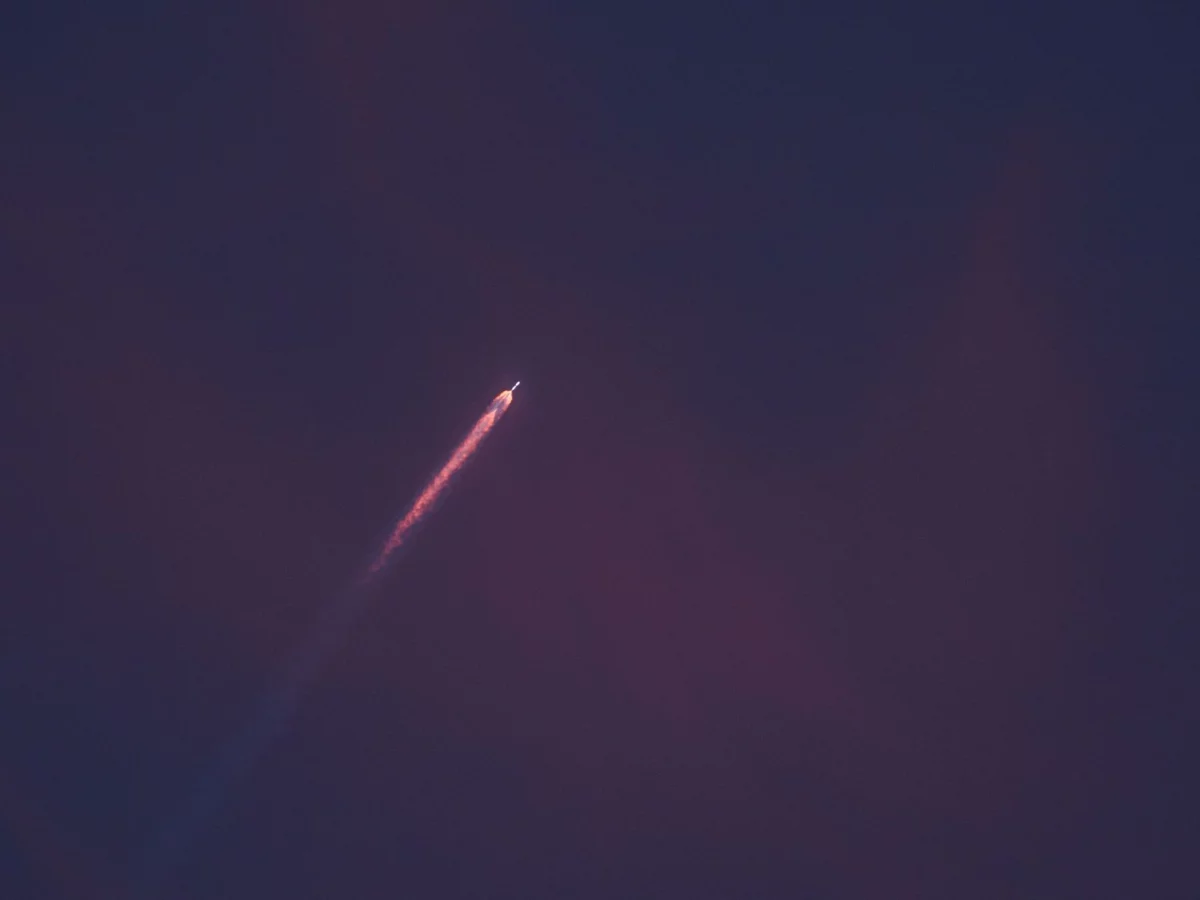
Ukraine’s long-range missile arsenal is no longer a marginal supplement to the front line. It is becoming a separate layer of the war, one designed to reach into the rear areas that Vladimir Putin’s system has traditionally treated as safe. That matters because modern campaigns are not decided only by who holds trenches; they are also decided by who can keep pressure on command posts, airfields, logistics nodes, oil infrastructure, and air defence batteries far beyond the immediate battlefield. In that sense, the emerging campaign is as much about drone warfare and industrial endurance as it is about explosives.
The reported mix of unmanned aerial vehicles, loitering munitions, cruise missiles, and possible ballistic missile development points to a shift in thinking. Ukraine is not merely trying to hit targets; it is trying to force Russia to spend attention, interceptors, manpower, and political capital in more places than it can comfortably cover. The phrase ‘kamikaze robots’ sounds sensational, but it captures a real trend: the use of expendable robotic systems, including potentially unmanned ground vehicles, as part of a broader precision-strike ecosystem.
From drone raids to a deep-strike doctrine
The early phase of the war showed how quickly improvised air power can become strategically meaningful. Small drones, commercial components, and modest payloads were enough to expose gaps in Russian coverage and create a constant operational headache. Over time, that improvisation has become more structured. Ukraine’s current approach looks less like isolated raids and more like a developing deep strike doctrine: reach the rear, disrupt the logistics chain, and make Russia defend everywhere at once. That is classic asymmetric warfare, but with a twenty-first-century industrial base attached.
What matters here is not only the weapon type but the role each weapon plays. A drone does not need to destroy a depot to be useful; it can force a radar to switch on, reveal a position, or trigger an air defence response that empties a missile launcher. A loitering munition does not need the destructive power of a larger missile if it can linger, identify a target, and strike at a moment of weakness. In that sense, the war is being shaped by the logic of precision-guided munitions, but also by their cheaper, more expendable cousins.
The decisive variable is not a single perfect strike. It is the ability to keep striking, cheaply and repeatedly, until the defender’s system starts to fail under its own weight.
That logic explains why the phrase Ukraine long-range missile arsenal is more important than it sounds. It is not just a label for isolated systems. It is shorthand for a network: sensors, software, targeting intelligence, production lines, launch platforms, and battle-damage assessment. Remove any one of those pieces and the entire concept becomes less threatening.
How Ukraine tries to overwhelm Russian air defenses
Air defence is not a wall. It is a layered, expensive, and imperfect system made up of sensors, radars, command links, interceptors, and human operators. Russia’s network includes elements that are designed to counter aircraft, drones, cruise missiles, and ballistic threats, but each layer has limits. The more vectors a defender must track, the higher the chance of error, delay, or overload. This is where repeated long-range attacks become more dangerous than a single dramatic launch.
The defensive problem is magnified by electronic warfare. Jamming, spoofing, and communication disruption can degrade both the attacker and the defender, but they do so asymmetrically. A cheap drone may be lost; a defender may still be forced to spend a far more expensive interceptor or reveal a radar signature. The same is true of surface-to-air missile systems, which are powerful but finite. They are effective in a contest of one target against one interceptor. They are less comfortable when the attacker can send mixed salvos, decoys, and follow-on waves.
This is why analysts keep returning to the relationship between air defense and missile defense. Both are indispensable, but neither is absolute. A modern defender can reduce damage dramatically and still lose the broader contest if the attacker can choose the time, direction, altitude, and saturation level of the strike. That was a central lesson of historical strategic bombing campaigns, and it remains true even when the aircraft are no longer crewed.
Russia’s response, as with any state under pressure, is likely to mix hardening, dispersal, deception, and counter-strike. But each of those measures has a cost. Sheltering a plane, moving a fuel depot, or adding more radar coverage reduces flexibility elsewhere. A system can be protected. A whole rear area is harder to protect indefinitely.
What the reported ‘Flamingo’ and ‘Pelican’ labels imply
The reported references to ‘Flamingo’ and ‘Pelican’ should be treated carefully. Names in wartime reporting often serve several functions at once: they conceal the real project, they signal progress to allies and adversaries, and they can inflate expectations before the systems are fully proven. That does not make the names meaningless. On the contrary, they suggest that Ukraine is trying to move from ad hoc strikes toward branded, industrialised capabilities that resemble a domestic weapons portfolio rather than a one-off improvisation.
If these labels correspond to new missiles or missile-like systems, then the key question is not the name but the architecture. Are they cruise missiles, ballistic systems, long-range drones, or hybrids of those categories? The boundaries matter less to the audience than to the target planner. A cruise missile can fly a different profile from a ballistic missile. A loitering munition can search differently from a fixed-route weapon. A robust attacker understands all of those differences and uses them to create uncertainty in the defender’s military-industrial complex.
That uncertainty is itself a weapon. When a target commander cannot tell whether the next threat is a drone, a missile, a decoy, or a delayed follow-up salvo, the cost of defending the rear rises. This is why the most serious development in Ukraine‘s strike effort may not be a single flagship system but the emergence of a portfolio of systems with overlapping roles. In a long war, diversity is often more valuable than a single headline platform.
The industrial arithmetic of attrition
Every discussion of Ukraine’s strike capability eventually returns to the same harsh arithmetic: who can build faster, cheaper, and more reliably? A war of attrition rewards the side that can replace losses without collapsing into scarcity. That is where the economics of war of attrition become decisive. A defender can spend millions on a missile interceptor to destroy a cheap drone. That exchange may still be rational for the defender if the drone is heading toward a strategic target, but it is not a sustainable pattern if repeated at scale.
Ukraine’s advantage lies in flexibility rather than brute force. It can combine imported systems, domestic production, modified civilian technology, and battlefield learning loops. It can also exploit the fact that unmanned aerial vehicles are easier to iterate than crewed platforms. Changes in software, communications, navigation, and payload configuration can be made faster than the procurement cycle associated with conventional air power. That is one reason the current conflict is often discussed alongside the future of drone warfare rather than the past of artillery alone.
But production is not magic. Scale requires stable supply chains, protected factories, qualified engineers, secure testing ranges, and a targeting apparatus that can turn production into repeatable battlefield effect. If the strikes are sporadic, they remain tactically annoying. If they become regular and varied, they begin to shape operational planning. The distinction is crucial.
How Moscow can adapt, and where adaptation breaks down
Russia is not passive. It can reinforce electronic warfare assets, disperse aircraft, harden depots, expand decoys, and shift critical stocks farther from the front. It can also use its own strike systems to hit launch sites, logistics points, and industrial facilities. In theory, that should blunt the campaign. In practice, adaptation is rarely free. Every extra layer of defence competes with offensive needs and with the simple problem of geography: a large country is expensive to defend everywhere at once.
There is also an information problem. A defender that spreads too much may preserve hardware but surrender initiative. A defender that concentrates may create holes elsewhere. That tension is familiar in strategic bombing history, but it becomes even sharper when the attacker can mix low-cost drones with higher-value missiles. A modern air defence system can be excellent and still be forced into a reactive posture.
Finally, Russia’s own industrial and operational choices matter. If command hubs, ammunition depots, refineries, and airfields have become more dispersed, then Ukraine’s strikes may be aiming less at destruction than at friction. Friction is slower, but it is often more durable. It changes schedules, raises insurance costs, lengthens supply routes, and forces commanders to assume that the rear is no longer a rear.
FAQ: Ukraine’s long-range strike campaign
What is the difference between a loitering munition and a cruise missile?
A loitering munition is designed to remain in an area, search for a target, and then attack. A cruise missile usually follows a preplanned route to a fixed or semi-fixed target. Both can be precise, but they solve different operational problems. The loitering munition is more flexible in the final moments; the cruise missile usually carries more range, speed, and payload.
Why do drones matter if missiles are more powerful?
Drones matter because they are often cheaper, easier to mass-produce, and more adaptable. They can trigger expensive interceptions, expose defence positions, and keep pressure on the defender between missile strikes. In a campaign of attrition, cheap systems can be strategically valuable precisely because they are not exquisite.
Can Russian air defense stop large drone attacks?
It can reduce the damage, but it cannot guarantee complete protection. Layered air defense can be effective against individual threats, yet large salvos, decoys, jamming, and mixed attack profiles can still penetrate or exhaust the system. Defence is about probability, not certainty.
Are the reported new systems enough to change the war?
Not by themselves. New systems matter only if Ukraine can manufacture, deploy, and sustain them at a rate that produces cumulative pressure. The real test is whether the arsenal becomes routine rather than exceptional. One-off attacks attract attention; repeatable capability changes the enemy’s behaviour.
The next test is persistence, not novelty
The most important insight in this campaign is that novelty is not the real breakthrough. Persistence is. A country can impress the world with a single dramatic strike and still fail strategically if it cannot repeat the effect. By contrast, a steady stream of long-range pressure can make even a strong defender behave conservatively, move assets, and spend more on protection than on offence. That is the logic behind Ukraine’s emerging strike posture, whether it is expressed through drones, missile prototypes, or the reported codenames that have caught public attention.
What to watch next is not merely whether another named system appears. It is whether Ukraine can fuse cruise-missile ambition, ballistic-missile development, and cheap robotic platforms into one coherent campaign architecture. If it can, Russia’s rear will become harder to distinguish from the front. If it cannot, the arsenal will remain impressive but episodic. The unanswered question is therefore not whether Ukraine can strike far away. It is whether it can keep making distance itself into a liability for Moscow.
Frequently Asked Questions
Why are Ukraine’s long-range strikes considered a separate layer of the war rather than just support for the front line?
Because they target the systems that keep the front line functioning: logistics hubs, command posts, airfields, air defenses, and fuel infrastructure. Instead of only contesting trenches, Ukraine is trying to make Russia defend its rear areas, divert resources, and slow operations everywhere at once. That creates pressure beyond the immediate battlefield and changes how the whole campaign is conducted.
Why do cheap drones matter if they cannot destroy heavily fortified targets on their own?
Their value is not only in destruction. Cheap drones can force air defenses to activate, reveal radar positions, trigger missile launches, and consume expensive interceptors. Even if a drone is shot down, it can still create cost and confusion for the defender. In a sustained campaign, that makes them strategically useful well beyond their payload size.
What makes Ukraine’s approach different from a one-off missile strike?
The key difference is persistence. A single strike can damage a target, but repeated attacks can wear down air defenses, interrupt repairs, and force constant alert status. Ukraine appears to be building a system that combines drones, loitering munitions, and missiles to keep pressure on Russia over time, not just deliver occasional dramatic hits.
How can mixed drone and missile salvos overwhelm Russian air defenses?
Air defenses are strongest when they can track a limited number of threats. Mixed salvos complicate that by presenting different speeds, flight paths, signatures, and timing. Some weapons may be used as decoys while others carry the main payload. That forces defenders to make quick decisions, increasing the chance of interception errors or interceptor depletion.
Does this mean Ukraine is trying to win by striking Russian territory instead of holding ground?
Not exactly. The purpose is not to replace battlefield operations, but to complement them. Deep strikes can disrupt fuel supplies, repair facilities, and command networks that support Russian forces at the front. By making rear areas unsafe, Ukraine can reduce Russia’s ability to sustain offensive operations and complicate its overall war planning.