
A Thermacell LIV 2.0 review is really a test of whether a premium backyard mosquito control system can outperform the usual mix of sprays, candles, fans, and patience. In the right setting, the answer is often yes. It will not erase every mosquito on the property, but it can meaningfully improve a patio, deck, or outdoor seating area when ordinary mosquito repellent methods fall short.
That matters because mosquito control is not just a comfort issue. Vector control is part of everyday public health, and the same insects that interrupt dinner outside can also transmit diseases such as West Nile virus, dengue fever, and malaria. The smartest outdoor strategy is usually layered: remove breeding sites, use an insect repellent when needed, and add a device that makes the places you actually sit more livable.
That is the lens I use here. Instead of asking whether Thermacell LIV 2.0 is perfect, the more useful question is whether it solves the real problem most people have: a small, usable outdoor zone that becomes unbearable at dusk.
What Thermacell LIV 2.0 is trying to do
Thermacell LIV 2.0 belongs to the category of spatial mosquito protection rather than contact protection. A lotion or spray works on your skin. A perimeter system tries to create a more comfortable bubble around the area where you sit. That distinction matters. In integrated pest management, the goal is not to rely on one miracle product, but to combine the right tools in the right order.
Thermacell-style systems sit at the intersection of consumer convenience and chemical control. Depending on the formulation, products in this category may use insecticides in the pyrethroid family, including compounds such as allethrin or metofluthrin. That is one reason label reading matters. A good review should never treat a mosquito device as decor; it is a controlled chemical delivery system designed for outdoor use.
For homeowners, the appeal is easy to understand. Compared with a mosquito trap, which tries to lure and capture insects, a spatial repellent is aimed at making an area less inviting in the first place. Compared with a spray bottle, it removes some of the on-body friction of repeated application. And compared with a candle or citronella setup, it usually promises a more consistent zone of protection.
The most useful mosquito product is the one you will actually turn on every night you sit outside.
How the system works in practice
Perimeter-based protection, not yard-wide elimination
The biggest misconception about a device like the LIV 2.0 is that it should make the whole yard mosquito-free. That is not how outdoor ecology works. Mosquitoes breed in standing water, rest in shaded vegetation, and move with wind patterns, humidity, and host cues. No consumer gadget changes that entire system. What it can do is reduce bites where the system is deployed most carefully: near furniture, conversation zones, and dining areas.
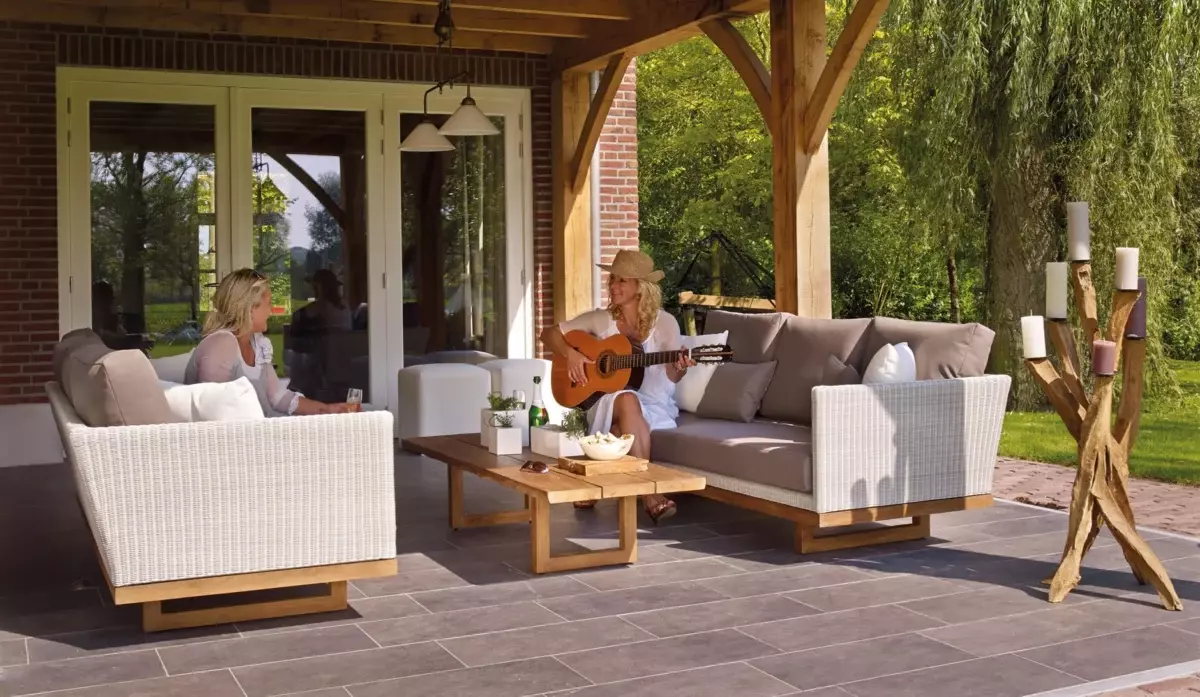
This is why the product makes more sense for a defined seating area than for a sprawling lawn. A covered patio, a deck with a fixed table, or a small backyard entertaining space is a good fit. A large open yard with heavy wind and multiple breeding sources is a much harder challenge. In other words, the device is best understood as vector control for living space, not eradication for the property.
Why the app-connected angle matters
Thermacell’s LIV line is part of the broader shift toward app-connected outdoor gear. The convenience story is familiar from the smartphone era: if the controls are simple enough, people are more likely to use the product consistently. That consistency matters more than a clever feature list. A mosquito system that stays turned off because it is annoying to manage is a bad system, no matter how elegant the hardware looks.
If your setup pairs through Bluetooth or another local wireless method, think of it as a convenience layer rather than the core value proposition. The core value is still the same: a repeatable, low-friction way to activate protection before the mosquitoes get active. In that sense, the LIV 2.0 fits the larger smart home trend, even though it lives outside the house.
Real-world performance: where it shines and where it struggles
Where it shines
The strongest case for Thermacell LIV 2.0 is the ordinary evening that turns into an outdoor event. When the temperature drops, the lights come on, and everyone wants to stay on the patio, mosquito pressure often becomes the limiting factor. In that situation, a perimeter system can feel transformative because it changes the behavior of the space itself. Instead of constantly swatting, guests can settle in.
That experience lines up with the logic of chemical ecology: insects use chemical cues to find hosts and navigate environments, so altering those cues can change behavior without needing to kill every insect nearby. For many people, that is enough. Comfort, not total population reduction, is the real outcome that matters.
Where it struggles
Wind is the obvious enemy. So is a large, open layout with no boundary for the protective zone to gather around. If the air is moving hard enough, any spatial repellent has a harder time staying concentrated where you need it. Shade, vegetation, and nearby water can also keep mosquito pressure high even when the device is working exactly as designed.
This is also where expectations need to be realistic. A consumer system cannot outdo poor habitat management. If you have clogged gutters, birdbaths that never get emptied, dense shrubs right next to seating, or other sources of standing water, you are feeding the problem. The CDC’s guidance on preventing mosquito bites and the EPA’s general mosquito prevention advice and insect repellent guidance both reinforce the same idea: the best outcomes come from combining personal protection with environmental control.
Cost, maintenance, and value
Thermacell LIV 2.0 is expensive and imperfect, which is exactly why value matters. With premium mosquito systems, the purchase price is only the first bill. There are recurring refills, battery charging or power management, and the possibility that you will spend more if you want to cover multiple outdoor zones. A device can be technically impressive and still feel overpriced if it only serves one narrow use case.
That said, cost should be judged against what it replaces. If you routinely buy sprays, candles, disposable products, or multiple competing gadgets, a single system may become easier to justify. If you entertain often, or if mosquitoes repeatedly end evenings early, the real comparison is not against a cheap candle. It is against lost time, canceled gatherings, and the hassle of reapplying products to skin and clothing.
Battery life matters too. A rechargeable battery is a convenience feature only if it reliably lasts through the use pattern you actually need. For a device like this, the ideal charge cycle is one you barely think about. If you have to plan around power the way you would with a camera on a long trip, the system becomes less elegant in daily life.
Thermacell LIV 2.0 versus other backyard mosquito control methods
Choosing the best outdoor mosquito control device depends on the space, the budget, and how much maintenance you are willing to accept. Here is the practical comparison most people actually need.
| Method | Strengths | Weaknesses | Best for |
|---|---|---|---|
| Thermacell LIV 2.0 | Convenient, zone-based protection, low friction once set up | High upfront cost, recurring refills, coverage is not unlimited | Patios, decks, fixed seating areas |
| Insect repellent | Direct personal protection, portable, proven for skin coverage | Needs reapplication, less convenient for groups | People on the move, travel, outdoor work |
| Mosquito trap | Can reduce local populations over time | Does not always improve comfort immediately, placement matters | Yards where long-term reduction is the goal |
| Fans | Cheap, chemical-free, often effective in seating zones | Not discreet, weather-dependent, limited reach | Small dining areas and covered porches |
| Sprays and yard treatments | Can deliver broad coverage for a limited time | Requires repeated application, environmental trade-offs, not always DIY-friendly | Heavy mosquito pressure or occasional event prep |
The table makes the trade-off clear: Thermacell LIV 2.0 is not the most comprehensive approach, but it is one of the most convenient for defined social spaces. That convenience is the product’s biggest strength and also the reason some users will find it overpriced.
Best practices if you want it to work as well as possible
- Start with source reduction. Empty standing water, clean gutters, and remove obvious breeding spots before relying on any device.
- Use the system where people actually sit. A small, well-used patio usually benefits more than a large, open lawn.
- Think in layers. Pair the device with fans, screening, and selective use of skin-applied repellent when mosquito pressure is high.
- Respect wind and layout. If your yard is exposed, expect a less stable protective zone.
- Follow the label. If the unit uses a pyrethroid-family active ingredient, treat it like the regulated product it is, not a decorative appliance.
- Track the recurring cost. Refills and power management determine real value more than the first-day impression.
For households that want a more durable plan, the best approach is often a hybrid one: the LIV 2.0 for comfort at the table, source reduction for the property, and traditional repellent for times when you are away from the protected zone. That is the same logic public-health agencies use in broader integrated pest management programs.
FAQ: Thermacell LIV 2.0 and backyard mosquito control
Is Thermacell LIV 2.0 worth it?
If your biggest problem is mosquitoes ruining a fixed outdoor seating area, it can be worth it. If you want total yard elimination, it is the wrong expectation. The value depends on how often you use your patio and how much you dislike repeated spraying.
Does Thermacell LIV 2.0 work in windy conditions?
Any spatial repellent works less predictably in wind. It may still help, but the protective zone can become less stable. For exposed yards, a fan, screening, or another layer of control may matter more than the device alone.
Is it better than a mosquito trap?
Not necessarily better in every sense, but better for a different job. A trap is aimed at reducing mosquitoes by attracting and capturing them. Thermacell LIV 2.0 is aimed at making a specific area more comfortable now. If your goal is dinner outside tonight, the LIV 2.0 may be the more practical choice.
Is it safe around pets and children?
Safety depends on the exact product, placement, and label directions. Always read the instructions, keep refills out of reach, and use only as directed. If anyone in the household is sensitive to insecticides, treat the device with extra caution and consult the official guidance before use.
The real test of smart mosquito control
The most important insight from this review is that the best mosquito technology is not the one that sounds most futuristic. It is the one that reliably reduces bites in the place you care about, without becoming a chore. Thermacell LIV 2.0 appears to succeed because it focuses on a human-scale problem: making one small outdoor zone usable again.
What to watch next is whether smart mosquito control becomes more precise, more affordable, and less dependent on recurring consumables. The broader market is moving toward app-driven outdoor systems, better battery management, and more coordinated devices that fit into the wider smart home ecosystem. If manufacturers can lower the cost per season while improving wind resistance and zone consistency, the category could become much more mainstream.
The unanswered question is whether consumers will keep paying for comfort as a service. That is ultimately the bet behind products like LIV 2.0: not that mosquitoes will vanish, but that people are willing to invest in a better evening outside. The brands that win this category will not be the ones promising a perfect yard. They will be the ones that make the dinner table, the deck, and the last hour of daylight feel like yours again.
Frequently Asked Questions
Does Thermacell LIV 2.0 actually work in a windy or fully open backyard?
It can help, but it is much less effective in open, windy spaces than in a defined seating area. The system is designed to create a more comfortable zone around patios, decks, or tables, not to clear an entire yard. If wind disperses the active ingredient quickly or mosquitoes are coming from many directions, results may be noticeably weaker.
Is Thermacell LIV 2.0 enough on its own, or do you still need other mosquito control steps?
It works best as part of a layered strategy, not as a standalone fix. Removing standing water, trimming dense vegetation, and using skin repellent when needed still matter. Think of LIV 2.0 as a comfort tool for the space you occupy, while the other measures reduce the overall mosquito pressure around your property.
Is a smart, app-connected mosquito system worth it if the main job is just turning on protection?
The app is only useful if it makes the system easier to use consistently. That is the real value: if control is simple, you are more likely to run it every time you sit outside. If you would forget a less convenient setup, the connected features may be worth it; otherwise, they are secondary to the core function.
Is Thermacell LIV 2.0 safer or more suitable around kids and pets than sprays and candles?
It can be a more controlled option than repeated spraying or open-flame candles, but it is still a chemical mosquito-control product and should be used exactly as labeled. That means paying attention to placement, ventilation, and any guidance about people, pets, and food areas. The label is more important than the marketing.
What kind of outdoor space is the best fit for Thermacell LIV 2.0?
The best fit is a small, consistent gathering area where people sit for a while, such as a patio dining space, deck, or screened-like outdoor lounge. It is less ideal for large lawns, changing seating layouts, or areas with multiple mosquito sources nearby. The more defined the zone, the better the system tends to perform.
How should you think about the cost compared with cheaper mosquito options?
Compare it to the cost of actually using the product consistently, not just the purchase price. Candles and sprays may seem cheaper upfront, but they often require repeated buying and more effort. If LIV 2.0 leads to more nights spent comfortably outside, the value can be strong. If you rarely sit outdoors, it may be overkill.