
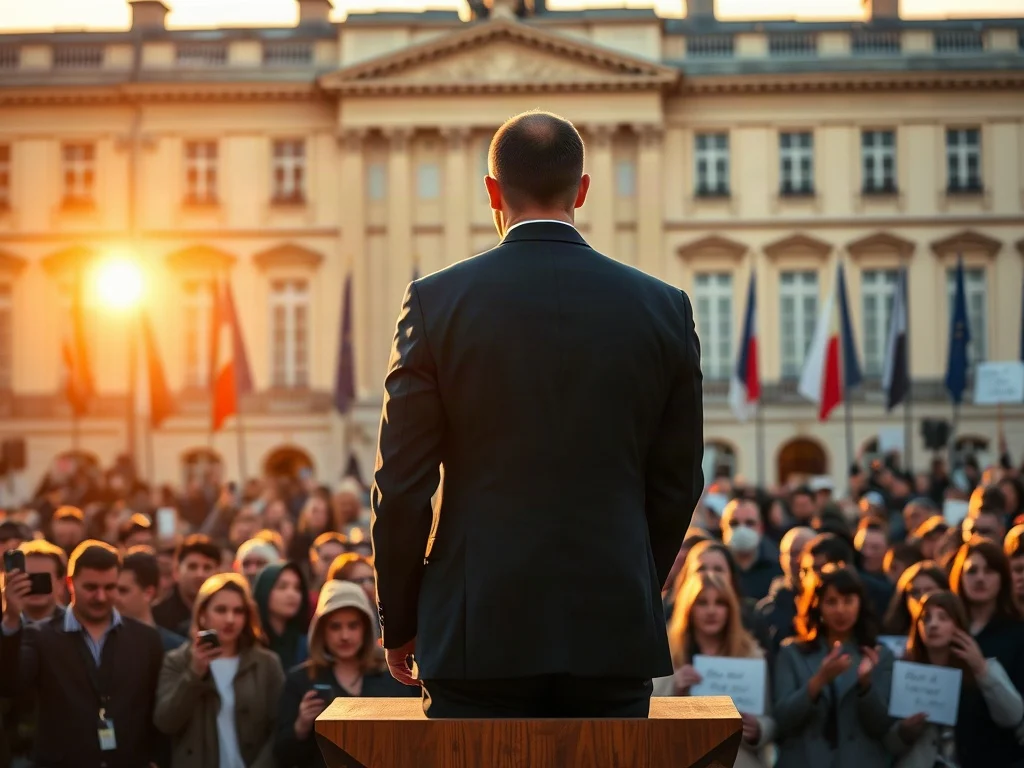
The Teddy Riner presidential candidacy is about far more than the ambitions of one celebrated athlete. When an Olympic judo champion is seriously discussed as a contender for the Élysée, it exposes a fault line in French democracy: voters are searching for credible figures who stand outside the established order. In an interview with France 24, political scientist Lex Paulson called the moment “illustrative of this hunger for an alternative” to the figures who dominate the field, notably Marine Le Pen and Jean-Luc Mélenchon. This analysis looks past the novelty to what the story says about trust, attention and power.
Who Is Teddy Riner, and Why Does His Candidacy Matter?
Teddy Riner is among the most decorated competitors in the history of judo, with a record of Olympic and world titles that has made him a national figure far beyond sport. He has also spoken publicly against racism and xenophobia, commitments that Paulson says may resonate with many voters.
The timing is what makes the story significant. France is navigating sociopolitical and economic strain, traditional parties are struggling to mobilize supporters, and the political centre remains deeply fragmented. The structure of the French Fifth Republic, which places enormous weight on one personality, makes a figure with instant national recognition especially disruptive ahead of the 2027 presidential election.
Attention Is the New Currency of Politics
Paulson’s central argument is that the resources of campaigning have changed. In his words:
“The currency of politics now is no longer just money to buy television advertisements or open offices. It’s the ability to capture attention.”
The Attention Economy Meets the Ballot Box
In the attention economy, a fragmented media landscape rewards people who are already known and trusted. A champion who has filled stadiums and dominated national broadcasts starts with an advantage that most politicians spend decades trying to build.
Not a French Exception
This pattern is familiar internationally. Volodymyr Zelenskyy moved from entertainment to the presidency of Ukraine, Donald Trump carried a famous media persona into the White House, and Arnold Schwarzenegger became governor of California. France has its own history of outsiders, including Emmanuel Macron, who in 2017 built a campaign outside the main party structures. Each case differs, but all show that political outsiders in France and elsewhere now have a path that was once closed to them.
Visibility Is Not the Same as Credibility
Paulson draws a sharp distinction. Celebrity opens doors, but it does not by itself make a serious presidential contender. He questions whether Riner has articulated a sufficiently developed political vision, and that is the decisive test. A presidential campaign demands positions on pensions, public debt, security, industry and foreign policy, and voters will eventually ask for them.
The question of whether an Olympic athlete can realistically become president of France therefore comes down to three things:
- Programme: a coherent set of priorities that goes beyond values statements.
- Organisation: a national structure, sponsorships and volunteers capable of sustaining a campaign.
- Resilience under scrutiny: the ability to withstand the intense examination that front-runners face.
Why Voters Turn to Outsiders: A Crisis of Representation
The deeper story, in Paulson’s reading, is not whether Riner can win. It is what his emergence reveals about a crisis of democratic representation. Voters, he argues, increasingly see professional politicians as a distant governing class. As he puts it:
“People don’t feel like they’re being listened to except for the few weeks before an election.”
He adds that “voters don’t vote for policies. Voters vote for people they sense will stand up for them.” That claim is a provocative interpretation rather than an established law, and political scientists debate how far identification outweighs programme. Still, it helps explain the appeal of populism and anti-establishment movements, from the yellow vests movement in France to Italy’s Five Star Movement.
Reimagining Governance, Not Just Elections
Paulson, who directs executive programs at the UM6P School of Collective Intelligence at Mohammed VI Polytechnic University, argues that the real opportunity lies in bringing decision-making closer to citizens. Several existing tools point in that direction:
- Collective intelligence methods that draw on the knowledge of many people rather than a small elite.
- Deliberative democracy formats such as citizens’ assemblies, which France tested with its Citizens’ Convention for Climate.
- Standing consultation, so that citizens are heard between elections and not only during campaign season.
Any candidate, famous or not, who proposes concrete mechanisms like these would answer the grievance that Paulson identifies, which is a feeling of not being heard.
Frequently Asked Questions
Who is Teddy Riner?
He is a French judoka and one of the most successful competitors in the sport’s history, widely known in France for his Olympic and world championship results and his public stance against racism.
Why are voters turning to political outsiders?
According to Lex Paulson, many citizens feel that professional politicians listen to them only before elections. Outsiders with personal credibility can seem more likely to “stand up for them.”
Can an Olympic athlete realistically win the French presidency?
Fame provides visibility, but according to Paulson it does not guarantee credibility. A developed political vision and a serious organisation would still be required.
The Question Riner Leaves Behind
The most important insight is that Riner is a symptom rather than a cause. His name carries weight because the gap between citizens and institutions has widened enough for a non-politician to fill it in the public imagination. Whether he wins matters less than whether established parties answer the demand his visibility reveals.
Watch three things in the coming months: whether Riner publishes a detailed programme, whether the traditional centre can offer a credible alternative to Le Pen and Mélenchon, and whether any contender proposes real ways of giving citizens a voice beyond the ballot. If the answer to the last question is no, the next outsider will find the same open door, and the unanswered question will be how much longer French democracy can rely on personalities to repair what institutions have not.
SEO DATA
Primary Focus Keyphrase: Teddy Riner presidential candidacy
Related Keyphrase 2: political outsiders in France
Related Keyphrase 3: can an Olympic athlete become president of France
Related Keyphrase 4: why are voters turning to political outsiders
Related Keyphrase 5: crisis of democratic representation
Primary Keyphrase Synonyms: Teddy Riner presidential bid, Riner’s run for the presidency, Riner presidential run, Olympic judo champion’s campaign, Riner’s candidacy for the Élysée
SEO Title: Teddy Riner Presidential Candidacy: France’s Hunger for an Alternative
Meta Description: The Teddy Riner presidential candidacy reveals how attention, trust and a crisis of representation are reshaping French politics. Read the analysis.
URL Slug: teddy-riner-presidential-candidacy
Image Filename: teddy-riner-presidential-candidacy-france.jpg
Image ALT Text: Tall athletic man in a dark suit facing a crowd outside a French palace at dawn, symbolizing a presidential candidacy
Image Title: Teddy Riner presidential candidacy in France
Image Caption: An athlete’s possible run for the presidency shows how attention is reshaping French politics.
Search Intent: Informational (news analysis)
Frequently Asked Questions
Has Teddy Riner officially announced that he is running for president?
The article does not say so. It describes him as being seriously discussed as a possible contender for the Élysée ahead of the 2027 election. Political scientist Lex Paulson uses the idea as a lens on voter dissatisfaction, and he questions whether Riner has developed a sufficient political vision.
Why would a judo champion have an advantage over career politicians?
According to Paulson, attention is now the main currency of politics. In a fragmented media landscape, people who are already known and trusted start ahead. Riner has filled stadiums and dominated national broadcasts, so he has a level of recognition that most politicians spend decades trying to build.
Is fame enough to win the French presidency?
No. Paulson stresses that celebrity opens doors but does not make someone a serious contender. A candidate also needs a coherent programme on pensions, debt, security, industry and foreign policy, a national organisation with volunteers and funding, and the resilience to withstand the scrutiny that front-runners face.
Why does the French political system favour strong personalities?
The Fifth Republic places enormous weight on a single individual, the president. That makes a figure with instant national recognition especially disruptive. Combined with struggling traditional parties and a fragmented centre, it leaves room for outsiders to gain ground before the 2027 election.
Are there precedents for outsiders winning high office?
Yes. The article cites Volodymyr Zelenskyy, who moved from entertainment to Ukraine's presidency, Donald Trump, and Arnold Schwarzenegger as governor of California. In France, Emmanuel Macron built his 2017 campaign outside the main party structures. Each case differs, but all show a path once closed to outsiders.
Is Paulson's claim that voters choose people rather than policies settled fact?
No. The article calls it a provocative interpretation rather than an established law. Political scientists debate how far a voter's sense of identification with a candidate outweighs the importance of their programme. The claim is used to help explain why outsiders appeal to voters who feel unheard.