
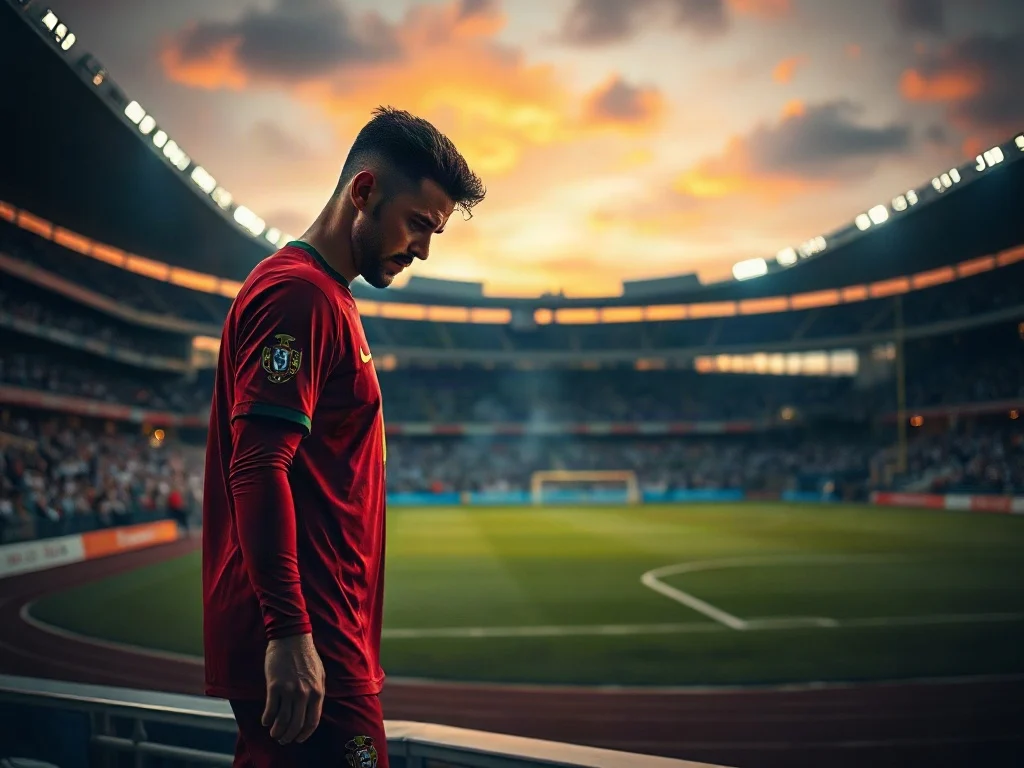
When Ronaldo retires from international football, it closes the longest and most decorated international career in the men’s game. A player who made his Portugal debut as a teenager in 2003 has now left the stage after more than two decades. The BBC’s coverage, with analysis from Guillem Balagué, frames the exit as bitter. This article does not reproduce that reporting. It sets the departure in context: what Cristiano Ronaldo changed for Portugal, why an ending like this feels unfinished, and what comes next for the player and the national team.
One caution applies. The details of the announcement, including its timing and stated reasons, belong to the original reporting and official statements from Ronaldo and the Portuguese federation. Where this article discusses motives, it separates verifiable career facts from interpretation.
How Ronaldo Transformed Portugal’s International Standing
Before Ronaldo, Portugal’s national team was admired for its technique but had never won a major tournament. Its great figures, Eusébio in the 1960s and later Luís Figo, produced near misses rather than trophies. Ronaldo arrived from Madeira via Sporting CP and became the focal point of a generation.
From teenage winger to captain
He first reached a major final at UEFA Euro 2004, when Portugal lost to Greece on home soil. That defeat shaped much of what followed. The next decade was a long search for the trophy that had slipped away in Lisbon.
The trophies that defined the era
The search ended at UEFA Euro 2016. Ronaldo was injured early in the final against France, yet he stayed on the touchline as a vocal presence, and Éder’s extra-time goal won Portugal its first major title. Portugal then won the inaugural UEFA Nations League in 2019. A second Nations League triumph followed in 2025, when Portugal beat Spain on penalties in the final, and Ronaldo scored in that match.
The Numbers Behind the Career
The statistics explain why this retirement carries so much weight. Ronaldo holds the men’s record for international appearances, with more than 200 caps. He is also the all-time leading international goalscorer, with more than 130 goals, having passed Ali Daei‘s long-standing mark of 109. He scored at five different World Cups, a feat no other men’s player had achieved when he did it in 2022. He also played in a record number of European Championships.
These totals should be read with some nuance. A share of his goals came from penalties and from qualifiers against weaker opposition, a point critics often raise. Even so, the longevity, consistency and range of tournaments are unmatched. Supporters would add that a striker has to be on the pitch and decisive for twenty years to build a record like this.
| Milestone | Context |
|---|---|
| Debut in 2003 | Aged 18, in the build-up to the home Euro |
| Euro 2004 final | Defeat to Greece in Lisbon |
| Euro 2016 | First major trophy for Portugal |
| Nations League 2019 and 2025 | Two titles in the competition |
| Five World Cup goals-scored tournaments | Record in the men’s game, completed in 2022 |
Why the Ending Feels Bitter
This section is interpretation, not reported fact. The word bitter fits because the final chapter did not match the scale of the career. His last World Cups and Euros were marked more by frustration than by celebration.
The 2022 World Cup and the Fernando Santos fallout
At the 2022 World Cup in Qatar, Ronaldo was left out of the starting line-up for the round of 16 by Fernando Santos. Portugal won that match 6-1 without him. A quarter-final defeat to Morocco followed, and the images of Ronaldo leaving the pitch in tears became a defining picture of the tournament. Santos left soon afterwards.
Euro 2024 and a tournament without a goal
Under Roberto Martínez, Portugal reached the quarter-finals of UEFA Euro 2024. Ronaldo did not score in open play at that tournament. He missed a penalty in extra time against Slovenia and wept on the pitch, only for Diogo Costa’s shootout saves to rescue Portugal. France then eliminated Portugal on penalties. The tournament raised a question that had been building for years: whether the team’s attacking structure still revolved around a 39-year-old.
The tension between legacy and selection
This tension is common at the end of great careers. A coach has to weigh sentiment and symbolism against the need to build for the future. A team can lose its tactical balance when the biggest name on the sheet dictates how it plays. Any honest assessment of why this ending feels bitter has to acknowledge that both sides of that argument have merit.
Why Did Ronaldo Retire From Portugal Duty?
Anyone asking why Ronaldo retired from international football should start with the official statements and the BBC’s reporting, because the stated reasons carry more weight than speculation. Several factors are widely discussed in football analysis, but none of them should be treated as confirmed motivation:
- Age and physical demands: Ronaldo was born in February 1985, and the schedule of qualifiers, Nations League fixtures and tournaments is demanding even for elite athletes.
- Club commitments: He plays his club football for Al Nassr in Saudi Arabia, so international breaks involve long travel.
- Succession planning: Portugal has a deep pool of young attackers and midfielders, and the federation has to plan beyond one player.
- Personal timing: Great players often choose their own moment, and that can be unrelated to a specific match or tournament.
Balagué’s analysis, as flagged in the BBC’s headline, concerns the human side of this decision. It is best read directly rather than summarised by third parties.
What’s Next for Cristiano Ronaldo
Retiring from the national team does not mean retiring from football. Ronaldo’s career at club level took in Manchester United, Real Madrid, Juventus and now the Saudi league, and he has repeatedly shown that he manages his body and schedule with unusual discipline. Without international duty, he could in theory focus on a shorter club calendar.
Possible paths after the break
- Continuing at club level: His contract situation and fitness will determine how long he continues, and these are best checked against current club announcements.
- Commercial and media work: His global brand, built on social media reach and sponsorship, will keep generating income and attention regardless of where he plays.
- An ambassadorial or coaching role: This is speculation, but many players of his stature move toward federation roles or youth development. Nothing has been confirmed.
How Portugal Moves On Without Its Captain
For the Portuguese Football Federation, the practical challenge is to shift the team’s identity from a star-centred model to a collective one. That does not mean an easy transition. Replacing the goals is possible in a statistical sense, but replacing the leadership, presence and sense of occasion is harder.
Practical questions for the coaching staff
- Who takes penalties and set pieces, a duty that has historically fallen to Ronaldo?
- Who wears the captain’s armband, and what kind of leadership style does the dressing room need?
- How should the attack be organised around wide forwards and attacking midfielders rather than a single reference striker?
- How should younger players be introduced without the safety net of the team’s biggest name?
Observers should also watch how Portugal performs in the build-up to the 2026 FIFA World Cup, which gives a first real test of the post-Ronaldo era. Check the official sites of the Portuguese federation and UEFA for confirmed fixtures and squad announcements.
The Ronaldo and Messi Question
No assessment of Ronaldo’s international career avoids comparison with Lionel Messi, whose Argentina won the 2022 World Cup. Ronaldo’s supporters point to the Euro 2016 title and two Nations League wins, plus the scoring records. His critics point out that he never won a World Cup and went deep into knockout rounds only rarely. Both positions hold up. The fairer framing is that Ronaldo’s achievement was dragging a country of roughly ten million people into the elite for twenty years, which no single trophy fully captures.
What the Departure Reveals About Legacy
The most important insight is that a career’s ending rarely matches its peak. Ronaldo’s story with Portugal is not defined by the tears in Qatar or the missed penalty in Frankfurt, but those moments will colour how the ending is remembered in the short term. Over time, the Euro 2016 victory, the records and the transformation of Portugal’s ambitions are likely to dominate the narrative.
The question to watch is not whether Portugal can find another scorer. It is whether the country can keep its self-belief without the player who taught it to expect trophies. Reasonable prediction suggests Portugal will remain a strong tournament side, given the quality of its young talent. Whether it finds a figure who inspires a nation the way Ronaldo did is an open question, and the 2026 World Cup will offer the first honest evidence.
Frequently Asked Questions
Why do critics say Ronaldo's international goal record needs some nuance?
Critics point out that part of his tally came from penalties and from qualifiers against weaker opposition. Supporters answer that scoring for twenty years, across many tournaments, requires consistency and longevity that no other men's player has matched, so the record still stands as exceptional.
Did Portugal win any major title before Ronaldo's era?
No. Portugal were admired for their technique, and figures like Eusébio and Luís Figo came close, but the team never won a major tournament before Ronaldo's generation. The first major title arrived at Euro 2016, followed by the Nations League in 2019 and 2025.
How did Ronaldo contribute to the Euro 2016 final if he was injured?
He went off injured early in the final against France. He did not play on, but he stayed on the touchline as a vocal presence encouraging his teammates. Éder's extra-time goal then gave Portugal its first major trophy.
What made Ronaldo's 2022 World Cup record historic despite the disappointing exit?
He scored at five different World Cups, a feat no other men's player had achieved when he did it in 2022. Even so, Portugal went out to Morocco in the quarter-finals, and his tears on leaving the pitch became a defining image of the tournament.
Why is his retirement described as bitter rather than triumphant?
This is the article's interpretation, not reported fact. His final World Cup and Euro were marked by frustration: he was dropped to the bench by Fernando Santos in 2022, and at Euro 2024 he scored no open-play goal and missed a penalty against Slovenia.
Where can readers find the official details of the retirement announcement?
The article deliberately does not reproduce the reporting on the announcement. The timing and stated reasons come from the original coverage, such as the BBC's with Guillem Balagué, and from official statements by Ronaldo and the Portuguese federation, which are the sources to check.