
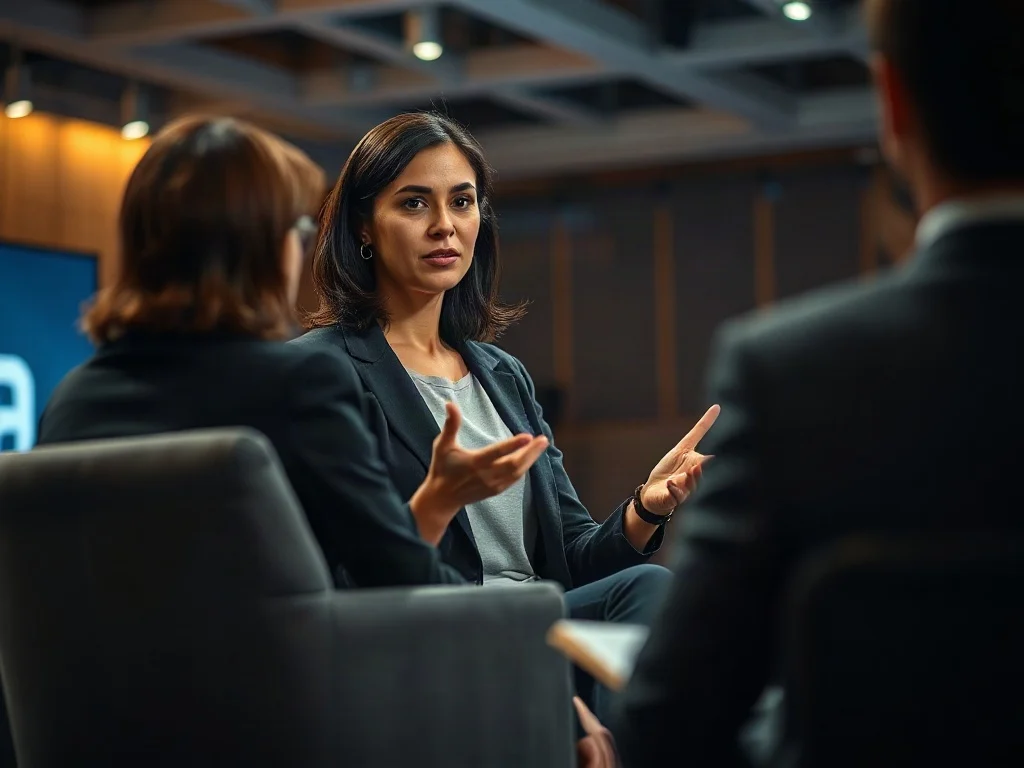
The Noa Argamani philosophy is easy to caricature as inspirational shorthand: stay positive, be grateful, play the hand you are dealt. Her own account, given at Business Insider’s Long Play event in conversation with editor in chief Jamie Heller, is more specific and more useful. It describes a discipline of attention that she says carried her through 246 days in Hamas captivity, and which she now applies to a new career in venture capital. This analysis separates what she actually said from what it is tempting to read into it, and asks what the approach can and cannot teach.
What Noa Argamani Actually Said
Argamani was kidnapped in the October 7, 2023 attack on Israel and rescued after 246 days. In the Long Play conversation she said she never doubted that she would return home alive. She held that view even though two friends died in captivity and she regularly heard rockets and bombs exploding. She spent much of the time alone in a tiny room.
The core of her account is a practice rather than a feeling. She said she found something to be grateful for in the smallest comforts: half a liter of water, a sock, a blanket. In her words, “I said thank you for everything that I have at that moment.” She also said that each morning she looks at the cards in her hand and plays them as well as she can.
Two caveats are worth stating. First, her certainty about survival is a retrospective account from someone who survived, and it should be read as her description of her own mindset, not as evidence that optimism determines outcomes. Second, her remarks at the event are the only source for these details here, so claims about her captivity should stay within what she has said publicly.
Gratitude as a Method, Not a Mood
The most analytically interesting part of her philosophy is the scale of the gratitude. Gratitude in popular culture is usually attached to abundance: a good year, a loving family, a promotion. Argamani describes the opposite condition, in which the objects of thanks are a sock and a blanket. That is not a vague attitude of positivity. It is a deliberate narrowing of focus to the controllable and the present.
Why narrowing attention matters
In a situation where almost nothing is controllable, the mind has two broad options: dwell on what is out of reach, or inventory what remains. Her method is the second. Psychologists discuss related ideas under psychological resilience, but it would be overreach to claim her approach is a validated protocol. It is a personal practice, described credibly and without clinical claims.
Where the framing has limits
A critic should note what this philosophy does not address. Gratitude practices can be misused to suppress legitimate anger or grief, and optimism is not a substitute for rescue, medical care, or political resolution. Argamani did not claim otherwise. Her optimism coexisted with the deaths of friends, and she did not present it as a way around loss. The risk lies with audiences who turn her account into a general prescription, implying that people who suffer more simply were not positive enough.
The Card Metaphor and the Logic of Constraints
The “cards in my hand” line is the most portable part of the philosophy, and it has a precise meaning. A card player cannot choose the deal. The skill lies in reading the hand accurately and then choosing the best play. This is not the same as believing the hand is good.
That distinction explains how she moved from survival to career planning. She described reflecting on her special skills and resources and how they align with her goals. Her inventory, as she presented it, included improved English, sharper public speaking skills built while advocating for the release of the other Israeli hostages, and a global profile she did not choose but now holds.
From AI Student to Venture Capital
Before October 7, Argamani was in her third year of college studying artificial intelligence, with the idea of becoming a software engineer or eventually a founder. In captivity she told herself she loved the life she was living and would finish her degree on returning home. After her return, she said, so much changed.
The role at Vine Ventures
Following an internship this year, she joined Vine Ventures as head of platform. The firm backs early-stage startups, with a focus on AI, cybersecurity, and defense tech. Her stated aim is to work with Israeli founders and companies to help them expand globally. She also frames the work as strengthening Israel’s security through economic success.
She said she still has much to learn about venture capital, and she joined in part because of her relationship with founder and managing partner Eric Reiner, who helped her advocate for the remaining hostages. That detail matters. The hire is built on a relationship formed through advocacy, which is common in venture capital and also a standard point of scrutiny about how access and opportunity are distributed.
What “head of platform” typically means
In venture firms, platform roles generally focus on supporting portfolio companies through introductions, hiring help, and market access rather than on making investment decisions. Titles and responsibilities vary between firms, and Argamani has not described the specifics of her duties beyond helping Israeli founders expand globally. The role appears to fit her profile: a recognizable public figure with international reach, strong communication skills, and a technical education that is incomplete but relevant.
Economic Success as a Security Argument
The most consequential claim in her account is that economic success strengthens Israel’s security. It rests on a long-running narrative about Israel’s technology sector, popularized by the book Start-Up Nation, in which a dense startup ecosystem is tied to national strength. Vine’s focus areas, cybersecurity and defense technology, sit at the point where commercial and security interests overlap.
There are two ways to read this. The supportive reading is that a strong technology economy funds innovation, attracts talent, and builds capabilities with dual civilian and military uses. The skeptical reading is that investment outcomes depend on global capital markets, regulation, and geopolitical conditions that no single investor controls. Both readings can hold at once. What Argamani offers is a statement of intent, not evidence of impact, and her track record in this field is only beginning.
A Critical Reading of the Survivor Narrative
Public figures who emerge from trauma often receive instant authority they did not seek and that does not automatically transfer to a new field. Argamani herself appears aware of this: she acknowledges what she has yet to learn. That candor is the strongest signal in her account. The gap between her platform and her experience in venture capital is real, and how she closes it will matter more than the narrative around her.
There is also a structural tension. Her visibility is an asset to founders seeking access and attention, but a spokesperson role and an operating role require different skills. The test will be whether she builds repeatable value for portfolio companies beyond the weight of her story.
“Now I have the opportunity to be on this stage and talk about all of the things that I’ve been through, and also how I want to build the future.”
The sentence is revealing. It places the past and the future on the same stage, treating her experience as a foundation rather than a brand.
Practical Lessons From the Noa Argamani Philosophy
Stripped of the context of captivity, which no reader should expect to replicate, several transferable ideas remain.
- Inventory before ambition. List the skills, relationships, and resources you actually hold before setting goals. Argamani’s move into venture capital builds on communication skills and relationships she already had.
- Scale gratitude to the situation. Under pressure, naming specific, small, present things is more credible than abstract positivity.
- Separate hope from denial. Playing a weak hand well requires seeing it accurately first.
- Treat learning as a stated plan. Admitting what you do not yet know, as she did about venture capital, is a stronger career signal than claiming expertise.
- Choose mentors by track record of action. Her link with Eric Reiner was built on shared work, not only on introductions.
Frequently Asked Questions
Who is Noa Argamani?
Noa Argamani is an Israeli who was kidnapped in the October 7, 2023 attack and held by Hamas for 246 days before being rescued. She is now head of platform at Vine Ventures and an advocate for the release of other Israeli hostages.
How did Noa Argamani survive captivity, according to her own account?
She says she maintained unwavering optimism, practiced gratitude for small comforts such as water, a sock, and a blanket, and never doubted that she would return home alive. This is her personal description, not a clinical explanation of survival.
What does Noa Argamani do now?
After an internship, she joined Vine Ventures, a firm backing early-stage startups in AI, cybersecurity, and defense tech. She works with Israeli founders to help them expand globally.
Why did Noa Argamani move into venture capital?
She cited her relationship with founder and managing partner Eric Reiner and a desire to build her career while helping her country. She also said she is still learning the field.
The Real Test Begins After the Story
The central insight of the Noa Argamani philosophy is that optimism, as she practices it, is operational rather than emotional: assess the hand, find the usable pieces, act. That makes it testable in a way that slogans are not. Captivity tested it under conditions no one should seek. Venture capital will test it differently, through measurable outcomes for founders, a track record of introductions that lead to growth, and the slower work of earning credibility in a field that rewards results.
Watch three things next. First, whether her role at Vine produces visible results for portfolio companies beyond publicity. Second, whether she completes the degree she said she planned to finish, or finds a different route to technical credibility. Third, whether the argument that economic success strengthens security holds up amid wider investment cycles and geopolitical risk. The reasonable prediction is that her public profile will open doors quickly, but the durability of her career will depend on the unglamorous work that follows. The open question is whether a philosophy forged in extreme scarcity can adapt to the very different pressures of abundance and expectation.
Frequently Asked Questions
Does Noa Argamani claim that optimism is what kept her alive?
No. The article stresses that her certainty about returning home is a retrospective account from a survivor. It describes her own mindset and is not evidence that optimism determines outcomes. Two of her friends died in captivity, and she never presented optimism as a way around loss.
What is the difference between her gratitude practice and ordinary positive thinking?
Popular gratitude is usually tied to abundance, such as a promotion or a good year. Hers focused on tiny comforts like half a liter of water, a sock, or a blanket. It worked as a deliberate narrowing of attention to what was controllable and present, not as a general mood.
What does the 'cards in my hand' metaphor really mean?
It does not mean the hand is good. A card player cannot choose the deal, but can read the hand accurately and pick the best play. For Argamani, this meant taking honest stock of her skills and resources, then acting on them, rather than pretending circumstances were favorable.
Is her approach a scientifically validated resilience method?
No. The article says her practice relates to ideas discussed under psychological resilience, but calling it a validated protocol would be overreach. It is a personal practice, described credibly and without clinical claims, so it should not replace professional mental health support or treatment.
What are the risks of turning her story into a general prescription?
The main risk is implying that people who suffer more were simply not positive enough. Gratitude can also be misused to suppress legitimate anger or grief. Optimism cannot substitute for rescue, medical care, or political resolution, and Argamani herself never claimed that it could.
How does her philosophy connect to her move into venture capital?
She applies the same inventory logic to her career. She reflected on her skills and resources, including improved English, stronger public speaking from advocating for hostages, and a global profile she did not choose. Combined with her earlier AI studies, these form the hand she now plays in venture capital.