
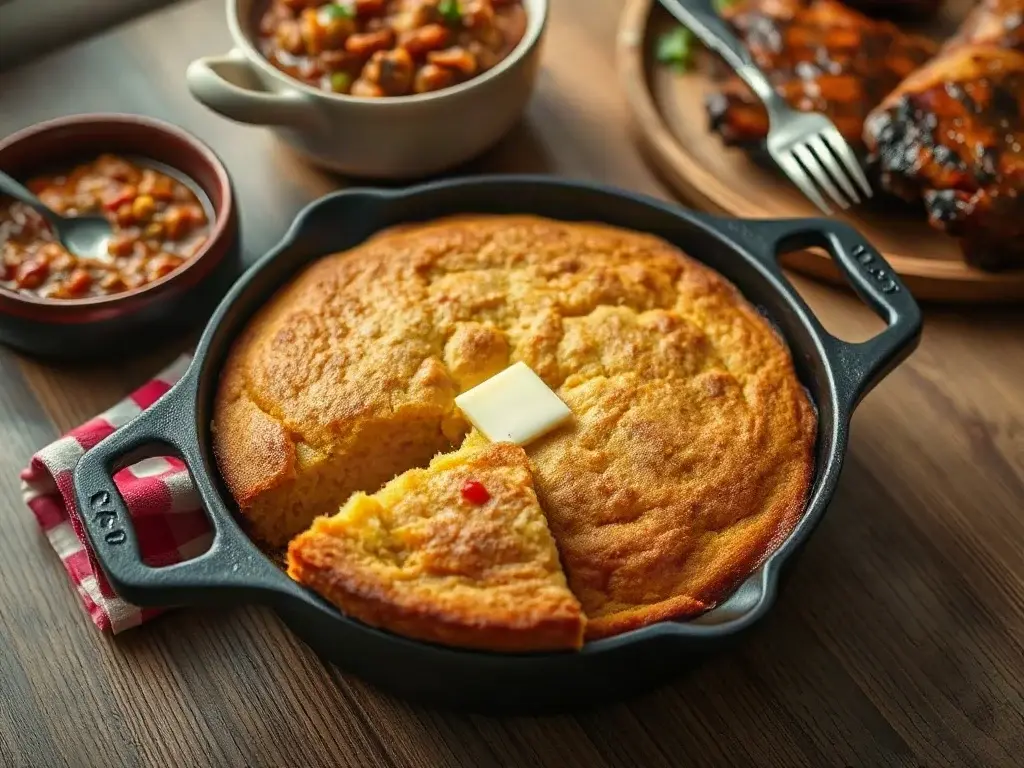
Southern cornbread is judged by its crust, its crumb and its restraint. Baked in a preheated cast iron skillet, it becomes the standard side for a bowl of chili or a plate of ribs. This analysis looks at why the skillet matters, where cooks go wrong, and which traditions are fact and which are folklore.
What Defines Traditional Southern Cornbread
Cornbread is a quick bread built on cornmeal, itself ground from maize. It descends from early corn breads such as johnnycakes, and it sits at the center of Southern cuisine alongside grits and hushpuppies.
The common claim is that the Southern version is savory, low in sugar and often free of wheat flour. That describes a strong tendency, not a rule. Recipes vary by household and region, and anyone who says there is one authentic formula is overstating the case. The consistent element is method: hot fat, a hot pan and a batter poured into it.
Why the Cast Iron Skillet Matters
Heat Retention and Crust Formation
Cast iron holds heat well and releases it evenly. When batter hits a preheated, greased skillet, the outside sets almost immediately. That contact drives Maillard browning and produces the deep, crisp base that a thin aluminum pan or glass dish rarely matches. The crust is the main reason to bake cornbread this way.
The Fat Question
Traditional cooks heat lard, bacon drippings or oil in the skillet before adding batter. Each choice has a trade-off. Bacon fat adds flavor but may clash with a sweeter batter. Neutral oil gives a clean crunch with less character. Butter tastes good but browns faster and can burn at skillet temperatures. Pick the fat to suit what is on the table.
The Ingredients That Do the Work
A well-built batter is short on ingredients, so each one has to earn its place:
- Cornmeal: grind size sets the texture. Finer meal gives a tender crumb, and coarser meal gives a rustic, gritty bite.
- Buttermilk: its acidity tenderizes and adds tang. It also reacts with baking soda for lift.
- Leavening: baking powder, baking soda, or both, depending on how acidic the batter is.
- Eggs: they bind the batter and add richness.
As a starting point, many cooks use roughly two cups of cornmeal to about one and three-quarter cups of buttermilk, plus an egg or two. Treat these as adjustable proportions and not a fixed formula. Cornmeal brands absorb liquid differently.
Common Mistakes
- Skipping the preheat. A cold skillet gives a pale, soft bottom. Heat the pan and the fat in the oven first, until the fat shimmers.
- Overmixing. Stir only until combined. Beating the batter makes the bread tough.
- Overbaking. Cornmeal has no gluten to hold moisture, so a few extra minutes can turn the crumb dry.
- Neglecting the pan. A poorly maintained skillet makes the bread stick. A well-seasoned one releases it cleanly.
Pairing: Why Chili and Ribs
The pairing is practical as well as traditional. Chili is wet, spicy and heavy. A slice of cornbread soaks up the sauce and its mild corn sweetness tempers the heat. With ribs, it is a neutral, starchy counterweight to smoke and sauce. Sweet or cakey cornbread can fight those dishes, which is one reason purists favor the savory style.
Frequently Asked Questions
Does Southern cornbread contain sugar?
Traditionally it contains little or none, though many modern recipes add some. The choice is a matter of taste and regional habit.
Why use a cast iron skillet for cornbread?
It retains heat and builds a crisp, browned crust that lighter pans struggle to produce.
Can I make it without buttermilk?
Yes, but you lose some tang and tenderness. Soured milk can approximate it, with a slightly different result.
The Real Test of the Skillet
The central lesson is that cornbread is a technique problem more than a recipe problem. The ingredients are cheap and nearly interchangeable. The difference between ordinary and excellent comes from a hot pan, the right fat and restraint in mixing. That is why the tradition has outlasted countless variations.
The open question is whether regional purism can survive as sweeter, cake-style versions become the commercial default. Watch for how home cooks respond, particularly as interest in cast iron and from-scratch cooking continues. The skillet is easy to buy, but the habits around it are the part that has to be passed down.
Frequently Asked Questions
How do I know the skillet and fat are hot enough before adding the batter?
Heat the empty skillet with the fat in the oven until the fat shimmers. When the batter hits the pan, it should sizzle right away. That immediate contact sets the outside and builds the crisp, browned crust. A cold or lukewarm pan gives a pale, soft bottom.
Which fat gives the best result: bacon drippings, lard, oil or butter?
None is best in every case. Bacon fat adds flavor but can clash with a sweeter batter. Neutral oil gives a clean crunch with less character. Butter tastes good but browns faster and can burn at skillet temperatures. Choose the fat to suit the dishes you are serving.
Why does my cornbread turn out dry or tough?
The usual causes are overbaking and overmixing. Cornmeal has no gluten to hold moisture, so a few extra minutes in the oven can dry the crumb. Beating the batter also makes the bread tough. Stir only until the ingredients are just combined.
Does the grind of the cornmeal change the cornbread?
Yes. Grind size sets the texture: finer meal gives a tender crumb, while coarser meal gives a rustic, gritty bite. Brands also absorb liquid differently, so treat the usual proportions as a starting point and adjust the buttermilk to get the right batter consistency.
Why does cornbread stick to my cast iron skillet?
Sticking usually points to a poorly maintained pan. A well-seasoned skillet releases the bread cleanly. Preheating the pan and the fat until shimmering also helps, because the crust sets quickly and lifts away instead of gluing itself to bare metal.
Is there only one authentic Southern cornbread recipe?
No. Savory, low-sugar and often wheat-free describes a strong tendency, not a rule. Recipes vary by household and region. What stays consistent is the method: hot fat, a hot pan and batter poured straight into it.