
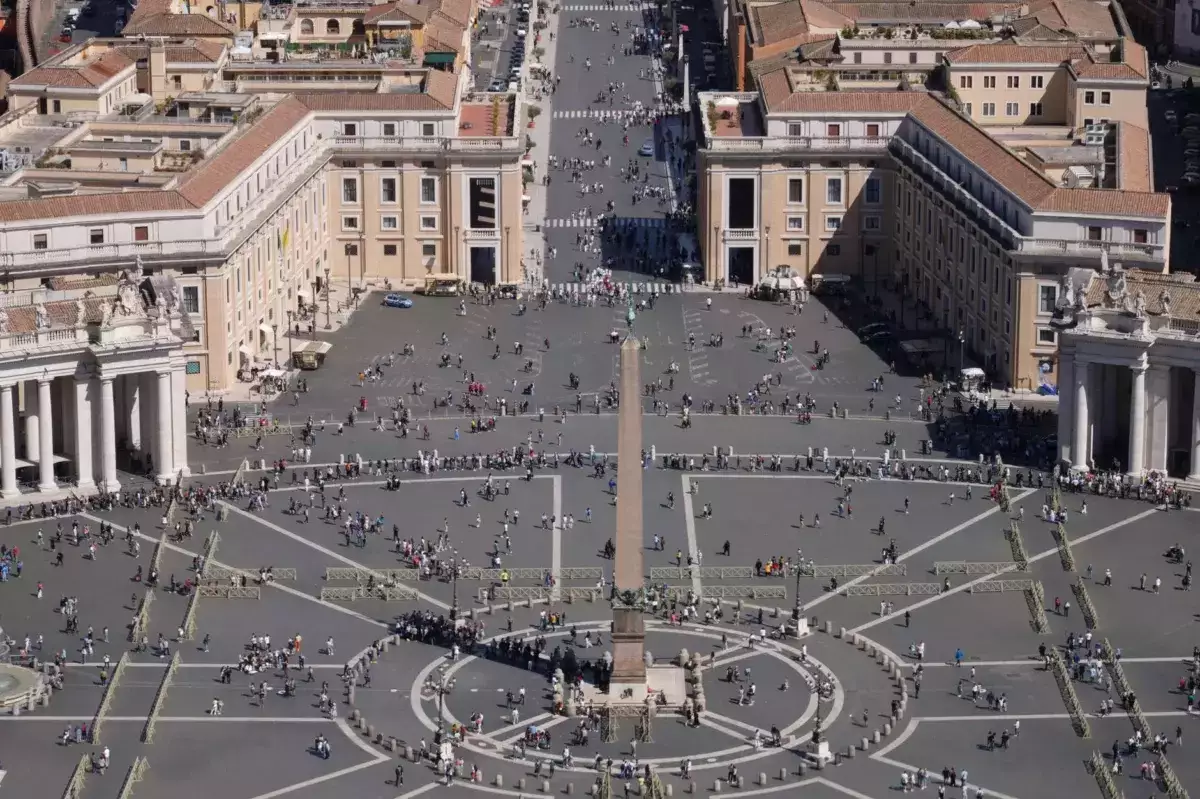
When the Pope Leo XIV open-air Mass in Paris drew more than 800,000 people into the heart of the city, it became more than a liturgical celebration on a busy weekend. According to Vatican estimates, it was a public act of faith on a scale that few modern cities can absorb without feeling transformed. The scene joined the language of the Catholic Church with the living rhythm of the Mass, placing worship in the middle of Paris, a city shaped by memory, politics, and laïcité. In that moment, the city was not just a backdrop; it became part of the message.
Why the Paris Mass mattered so much
Large papal liturgies are never only about attendance. They are about visibility, shared identity, and the Church’s willingness to pray in front of the world. When a pope presides over an outdoor Eucharist, the Eucharist is no longer enclosed by stone walls alone; it enters the civic imagination. That is why the event resonated far beyond the faithful who came to pray. It spoke to the Holy See as much as to local worshippers, and it reminded observers that the pope’s ministry is both pastoral and symbolic.
In a country such as France, where public religion often lives beside a strong tradition of secular public life, the visual force of an open-air Mass matters. It does not erase the tensions around religion in public space, nor does it solve them. But it does show that sacred ritual can still gather a crowd large enough to alter traffic, reframe a skyline, and command attention with nothing more than prayer, song, and silence.
That scale also invites caution. Crowd estimates are never perfectly precise, and the number itself is not the whole story. Yet a Vatican estimate of 800,000 suggests something undeniably rare: an act of worship that crossed from ecclesial event into civic phenomenon. In the language of Roman Catholicism, that is not spectacle for its own sake. It is a public witness that says faith still belongs in the open square.
Lourdes turned the visit from spectacle into pilgrimage
If Paris represented public visibility, Lourdes gave the visit its spiritual depth. By praying at the Grotto of Massabielle, the pope stood at one of the most recognizable pilgrimage sites in the world. The place is closely tied to Our Lady of Lourdes and to the testimony of Bernadette Soubirous, whose reported apparitions transformed a quiet corner of southern France into a destination for prayer, healing, and reflection.
That is the power of pilgrimage: it changes the meaning of travel. A journey to Lourdes is never only about geography; it is about interior movement. Pilgrims arrive with grief, gratitude, hope, and sometimes fear. They come for the water, the ritual, the rosary, the candles, and the possibility that suffering can be faced without being denied. In that sense, the pope’s prayer there shifted the weekend from a large public liturgy into a quieter and more intimate act of accompaniment.
The second day of the pope’s apostolic journey to France therefore carried two complementary meanings: Paris showed the Church speaking publicly, and Lourdes showed it kneeling with the wounded. Together, they formed a coherent pastoral picture.
What the numbers and symbolism suggest
A crowd of this size reveals both opportunity and challenge for the Church. Public worship can inspire people who may never have entered a parish on their own. It can also create expectations that are difficult to sustain once the cameras leave. The real test is whether the emotion of the day becomes discipleship later.
- Will local parishes welcome new visitors who were drawn by the event?
- Will Lourdes see renewed pilgrim interest beyond the weekend headlines?
- Will dioceses use the moment to deepen catechesis, charity, and vocations?
For church leaders, these are not abstract questions. They determine whether a massive open-air Mass becomes a passing memory or a durable pastoral moment. That is why the setting matters so much. A liturgy in central Paris can speak to the culture; a prayer at Lourdes can speak to the soul. Together, they suggest that Catholic witness still moves most powerfully when it joins public visibility with private mercy.
Frequently asked questions
Why is Lourdes so important to Catholics?
Lourdes is important because it combines Marian devotion, healing devotion, and the enduring story of Bernadette Soubirous. For many Catholics, it is one of the clearest places where faith, suffering, and hope meet in a single location.
What is an apostolic journey?
An apostolic journey is a papal trip outside the Vatican for pastoral, liturgical, or diplomatic purposes. These visits often mix public worship, encouragement for local churches, and gestures of solidarity with communities.
Why do open-air papal Masses draw such huge crowds?
They offer a rare chance to see the pope in person and participate in a communal act of worship on a historic scale. For many attendees, the atmosphere itself becomes part of the spiritual experience.
What this weekend may signal next
The most important question is not whether the crowd was huge; it is whether the moment will endure. In a Europe that often debates the place of religion in public life, the event showed that faith can still gather mass attention without surrendering its sacramental core. That is a powerful sign, but it is also a challenge: if the Church wants this kind of visibility to matter, it must turn awe into welcome, and welcome into lasting renewal.
What readers should watch next is not only the next papal visit, but the next local response: the parish doors opened, the pilgrimages renewed, the young people who stayed, the sick who came to Lourdes, and the communities that decide to build on what they saw. The unanswered question is quietly profound: can a public Mass still become a doorway to conversion, or will it remain only a breathtaking image? The answer may determine how the Church speaks in public for years to come.
Frequently Asked Questions
Why did the open-air Mass in Paris attract so much attention beyond Catholic circles?
Because it was not just a church event, but a public act of faith in the center of a major secular capital. The scale of the gathering, the visibility of the pope, and the setting in a city shaped by laïcité made it symbolic well beyond Catholic worship. It touched questions about religion, public space, and national identity.
Was the reported crowd size of 800,000 officially confirmed?
The article notes that the figure came from Vatican estimates, which means it should be read as an informed estimate rather than an exact count. Large outdoor religious events are difficult to measure precisely, but even allowing for some uncertainty, the attendance was clearly extraordinary and enough to make the liturgy a civic-scale event.
Why is Lourdes considered so important after the Paris Mass?
Lourdes shifts the emphasis from public visibility to spiritual depth. It is one of the world’s best-known pilgrimage sites, linked to Our Lady of Lourdes and Bernadette Soubirous. By praying there, the pope connected the weekend’s large-scale public witness with a place associated with healing, suffering, and intimate devotion.
What is the significance of holding a Mass outdoors instead of in a church?
An outdoor Mass places the liturgy into everyday civic life, making it visible to believers and non-believers alike. It can turn worship into a shared public moment rather than a private religious gathering. In this case, the open-air setting in Paris helped frame the Eucharist as a message addressed to the city itself.
Does a huge papal event like this automatically lead to lasting religious renewal?
Not necessarily. The article suggests that large events can inspire interest, but their long-term impact depends on what happens afterward. Local parishes, dioceses, and pilgrimage sites must turn the momentum into catechesis, charity, prayer, and vocations. Otherwise, the emotional intensity may fade once the event ends.