
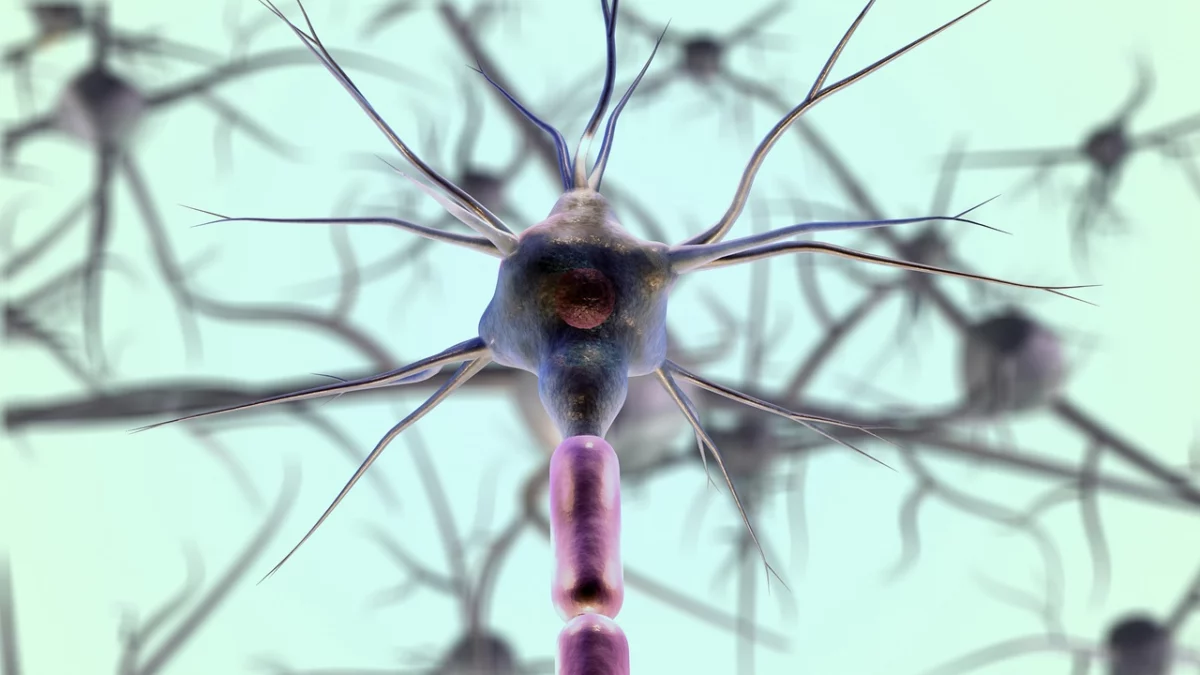
When the Nobel Prize in Physiology or Medicine recognized optogenetics, it celebrated a rare scientific achievement: the ability to control neurons with flashes of light. That deceptively simple idea, developed through the work of Karl Deisseroth, Peter Hegemann and Georg Nagel, has changed how researchers think about the brain, neuroscience and even the future of medicine. In one stroke, light-controlled neurons turned neural activity from something only observed into something that can be switched, measured and tested with exquisite precision.
What optogenetics actually does
At its core, optogenetics is a marriage of genetics and optics. Scientists introduce a gene for a light-sensitive protein, often channelrhodopsin, into a carefully chosen set of cells. When those cells receive a pulse of blue or other tuned light, ions move across the membrane and the neuron fires an action potential. For the first time, a researcher can activate, silence or modulate a specific circuit with timing measured in milliseconds rather than seconds or minutes.
That is why the method feels so revolutionary. Traditional tools such as drugs and electrodes often affect broad regions. Optogenetics can aim much more narrowly. It lets scientists ask not just what happens in the brain, but which exact cell population causes the effect.
Optogenetics changed neuroscience from watching the storm to steering it.
The light switch inside a neuron
To deliver the new protein, researchers often rely on a viral vector or another gene therapy approach. The technical challenge is not simply getting the gene into tissue, but ensuring it reaches the right cell type and stays active long enough to be useful. In the retina, where light naturally enters the body, that logic is especially powerful. In deeper parts of the brain, the engineering becomes far more complicated.
Why the Nobel Prize mattered
The Nobel Prize in Physiology or Medicine is not awarded for hype; it usually honors ideas that permanently alter the scientific landscape. The official Nobel Prize overview at the Nobel Prize in Physiology or Medicine reflects that optogenetics is not merely a clever trick, but a platform. It gives neuroscientists a way to test cause and effect in a living system, which is much harder than simply observing correlation.
That shift matters because many of medicine’s hardest questions are causal questions. If one circuit is activated, does behavior change? If another is quieted, does fear soften or memory improve? By illuminating those pathways, optogenetics has become a kind of molecular flashlight for the mind.
The promise is especially compelling for conditions such as blindness, depression and dementia, including Alzheimer’s disease. But the excitement should be tempered by realism: these disorders are biologically distinct, and a tool that is elegant in the lab does not automatically become a therapy in the clinic.
Where the promise is real, and where it is still fragile
The strongest near-term value of optogenetics remains in research. It helps scientists map neural circuits, probe perception and study how patterns of firing relate to movement, reward and memory. In that sense, it is as important to modern neuroscience as microscopy was to cell biology: it reveals structure, but also action.
- Precision: only targeted cells respond.
- Speed: light can change activity almost instantly.
- Insight: researchers can prove which circuit causes a behavior.
- Limit: human therapy still faces delivery, safety and durability barriers.
Vision is one of the most discussed medical targets because the eye is comparatively accessible and the retina is already a layered neural tissue built to process light. That makes some forms of retinal restoration more plausible than interventions deep inside the brain. Even so, restoring light sensitivity is not the same as restoring sight. The brain must still learn how to interpret the incoming signal.
The hard engineering problem behind a beautiful idea
Optogenetics is elegant in principle and stubborn in practice. Light scatters in tissue. Implants can be invasive. Genetic delivery must be safe, repeatable and precise. Any future clinical trial will need to answer a difficult question: do the benefits of targeting a tiny neural population outweigh the risks of altering living cells with light-sensitive proteins?
That is why comparisons with deep brain stimulation are useful. Both approaches aim for neural precision, but they do so in different ways. Optogenetics promises finer cell-type specificity, while deep brain stimulation already has a clinical foothold in some disorders. The future may not belong to one tool alone, but to combinations of surgery, gene delivery, imaging and stimulation tailored to a disease’s biology.
What readers should watch next
Three developments will shape the next chapter. First, researchers are improving light-sensitive proteins so they respond to longer wavelengths that travel farther through tissue. Second, engineers are designing smaller, wireless light-delivery systems. Third, scientists are learning how to target the right cells more selectively, which is essential if optogenetics is ever to move beyond the lab.
If those advances mature, optogenetics could become part of a broader toolkit for precision medicine, alongside imaging, biomarkers and future gene-based therapies. The deeper lesson is not simply that neurons can be switched on and off. It is that the nervous system may one day be treated as a programmable biological circuit, with light as one of its languages.
FAQ
How does optogenetics work?
Scientists insert a gene for a light-sensitive protein into selected cells. When the correct wavelength of light reaches those cells, the protein changes shape and alters ion flow, which can trigger or silence a neuron.
Can optogenetics cure blindness?
Not yet, and perhaps not in a single universal way. It may help some forms of retinal disease, but restoring usable vision requires more than light sensitivity alone. The right cells must be targeted, and the brain must interpret the signal correctly.
Why is optogenetics important for depression and dementia research?
Because it lets scientists test whether specific circuits influence mood, memory or behavior. That kind of causal evidence is invaluable for diseases that involve many overlapping pathways, including depression and Alzheimer’s disease.
The next question for light-based medicine
The most important insight is that optogenetics did not just give neuroscience a new gadget; it gave it a new grammar. The real question now is not whether light can control neurons, but how safely and elegantly that control can be translated into therapy for people. If the coming years bring smaller devices, smarter proteins and cleaner delivery systems, the Nobel-winning science may move from laboratory brilliance to clinical possibility. The open question is beautifully simple: when biology can be written in light, which diseases will yield first, and which will still resist the beam?
Frequently Asked Questions
Why is optogenetics considered more precise than drugs or electrodes?
Drugs usually spread through broad areas and can affect many cell types at once, while electrodes stimulate or record in a more limited but still less selective way. Optogenetics is more precise because the light-sensitive gene can be placed in only certain cells, letting researchers control a very specific circuit with millisecond timing.
If optogenetics can control neurons so accurately, why isn’t it already a common treatment?
The main obstacle is delivery, not the light itself. Scientists must get the gene into the right cells, keep it active safely, and make sure the light reaches the target tissue without damaging anything. These engineering and biological constraints are especially hard in deep brain regions, so most uses are still in research.
Why is the retina considered a more realistic target than deep brain tissue?
The retina is closer to the body surface and is naturally designed to process light, which makes it easier to reach with therapy. Deep brain areas are harder to access without invasive procedures. Even so, restoring light sensitivity in the eye is not the same as restoring full vision, because the brain must interpret the signal correctly.
What exactly did the Nobel Prize recognize in optogenetics?
The prize recognized a platform that changed neuroscience from mainly observing brain activity to actively testing cause and effect. By making it possible to switch specific neurons on or off with light, optogenetics gave scientists a way to link precise cell populations to behavior, memory, movement and other brain functions.
Could optogenetics help with diseases like depression, dementia or blindness?
Potentially, but with very different levels of readiness. It is especially promising for vision-related disorders because the eye is more accessible. For depression or dementia, the biology is more complex and the required brain targeting is harder. For now, its biggest impact is still in research rather than routine therapy.