
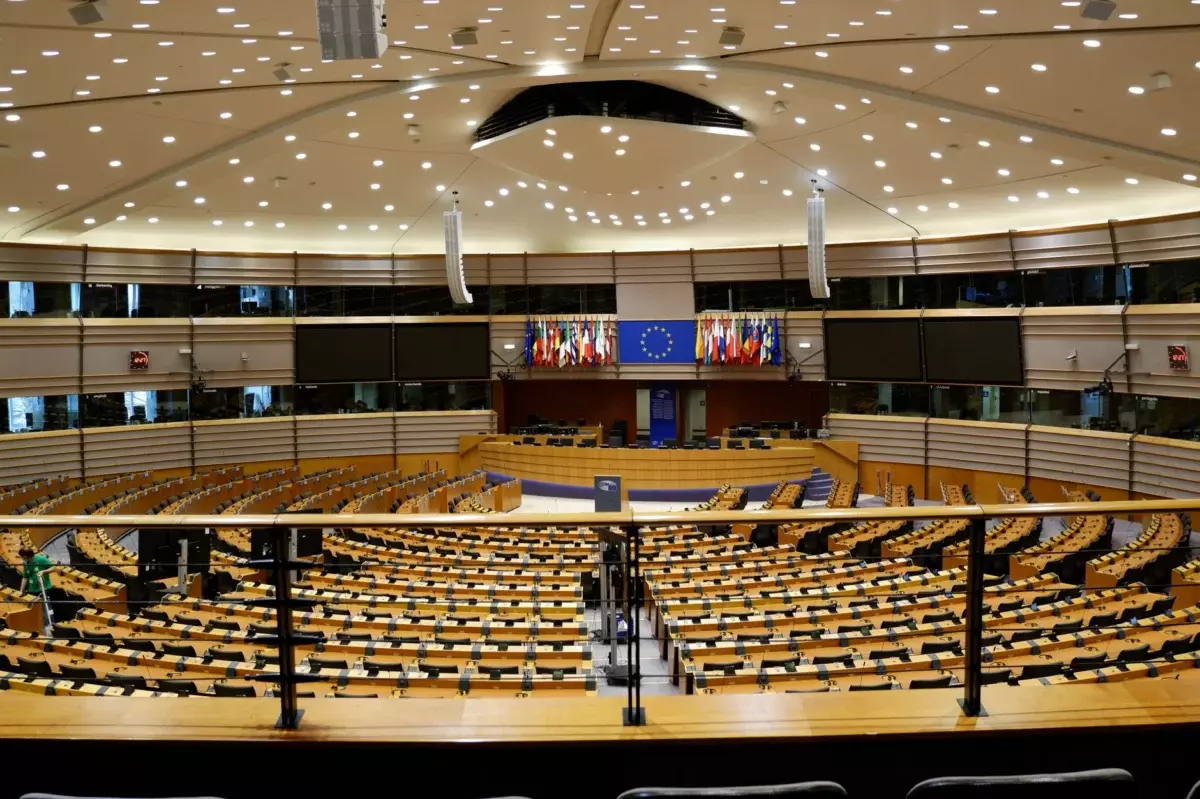
EU strategic autonomy was never meant to be a slogan; it was a response to shock. When Ursula von der Leyen delivered her State of the Union address at the European Parliament a year ago, she described a Europe boxed in by Russian aggression, unreliable allies, and industrial weakness. The backdrop was stark: Russian drones had crossed into Poland, NATO looked more political than ever, and Donald Trump was again challenging the assumptions that have long underpinned the transatlantic order. In that climate, the European Commission was trying to persuade the European Union that survival now meant acting like a power, not a marketplace.
A year later, the verdict is neither triumph nor failure. Europe has moved in ways that would have seemed slow only yesterday: tighter defence coordination, sharper digital rules, a more assertive industrial agenda, and a clearer language of resilience. But the larger test remains brutal in its simplicity. Can Europe make decisions fast enough, at scale, before the next crisis exposes the gap between ambition and capacity?
“Europe, she said, was in a fight — and this was its independence moment.”
What the independence moment really meant
In Brussels, language matters. The phrase strategic autonomy does not mean isolation, nor does it mean pretending the United States is irrelevant. It means reducing dangerous dependencies where they matter most: defence, energy, critical technology, and finance. That idea has circulated for years, but the war in Ukraine, supply-chain shocks, and geopolitical coercion have turned it from theory into necessity. The deeper debate is not whether Europe should be stronger; it is whether the union can become stronger without losing the consensus-driven habits that define it.
That is why this story is about institutions as much as policy. The European Council can set direction, the Commission can draft and coordinate, and the Parliament can legitimise and amend, but none of them can compensate for national hesitation if the member states refuse to invest political capital. Read alongside the official material on the European Commission website and the European Parliament‘s own pages, the pattern is clear: Europe has ideas, but power still depends on implementation.
Where Europe has made real progress
Defence is no longer a side topic
For decades, security policy sat beneath the shadow of NATO. That has not changed, but it has become more complicated. Europe has pushed harder on joint procurement, readiness, and industrial capacity through tools such as the European Defence Fund and the European Defence Agency. The achievement is not that Europe has become self-sufficient; it has not. The achievement is that defence is now treated as a strategic system, not a budget afterthought.
The digital agenda is finally hard-edged
Europe’s regulatory power has always been one of its most underestimated assets. The Digital Services Act and the Artificial Intelligence Act are part of a broader attempt to set rules before markets harden around foreign platforms and opaque systems. Add the European Chips Act, and you see a union trying to rebuild leverage in the technologies that shape sovereignty. It is not glamorous work, but it matters. In the age of artificial intelligence, the side that writes the rules and secures the chips often decides the long game.
Energy dependence has been reduced, but not erased
The war in Ukraine forced Europe to confront the cost of dependence on Russian energy. The shift away from Moscow has been one of the most consequential changes of the last two years, and it has intersected with the European Green Deal in uneasy but important ways. Decarbonisation is still the long-term destination, but energy security has become a present-tense policy. Sanctions on Russia also matter here: they are not a substitute for strategy, but they are a signal that Europe is willing to use economic power as geopolitical power.
Where the cracks are still visible
Europe’s biggest weakness is not lack of vision; it is fragmentation. A single market still faces national vetoes, uneven industrial capacity, and conflicting fiscal instincts. The union can agree on the necessity of resilience, yet struggle over who pays, who builds, and who decides. That is especially true in areas like defence manufacturing, infrastructure, and enlargement, where the logic of the whole collides with the politics of each capital.
Enlargement of the bloc is a perfect example. The prospect of new members can strengthen Europe’s strategic depth, but it also raises the question of whether the current institutions are fit for a larger, more exposed union. Likewise, the European single market remains a gigantic asset, yet one that still does not move with the speed of the United States or China. That matters because strategic autonomy without economic dynamism is only rhetoric with better branding.
What to watch next
The next phase will be judged less by speeches than by execution. Watch whether defence spending becomes more joint and more industrially coherent. Watch whether digital rules are enforced with the same confidence with which they are announced. Watch whether member states can align around energy, infrastructure, and capital-market reform instead of reverting to old national habits. And watch whether Europe can keep its transatlantic partnership strong without mistaking dependence for friendship.
FAQ: Europe, power, and strategic autonomy
What does strategic autonomy mean for the EU?
It means building enough capacity to act independently in critical areas such as defence, technology, and energy, while still cooperating with allies.
Is Europe becoming less dependent on the United States?
Only partially. Europe has improved its resilience, but it still relies heavily on American military power, technology, and political leadership inside NATO.
Why was the 2024 State of the Union speech so important?
Because it framed Europe’s response to war, instability, and industrial pressure as a single strategic question rather than a set of separate crises.
The most important insight is that Europe is winning only where it turns language into institutions, money, and enforceable rules. That is slower than a rallying cry, but it is the only kind of victory that lasts. The unanswered question is whether the union can keep this momentum when the emergency atmosphere fades and the political cost of compromise returns. If it can, the next year may look less like a fight for survival and more like the first credible chapter of European power.
Frequently Asked Questions
Does EU strategic autonomy mean Europe wants to replace NATO or distance itself from the United States?
No. In the article, strategic autonomy is presented as reducing dangerous dependencies, not cutting ties with allies. The goal is to give Europe more room to act in defence, energy, technology, and finance when partners are unreliable or distracted, while still keeping the transatlantic relationship and NATO relevant.
Why is defence suddenly treated as central to strategic autonomy if NATO still exists?
Because NATO does not solve every European vulnerability, especially industrial capacity, procurement speed, and readiness. The article argues that Europe is now treating defence as a strategic system rather than a budgetary afterthought, using tools like the European Defence Fund and the European Defence Agency to strengthen coordination and production.
How do digital rules like the DSA and AI Act relate to Europe’s geopolitical power?
They matter because rules shape markets before dominant foreign platforms and AI systems become entrenched. By setting standards early, Europe can influence how technologies are built and used, protect users, and preserve leverage over critical digital infrastructure. In this sense, regulation becomes a form of power, not just consumer protection.
If Europe has made progress, why does the article say the verdict is neither triumph nor failure?
Because progress is real but incomplete. Europe has advanced in defence, digital regulation, and energy diversification, yet the deeper challenge is execution at scale and speed. The article stresses that institutions can propose and coordinate, but member states still need to invest political capital and act quickly before the next crisis hits.
Why is energy security still a problem if Europe has reduced dependence on Russian energy?
Reduced dependence does not mean full resilience. Europe has diversified away from Russia, but it remains exposed to price shocks, supply constraints, and the difficulty of balancing decarbonisation with security. The article suggests that energy autonomy is a moving target: the transition away from one dependence can expose others if not managed carefully.