
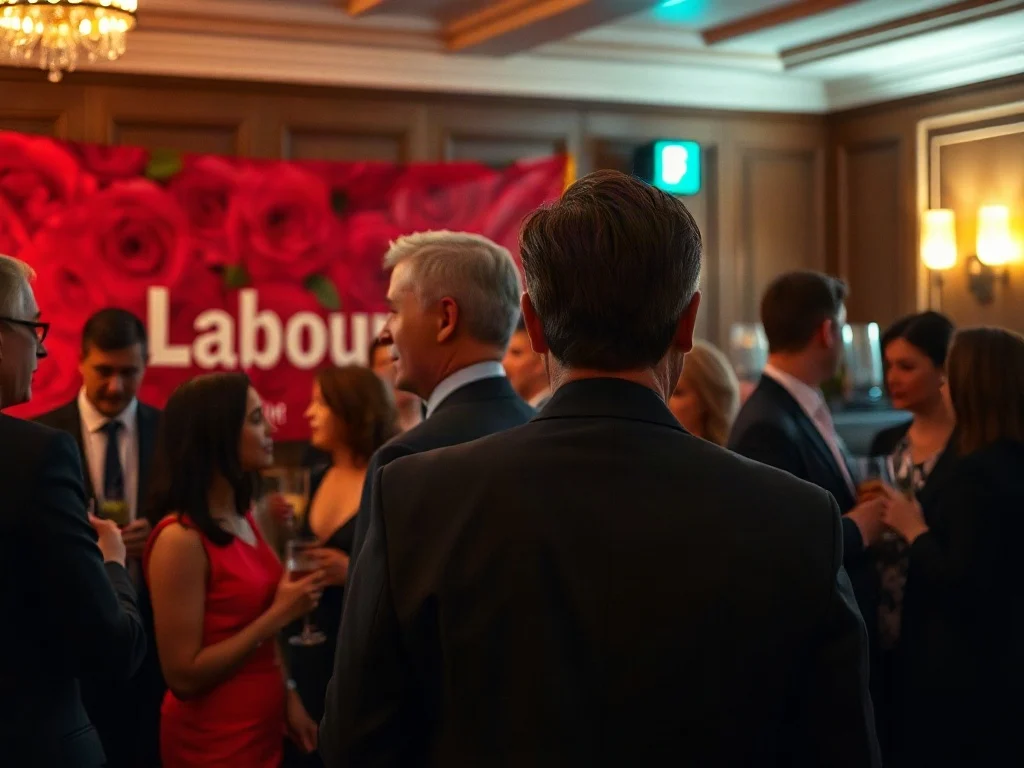
A single photograph, a few sardonic lines of commentary and a hashtag-ready sense of scandal: that is all it took for the Alex Davies-Jones Labour fundraiser episode to travel across political social media. According to a short report circulating online, the minister with responsibility for tackling violence against women and girls was pictured kissing Charlotte Hennessy, lead campaigner for the Hillsborough Law Now campaign, at a Labour party fundraising event. The report’s verdict was dripping with irony: “Nothing to see here…”
Is there really nothing to see? This article takes the claim apart carefully. It separates what the report actually says from what it implies, and it explains why the image resonated so strongly with a public already wary of politicians. It also looks at the standards that govern ministers at party events, and at why a campaign as emotionally significant as Hillsborough is so exposed to reputational spillover.
What the Report Actually Claims
The facts in the original item are thin. It describes a photograph in which Alex Davies-Jones, the Labour MP and minister, is kissing Charlotte Hennessy at a Labour fundraiser. It identifies Hennessy as the lead campaigner for Hillsborough Law Now. It also places the image in a broader and openly satirical narrative about a government that, in the author’s words, has delivered “21st century government, again”. The same passage refers to influencers performing a crude song outside 10 Downing Street and to ministers misbehaving at “drunken events“.
Several points deserve emphasis:
- The report is a commentary piece, not a formal investigation. Its tone is mocking and partisan.
- It does not cite any complaint, regulatory finding or official statement.
- It does not establish any breach of rules. The implication of impropriety rests on tone and juxtaposition, not on documented wrongdoing.
- Nothing in the item suggests that anyone involved was acting against their will. Both people are adults at a social event.
Readers should therefore treat the story as a political and reputational controversy, not a proven scandal. That distinction matters more than the headline suggests.
Why This Image Cuts Through: The Roles Involved
A Minister Tasked With Protecting Women and Girls
Davies-Jones represents Pontypridd and serves in the Ministry of Justice, with a brief covering victims and tackling violence against women and girls. Her portfolio is serious, and opponents routinely use a minister’s portfolio as a yardstick for scrutinising her personal conduct. The report’s framing links the image to that role, even though a consensual kiss between adults at a party event has no logical connection to her policy responsibilities.
A Campaigner Carrying the Weight of Hillsborough
The second figure matters even more. The Hillsborough disaster of 15 April 1989 killed 97 football supporters at a match in Sheffield. The aftermath became one of the longest quests for accountability in modern British history. The Hillsborough Independent Panel reported in 2012 on the disaster and the subsequent response by public bodies. Later inquests returned a verdict of unlawful killing.
The campaign for a Hillsborough Law centres on a legal duty of candour for public officials, so that bereaved families never again have to fight institutions that obstruct the truth. A campaigner who leads that effort carries moral authority that is deeply personal for the families and survivors involved. Any image that appears to blur the line between campaigner and party insider will be scrutinised through that lens.
The Rules: What Governs Ministers at Party Events
Ministers are not forbidden from attending party political events. Fundraisers are a normal part of Labour Party life, as they are for every major party. What constrains ministers is a framework of principles and guidance.
The Ministerial Code
The Ministerial Code sets out the standards of conduct expected of ministers. It is published by the government, and the current version is available on GOV.UK. It requires ministers to uphold the Seven Principles of Public Life, often called the Nolan Principles: selflessness, integrity, objectivity, accountability, openness, honesty and leadership. It also requires ministers to avoid conflicts of interest and to keep party political activity separate from official duties.
Who Judges Alleged Breaches?
Allegations of breaches are matters for the Prime Minister, advised by the Independent Adviser on Ministers’ Interests. The adviser’s role is limited, and the Prime Minister ultimately decides how to respond. Whether a personal moment at a social function could amount to a breach is doubtful on the facts in the report. Nothing indicates misuse of office, an undeclared interest or any improper exchange. A judgement and optics argument is a different matter, and it belongs to politics rather than to rules.
The Real Question: Perception, Not Proof
The episode is best understood as a case study in how political perception works. Consider the three layers at play.
Layer One: The Image
Photographs of public figures in intimate moments are potent because they need no explanation. They invite viewers to fill in the story. A caption such as “Nothing to see here…” is a rhetorical nudge: it tells readers there is something to see, while leaving the specifics unstated.
Layer Two: The Framing
The report bundles the photograph with other grievances, including influencers’ antics outside Downing Street and ministers at “drunken events”. This is a classic technique in tabloid-style political commentary. Unrelated incidents are stacked to build a cumulative portrait of a government lacking seriousness. Each item might be trivial alone, but together they form a narrative.
Layer Three: The Politics
Governments that arrive promising integrity and change are held to higher standards. Labour campaigned heavily on restoring trust under Keir Starmer, so opponents are quick to seize on any incident that suggests laxity. It is a pattern seen in every administration, and the broader category of political scandal often runs on atmosphere rather than evidence.
The Privacy Counterargument
There is a strong case against treating the photograph as news at all. Adults, including politicians, have a legitimate expectation of privacy in their private lives. A kiss at a party does not obviously touch the public interest unless it reveals a conflict of interest, an abuse of power or hypocrisy about a stated policy.
Critics of the coverage might add the following points:
- The portfolio of a minister does not strip her of a private life.
- A campaigner’s personal conduct is not a measure of her campaign’s merit.
- Mocking commentary risks distracting from substantive questions about legislation and accountability.
Defenders of the coverage might respond that a fundraiser is a political event, that attendees pay to access ministers, and that the closeness of campaigners to government is a legitimate subject of scrutiny. Both positions have merit, and the answer depends on whether any substantive issue lies beneath the image.
What Campaigners and Ministers Should Learn
For Campaigners
Independent campaigns derive power from distance. A group seeking legislative change must be seen as answerable only to the people it represents, not to the party in government. Best practice for campaign leaders includes:
- Declaring any party event attendance clearly and consistently.
- Separating personal relationships from the campaign’s public communications.
- Preparing a short, factual response in case an image goes viral.
- Keeping the focus on the families and the legislative text, not the personalities.
For Ministers and Their Offices
Ministers operating at party events live in a world where every attendee carries a camera. Sensible practice includes a clear understanding of which events are official and which are party functions, awareness of who is present, and a communications plan for the inevitable moment a private interaction becomes public. Most reputational damage comes not from the incident itself but from a slow, defensive or contradictory response.
How to Read Stories Like This One
Readers should weigh three tests before drawing conclusions:
- Source: Is the item reporting verified facts or offering opinion dressed as news?
- Substance: Does it identify a specific rule broken, a conflict of interest, or harm done?
- Proportion: Is the attention commensurate with the evidence, or is it driven by novelty and ridicule?
Applying these tests to the Alex Davies-Jones fundraiser story, the answer is that the claim is thin on substance and heavy on insinuation. That does not mean it is meaningless. It means its significance is political rather than regulatory.
Frequently Asked Questions
Who is Alex Davies-Jones?
She is the Labour MP for Pontypridd and a minister in the Ministry of Justice whose responsibilities include victims and violence against women and girls.
What is Hillsborough Law Now?
It is a campaign calling for legislation, often called the Hillsborough Law, that would impose a legal duty of candour on public officials and ensure bereaved families are not left to fight for the truth alone. Readers should check current parliamentary records for the legislation’s status.
Did the minister break the Ministerial Code?
The report does not allege a specific breach, and no formal finding has been cited. Attending a party fundraiser is not in itself prohibited.
Why does a fundraiser photo become news?
Because of the combination of a high-profile ministerial brief, a symbolic campaign and a government that has staked its reputation on trust and integrity.
The Question Hovering Beyond the Photograph
The most important insight from this episode is that political damage rarely depends on proof. It depends on whether a story fits a narrative that audiences are already primed to believe. A government accused of carelessness will find that every awkward image is read as confirmation. That is why the reputational risk lies less in the kiss itself than in the pattern a series of such images might build.
For readers, the more meaningful matter is the one the photograph risks obscuring: the fate of the Hillsborough Law and the promise of a legal duty of candour. Watch how the government handles that legislation, how closely campaigners stay independent from party machinery, and whether the next wave of commentary addresses substance rather than spectacle. If this story fades within days, it will have been a footnote. If it hardens into shorthand for a government at ease with itself, it could matter far more than anyone at that fundraiser intended. The unanswered question is whether voters will judge this government by its photographs or by its record on accountability.
Frequently Asked Questions
Does the report prove that Alex Davies-Jones broke any rules?
No. The item is a mocking commentary piece, not an investigation. It cites no complaint, regulatory finding or official statement, and it documents no breach of the Ministerial Code. Any suggestion of impropriety rests on tone and juxtaposition rather than evidence, so it should be read as a reputational controversy.
Why does the photo attract more attention because of Davies-Jones's ministerial brief?
She serves in the Ministry of Justice with responsibility for victims and for tackling violence against women and girls. Opponents often use a minister's portfolio as a yardstick for her personal conduct. Logically, a consensual kiss between adults has no bearing on policy, but the framing still creates a perceived contrast.
Why is the involvement of a Hillsborough Law Now campaigner so sensitive?
The Hillsborough disaster killed 97 supporters in 1989 and led to a decades-long fight for accountability. A campaigner leading the push for a legal duty of candour carries deep moral authority for families. Any image suggesting she is a party insider can therefore be scrutinised more intensely.
Are ministers allowed to attend party fundraisers like this one?
Yes. Ministers may attend party political events, and fundraisers are a normal part of life for every major party. They are constrained not by a ban but by a framework of principles and guidance, chiefly the Ministerial Code, which sets expected standards of conduct.
What is the Hillsborough Law that the campaign is pushing for?
The proposed Hillsborough Law centres on a legal duty of candour for public officials. The aim is to ensure bereaved families never again have to battle institutions that obstruct the truth, as families affected by Hillsborough did for decades before the 2012 Independent Panel report and later unlawful killing verdicts.
Should readers treat this story as a scandal?
Cautiously. The facts are thin: one photograph, identification of two adults at a social event, and no suggestion anyone acted against their will. The piece is partisan and satirical, bundling the image with unrelated jibes. It is better viewed as a political and reputational row than a proven scandal.