
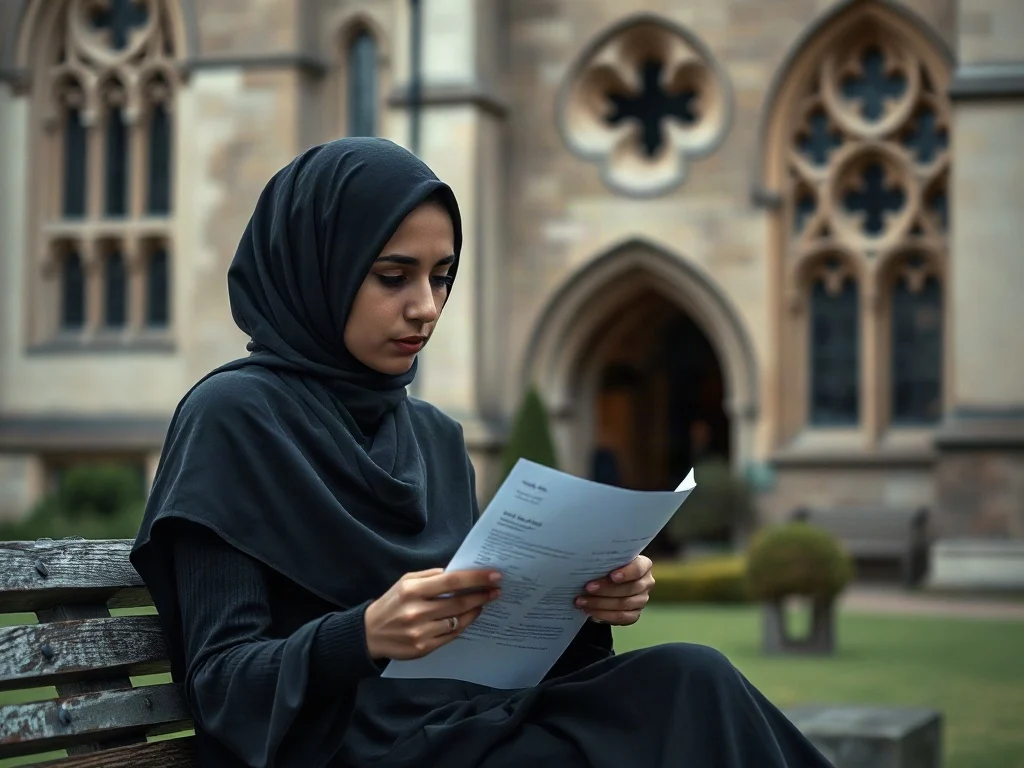
For Afghan women with UK university visas now out of reach, an offer letter has turned into a promise that cannot be kept. In March this year, the Home Office announced an emergency visa brake on study visas for applicants from Afghanistan. Women who had won places at British universities, and who describe themselves as ‘heartbroken’, are now stuck. This article explains what the policy means, why the stakes are unusually high for this group, and what the evidence does and does not tell us.
What the UK emergency visa brake on Afghanistan actually does
A visa brake is a pause on a category of applications, not a change to the underlying immigration rules. Applicants who meet every requirement for a travel visa can still be refused because of their nationality. The only details confirmed in the reporting are the March announcement and its target: study visas for Afghan applicants. Government statements on such measures usually cite the need to prevent misuse of the study route. Readers should check the current guidance on the official GOV.UK student visa page, because the details of a temporary measure can change.
Why Afghan women are affected differently
Since the fall of Kabul in 2021, the Taliban have progressively restricted women in Afghanistan. Girls have been barred from secondary school, and in December 2022 women were barred from universities. The result is a near-total closure of education in Afghanistan for women beyond primary level. Some UN officials and legal scholars describe this as gender apartheid, though the term is still debated in law.
For most applicants, a rejected visa means choosing another university or another year. For a young Afghan woman, studying abroad may be the only route to higher education at all. A nationality-based pause therefore lands hardest on people who have no domestic alternative.
The policy tension: border control versus protection
The likely government rationale
Governments facing political pressure over immigration to the United Kingdom often argue that study routes can be used to enter the country and then claim asylum. Under that logic, a temporary brake protects the integrity of the system. Whether it does so effectively is an empirical question, and the available reporting does not settle it.
The critics’ case
Critics, including affected students and many in the university sector, argue that a blanket nationality rule cannot tell a genuine scholar from a person misusing the route. They also point out that the UK has publicly condemned the Taliban’s treatment of women, which makes closing a rare exit route look inconsistent. Scholarship programmes such as Chevening exist precisely to bring talented students to Britain, and a brake that catches such candidates carries a reputational cost.
Why did the UK stop study visas for Afghans?
The short answer is that the Home Office introduced a temporary ’emergency’ measure aimed at one nationality. The full rationale, the evidence behind it, and any exceptions are the points applicants and universities most need clarified. Where the government has not published detailed justification, it is fair to describe the reasoning as inferred, not confirmed.
Practical steps for affected applicants and universities
- Talk to the admissions office early. Many universities can defer an offer, which preserves the place if the situation changes.
- Get regulated immigration advice. Only advisers registered with a recognised UK regulator should give legal guidance.
- Document everything. Keep offer letters, funding confirmations and refusal notices in case rules or exceptions change.
- Explore parallel options. Scholarships and online degrees in other countries can keep academic progress alive.
- Universities should speak up. Bodies such as Universities UK can press for case-by-case exceptions.
The wider cost: lost talent
Policies that block education for talented people can feed a form of brain drain in reverse, because the skills are never developed in the first place. Afghanistan faces shortages of female doctors, teachers and midwives, and every blocked graduate deepens that gap. There is also a refugee dimension: when legal study routes close, desperate people may turn to more dangerous alternatives.
FAQ
Can Afghan women still study in the UK?
The brake applies to study visas for Afghan applicants, so new applications are heavily affected. Check current Home Office guidance, since any exceptions would be published there.
What is an emergency visa brake?
It is a temporary pause on visa applications from a defined group, introduced without changing the main immigration rules.
Will universities hold offers open?
Policies vary. Applicants should ask their university directly about deferral.
The question the visa brake leaves unanswered
The central insight is that a policy designed for border management collides with a humanitarian reality in which education itself is banned at home. The brake treats every Afghan applicant as a risk category, while the Taliban’s restrictions make this group among the least able to study anywhere else. Watch for three things: whether the Home Office publishes its evidence, whether a carve-out for women or scholarship holders emerges, and whether legal challenges test the measure. A reasonable prediction is that pressure from universities and Parliament will grow if deferred offers start expiring. The real question is whether the UK can hold that line while it also condemns the ban on women’s education.
Frequently Asked Questions
Does the visa brake mean Afghan women no longer meet the UK's study visa requirements?
No. A visa brake pauses a whole category of applications and does not change the underlying immigration rules. Applicants who meet every requirement, including an offer, funding and language ability, can still be refused solely because of their nationality.
Can a university keep my place open if I cannot get a visa now?
Many universities can defer an offer, which preserves the place if the situation changes. Contact the admissions office early, explain your circumstances, and ask in writing about deferral options and any case-by-case support the institution can offer.
Why is this policy considered harder on Afghan women than on other applicants?
Since December 2022 the Taliban have barred women from universities, and girls are excluded from secondary school. For most applicants a refusal means trying another university or year, but for many Afghan women studying abroad may be the only route to higher education.
Has the government explained why it introduced the brake?
Only the March announcement and its target, study visas for Afghan applicants, are confirmed in the reporting. Such measures are usually justified as preventing misuse of the study route, but detailed evidence has not been published, so that rationale is inferred, not confirmed.
What can affected applicants do while the brake is in place?
Keep offer letters, funding confirmations and refusal notices in case exceptions arise. Get advice only from advisers registered with a recognised UK regulator. Explore scholarships or online degrees elsewhere, and check the official GOV.UK student visa page for current guidance.
Are scholarship holders such as Chevening candidates exempt from the brake?
The reporting does not say whether any exceptions exist. Critics argue the brake could catch scholarship candidates, since a blanket nationality rule cannot distinguish genuine scholars from misuse. Applicants should check the official guidance and ask their scholarship provider or university directly.