
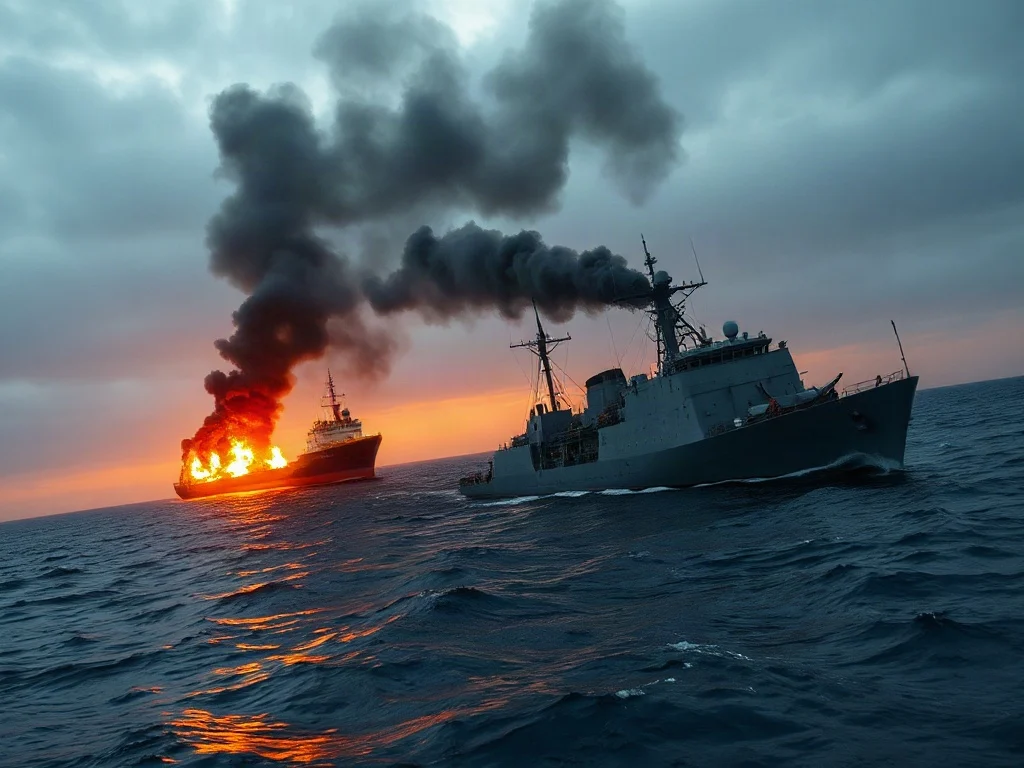
The reported Ukraine strikes on Russian ships off Libya would extend the war far beyond its usual naval theater if confirmed. Ukraine has shared video of the attacks. President Volodymyr Zelensky said a Russian warship was sunk and a Russian cargo ship was also hit. Most fighting at sea in the Russo-Ukrainian War has taken place in the Black Sea and the Sea of Azov, so a claim about the central Mediterranean needs careful reading.
What Has Actually Been Reported
The core facts are limited. Zelensky said a Russian warship was sunk and a cargo ship was hit. Ukraine released video it presents as showing the strikes, and the location is given as waters off Libya.
The available reporting does not establish several important details:
- The names and exact types of the vessels.
- The weapons or platforms used.
- The precise date and coordinates.
- Any independent confirmation of casualties or damage.
Until those gaps are filled, the Zelensky video claim of a Russian warship sunk should be treated as an official Ukrainian assertion rather than an independently verified event.
Why Would Russian Ships Be Off Libya?
The question has a plausible strategic answer. Moscow has long maintained a naval facility in Tartus, Syria, and the Russian naval presence in the Mediterranean has historically depended on supply runs across the sea. Russia has also built influence in Libya, including through the Wagner Group, which was linked to forces loyal to Khalifa Haftar during the Second Libyan Civil War.
A cargo ship in that area could be moving equipment, fuel or commercial goods. A warship could be escorting it or simply transiting. Neither role is confirmed here, so this is informed context rather than established fact about these particular vessels.
How Could Ukraine Strike Ships So Far From Home?
This is the most debated question. The reports do not say how the attack was carried out, and any explanation is speculation. What is documented is Ukraine’s earlier record against the Russian fleet. In 2022 the cruiser Moskva sank in the Black Sea. Ukraine said it struck the ship with missiles, while Russia attributed the loss to fire and an ammunition explosion. Ukraine has also used unmanned surface vehicles against the Black Sea Fleet.
Reaching the Mediterranean is a different problem. The distance is far greater, and the Montreux Convention and Turkey’s control of the straits shape which warships can move between the Black Sea and the Mediterranean. Any credible account would have to explain the launch method and the targeting data.
How to Evaluate the Video Evidence
Strike footage is easy to release and hard to place. Analysts typically use open-source intelligence methods and cross-check footage against satellite imagery and ship-tracking data. Readers should look for these signals:
- Vessel identification: hull numbers, silhouettes and registry data.
- Geolocation: whether coastline, weather and timestamps match the claimed position.
- Independent confirmation: statements from Libyan, Italian, Maltese or other regional authorities, or from commercial shipping monitors.
- Russian response: a denial, an acknowledgment or silence all carry information.
Each side also has an incentive to shape the narrative. Ukraine benefits from showing reach and resilience, while Moscow benefits from minimizing losses.
Legal and Diplomatic Implications
The legal picture differs for the two vessels. A naval vessel of a belligerent is generally a lawful military objective under international humanitarian law. A cargo ship is more complicated, since merchant vessels are normally civilian unless they make an effective contribution to military action. Where the strikes occurred also matters. Libya’s exclusive economic zone and the rules in the UN Convention on the Law of the Sea could raise sovereignty, environmental and navigation-safety questions for coastal states.
For Libya and its neighbors, a conflict spilling into busy Mediterranean shipping lanes creates risks for insurers, commercial operators and freedom of navigation. Earlier attacks on shipping in the Black Sea showed how quickly such risks can affect grain exports and insurance costs.
Frequently Asked Questions
Has the sinking been independently confirmed?
Based on the available report, no. The claim comes from President Zelensky and the video Ukraine released, and the details are not yet independently verified.
Why does the location matter?
The Mediterranean is far from Ukraine’s usual operating area. A confirmed strike there would suggest a larger reach, or new intelligence and targeting capabilities, than previously demonstrated.
Does this change the war’s trajectory?
One incident rarely changes a war’s course. What matters is whether it repeats, whether Russia must change how it supplies and protects its ships, and how Mediterranean states react.
The Real Test: Can This Claim Be Repeated and Proven?
The most important point is that the story rests on a claim and a video, not yet on a verified account of what happened. If independent evidence confirms the sinking, it would show that Russian naval logistics are exposed well beyond the Black Sea, and that is a strategic problem for Moscow. If the evidence is thin or contradictory, the episode becomes mainly an information-war story.
Watch for three developments: satellite or ship-tracking confirmation, official reactions from Libya and other Mediterranean states, and any change in how Russia routes or escorts its vessels. The unanswered question is whether Ukraine can sustain pressure at this distance, or whether this was a one-off demonstration meant to prove that no Russian ship is entirely out of reach.
Frequently Asked Questions
Has the sinking of a Russian warship off Libya been independently confirmed?
No. The claim rests on Zelensky's statement and video released by Ukraine. The reporting gives no vessel names, exact types, date, coordinates or independent confirmation of damage or casualties, so it should be treated as an official Ukrainian assertion until verified by other sources.
Why would Russian ships be operating in the central Mediterranean?
There is a plausible strategic explanation. Russia has a naval facility in Tartus, Syria, depends on supply runs across the Mediterranean, and has built influence in Libya, including through the Wagner Group. The roles of these particular ships remain unconfirmed, so this is context rather than established fact.
How could Ukraine reach targets so far from the Black Sea?
The reports do not explain the method, so any answer is speculation. Ukraine has previously used missiles and unmanned surface vehicles in the Black Sea, but the Mediterranean is much farther away. A credible account would need to explain both the launch method and the targeting data.
What should readers look for to judge whether the video is genuine?
Analysts use open-source intelligence to cross-check footage with satellite imagery and ship-tracking data. Key signals include hull numbers and silhouettes, geolocation that matches coastline, weather and timestamps, statements from regional authorities or shipping monitors, and how Russia responds, whether by denial, acknowledgment or silence.
Is attacking a cargo ship legally different from attacking a warship?
Yes. A belligerent's naval vessel is generally a lawful military objective under international humanitarian law. Merchant ships are normally civilian unless they make an effective contribution to military action, so a cargo ship strike raises harder legal questions, especially if it occurred in Libya's exclusive economic zone.
Could the Montreux Convention explain how Russian or Ukrainian ships reach the Mediterranean?
It is relevant context. The Montreux Convention and Turkey's control of the straits shape which warships can pass between the Black Sea and the Mediterranean. This limits naval movements, which is one reason any credible account of a Mediterranean strike must explain how it was carried out.