
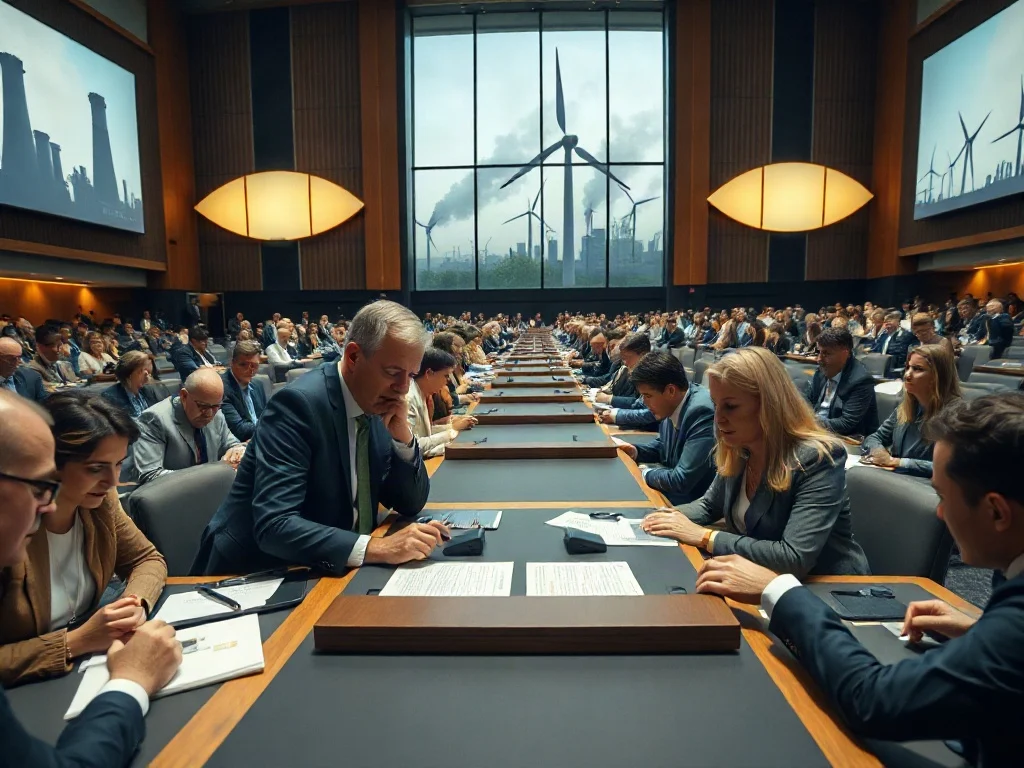
The COP31 climate talks have reached a deadlock, with delegates from nearly 200 countries struggling to agree on a new global climate agreement. The central obstacle is the role of fossil fuels. Reports describe a standoff between governments that want a clear commitment to move away from coal, oil and gas and those that want to protect their economic interests and energy security. This article explains why the fight keeps recurring, what is structurally blocking progress, and which signals matter most as negotiators try to break the impasse. Details are still developing, so claims here are limited to what is publicly established.
Why the COP31 Climate Talks Matter Now
COP31 is the 2026 session of the United Nations climate change conference. It is organised under the UN Framework Convention on Climate Change and follows the COP30 summit in Belém. Under the Paris Agreement, countries pledged to hold warming well below 2°C and pursue efforts to limit it to 1.5°C. The Intergovernmental Panel on Climate Change has found that limiting warming to 1.5°C requires deep, rapid cuts in greenhouse gas emissions this decade.
Fossil fuels are the main driver of those emissions. The United Nations has stated that they account for more than 75 percent of global greenhouse gas emissions and nearly 90 percent of carbon dioxide emissions. Any serious plan to slow global warming must therefore address fossil fuels directly, which is why the issue keeps surfacing in the negotiating room.
What Is Driving the Fossil Fuel Deadlock
The Unresolved Legacy of COP28
At the COP28 conference in Dubai, governments agreed for the first time to call for “transitioning away” from fossil fuels in energy systems. That wording was a landmark, but it was not a binding timetable. Since then the disagreement has shifted from whether to mention fossil fuels to how specific the language should be. Should the text include a roadmap, dates, or a fossil fuel phase-out for particular fuels? Each option carries different costs for different economies.
Consensus Gives Every Country a Veto
UN climate negotiations generally operate by consensus. A single determined party, or a small bloc, can block language that most countries support. This is not a flaw unique to COP31. It is a feature of the system, and it often produces compromise text that is deliberately vague. When the stakes are as high as fossil fuel production, vagueness gets harder to achieve.
Competing Economic Realities
Major producers such as Saudi Arabia and fellow members of OPEC depend heavily on hydrocarbon revenue. Many developing economies also rely on coal or gas for growth and want guarantees of climate finance before accepting stricter language. On the other side, small island states and many European countries argue that delay is the costliest choice. Both positions are rational given each group’s exposure, which is why the standoff is so durable.
Why a Global Climate Agreement Is So Hard to Finalise
A global climate agreement must balance three things at once: ambition, fairness and implementation. Countries submit nationally determined contributions, but these pledges are set domestically and have often fallen short of what the science requires. Wealthier countries are asked to lead, while poorer ones ask who will pay for the transition. Technologies such as carbon capture and storage are also contested. Some governments see them as a bridge, while critics see them as a way to prolong fossil fuel use. Even the shared goal of net zero hides disagreement about timing and pathways.
What to Watch as Negotiators Try to Break the Impasse
- Draft text changes: Watch whether bracketed fossil fuel language shrinks or grows between drafts. Bracketed text signals active disagreement.
- Bloc coordination: Shifts among producer states, developing-country groups and the European Union often precede a breakthrough.
- Finance offers: Credible climate finance commitments have historically unlocked stronger language on mitigation.
- Subsidy language: Provisions on fossil fuel subsidies are a useful indicator of how far governments will go.
- Parallel coalitions: Groups of willing countries may advance their own commitments outside the formal consensus process.
For primary data, readers can consult the UNFCCC website, the IPCC and the International Energy Agency. The wider shift toward renewable energy continues regardless of what any single summit decides.
Frequently Asked Questions
Why are the COP31 climate talks deadlocked?
The main reason reported is disagreement over how strongly the final text should address fossil fuels. Consensus rules mean that opposition from even a few parties can stall the entire package.
Where is COP31 being held?
COP31 is scheduled for Antalya, Turkey, with Australia leading the negotiations under a compromise arrangement. Check the UNFCCC for the latest confirmed details.
Does a deadlock mean the talks have failed?
Not necessarily. Climate conferences often stall before a late compromise, and several past summits ran past their scheduled end. A deadlock is a warning sign, not a verdict.
The Question COP31 Cannot Postpone Forever
The most important insight from this standoff is that the fossil fuel dispute is no longer about whether the energy transition will happen. It is about who sets the pace and who bears the cost. Until finance, fairness and timelines are negotiated together rather than separately, consensus texts will keep landing on language that few countries find satisfying.
Watch for two developments. First, whether a coalition of ambitious countries moves ahead with its own fossil fuel roadmap outside the formal process. Second, whether major producers accept any specific language in exchange for transition support. A reasonable prediction, which is not a certainty, is that the final outcome will be incremental. The open question is whether incremental progress can still match the speed that the science demands.
Frequently Asked Questions
Why can't most countries simply outvote the holdouts on fossil fuel language?
UN climate negotiations generally work by consensus rather than majority vote. That means one determined country or a small bloc can block wording that most others support. This is a built-in feature of the system, and it often leads to deliberately vague compromise text.
Did COP28 not already settle the question of moving away from fossil fuels?
Not fully. COP28 in Dubai was the first time governments called for transitioning away from fossil fuels in energy systems, but it set no binding timetable. The dispute has since moved from whether to mention fossil fuels to how specific the language should be, such as roadmaps, dates or fuel-specific phase-outs.
Why do some developing countries resist stronger fossil fuel commitments?
Many developing economies still rely on coal or gas for growth and energy security. They often want guarantees of climate finance before accepting stricter language, asking who will pay for the transition. Their position is a response to economic exposure, not simple opposition to climate action.
Is carbon capture and storage a solution or a loophole in these talks?
It is contested. Some governments see carbon capture and storage as a bridge that lets countries cut emissions while still using fossil fuels. Critics argue it can prolong fossil fuel use. This disagreement adds to the difficulty of agreeing on timing and pathways, even among countries sharing a net zero goal.
What signs would show that negotiators are close to a breakthrough?
Key signals include bracketed fossil fuel text shrinking between drafts, since brackets mark active disagreement. Shifts in coordination among producer states, developing-country groups and the European Union also matter, as do credible climate finance offers, which have historically unlocked stronger mitigation language.
Why does the fossil fuel issue keep returning in every climate negotiation?
Fossil fuels are the main driver of warming. The UN says they account for over 75 percent of global greenhouse gas emissions and nearly 90 percent of carbon dioxide emissions. Any serious plan to meet the Paris Agreement's 1.5°C goal must therefore address them directly.