
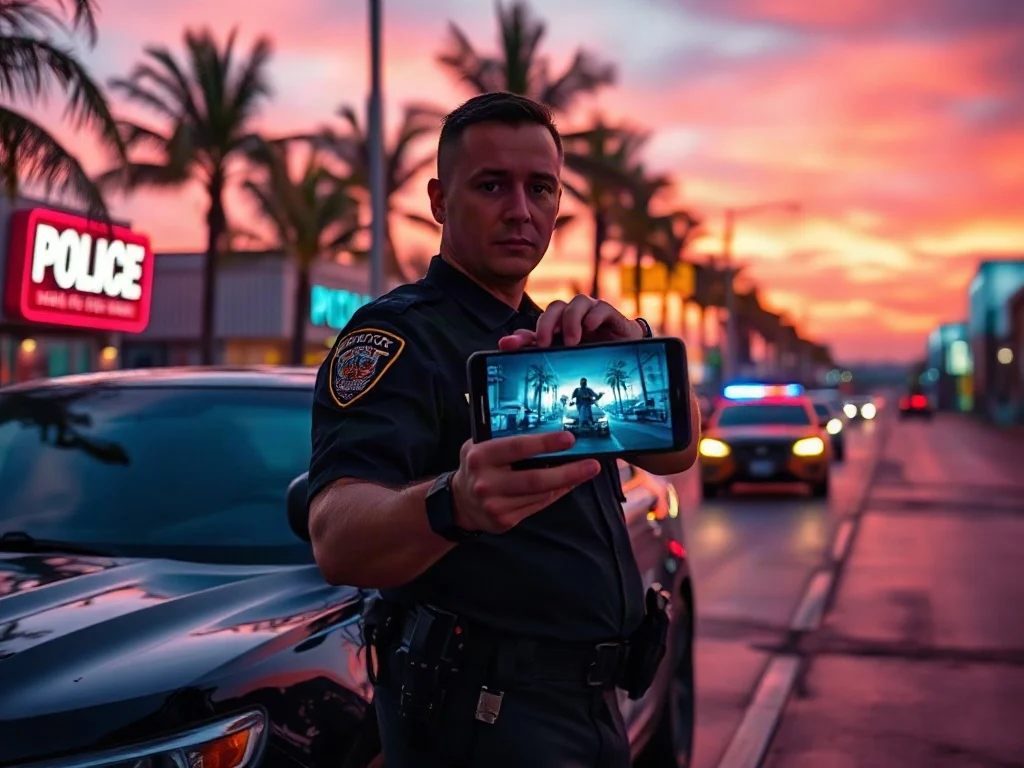
The internet has a new target: police GTA 6 recruitment and public-messaging posts. In these posts, real law enforcement agencies borrow the branding, jokes and imagery of Grand Theft Auto VI to attract applicants and to lecture the public. The reporting behind this story argues that the blockbuster franchise has never hidden its contempt for law enforcement, which makes the strategy look tone-deaf. This article looks at why the approach is tempting, why it so often falls flat, and what agencies should consider before trying it.
The analysis below separates what is documented from what is interpretation. We do not have a full census of which departments have posted what, so this piece does not invent examples or statistics. Instead it focuses on the structural reasons the pairing is risky and on practical lessons for communications teams.
What the Reporting Describes, and What It Does Not
The article that prompted this discussion makes two claims. First, the game treats police as obstacles, antagonists or punchlines. Second, real departments are nonetheless using the game to recruit new officers and to scold the public. The headline’s verdict is that the result is “extremely corny.”
That is an editorial judgment, not a measured finding. Nobody has published rigorous data showing that GTA-themed posts reduce or increase applications. Anyone claiming a precise effect on recruitment numbers should be treated with skepticism. What can be analyzed is the gap between the franchise’s tone and the tone an agency needs to project.
Why Grand Theft Auto Is an Awkward Partner for Police
A franchise built on satire of authority
The Grand Theft Auto series, developed by Rockstar Games and published by Take-Two Interactive, is widely understood as a satire of American excess, media culture and institutions. Its core loop lets players commit crimes and then evade a wanted level system in which police are the pursuing force. The player is almost never cast as the officer. Institutions of authority tend to be corrupt, incompetent or cartoonishly violent.
That is not a flaw in the product. It is the product. Using it as a vehicle for earnest recruitment messaging means borrowing a text whose jokes are frequently at the recruiter’s expense.
The setting and the hype cycle
Rockstar has confirmed that the new game returns to a fictionalized state called Leonida, with a version of Vice City inspired by Miami. The series previously visited the city in Grand Theft Auto: Vice City. The first trailer arrived in December 2023, and the release date has since been pushed back more than once. Readers should check the Rockstar Games Newswire for the current schedule.
The long wait and the enormous anticipation explain the temptation. Few cultural events in entertainment generate attention at this scale, and every social media manager can see the engagement. The previous entry, Grand Theft Auto V, remained culturally dominant for over a decade, so the audience is broad and its habits are deeply formed.
How Police GTA 6 Recruitment Is Supposed to Work
The logic behind police departments using video game memes is not irrational. Many agencies face staffing pressure and compete with private employers for younger candidates. Communications teams are encouraged to borrow tactics from employer branding, viral marketing and content marketing. The playbook is simple:
- Attach the message to a trending cultural moment.
- Use humor to make an institution feel human.
- Aim at younger audiences, such as Generation Z and younger Millennials, who are heavy gamers and heavy social media users.
- Convert attention into applications through a clear call to action.
Each step works in isolation. The failure usually happens in the second step, because humor only works when the audience believes the joke is shared rather than imposed.
Why Law Enforcement Social Media Strategy Often Backfires
The tone mismatch
A good law enforcement social media strategy depends on credibility. When an agency uses a game where players flee from officers to promote a career in policing, the audience reads the message through the game’s own framing. The most common reaction is mockery, because the post tries to claim the coolness of a property that treats its subject with contempt.
Recruiting and scolding in the same breath
The report highlights a second problem. Some posts reportedly use the game’s imagery to warn or scold the public. Scolding is difficult to deliver in meme form. A joke asks the audience to relax, while a warning asks them to comply. Combining the two tends to produce the register people call “cringe,” with neither the humor nor the authority landing cleanly.
Trust is the real currency
Research and commentary on community policing consistently treat public trust as the foundation of legitimacy. After years of debates over police misconduct and campaigns such as defund the police, many residents view playful messaging with suspicion. A joke that might work for a coffee brand can read as image management when it comes from an armed state institution.
| Intended effect | Likely audience reaction |
|---|---|
| Appear approachable and modern | Seen as trying too hard to be liked |
| Reach young gamers | Gamers recognize the series’ anti-police satire |
| Deliver a public safety warning | Joke format undermines the seriousness |
| Generate engagement | Engagement is often ridicule, which still spreads the post |
That last row matters. Mockery still counts as reach, and the Streisand effect can keep a clumsy post circulating far longer than the department intended. Whether that visibility helps or harms recruitment is unknown.
Legal and Ethical Questions Agencies Should Ask
Intellectual property
Game titles, logos and art are protected by trademark and copyright. Some uses may be defensible as fair use or as parody, but a government agency running promotional content is a different case from an individual fan. Legal review is sensible, and this article does not offer a legal conclusion on any specific post.
Public money and public messaging
Agency accounts are funded by taxpayers. Residents can reasonably ask whether staff time spent chasing trends is the best use of resources, and whether a pop-culture tie-in is appropriate for an institution with coercive powers.
Context around the product
The franchise has a long history of public controversy, a pattern covered in the broader record of video game controversies and earlier moral panics. An agency that promotes the game may inadvertently endorse a product that others in the community criticize.
Do Police Departments Use GTA 6 to Recruit? A Practical Reading
Based on the reporting, yes, at least some do, and the pattern may grow as the release approaches. Agencies still considering the tactic should apply a few disciplined checks.
Best practices for communications teams
- Match the property to the message. If the source material mocks your institution, choose a different hook.
- Separate recruiting from enforcement messaging. A joke format should not carry a warning or a scolding tone.
- Test with outsiders. Ask residents and gamers who are not on staff how the post reads before it goes live.
- Lead with substance. Pay, training, schedules and career paths persuade applicants more than a borrowed logo.
- Plan for ridicule. Decide in advance whether to respond, delete or ignore.
Common mistakes
- Treating engagement as the same thing as applications.
- Joining a trend after it has peaked.
- Using a game’s imagery without reading its tone.
- Letting a single enthusiastic staffer decide the voice of the whole institution.
What to measure
Track qualified applications, completion rates in the hiring pipeline, sentiment in comments and any change in community complaints. Raw likes and shares tell very little about whether the campaign achieved its purpose.
What Could Change Over the Next Few Years
These are reasonable predictions, not confirmed developments. As the game‘s release nears, expect a surge of brands, public bodies and politicians attempting to ride the wave. Audiences are growing more literate at spotting institutional meme-chasing, so the penalty for misjudging tone is likely to rise. Agencies may also adopt formal social media policies requiring legal and community review for pop-culture tie-ins. Game publishers, meanwhile, may become more protective of how their intellectual property is used by government accounts.
Frequently Asked Questions
Do police departments use GTA 6 to recruit?
According to the reporting behind this article, some departments have used the game’s branding and themes in recruitment and public-facing posts. There is no comprehensive public tally.
Why do police departments use video game memes?
They want to reach younger audiences, appear approachable and earn engagement cheaply. Recruitment shortages and the low cost of social media content add to the appeal.
Is it legal for police to use Grand Theft Auto branding?
It depends on the specific use. Trademark, copyright, fair use and parody doctrines all apply, and a government agency should seek legal advice rather than assume protection.
Does meme-based recruitment work?
There is no strong public evidence either way for GTA-themed campaigns specifically. Engagement can be high, but engagement alone does not show that the campaign produced qualified applicants.
The Joke Is Always on Someone
The most important insight is that borrowed cool is not a neutral asset. A franchise built on mocking authority cannot easily be turned into an instrument of that authority, and audiences feel the contradiction immediately. The posts do not fail because humor is forbidden to police. They fail because they put the institution inside a story that was written to make it look foolish.
Watch three things as the game’s release approaches: whether more agencies join the trend, whether Rockstar or Take-Two says anything about government use of the property, and whether any department publishes data on what these campaigns actually delivered. If the numbers show real gains in qualified applicants, the corny posts may keep coming. If they show only ridicule, the more interesting question will be why so many institutions needed that evidence before trusting their own instincts about tone.
Frequently Asked Questions
¿Hay datos que demuestren que los memes de GTA 6 aumentan o reducen las solicitudes de ingreso a la policía?
No. El artículo aclara que nadie ha publicado datos rigurosos sobre ese efecto. Calificar estas publicaciones de "cursis" es un juicio editorial, no un hallazgo medido, así que conviene desconfiar de quien afirme cifras exactas sobre su impacto en el reclutamiento.
¿Por qué Grand Theft Auto es un socio incómodo para un cuerpo policial?
La saga de Rockstar es una sátira de la autoridad y del exceso estadounidense. El jugador casi nunca es policía, y las instituciones suelen aparecer corruptas, incompetentes o violentas. Usarla para un mensaje serio supone apropiarse de un texto cuyos chistes suelen ir contra el propio reclutador.
¿Por qué las agencias siguen usando este tipo de contenido si suele fallar?
La lógica no es irracional: muchas agencias sufren falta de personal y compiten con empresas privadas por candidatos jóvenes. GTA 6 genera una atención enorme, y cualquier community manager ve el potencial de interacción. Aun así, el humor solo funciona si el público siente que el chiste es compartido.
¿En qué paso de la estrategia suele fallar el reclutamiento con memes?
Según el artículo, el fallo suele estar en el segundo paso: usar humor para humanizar la institución. Ese humor solo funciona cuando la audiencia cree que la broma es compartida y no impuesta. Si el público la percibe forzada, la credibilidad de la agencia se resiente.
¿Dónde puedo consultar la fecha de lanzamiento actual de GTA 6?
El artículo recomienda el Rockstar Games Newswire, el canal oficial de la compañía. Recuerda que el primer tráiler salió en diciembre de 2023 y que la fecha de salida se ha retrasado más de una vez, así que conviene verificarla allí y no en publicaciones de terceros.
¿Qué ambientación tiene GTA 6 y por qué importa para esta polémica?
El juego regresa al estado ficticio de Leonida, con una versión de Vice City inspirada en Miami. Importa porque la saga lleva más de una década de dominio cultural con GTA V, lo que crea una audiencia amplia y muy fiel que las agencias quieren aprovechar.