
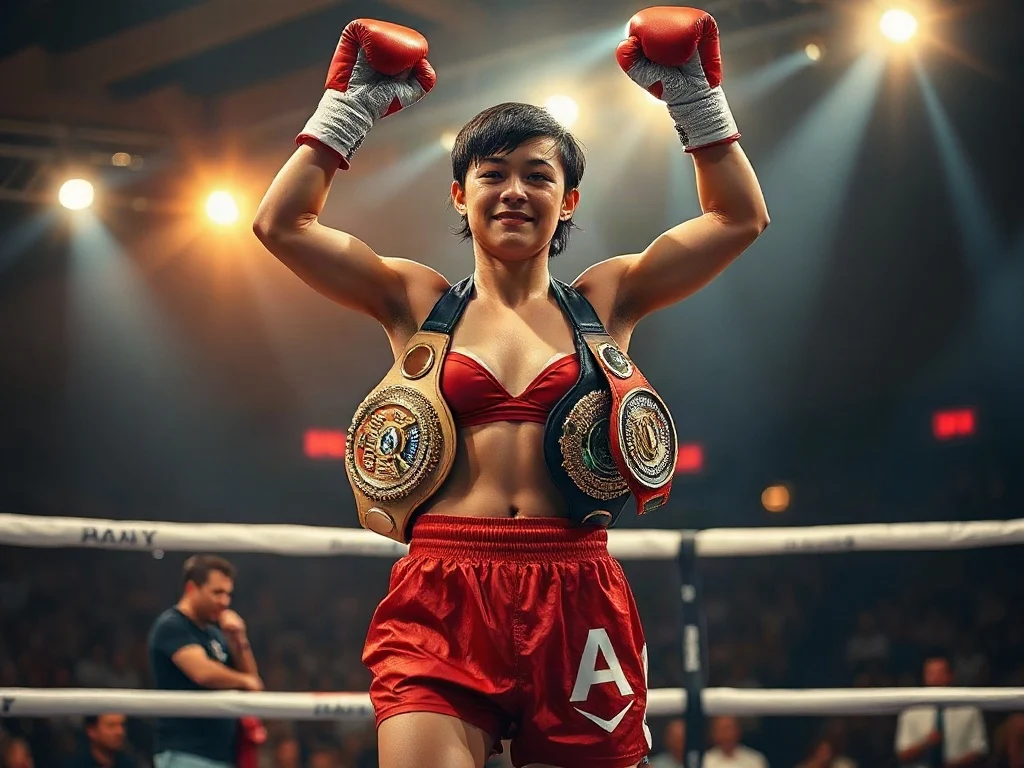
Lauren Price has secured her place in boxing history by becoming the undisputed welterweight champion, dominating Michaela Kotaskova to unify the division. For a fighter who went from Olympic gold to a complete set of world titles in a few years, it is a defining moment, and one that says a lot about how quickly women’s boxing is maturing. This article looks at what the result means, why undisputed status is so hard to earn, and what it changes for Price and for the 147-pound division.
Only the confirmed outcome is treated as fact here: Price dominated Kotaskova and was left as the sole holder of the welterweight crown. Where this article discusses what may come next, it is analysis and prediction, and it is labelled that way.
Lauren Price vs Michaela Kotaskova: What the Result Tells Us
The headline fact is simple. Lauren Price beat Michaela Kotaskova in a one-sided contest that completed her collection of world titles at welterweight. The word dominates matters. Unification bouts are usually tight, tactical affairs, because the champions involved have already beaten most of the people who have faced them. A comfortable win in the final bout of a unification campaign suggests a clear gap in class, conditioning and ring management.
That does not make the opponent a poor fighter. Reaching a unification fight means a boxer has earned a world-level position. But the best champions are defined by how they handle that moment, and the verdict in this case was clear.
What Does Undisputed Champion Mean in Boxing?
Many casual fans ask what an undisputed champion actually is, since boxing has long been criticised for having too many belts and too few clear champions. The term has a precise meaning, and it is worth understanding before judging how significant Price’s achievement is.
The Four Recognised Sanctioning Bodies
In the modern four-belt era, a boxer is generally recognised as undisputed champion when they hold all the major world titles in a weight class at the same time. Those titles are issued by four organisations:
- the World Boxing Association (WBA)
- the World Boxing Council (WBC)
- the International Boxing Federation (IBF)
- the World Boxing Organization (WBO)
Each body maintains its own rankings, mandatory challengers and rules, and they do not always agree. That is why unifying all four is difficult. A champion must beat fellow titleholders, satisfy mandatory defence obligations and keep the whole project alive while promoters, broadcasters and rival camps negotiate.
Why It Is Harder Than It Looks
Becoming undisputed champion is as much a logistical achievement as an athletic one. Several obstacles routinely derail unification plans:
- Promotional rivalry: Champions are often tied to different promoters and broadcasters, which can stall negotiations for years.
- Mandatory challengers: Each sanctioning body can order a title defence against a specific contender, which can interrupt a unification path.
- Scheduling and injuries: A single postponed fight can alter the order in which titles are unified.
- Risk management: Every unification bout is a possible loss, so many camps avoid the risk until the commercial reward is large enough.
The welterweight division, with a 147-pound limit in professional boxing, has historically been one of the sport’s deepest. Taking every belt there means beating the best available opposition, not simply accumulating titles.
From Olympic Gold to World Champion: How Price Got Here
Price’s route to the top is unusual even by the standards of combat sports. She is Welsh, and before she became a professional boxer she had already competed at elite level in more than one sport.
Football, Kickboxing and Boxing
Price played football at a high level, representing the Wales women’s national football team, and she also had a background in kickboxing, where she became a world champion. That multi-sport foundation is often cited as a reason for her athleticism, footwork and ability to adapt to different opponents, though it is an interpretation rather than a measurable fact.
The Olympic Breakthrough
Her biggest amateur achievement came at the 2020 Summer Olympics in Tokyo, where she won gold in the women’s middleweight division. Olympic gold gave her international credibility and a strong platform for turning professional. It also placed her in a lineage that began when women’s boxing made its Olympic debut at the 2012 Games, an event made famous by Nicola Adams, who won the first women’s Olympic boxing gold medal.
Why the Amateur Pedigree Matters
Amateur boxing rewards clean scoring, distance control and tactical discipline. Those skills often translate into professional dominance against opponents who rely on power or aggression. The caveat is that professional boxing demands longer fights, different pacing and a higher tolerance for punishment, so not every Olympic medallist succeeds. Price’s progression to a complete set of world titles suggests she has made that transition effectively.
Why a Dominant Performance Matters for Her Legacy
Boxing history tends to remember how a title was won as well as that it was won. A narrow, contested victory invites debate and rematch calls. A dominant performance closes the argument.
There are three practical consequences for Price:
- Commercial leverage: Undisputed champions can negotiate from a position of strength over purse splits, venues and broadcast terms.
- Historical standing: Holding every belt places her in a small group of boxers who have fully unified a division. The sport recognises few such champions, and fewer still have done so in the women’s game.
- Strategic choice: She now decides what happens next, whether that means defending, vacating titles or moving to another weight class.
Treat commentary on the legacy question with some caution. Legacy is subjective, and a single victory, however emphatic, does not settle comparisons with other champions across eras and weight classes.
Women’s Boxing in the Undisputed Era
Price’s achievement fits into a wider shift. Over the past decade, women’s boxing has moved from the margins toward the centre of major cards. Katie Taylor and Claressa Shields have each held undisputed status, and their success helped prove that unification fights can attract significant audiences. The broader history and structure of the sport are covered in the Wikipedia overview of women’s boxing.
Structural Differences Worth Knowing
Women’s professional bouts are commonly contested over shorter rounds than men’s fights, typically two minutes rather than three, though the format has been debated, and some champions have campaigned for change. Depth of competition also varies by division. In some weight classes there are only a handful of genuine title-level contenders, which can make unification easier on paper but harder in practice, because the same few opponents must be willing to fight each other.
The Economic Angle
Broadcasters and streaming platforms have increased their investment in women’s boxing, but pay and exposure still lag behind the biggest men’s divisions. Undisputed champions are among the few women in the sport able to push those numbers upward. Price’s status may therefore matter commercially as much as sporting terms, although specific financial figures for her contests are not publicly confirmed and should not be assumed.
What Fans, Analysts and Aspiring Boxers Can Learn
Beyond the headlines, Price’s path offers practical lessons for anyone following the sport or competing in it.
For Fans and Analysts
- Judge the journey, not just the finale: Look at the quality of opposition faced across the whole unification run.
- Check the sanctioning body status: Titles can be vacated, stripped or recognised differently, so verify the current picture before using the word undisputed.
- Separate dominance from competitiveness: A lopsided result may reflect a class gap, not a weak opponent.
For Aspiring Professionals
- Build a technical base early: An amateur pedigree helps with distance control and ring craft.
- Plan for the politics: Management, promotional alliances and mandatory obligations shape a title path almost as much as performance.
- Avoid rushing the step-up: Fighters who face elite opposition too soon often stall; steady progression has been a feature of the most successful champions.
Frequently Asked Questions
What does undisputed welterweight champion mean?
It means a boxer holds all the major world titles at welterweight at the same time, namely those of the WBA, WBC, IBF and WBO. No other recognised world champion exists in the division.
Who is Lauren Price?
Lauren Price is a Welsh boxer who won Olympic gold in the women’s middleweight division at the Tokyo Games. She has also competed in football and kickboxing, and she is now the undisputed welterweight champion.
Who did Lauren Price beat to become undisputed champion?
She beat Michaela Kotaskova in a dominant performance that completed her unification of the welterweight division.
How hard is it to become undisputed champion?
It is extremely difficult. A boxer must beat other titleholders, satisfy sanctioning body obligations and navigate promotional and scheduling barriers, all without losing.
What happens after a boxer becomes undisputed champion?
The champion may defend all belts, give up some titles to avoid mandatory challengers, move to a different weight class, or negotiate a high-profile fight in another division. The choice depends on money, opportunity and ambition.
The Hard Part Starts After the Last Belt
The most important insight from Price’s victory is that unification is an ending only in a narrow sense. Winning every belt proves superiority in a division at one moment, but it also creates a strategic problem. Four sanctioning bodies will each expect mandatory defences, opponents who might once have been rivals become obstacles or stepping stones, and the commercial pull of a bigger fight in another weight class grows stronger.
Several things are worth watching. The first is whether Price chooses to defend her titles or relinquish some of them, since that will reveal how she values the undisputed label against flexibility. The second is whether she moves up or down in weight in search of larger fights, a decision that has defined the late careers of many modern champions. The third is whether her success improves visibility and pay for the women’s welterweight division, or whether the attention fades once the headline is gone.
A reasonable prediction, and it is only a prediction, is that Price will have significant freedom to choose her next challenge, because few boxers can match the bargaining power that comes with owning every belt. The unanswered question is whether she will use that power to defend her place in history or to chase a new one. How she answers it will shape her legacy more than any single night in the ring.
Frequently Asked Questions
What exactly does it mean to be an undisputed welterweight champion?
It means holding all four major world titles in the division at the same time: WBA, WBC, IBF and WBO. Because each organisation has its own rankings and rules, a boxer must beat fellow titleholders and handle mandatory defences, which makes the achievement rare.