
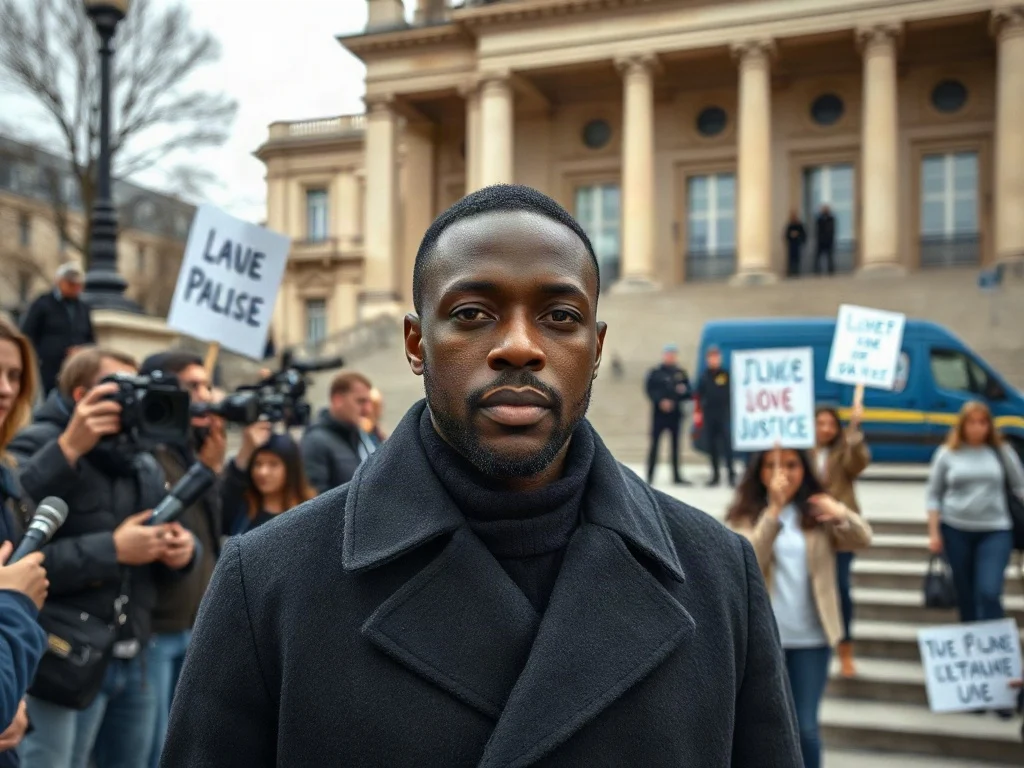
A Paris court has sentenced three policemen to prison over the Michel Zecler police beating of November 2020, a verdict that is rare in France. The assault on the Black music producer was filmed, and the footage set off national outrage and forced a hard look at police brutality and racism inside French law enforcement. This analysis looks at what happened, why the sentences matter, and what they do and do not change.
What Happened to Michel Zecler in 2020
Zecler was beaten by officers at the entrance to his Paris music studio. He was struck repeatedly with fists and a baton, and tear gas was used inside the studio. He and his lawyers said the officers also shouted racist insults. The initial police account portrayed him as the aggressor, and he was placed in custody. Security-camera footage from the studio contradicted that version. Once it was published, the case unraveled for the officers and the story shifted to the conduct of the police.
Why the Video Changed Everything
Without the recording, the case might have rested on the word of a Black man against the official report of several officers. Footage is one of the few forces able to break that imbalance. The same dynamic drove the global reaction to the murder of George Floyd earlier that year, and it explains why debates over body-worn cameras and filming the police are so heated.
The Political Shockwave
President Emmanuel Macron said the images were unacceptable and that they shamed France. Interior Minister Gérald Darmanin said the officers were unworthy of the uniform and called for their suspension. The timing mattered. The government was defending a controversial security bill that would have restricted the publication of images of on-duty police. Critics argued that the Zecler footage showed exactly why such images must stay in public view.
The president’s reported reaction, that the images “shame us,” was striking because such language rarely comes from the top of the French state in cases involving the police.
Why These Prison Sentences Are Rare
Convictions of police officers for violence are uncommon in many countries, and France is no exception. Several structural factors explain this:
- Evidence gaps: Without video, courts often rely on police reports, which carry institutional weight.
- Internal investigation: Complaints are typically handled by the police’s own inspectorate, which critics say creates a perception of conflict of interest.
- Legal protections: French law gives officers latitude to use proportionate force, and courts often accept claims of necessity.
- Slow proceedings: Years pass between incident and trial, and witnesses and public attention fade.
A custodial sentence therefore carries symbolic weight well beyond this single case. It signals that filmed abuse can lead to real consequences, even if the exact terms of the sentences are best checked in the court‘s written judgment.
Police Violence in France and the Question of Racism
The debate over police violence in France is bound up with the wider question of racism in France. A 2017 survey by the Defender of Rights found that young men perceived as Black or Arab were far more likely to report being stopped for identity checks than other men. French officials have long resisted the label of institutional racism, and the government has generally argued that misconduct is the work of individuals rather than a systemic problem.
Racial Profiling in the Courts
In 2023, France’s Council of State acknowledged that discriminatory identity checks do occur. It stopped short of ordering sweeping structural reform. Advocates of change point to this as evidence that racial profiling is recognized in principle but weakly remedied in practice. Organizations such as Human Rights Watch have urged France to adopt stronger safeguards. The Defender of Rights also publishes official reports and recommendations on police conduct and discrimination.
Accountability Beyond One Verdict
Police accountability is more than a single trial. The 2023 killing of Nahel Merzouk and the riots that followed showed how quickly tension between young residents of the banlieues and the National Police can escalate. Researchers and rights groups point to several measures that could build trust:
- Independent oversight of complaints rather than purely internal review.
- Consistent recording of stops, so patterns can be analyzed.
- Clear, enforced rules on the use of force and on false police reports.
- Protection of citizens’ right to film officers in public.
FAQ: The Zecler Case
Who is Michel Zecler?
Michel Zecler is a Black Parisian music producer who was beaten by police officers in November 2020. Security footage of the attack became public days later.
Why is the sentencing considered rare?
Officers are seldom convicted and jailed for violence in France, especially when the evidence is contested. Here, video evidence made the case unusually clear.
Does the verdict end the debate on police racism in France?
No. It is a significant precedent, but the broader disputes over profiling, oversight and systemic bias remain unresolved.
The Real Test Comes After the Verdict
The most important insight from this case is that accountability depended on a piece of evidence the officers did not control. The prison sentences prove that the system can respond to filmed abuse. They do not prove that it can respond to abuse that was never filmed. Watch for three things: whether the convicted officers appeal, whether institutional reforms follow, and whether future complaints without video reach court at all. The question that remains is whether France will build a system that does not need a camera in order to deliver justice.
Frequently Asked Questions
Why was the security camera footage so decisive in the Zecler case?
The initial police report portrayed Zecler as the aggressor and he was placed in custody. The studio's security-camera footage contradicted that account. Without it, the case might have come down to a Black man's word against several officers' official report, which courts tend to treat as weightier.
Why are prison sentences for police violence so uncommon in France?
Several factors combine: a lack of independent evidence, complaints handled by the police's own inspectorate, legal latitude for proportionate force, and slow proceedings in which witnesses and public attention fade. Together they make convictions, and especially custodial sentences, unusual unless the incident was filmed.
How did the case affect the government's security bill?
The footage emerged while the government was defending a controversial bill restricting the publication of images of on-duty police. Critics said the Zecler video showed exactly why such images must stay public. Macron said the images shamed France, and Darmanin called the officers unworthy of the uniform.
Does the verdict mean France has recognized institutional racism in its police?
No. French officials have long rejected the label of institutional racism and generally say misconduct is the work of individuals. The sentences punish specific officers. Even the 2023 Council of State acknowledgment of discriminatory identity checks stopped short of ordering sweeping structural reform.
What evidence exists that racial profiling is a problem in France?
A 2017 survey by the Defender of Rights found that young men perceived as Black or Arab were far more likely to report identity checks than other men. In 2023 the Council of State acknowledged that discriminatory checks occur, though advocates say remedies remain weak in practice.
Where can readers find the exact terms of the sentences?
The article advises checking the court's written judgment for the precise terms of the sentences. The analysis stresses the symbolic weight of a custodial sentence, which signals that filmed abuse can have real consequences, rather than detailing the exact penalties imposed on each officer.