
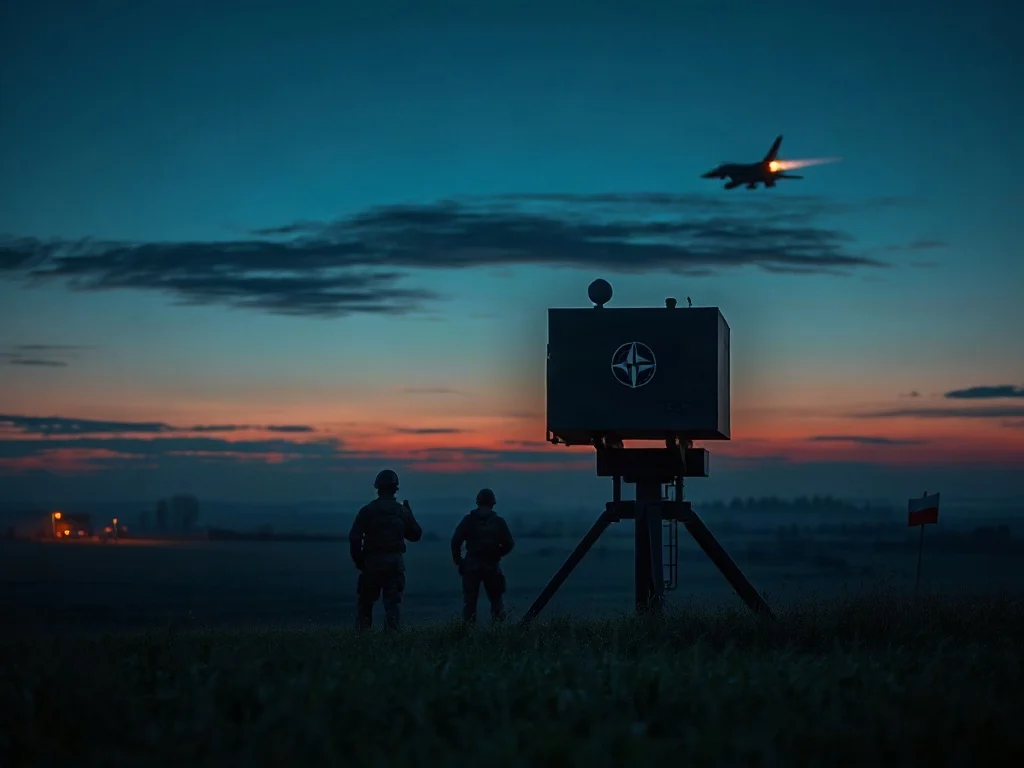
A Russian missile hit Poland, according to Prime Minister Donald Tusk. The strike came while Ukraine’s allies were holding a military exercise. Nobody was hurt and no damage has been reported, but Warsaw called the incident a deliberate “provocation” from Moscow. Even a harmless impact on the territory of a NATO member raises questions about intent, alliance response and escalation. This analysis separates what is confirmed from what is still unknown.
What is confirmed about the missile strike in Poland
The confirmed facts are limited. Tusk attributed the missile to Russia. There were no casualties and no reported damage. The Polish government framed the event as a provocation, not an accident. The reports available so far do not specify the missile type, the launch location, the flight path or the exact impact site, so those points should be treated as open.
The timing is notable because Ukraine’s allies were conducting a military exercise at the same moment. That coincidence may be deliberate signaling, or it may be unrelated. Without evidence of intent, it should be read as context, not proof.
Why Warsaw used the word “provocation”
In diplomatic language, provocation implies purpose. It suggests Moscow was testing Poland and NATO, not that a weapon strayed off course during the Russian invasion of Ukraine. The word also serves domestic and alliance purposes. It signals firmness to Polish voters and presses partners to take the incident seriously, while stopping short of describing an act of war.
Accident, spillover or signal?
Analysts usually weigh three explanations when a missile lands in a neighboring state:
- Navigation or targeting error: a cruise missile or ballistic missile strays because of jamming, malfunction or evasive routing.
- Spillover: a weapon is diverted or intercepted and falls across the border.
- Deliberate probing: a calibrated act meant to measure NATO reactions, a tactic associated with hybrid warfare.
Tusk’s framing points to the third explanation, but public evidence for it has not been presented.
Does a Russian missile hitting Poland trigger Article 5?
No automatic trigger exists. Article 5 commits members to treat an armed attack on one as an attack on all, but each ally decides what action it considers necessary. The text of the North Atlantic Treaty is deliberately flexible. Article 4, which allows consultations when a member feels its security is threatened, is the more common first step. Poland has used it before, after Russian drones entered its airspace in September 2025.
The 2022 precedent is instructive. When a missile struck Przewodów and killed two people, NATO members avoided invoking Article 5. The investigation indicated the missile was most likely a Ukrainian air-defense round fired against Russian attacks. This incident, with no casualties, makes an Article 5 response even less likely. Attribution, intent and harm all shape the alliance’s reaction.
Poland’s role on NATO’s eastern flank
Poland borders Ukraine, Belarus and the Russian exclave of Kaliningrad Oblast. It is also a main logistics hub for aid flowing to Ukraine, which makes it both strategically exposed and politically significant. The Polish Armed Forces have expanded rapidly, and allied troops are stationed in the country under NATO’s enhanced forward presence.
The air-defense challenge
Detecting a low-flying cruise missile is harder than tracking a high-arcing ballistic one. Layered air defense, including surface-to-air missiles, radar coverage and fighter patrols, narrows gaps but cannot close them. A missile that lands without casualties may still reveal weaknesses in detection, decision-making speed or rules of engagement. Shooting down a missile over a populated area carries its own risk from falling debris.
What this means for deterrence
Under deterrence theory, repeated low-level incidents test whether an alliance will respond consistently. If each event draws only statements, an adversary may conclude the threshold for action is very high. If the response is too forceful, it risks escalating a conflict between nuclear-armed powers. Allied governments have generally chosen a middle path of consultations, reinforced air defense and public attribution.
What readers and analysts should monitor
- Forensic attribution: official identification of the missile type and launch origin.
- Formal NATO steps: whether Poland requests Article 4 consultations.
- Air-defense posture: any new deployments or changes to engagement rules near the border.
- Russian response: denial, silence or an alternative explanation.
Frequently asked questions
Was anyone injured when the Russian missile hit Poland?
No. Reports state that nobody was hurt and no damage has been reported.
Why did Tusk call it a provocation?
The word implies deliberate intent. Warsaw sees the incident as an intentional test, not a stray weapon, although detailed evidence has not been published.
Will NATO invoke Article 5?
It is unlikely. Article 5 is not automatic, and the lack of casualties makes consultations under Article 4 the more probable step.
The test is not the missile but the response
The most important insight is that a harmless impact can matter more than a destructive one. It shows how Moscow and NATO manage ambiguity below the threshold of open conflict. The key unanswered question is whether investigators can establish intent. If they can, and the response is limited to words, the next probe will likely be bolder. If NATO pairs consultation with visible air-defense reinforcement, it may reinforce deterrence without widening the war. Watch the investigation’s findings, the alliance’s next consultation and the reaction in Moscow over the coming weeks.
Frequently Asked Questions
Why is it still unclear whether the missile strike on Poland was deliberate?
Tusk called it a provocation, but public evidence of intent has not been presented. Reports do not specify the missile type, launch location, flight path or impact site. Without those details, a targeting error, spillover from interception or deliberate probing cannot yet be ruled out.
Does a missile landing in Poland automatically trigger NATO's Article 5?
No. Article 5 commits allies to treat an armed attack on one as an attack on all, but each member decides what action it considers necessary. The treaty wording is deliberately flexible, so attribution, intent and the level of harm all shape the response.
What is the difference between Article 4 and Article 5, and which is more likely here?
Article 4 allows members to hold consultations when one feels its territory or security is threatened. Article 5 concerns collective defense after an armed attack. Article 4 is the more common first step, and Poland used it after Russian drones entered its airspace in September 2025.
How does this incident compare with the 2022 Przewodów missile strike?
In 2022 a missile hit Przewodów and killed two people, yet NATO members avoided invoking Article 5. Investigators indicated it was most likely a Ukrainian air-defense round fired against Russian attacks. This case caused no casualties, which makes an Article 5 response even less likely.
Why can a missile still reach Poland despite layered air defense?
Low-flying cruise missiles are harder to detect than high-arcing ballistic ones. Surface-to-air missiles, radar and fighter patrols narrow gaps but cannot close them. Shooting a missile down over populated areas also risks falling debris, which can slow decisions and complicate rules of engagement.
Why does a harmless impact still matter for NATO deterrence?
Repeated low-level incidents test whether the alliance responds consistently. If each event draws only statements, an adversary may conclude the threshold for action is very high. Even without casualties, a strike can expose weaknesses in detection, decision speed and political resolve.