
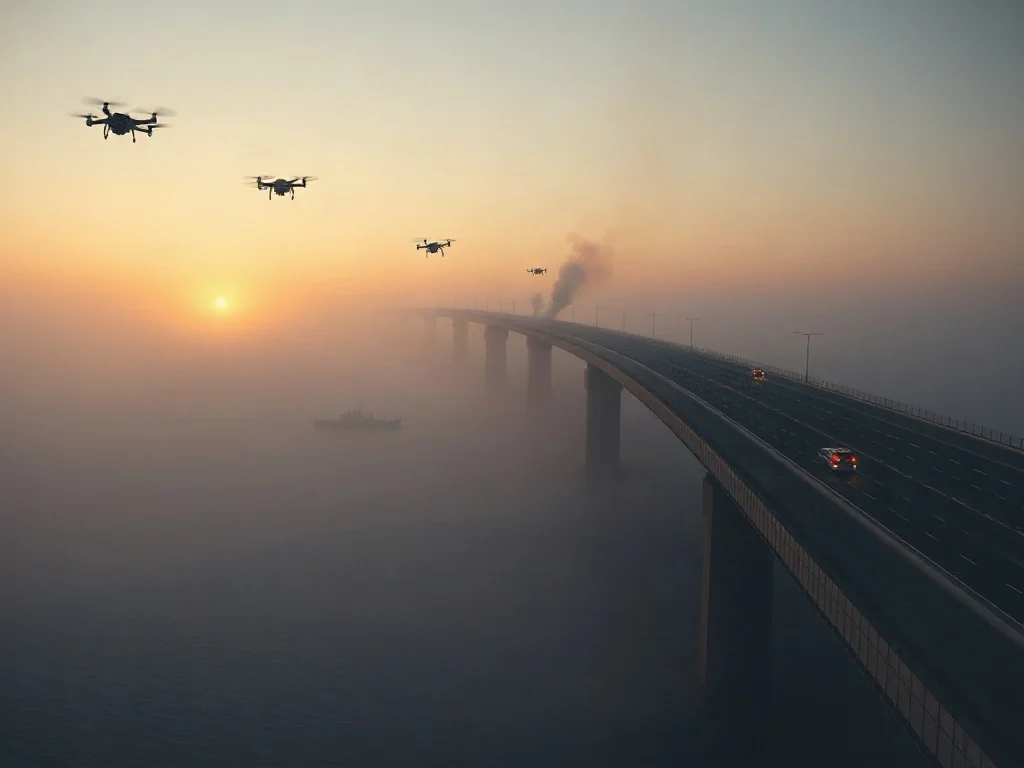
A Ukraine drone attack on a Crimea bridge is more than a strike on concrete and steel. According to reporting from Kyiv by Gulliver Cragg, the operation looks like a calculated signal to Moscow: ‘If you hit our bridges we can hit yours.’ Details of the damage are still emerging, so this analysis separates what is established from what is interpretation. It focuses on why bridges matter so much in this war and what a drone strike on one may mean.
“I think the Ukrainians are trying to send a message to the Russians with this – ‘If you hit our bridges we can hit yours.'” – Gulliver Cragg, reporting from Kyiv
Why Crimea’s Bridges Matter So Much
Since the annexation of Crimea by the Russian Federation in 2014, the peninsula has become a strategic hub for Russian forces. It hosts the Black Sea Fleet at Sevastopol and serves as a staging area for operations in southern Ukraine. Its connections to the mainland are therefore central to military logistics.
The best-known link is the Crimean Bridge across the Kerch Strait. Russia opened it in 2018 as a symbol of its claim to the peninsula. It has been attacked before, notably in the October 2022 explosion and again in July 2023. Each strike turned a prestige project into a recurring vulnerability.
Reading the Message Behind the Strike
Reciprocity as strategy
Cragg’s reading points to reciprocity. Russia has repeatedly targeted Ukrainian bridges, roads and rail links since its full-scale invasion. By hitting a key Crimea bridge, Kyiv shows that the damage can flow in both directions. This resembles a basic logic of deterrence theory: raising the expected cost of an action by showing you can impose similar costs in return.
This is an interpretation, not a confirmed Ukrainian statement of intent. Governments rarely explain such operations fully, and military and signaling goals often overlap. A strike can disrupt supply routes and send a political message at the same time.
Why drones are the tool of choice
The unmanned aerial vehicle has reshaped this war. Drones are cheap compared with conventional missiles, and they can be launched in volume. Some designs, known as loitering munitions, wait over an area before striking. Ukraine has built a sizeable domestic drone capability under wartime pressure. That lets it threaten well-defended infrastructure without risking pilots or relying on scarce Western long-range weapons.
Military Value Versus Symbolic Value
Analysts often disagree about how far bridge strikes change the battlefield. One view holds that every disrupted crossing forces Russia onto slower alternatives such as ferries, rail detours or the land corridor, which raises costs and delays reinforcement. The opposing view is that Russia can repair or reroute quickly, so symbolic and psychological effects outweigh lasting logistical damage.
Both views have merit, and the truth probably varies from strike to strike. A single attack rarely severs supply. Sustained pressure on several crossings, combined with strikes on fuel depots, rail nodes and air defenses, can compound the effect.
Legal and Escalation Questions
Bridges are dual-use structures: civilians cross them daily, yet militaries rely on them. Under international humanitarian law, such objects can become lawful targets only if they make an effective contribution to military action. Even then, attackers must weigh the expected civilian harm. Russia’s strikes on Ukrainian critical infrastructure have drawn heavy criticism, and each side casts its own attacks as legitimate and the other’s as unlawful.
Escalation is the other concern. Russia has historically answered high-profile hits on Crimean targets with large retaliatory strikes. Readers should watch whether the Kremlin responds in kind, and where.
What Readers Should Monitor
- Official confirmations: statements from Ukraine’s military and the Security Service of Ukraine, set against Russian claims.
- Verified damage: independent satellite imagery and geolocated footage rather than social media claims.
- Traffic and rail changes: closures, delays or rerouting that would indicate real logistical impact.
- Russian retaliation: whether strikes on Ukrainian bridges and energy sites intensify.
Frequently Asked Questions
Why is the Crimea bridge a target for Ukraine?
Bridges linking Crimea to the mainland support Russian military logistics and carry symbolic weight as part of Russia’s claim to the peninsula. Striking them can disrupt supply and deliver a political message.
Can drones destroy a large bridge?
Drones can damage spans, roadways and supports, but fully collapsing a large bridge generally takes heavy or repeated strikes. Damage assessments should come from verified evidence, not early claims.
Is attacking a bridge legal in war?
It can be, if the bridge makes an effective contribution to military action and the expected civilian harm is not excessive compared with the anticipated military advantage. Such judgments are often contested.
The Real Test Is What Comes After the Strike
The central insight is that this operation’s importance lies as much in the signal as in the structural damage. If Cragg’s reading is right, Kyiv is trying to establish a rule of reciprocity: infrastructure attacks will no longer be one-directional. Whether that deters Moscow, provokes harsher retaliation or does neither will be the real measure of the strike. The unanswered question is whether bridges on both sides become routine targets in a widening contest over mobility, and what that means for civilians who depend on them.
Frequently Asked Questions
Has Ukraine officially confirmed that the strike was meant as a message to Moscow?
No. The 'if you hit our bridges we can hit yours' reading comes from Gulliver Cragg's analysis, not from an official Ukrainian statement. Governments rarely explain such operations fully, and a strike can pursue military and political goals at once, so intent remains an interpretation.
Why is the Crimean Bridge such a recurring target?
The Kerch Strait bridge, opened by Russia in 2018, links the mainland to a peninsula hosting the Black Sea Fleet and serving as a staging area for southern operations. It is both a logistics artery and a prestige symbol, so attacks like those of October 2022 and July 2023 have military and psychological impact.
Do bridge strikes actually cut off Russian supplies in Crimea?
Rarely on their own. Analysts disagree: some say each disruption forces slower alternatives like ferries, rail detours or the land corridor, while others say Russia repairs or reroutes quickly. A single attack seldom severs supply, but sustained pressure combined with strikes on fuel depots, rail nodes and air defenses can compound the effect.
Why does Ukraine use drones for this kind of operation?
Drones are cheaper than conventional missiles and can be launched in volume. Some, called loitering munitions, wait over an area before striking. Ukraine's growing domestic production lets it threaten well-defended infrastructure without risking pilots or depending on scarce Western long-range weapons.
Is it legal under international law to attack a bridge?
A bridge is dual-use, since civilians and militaries both rely on it. Under international humanitarian law it can be a lawful target only if it makes an effective contribution to military action, and attackers must still weigh expected civilian harm. Each side calls its own strikes legitimate and the other's unlawful.
How might Russia respond to the attack?
Russia has historically answered high-profile hits on Crimean targets with large retaliatory strikes. Readers should watch whether the Kremlin responds in kind and where it strikes. Verified damage, based on satellite imagery and geolocated footage, and official statements from both sides will help clarify what actually happened.