
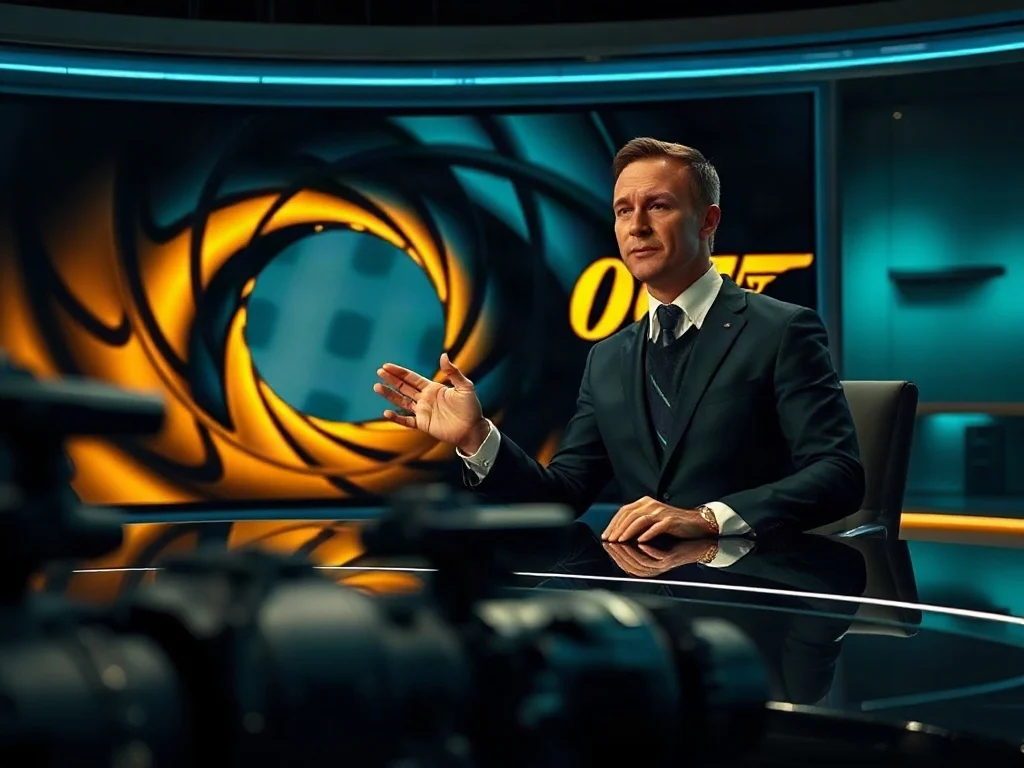
When a headline promises a Martin Daubney James Bond U-turn, with a pun about ‘the man with the golden gaffe’ attached, it is easy to see why the clip travels. It combines a combative broadcaster, a national institution and the oldest pleasure in political media: watching someone change course in public. This article does not pretend to know more about the clip than the headline reveals. It uses the moment to look at why Bond triggers so many reversals, how commentary around the franchise works, and what viewers should check before sharing a ‘screeching U-turn’ video.
What We Actually Know About the Martin Daubney James Bond U-Turn
The only confirmed detail is the framing: a video titled as a ‘screeching’ U-turn on James Bond by Martin Daubney, with a wordplay on The Man with the Golden Gun. The headline does not say which position he abandoned, what prompted the shift, or whether the change was substantial or a matter of emphasis.
That gap matters. Headlines like this are written to compress a nuanced exchange into a verdict. A change of heart on a casting rumour, a tone shift in a franchise or a remark about an actor can all be described as a U-turn. The clip itself is the primary source, and any summary, including this one, is secondary.
Who Is Martin Daubney, and Why Does His View on Bond Carry Weight?
Daubney is a British journalist and broadcaster who first became known as editor of Loaded, the lads’ magazine of the 1990s and 2000s. He later moved into politics as a Member of the European Parliament for the Brexit Party, the forerunner of Reform UK, and became a regular voice on GB News.
His background gives him a particular relationship with Bond. Loaded celebrated a certain kind of British masculinity, and Bond has long been shorthand for it. A commentator who built a career on speaking for ordinary male audiences has an obvious stake when 007 is argued over, and a reversal on the subject lands harder than it would for a neutral film critic.
Why James Bond Attracts Culture-War Commentary
Bond as a Mirror of National Mood
Created by Ian Fleming, Bond has been reinterpreted for more than seventy years. Sean Connery‘s Bond reflected postwar swagger. The Roger Moore era leaned into irony. Daniel Craig‘s run, which began with Casino Royale and ended with No Time to Die, made him wounded, mortal and finally expendable.
Because each era reflects its moment, arguments about Bond are rarely only about film. They stand in for larger questions about Britishness, masculinity, modernity and who gets to define a national icon. That makes the franchise a natural arena for what scholars call the culture war.
The Casting Debate as a Perpetual Trigger
Nothing generates more heat than the question of who plays 007 next. Speculation about actors such as Idris Elba has repeatedly produced waves of commentary, and arguments over political correctness and authenticity followed each one. Fleming’s character was a white Scottish-English naval officer. Cinema Bond has always been more flexible than the books. Commentators who take firm positions early, sometimes in response to a rumour, often have to adjust them as facts emerge. That is fertile ground for a U-turn.
The Business Behind the Noise: Amazon, Eon and Creative Control
Behind the commentary sits a major shift in who controls the franchise. For decades, Eon Productions, run by Barbara Broccoli and Michael G. Wilson, guarded Bond’s creative direction. After Amazon MGM Studios took over MGM, widely reported arrangements in early 2025 gave Amazon creative control of the franchise.
Subsequent reports linked Denis Villeneuve to direct and Steven Knight to write the next instalment. Readers should treat details of casting, tone and timelines as subject to change until confirmed through official channels such as the franchise’s own site, 007.com.
This uncertainty has a direct effect on commentary. When the studio is silent, pundits fill the vacuum with predictions and, sometimes, with confidently stated opinions that later need revising. A new owner, an unannounced actor and an undefined tone together create ideal conditions for premature certainty.
Anatomy of a Commentator’s U-Turn
Why Reversals Happen
Not every reversal is a gaffe. There are at least three distinct causes:
- New information: A rumour is confirmed or denied, and a sensible commentator adjusts.
- Audience feedback: A broadcaster tests a position, hears a strong response and softens or sharpens it.
- Correction of an overstatement: A remark made in the heat of a segment is walked back once its implications are clear.
Only the first and third reflect well on the speaker, and even then viewers tend to judge the reversal by tone rather than substance. The label flip-flop is applied far more readily to opponents than to allies.
Why Clips Make U-Turns Look Bigger
Short-form video rewards contrast. Placing a past statement beside a present one produces a clean narrative of inconsistency, even when the two statements address slightly different questions. Platform dynamics, including echo chambers, mean that supporters see a clip as a sensible clarification and critics see it as hypocrisy. Neither group necessarily watches the full programme.
A U-turn is only a story if you know exactly where the car was going in the first place.
How to Judge a ‘U-Turn’ Video Before You Share It
Whether the subject is Daubney, another broadcaster or a politician, a few habits separate informed viewers from amplifiers:
- Find the original statement. Watch the full earlier segment, not only the clip used for contrast.
- Identify what changed. Was it a fact, an opinion or merely the phrasing?
- Check the date. Casting and studio news moves quickly, and an earlier view may have been reasonable at the time.
- Separate the speaker from the headline. The ‘screeching’ and ‘gaffe’ language usually belongs to the editor, not the person speaking.
- Look for confirmation from official sources. For anything about Bond production, the franchise’s official channels and major trade reporting outrank social media summaries.
For publishers and creators covering similar moments, the practical lesson is to anchor the article in what is verifiable, quote accurately and avoid inferring motives. Search audiences increasingly reward pages that explain context rather than repeat a headline.
What the Next Bond Era Could Mean for Commentators
Several developments are plausible, though none is certain. A new director and writer could shift the tone toward something more cinematic and less formulaic. A fresh actor, once announced, will almost certainly face intense scrutiny from every direction of the political spectrum. And because Amazon operates a streaming business as well as a film studio, there is speculation, not confirmation, that Bond could expand into broader storytelling.
For commentators, the risk is obvious. The longer the gap between rumour and announcement, the more positions are staked on assumptions. The safest approach is to say what is known, flag what is not and leave room to adjust. The temptation, particularly on live television, is to do the opposite.
Frequently Asked Questions
What was Martin Daubney’s James Bond U-turn?
The headline describes a reversal on Bond, but it does not specify the subject. The original video is the only reliable source for what he said and what changed.
Who is Martin Daubney?
He is a British journalist and broadcaster, a former editor of Loaded magazine, a former Brexit Party MEP and a presenter on GB News.
Who will be the next James Bond?
At the time of writing, no actor has been confirmed in the sources used here. Official announcements will appear through the franchise’s own channels, and speculation should be treated cautiously.
Why does James Bond cause so much political debate?
Bond is a long-running symbol of British identity and masculinity. Changes to the character or casting therefore tend to be read as statements about wider cultural change.
Who controls the James Bond franchise now?
Amazon MGM Studios took creative control in early 2025, according to widely reported arrangements, ending the long era of control by Eon’s Barbara Broccoli and Michael G. Wilson.
Licence to Reverse: The Question 007 Leaves Open
The most useful insight from this episode is that the story is rarely the U-turn itself. It is the speed at which a complicated cultural question is turned into a verdict, and how little of the underlying evidence reaches the audience. Bond is a particularly efficient engine for that process because everyone owns a version of him.
Watch three things next: the first official casting announcement, the first clear statement of tone from Amazon’s creative team, and how commentators across the spectrum respond when their predictions meet reality. The real test will not be who guessed correctly, but who is willing to say plainly that they changed their mind. The unanswered question is whether a media economy built on outrage clips can ever reward that honesty more than it rewards the gotcha.