
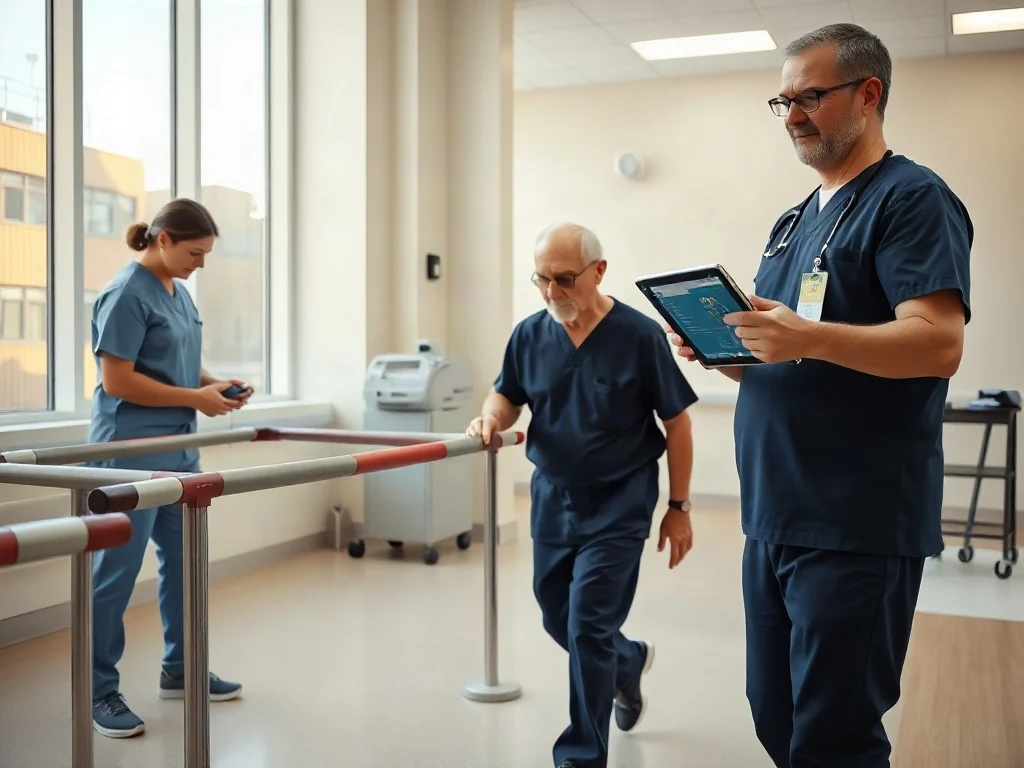
Inpatient rehabilitation facilities (IRFs) across the United States are investing in more reliable IT infrastructure to support care teams that work across inpatient rooms, satellite clinics and aquatic therapy pools. The goal is to keep clinicians connected to patient data wherever therapy happens, and to help patients recover after traumatic injuries or chronic illness.
Healthcare technology specialists say a mix of on-premises data centers, cloud services and secure networks now forms the backbone of modern rehabilitation care.
What Inpatient Rehabilitation Involves
IRFs provide intensive, post-acute care for patients recovering from events such as strokes, spinal cord injuries, brain injuries and major orthopedic surgery. Patients typically arrive after a stay in an acute care hospital.
Care is interdisciplinary. Physical therapists rebuild strength and mobility, occupational therapists help patients relearn daily tasks, and speech-language pathologists address communication and swallowing. Some programs add music therapy or other personalized approaches.
Medicare sets a demanding standard for these facilities. Under federal rules, patients generally must be able to participate in and benefit from about three hours of therapy per day, at least five days a week. That schedule leaves little room for scheduling errors or missing records.
Why Infrastructure Matters
Rehabilitation care rarely happens in one place. A patient may start the morning in a gym, move to a pool for aquatic therapy and finish the day in a private room. Some also receive follow-up care at satellite clinics.
Each setting needs access to the same up-to-date information: treatment plans, medication lists, therapy goals and progress notes. A weak wireless network, slow application or unreliable server can disrupt a session and cut into limited therapy time.
The environments also pose technical challenges. Pool areas, for example, demand ruggedized, moisture-resistant equipment and strong wireless coverage. Large therapy gyms, with their equipment and open layouts, can create connectivity dead zones.
The Hybrid Approach
Many healthcare organizations now combine on-premises data centers with cloud services. Systems that need low latency or tight local control, such as electronic health records (EHRs) and imaging archives, often remain on-site. Cloud platforms handle scalable workloads such as analytics, backup and disaster recovery.
Telehealth and remote monitoring add further demand. Rehabilitation providers increasingly use virtual visits and home-exercise platforms to extend care after discharge. These tools depend on dependable bandwidth and secure integration with the core medical record.
Data from therapy technology, including robotic gait trainers, sensor-based balance systems and virtual reality programs, also flows into clinical records. Without sturdy infrastructure, that information stays siloed and does little to inform treatment decisions.
Security and Compliance Pressures
Cybersecurity remains a top concern for all healthcare providers. The U.S. Department of Health and Human Services Office for Civil Rights, which enforces the HIPAA Security Rule, has reported steady growth in large breaches tied to hacking and ransomware in recent years.
Rehabilitation facilities face particular exposure because they rely on many connected devices, from therapy equipment to mobile workstations. Each device widens the attack surface. Security teams commonly respond with network segmentation, multifactor authentication, endpoint monitoring and regular staff training.
Downtime carries clinical consequences. If a ransomware attack or outage takes systems offline, therapists may lose access to a patient’s precautions, goals and history. Backup and recovery planning, including offsite or cloud-based copies of critical data, has become a core element of care continuity.
Staffing and Workflow Considerations
Technology also affects the people who deliver care. Therapists spend significant time on documentation, and clunky systems add to the burden. Mobile devices and streamlined EHR workflows let clinicians record progress at the point of care rather than at the end of a shift.
Healthcare IT leaders also point to the need for consistent performance across sites. A satellite clinic should offer the same speed, access and security as the main campus. Standardized network design and centralized management help achieve that without adding on-site IT staff at every location.
What It Means for the Industry
For hospital executives, the message is that IT spending in rehabilitation is a clinical issue as much as an operational one. Reliable systems protect therapy time, support outcomes reporting and help facilities meet regulatory requirements.
Patients and families may notice the effects indirectly: fewer delays, more coordinated care and easier transitions from hospital to home.
What to Watch Next
Several trends bear watching. Providers are exploring artificial intelligence tools that could reduce documentation work and flag patients at risk of setbacks. Wearable sensors may allow therapists to track recovery after discharge. Both depend on the same foundation of secure, high-performing networks and well-integrated data.
Federal cybersecurity expectations for healthcare are also likely to tighten, which would push rehabilitation providers to modernize aging systems. Facilities that build flexible infrastructure now will be better positioned to adopt these tools as they mature.
Frequently Asked Questions
Why do inpatient rehabilitation facilities need such dependable IT compared with other care settings?
Medicare expects patients to take part in about three hours of therapy a day, at least five days a week. With so little slack in the schedule, a slow application, weak Wi-Fi or an unavailable record can waste therapy time and disrupt a session.
Why are pools and large therapy gyms especially difficult for hospital networks?
Pool areas need ruggedized, moisture-resistant equipment and strong wireless coverage. Large gyms have bulky equipment and open layouts that can create connectivity dead zones. Therapists still need treatment plans and progress notes in these spaces, so coverage has to be planned with care.
Which systems usually stay on-site and which move to the cloud in a hybrid model?
Systems that need low latency or tight local control, such as electronic health records and imaging archives, often stay in on-premises data centers. Cloud platforms generally handle scalable workloads like analytics, backup and disaster recovery, which gives facilities flexibility without risking core clinical performance.
How does therapy technology like robotic gait trainers fit into the IT picture?
Robotic gait trainers, sensor-based balance systems and virtual reality programs generate data that should flow into the patient's clinical record. Without sturdy infrastructure and integration, that information stays siloed and cannot inform treatment decisions, which limits the value of the equipment.
Why are rehabilitation facilities particularly exposed to cyberattacks?
They depend on many connected devices, from therapy equipment to mobile workstations, and each one widens the attack surface. Common defenses include network segmentation, multifactor authentication, endpoint monitoring and regular staff training, supported by offsite or cloud backups that keep care going if systems fail.
What happens to patient care if ransomware or an outage takes systems offline?
Therapists may lose access to a patient's precautions, goals and history, which can affect safety and continuity of care. That is why backup and recovery planning, including offsite or cloud-based copies of critical data, is now treated as a core part of care continuity.