
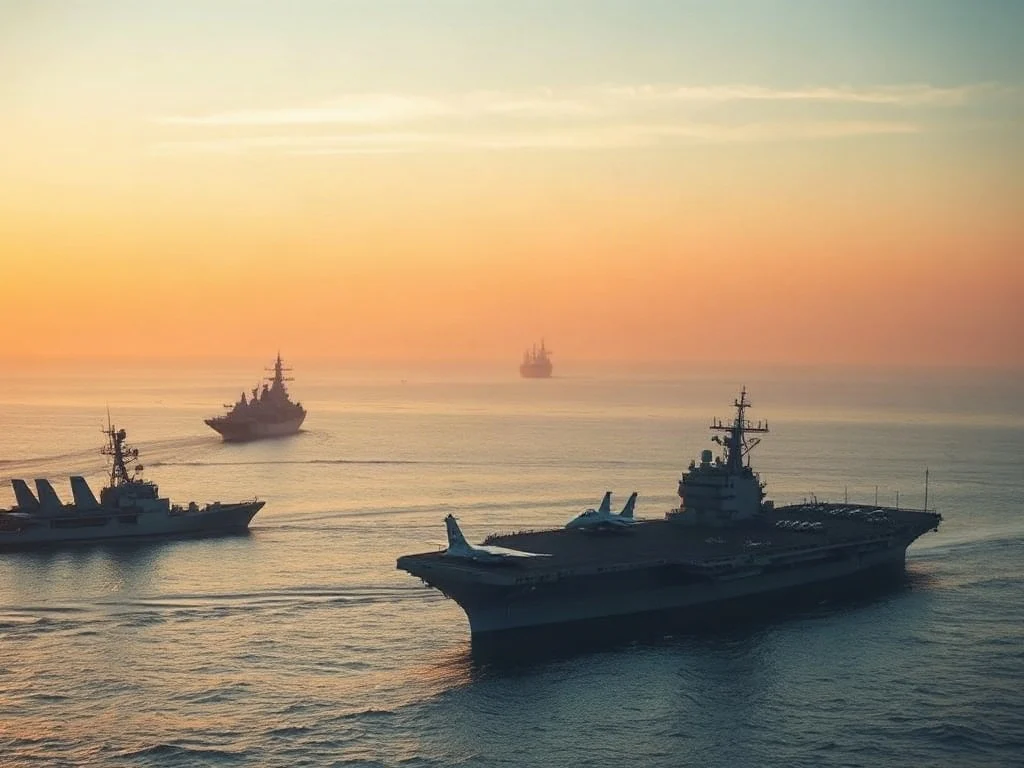
President Donald Trump has said further US attacks on Iran are ‘highly unlikely’, while insisting Washington is maintaining a ‘status quo’ and remains ‘locked and loaded’ if conditions change. The statement is built to do two jobs at once: reassure markets and allies that escalation is not imminent, and warn Tehran that restraint is conditional. This analysis looks at what the remark does and does not establish, why a pause in strikes is not the same as stability, and which indicators matter more than the rhetoric. The report itself is brief, so what follows separates what was said from what history and strategic logic suggest.
What the statement actually commits the US to
Strip away the tone and the message contains three separate claims. The first is a probability judgment: more strikes are ‘highly unlikely’. The second is a description of posture: the United States is holding a status quo. The third is a conditional threat: forces are ‘locked and loaded’.
None of these is a commitment. A probability estimate from a president is a reading of his own intentions, and those can change quickly. ‘Status quo’ is undefined, since the report does not say which Iranian behaviors are tolerated and which are not. ‘Locked and loaded’ is a signal of readiness, not a policy. The deliberate vagueness is typical of strategic ambiguity, which preserves freedom of action but also makes misreading more likely.
Background: how the US and Iran reached this point
From nuclear diplomacy to maximum pressure
The modern confrontation sits inside a long history of Iran-United States relations. The 2015 Joint Comprehensive Plan of Action limited Iran’s enrichment in exchange for sanctions relief. Trump withdrew the US from the agreement in May 2018 and reimposed sanctions against Iran. Critics argue that decision removed inspection constraints without securing a replacement. Supporters argue the deal’s sunset clauses and its silence on missiles and regional proxies made it inadequate. Both positions have substance, and the dispute still shapes how each side reads the other’s intentions.
Direct military episodes
Open force has been used sparingly but consequentially. The January 2020 assassination of Qasem Soleimani was followed by Iranian missile strikes on US-used bases in Iraq, and neither side pushed on to full-scale war. In June 2025, during the Twelve-Day War between Israel and Iran, the US carried out Operation Midnight Hammer against Iranian nuclear sites, including the Fordow Fuel Enrichment Plant. A ceasefire followed within days. Assessments of how much damage the strikes did to Iran’s nuclear program were contested publicly, which is the central analytical problem for anyone judging whether the status quo is durable.
Reading the message as deterrence, not de-escalation
In deterrence theory, threats work only if they are credible and if the adversary understands what behavior triggers them. The Trump formulation reassures on the first point and stays silent on the second. Calling further attacks ‘highly unlikely’ lowers the temperature, while ‘locked and loaded’ keeps the threat visible. This is classic coercive diplomacy: pressure paired with an implied offer of calm.
The audience problem
The statement is addressed to at least four audiences, and their needs conflict.
- Tehran is meant to hear that restraint is available but revocable.
- Israel is meant to hear that US forces remain ready, though Israeli planners may read ‘highly unlikely’ as a signal to avoid independent action or to prepare for it.
- Gulf partners and energy markets are meant to hear that disruption is not expected.
- The US public and Congress are meant to hear that no new war is being started.
A message tuned for all four will tend to be the least specific one that satisfies each, which is why it reads as noncommittal.
Why a pause is not the same as stability
The verification gap
The biggest unknown is the state of Iran’s nuclear material and capabilities. The International Atomic Energy Agency has repeatedly stressed that inspectors need access to confirm what Iran holds. Its public reporting is available at the IAEA website. Iran remains a party to the Treaty on the Non-Proliferation of Nuclear Weapons, but threats to reduce cooperation or leave the treaty have periodically surfaced. If inspectors lose visibility, the ‘status quo’ becomes an assumption rather than a verified condition, and uncertainty is itself a driver of preemptive thinking.
Maritime and proxy flashpoints
The Strait of Hormuz is one of the world’s most important oil transit chokepoints, so even limited harassment of shipping has outsized economic effects. The Islamic Revolutionary Guard Corps also operates through partners and networks, giving Iran options for indirect pressure that sit below the threshold of a direct US response. In a proxy war environment, an attack by a third party can force Washington’s hand even when neither government wants escalation.
The counterargument
A fair critic could say the ‘highly unlikely’ framing is simply accurate. The costs of renewed strikes are high, including retaliation against US personnel, oil price volatility and domestic political risk. Iran has also shown a pattern of calibrated, often telegraphed responses, as in 2020. On this reading, mutual deterrence is working and the rhetoric merely describes it. The weakness in that view is that calibrated responses depend on both sides reading signals correctly, and ambiguous language raises the odds of error.
Legal and domestic constraints
Presidential authority to use force is contested ground. The War Powers Resolution requires notification to Congress after hostilities begin and sets time limits, but successive administrations have interpreted its reach narrowly. Congressional debate over Iran has recurred since 2020. A statement that new strikes are unlikely also lowers the pressure for legislative limits, while ‘locked and loaded’ preserves executive flexibility. Whether that balance is desirable is a political judgment, but it is worth noting that the rhetoric serves the executive’s interests in both directions.
How to evaluate the signal: what to monitor
Readers, analysts and businesses exposed to Gulf risk should weight observable indicators above presidential phrasing. Useful measures include:
- IAEA access and reporting: any change in inspector presence or in the agency’s statements about stockpile accounting.
- Force posture: carrier group movements, bomber deployments and air defense reinforcement, which are costlier signals than speeches.
- Shipping and insurance conditions around Hormuz, which price risk faster than diplomats do.
- Israeli statements and actions, since Israel’s threat perception can diverge from Washington’s.
- Back-channel diplomacy: confirmed talks through intermediaries are a stronger sign of de-escalation than public reassurance.
- Sanctions enforcement changes, which indicate whether economic pressure is being tightened or traded.
A common mistake is treating one statement as a trend. The more reliable approach is to track whether words, deployments and diplomacy point in the same direction. For related background on regional risk and energy exposure, readers can consult resources such as the Arms Control Association, which tracks Iran’s nuclear file in detail.
FAQ: US attacks on Iran
Will the US attack Iran again?
The president says it is ‘highly unlikely’, but that is a statement of intent, not a binding commitment. Events such as a verified nuclear breakout, an attack on US forces or major disruption in the Gulf could change the calculation quickly.
What does ‘status quo’ mean in the US-Iran context?
The report does not define it. In practice it appears to mean no new US strikes, continued pressure and a maintained military presence, while Iran refrains from actions Washington treats as red lines. Those red lines have not been publicly specified.
What does ‘locked and loaded’ signal?
It is a readiness signal. It tells Iran that US forces can act quickly if the situation shifts, and it preserves deterrent credibility without announcing a decision.
Why does Iran’s nuclear program remain central?
Because uncertainty over enrichment capacity and stockpiles is the main trigger for military planning on all sides. Without reliable inspections, each government may assume the worst.
The real test is who defines a change
The most important insight is that ‘highly unlikely’ describes a present preference, not a structural condition. The status quo holds only while three things stay true: Iran avoids actions the US treats as intolerable, Israel does not force the issue, and neither side misreads a limited incident as the start of something larger. None of these is under Washington’s sole control.
The unanswered question is who gets to declare that the situation has ‘changed’. If the threshold is left undefined, it will be set by events, whether a verification dispute, a shipping incident or a proxy attack, rather than by deliberate policy. Watch for any move to make the red lines explicit, for example through talks or a renewed inspection arrangement. That would be stronger evidence of lasting restraint than any assurance about probabilities. Until then, a reasonable prediction is a fragile calm that is credible mainly because both sides still have more to lose from escalation than from waiting.
Frequently Asked Questions
Does calling further attacks 'highly unlikely' mean the US has ruled out military action against Iran?
No. The phrase is a probability judgment reflecting the president's current intentions, not a binding commitment. Combined with 'locked and loaded', it keeps force on the table. Intentions can change quickly, so the statement signals present restraint that remains conditional rather than a permanent policy.
What does 'status quo' actually refer to in Trump's statement?
It is deliberately undefined. The report does not specify which Iranian behaviors Washington tolerates and which would trigger action. This strategic ambiguity preserves US freedom of action, but it also raises the risk that Tehran or other actors misread where the red lines actually sit.
Why is a pause in strikes not the same as stability?
A pause only means no new attacks are happening now. Underlying issues remain unresolved, especially uncertainty over the state of Iran's nuclear material and capabilities, and the lack of verification. Public assessments of the 2025 strike damage were contested, so the durability of the calm is hard to judge.
Why does the statement sound so vague and noncommittal?
It is aimed at four audiences with conflicting needs: Tehran, Israel, Gulf partners and energy markets, and the US public and Congress. A message tuned to reassure and warn all of them tends to become the least specific version that each can accept, which produces noncommittal wording.
How might Israel interpret the 'highly unlikely' remark differently from Washington's intent?
Washington may intend to show its forces remain ready, but Israeli planners could read 'highly unlikely' as a cue to avoid independent action, or conversely as a reason to prepare for it. The ambiguity leaves room for different strategic conclusions.
Is this message de-escalation or deterrence?
It is closer to deterrence through coercive diplomacy. Calling attacks unlikely lowers tension, while 'locked and loaded' keeps the threat visible. However, it stays silent on which specific behaviors trigger a response, which weakens the clarity deterrence theory says a credible threat needs.