
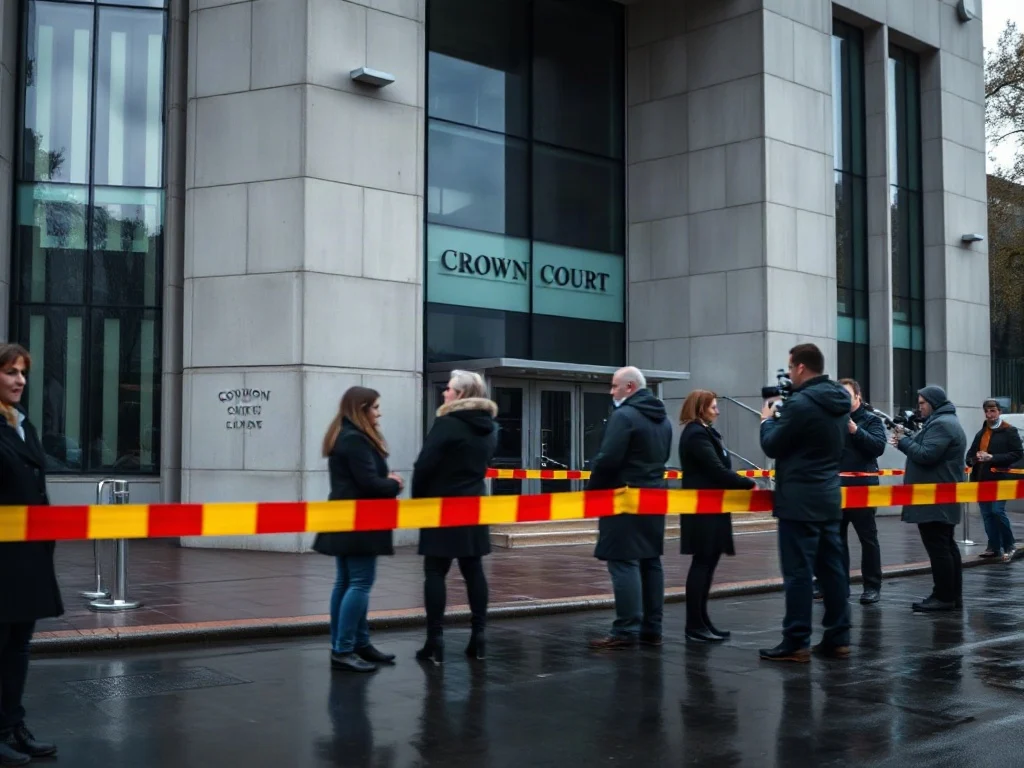
The Russell Brand sentencing at Southwark Crown Court on Monday marks a legal turning point in one of the most closely watched criminal cases involving a British public figure in recent years. According to the report that prompted this analysis, Russell Brand was sentenced for rape and three counts of sexual assault. The source text does not give the length of the sentence, so this article does not state or estimate it. Instead, it examines how such sentences are reached, what the ruling does and does not establish, and why the case matters beyond one individual.
This is an analytical piece, not a recap of courtroom drama. It separates what is confirmed from what is still unknown, and it explains the legal framework that shapes the outcome.
What the Russell Brand Sentencing Is Reported to Involve
The confirmed facts are narrow. The sentencing took place at Southwark Crown Court in London. The offences named are rape and three counts of sexual assault. A video of the moment the judge delivered the sentence was circulated by the news organisation.
Sentencing in England and Wales follows a conviction, either after a jury verdict or a guilty plea. Whatever the route, the sentencing hearing is a separate stage with its own rules and evidence. Readers should treat the judge’s sentencing remarks as the authoritative record. Headlines and social media summaries are not.
What the source does not tell us
- The total custodial term, if any, and how it is structured across the individual counts.
- Whether sentences run concurrently or consecutively.
- Whether any extended sentence or additional orders were imposed.
- Whether an appeal has been lodged or is planned.
Anyone searching for the Russell Brand sentence length should consult the court’s published remarks or an established news organisation’s full report. Guessing at the figure helps nobody and risks spreading error.
How a Case Reaches Sentencing in England and Wales
The path to a sentencing hearing has several stages. Police investigate, and the Crown Prosecution Service decides whether the evidence meets its charging test. The Metropolitan Police investigates many high-profile London cases. The CPS applies its Full Code Test, which asks whether there is a realistic prospect of conviction and whether prosecution is in the public interest. Its public guidance is available on the CPS website.
Once charged, a defendant is protected by the presumption of innocence. The prosecution carries the burden of proof and must satisfy a jury beyond reasonable doubt. Only after a guilty verdict or plea does the judge turn to punishment.
This sequence matters for public understanding. Sentencing does not re-argue guilt. It measures the seriousness of offences already established, which is why sentencing remarks often differ in tone from the trial itself.
How Judges Determine a Sentence for Sexual Offences
Sentencing is structured rather than improvised. The Sentencing Council publishes definitive guidelines that courts must follow unless it is contrary to the interests of justice. The offences themselves are defined mainly in the Sexual Offences Act 2003. Rape carries a maximum of life imprisonment. Sexual assault carries a maximum of ten years.
Culpability and harm
The guidelines for rape and sexual assault use a two-part assessment. The judge first places the offence in a culpability category, looking at factors such as planning, abuse of trust, use of intoxicants or the targeting of a vulnerable person. The judge then assesses harm to the victim, including psychological and physical effects. Together these set a starting point and a range. For the most serious rape category, the guideline range extends well into double-digit years. The full tables are on the Sentencing Council website.
Aggravating and mitigating factors
From the starting point, the judge adjusts for aggravating features, such as multiple victims, a pattern of offending or abuse of a position of influence. Mitigating features include previous good character, genuine remorse and personal circumstances. A victim impact statement may inform the harm assessment, though it does not dictate the outcome.
Why multiple counts complicate the arithmetic
When several offences are sentenced together, the judge must apply the principle of totality. The overall sentence has to be just and proportionate to the whole course of offending. That is why a reader cannot simply add up maximum terms or guideline starting points and reach a reliable figure.
The Russell Brand Sentencing in Context: Power, Fame and Accountability
The case sits within a wider public debate that gained momentum with the Me Too movement. A critical reading requires some discipline here. The movement changed public conversation about reporting and credibility. Criminal courts, however, operate on evidence, procedure and legal thresholds, not on public sentiment. A court outcome should be judged on those terms.
Fame as a factor in public perception
Celebrity creates distortions. Followers can form parasocial bonds with a performer, which can make some audiences reluctant to accept serious allegations. Critics of the entertainment industry argue that status can also deter complainants from coming forward. Both dynamics are plausible and documented in general terms. Neither proves anything about a particular case. The verdict and sentence, tested in court, are the relevant evidence.
The limits of the “cancel culture” frame
Commentators often describe reputational fallout as cancel culture. That label is analytically weak when applied to a criminal sentence. Reputational loss and criminal punishment are different mechanisms. One is social and informal. The other is a state-imposed consequence following a fair process with rights of appeal. Conflating the two obscures more than it explains.
What Happens After Sentencing
A sentence is not necessarily the end of the legal process. A defendant can seek permission to appeal to the Court of Appeal against conviction, sentence or both. Notice normally has to be given within 28 days, and permission is not automatic. Appeals against conviction succeed only on specific legal grounds. The prosecution can also refer an unduly lenient sentence to the Court of Appeal in qualifying cases, within a short time limit.
Other consequences follow by operation of law. A conviction for a sexual offence typically triggers notification requirements under the Sexual Offences Act 2003, and their duration depends on the sentence imposed. Courts may also consider ancillary orders. The exact package in this case should be read from the sentencing remarks rather than assumed.
Practical Guidance for Readers, Writers and Creators
High-profile sentencing cases generate misinformation quickly. These practices help.
- Verify the primary source. Use the judge’s sentencing remarks or the official court summary where published, and check the Judiciary of England and Wales website.
- Distinguish stages. Charge, conviction, sentence and appeal are separate events with different legal meanings.
- Respect complainant anonymity. Complainants in sexual offence cases have lifetime anonymity. Identifying them, or publishing details that could allow identification, can be a criminal offence.
- Watch for contempt risks. If an appeal or related proceedings are live, commentary that prejudices them may amount to contempt of court.
- Avoid unattributed figures. Do not repeat a sentence length, release date or parole estimate unless a reliable source states it.
Common mistakes to avoid
- Treating the maximum penalty as the expected penalty.
- Assuming a headline term equals time actually served in custody.
- Presenting social media rumour about other allegations as established fact.
- Using the case to make sweeping claims about an entire industry without evidence.
Frequently Asked Questions
Where was Russell Brand sentenced?
According to the source report, he was sentenced at Southwark Crown Court in London on Monday for rape and three counts of sexual assault.
How long is the Russell Brand sentence?
The source text does not state the length. Check the judge’s published sentencing remarks or a full report from an established news organisation.
Can the sentence be appealed?
Yes, in principle. A defendant may apply to the Court of Appeal for permission to challenge a conviction or sentence, normally within 28 days. Permission is not guaranteed.
How do judges decide sentences for rape?
They apply Sentencing Council guidelines. These assess culpability and harm, then adjust for aggravating and mitigating factors and for the totality of the offending.
Does a sentence mean the legal process is over?
Not necessarily. Appeals, referrals and post-sentence requirements can follow, and the sentencing remarks set out the immediate consequences.
The Question That Outlasts the Sentence
The most important insight from this case is structural, not personal. A sentencing hearing converts an intensely public, emotionally charged narrative into a bounded legal outcome, with defined offences, guideline ranges and rights of appeal. The risk for the public is treating that outcome as a verdict on an entire culture, an industry or a political persona. The risk for the justice system is that intense attention distorts how ordinary cases are understood.
Watch three things next. First, the published sentencing remarks, which will show how the judge weighed culpability, harm and any aggravating features. Second, whether an appeal is lodged, since the Court of Appeal’s reasoning would shape the final legal position. Third, how media organisations, platforms and talent agencies change their vetting and complaints procedures. That is a reasonable expectation rather than a confirmed development, and it will test whether this case produces lasting institutional change or only a brief spike of attention.
The unanswered question is whether public attention will follow the case through its quieter later stages, such as appeals and the long aftermath for those affected, or move on once the headline fades. That answer will say more about the culture around these cases than the sentence itself.