
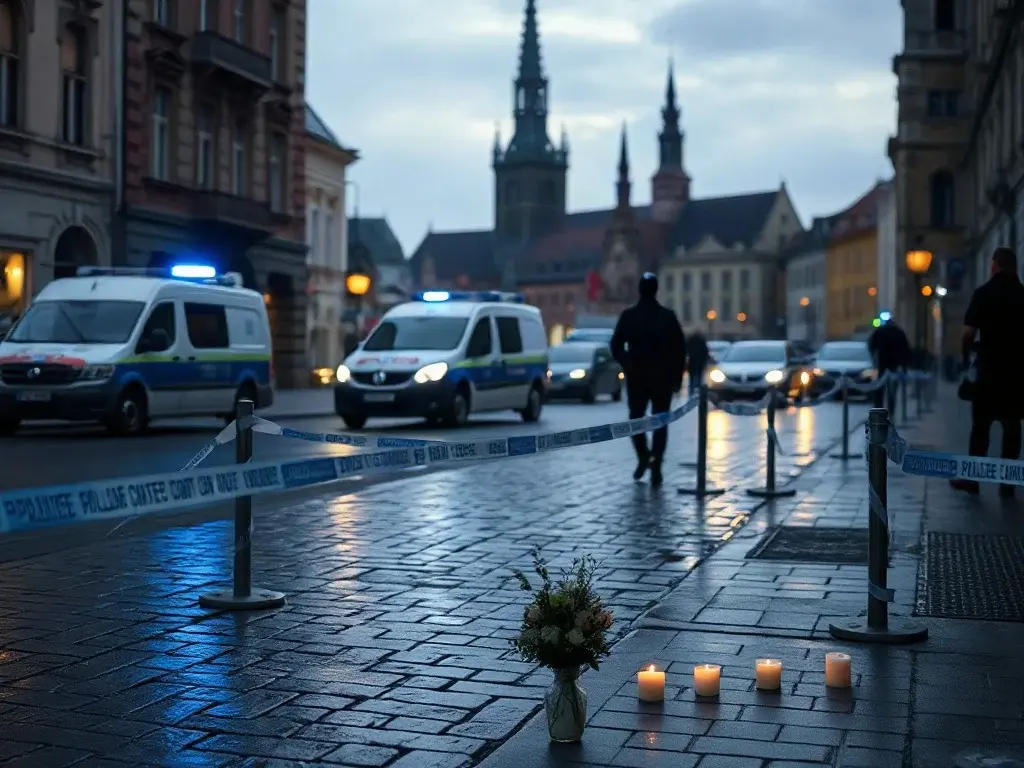
The death of the Krakow shooting suspect in hospital, as reported by police, closes one question and opens several harder ones. According to the information released so far, at least six people were killed in the shooting, and the bodies of three of the suspect’s family members were found at their home. A suspect who cannot be tried cannot explain a motive, and a public that wants answers will have to rely on the evidence instead. This analysis separates what authorities have actually stated from what commentators are already inferring, and explains why the gap matters for the investigation, for the victims’ families, and for the wider debate over firearms in Poland.
What Police Have Confirmed About the Krakow Shooting
Reporting at this stage rests on a short list of statements. Police say the suspect has died in hospital. They say at least six people were killed in the shooting. They also say three bodies of the suspect’s family members were found at the suspect’s home. Nothing beyond that should be treated as established.
Several points are not clear from the available reporting. It is unconfirmed whether the three bodies found at the home are counted among the six dead or are additional victims. The cause of the suspect’s death is also not stated, and neither are the type of weapon, its legal status, or any motive. Responsible readers should treat these as open questions. Early casualty counts in mass shooting events are frequently revised as investigators reconcile hospital records, scene findings and witness accounts, and the phrase “at least six” signals that the figure is provisional.
The city involved, Kraków, is the capital of the Lesser Poland Voivodeship and one of the country’s most visited cities. Official updates will come primarily from Polish police and prosecutors, and the official Polish police website is the most reliable place to check for corrections.
Why the Death of the Suspect Changes the Investigation
When a suspect dies before questioning, the legal and investigative picture shifts in predictable ways. The criminal case against that individual cannot proceed to trial, yet the inquiry does not end. Prosecutors still need to establish the sequence of events, the cause of each death, and whether anyone else was involved or had warning signs.
The loss of direct testimony
A living suspect can be questioned about motive, planning, access to weapons and any contact with others. That route is now closed. Investigators must reconstruct intent indirectly from messages, digital records, financial and medical history, witness statements, and the physical evidence at each location. This is slower and produces more tentative conclusions. Any motive offered in the coming days should be read as hypothesis unless prosecutors state it as a finding.
The role of forensic evidence
An autopsy and wider forensic science work will carry unusual weight. Ballistic comparison can show whether the same firearm was used at several scenes. Timelines built from phone data, camera footage and emergency calls can establish whether the killings at the home came before or after the public shooting. That sequence matters, because it shapes how the event is classified and which legal questions follow.
Accountability without a trial
A trial also acts as a public accounting. Without one, questions about how the suspect obtained a weapon, whether any agency had contact with the suspect, or whether warnings were missed will have to be answered through other channels, such as a prosecutorial report or an administrative review. Critics of institutional responses to violence often note that these reviews are less transparent than court proceedings. Whether Polish authorities publish findings in detail will be a meaningful test.
Reading the Family Home Discovery Carefully
The finding of three family members’ bodies at the suspect’s home is the most analytically significant detail in the report, and also the easiest to misread. Cases in which a perpetrator kills relatives and then attacks others are discussed in the research literature under categories such as familicide and murder–suicide. A number of studies of mass shootings in other countries have found that a substantial share of incidents involve a connection to domestic violence, either as a prior history or as part of the attack itself.
That pattern is a reason for investigators to examine the suspect’s household history. It is not evidence about this specific case. No official statement in the reporting so far says the suspect had a record of domestic abuse, prior police contact or a mental health diagnosis, and presenting any of these as fact would be speculation. The discipline required here is to keep a general research pattern separate from the particular facts of the Kraków case.
Facts, Unknowns and Inferences: A Working Guide
The table below summarises how a careful reader should classify the information currently available.
| Claim | Status |
|---|---|
| The suspect has died in hospital | Stated by police |
| At least six people were killed | Stated by police; figure may change |
| Three family members’ bodies were found at the suspect’s home | Stated by police |
| Overlap between the six deaths and the three bodies | Not clarified |
| Cause of the suspect’s death | Not stated |
| Motive and weapon source | Not stated |
Anyone searching for what happened in the Krakow shooting should expect this table to change as prosecutors release findings. Until then, definitive narratives are premature.
Gun Laws in Poland and the Policy Debate
Each incident of this kind prompts a debate about gun laws in Poland. In general terms, Poland is regarded as having a restrictive licensing regime compared with countries such as the United States. Civilian ownership typically requires a police-issued permit and medical and psychological assessments. Public mass shootings are comparatively rare there. The details of how this system functions, and whether it was followed in this case, are not yet known.
This is where commentary tends to overreach. Two opposing arguments appear after almost every shooting. One holds that the event proves existing gun control is inadequate. The other holds that it proves strict laws cannot stop determined offenders. Neither conclusion follows from a single incident without facts about the weapon. If the firearm was held legally, attention turns to licensing review and monitoring of permit holders. If it was held illegally, the focus shifts to trafficking, theft and the diversion of weapons. If it was a different kind of weapon altogether, the debate changes again.
Comparative data helps here. Cross-country figures on homicide are compiled by bodies such as Eurostat, and the agency’s official statistics portal allows readers to compare national homicide trends. Rare mass-casualty events carry large political weight but contribute little to overall homicide totals, so a proportionate policy response should rest on broader data and not on a single case.
Red flags and early intervention
One practical policy area deserves attention regardless of the specific facts: how warning signs reach licensing authorities. Systems that let relatives, doctors or police flag concerns about a permit holder, often called red flag laws in other jurisdictions, are debated for their effectiveness and their civil liberties trade-offs. Whether any such mechanism is relevant in Poland depends on facts the investigation has not yet released.
Responsible Coverage and What Newsrooms Should Avoid
Coverage of an event where the alleged perpetrator is dead creates a particular risk: the suspect becomes the only narrator in public memory, and victims recede. Standards of journalism ethics argue for restraint. Good practice includes:
- Attributing every claim to police or prosecutors and labelling unconfirmed details as such.
- Avoiding speculation about mental health, which stigmatises people with illness and is rarely a reliable explanation for violence.
- Naming and remembering victims in preference to dwelling on the suspect’s identity or manifesto-style material.
- Updating casualty figures transparently when they change.
Readers can apply the same standard. Treat early social media claims about motive, nationality or ideology with suspicion. In the first days after a shooting, false attributions spread faster than corrections.
What Institutions and Readers Should Monitor
Several developments will show whether this case yields real understanding or only a brief news cycle.
- Official casualty clarification. Watch for a definitive statement on how many people died, where, and in what order.
- Weapon provenance. The legal status of the firearm will determine the direction of the policy debate.
- Prior contact with authorities. Any earlier police reports, permit reviews or welfare checks involving the household would raise questions about missed intervention.
- Emergency response review. The performance of emergency services and the receiving trauma center is routinely assessed after events of this scale, and findings can improve future response.
- Prosecutorial reporting. The role of the public prosecutor will be central in publishing a reasoned account of what occurred.
FAQ: Krakow Shooting Suspect and the Investigation
What happened in the Krakow shooting?
Police say at least six people were killed in a shooting, the suspect later died in hospital, and three bodies of the suspect’s family members were found at their home. Further details, including motive and weapon, have not been confirmed in the reporting available.
Did the Krakow shooting suspect die from injuries sustained in the incident?
Police have said the suspect died in hospital, but the cause of death has not been stated. It should not be assumed to be the result of any particular event until authorities say so.
Are the family members counted among the six victims?
This has not been clarified. The reports describe at least six killed in the shooting and separately note three bodies at the suspect’s home, so the overlap is unknown.
Will there be a trial?
A criminal trial of the suspect is not possible after death, but prosecutors can still complete an investigation and publish findings about what happened.
The Question a Closed Case Cannot Answer
The most important lesson of this early reporting is how much is still unknown at the very moment the public most wants certainty. The suspect’s death removes the one person who could have explained the violence, and that places the full burden on investigators to reconstruct it from evidence. The three bodies at the family home suggest that the violence did not begin in public, which is why any account that begins and ends with the shooting scene will be incomplete.
The next signal to watch is not the final death toll but the quality of the official disclosure. If prosecutors publish a clear timeline, the weapon’s legal history and any prior contact between the household and the authorities, Poland will have the material for an evidence-based debate about prevention. If they do not, the vacuum will be filled by assumption, and the policy conversation will repeat the familiar pattern in which each side finds in a single tragedy the argument it already held. The unanswered question is whether anyone had the chance to intervene earlier, and whether the institutions responsible will be willing to say so.
Frequently Asked Questions
Are the three bodies found at the suspect's home included in the six reported deaths?
This is not confirmed. Police have said at least six people were killed in the shooting and that three family members' bodies were found at the suspect's home, but they have not clarified whether those three are part of the six or additional victims. The count may be revised.
Why does the phrase "at least six" matter in early reports?
It signals that the figure is provisional. In mass shooting events, casualty counts are often revised as investigators reconcile hospital records, scene findings and witness accounts. Readers should treat the number as a minimum and watch for official updates rather than assuming it is final.
Can the investigation continue even though the suspect has died?
Yes. The criminal case against the suspect cannot go to trial, but prosecutors still need to establish the sequence of events, the cause of each death, and whether anyone else was involved or missed warning signs. The inquiry simply relies more on evidence than on testimony.
How can investigators determine a motive without questioning the suspect?
They must reconstruct intent indirectly from messages, digital records, financial and medical history, witness statements and physical evidence at each location. This is slower and yields more tentative conclusions, so any motive offered early should be treated as a hypothesis unless prosecutors present it as a finding.
Why does the order of the killings at the home and the public shooting matter?
Timelines built from phone data, camera footage and emergency calls can show whether the family members were killed before or after the public shooting. That sequence shapes how the event is classified and which legal and investigative questions follow, so it carries real weight in the final assessment.
Where can readers find reliable updates and corrections?
Official updates will come mainly from Polish police and prosecutors. The official Polish police website is the most reliable place to check for corrections. Readers should be cautious with commentary that infers motive, weapon type or legal status, since none of these have been confirmed.