
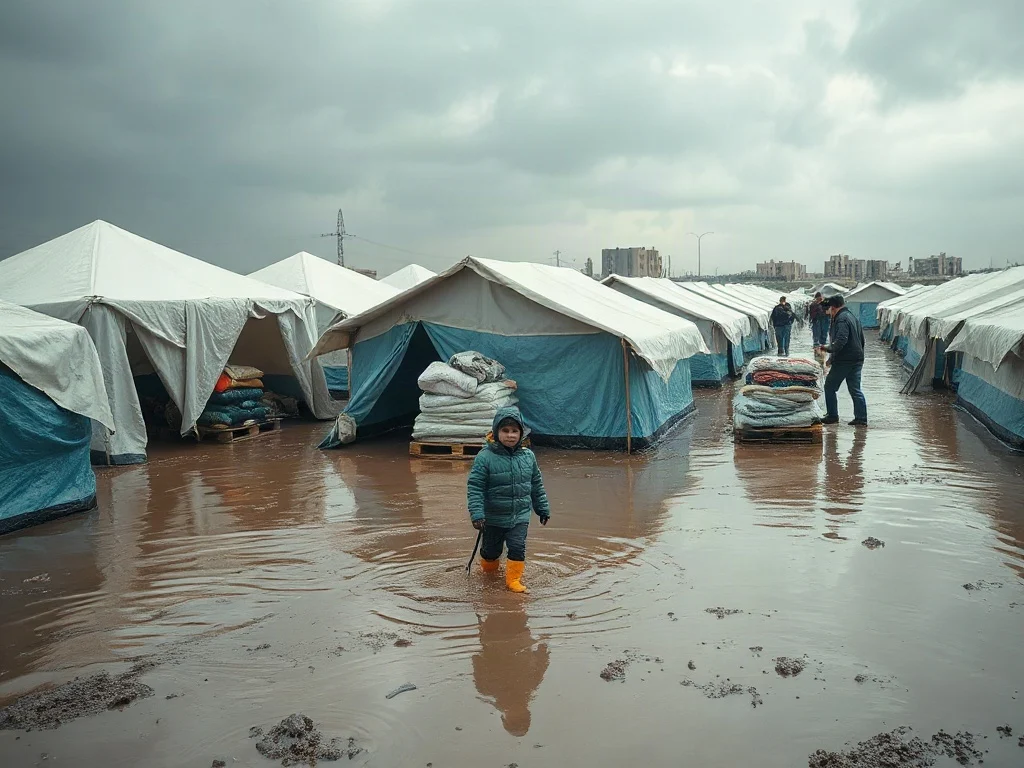
Reports that Gaza tents flooded after heavy rain are not a weather story. Tens of thousands of tents, the temporary shelters of Palestinians displaced by Israel’s war with Hamas, were reported flooded, and the failure is structural. The rain was predictable. The vulnerability of makeshift camps to it was predictable too. This analysis explains why flooding in displacement camps is so severe, what it means for public health, where responsibility is contested, and what to watch as winter progresses.
The news report is brief, so this article separates what is established from what is not. The core fact is that heavy rain flooded shelters used by displaced Palestinians. Precise figures for people affected, injuries, and deaths vary by source and change quickly. Where numbers are uncertain, this article says so rather than guessing.
Background: How Gaza Reached the Point Where Tents Are Homes
The Gaza war began after the Hamas-led attack on southern Israel on 7 October 2023. Hamas governed the Gaza Strip at the time. Israel’s military campaign and the earlier blockade of the Gaza Strip left the territory with extensive damage to housing and infrastructure. United Nations agencies have repeatedly said that the large majority of Gaza’s roughly two million residents have been displaced, many of them several times.
For most of these internally displaced people, shelter means a tent, a tarpaulin stretched over scrap timber, or a damaged building. Camps have formed in places such as Khan Yunis, on the coast, and around Gaza City. Many sit on sandy or low-lying ground chosen because it was available, not because it was suitable. A refugee camp normally involves site planning, drainage, and sanitation. Many of Gaza’s camps grew without them.
Why Tents Flood So Easily in Gaza
Gaza has a Mediterranean climate. Most rain falls between roughly November and March, often in intense bursts. Heavy winter rain is normal there. What has changed is the capacity to absorb it. Four factors combine.
Placement and Ground Conditions
Camps are packed into small areas with little room for runoff to escape. Tents pitched in depressions collect water, and tents on compacted or clay-rich ground stay saturated. Sandy ground drains better but erodes and collapses under stress.
Damaged Drainage and Sanitation
Stormwater channels, pumping stations, and sewage networks have been damaged or have lost power and fuel. Where drainage fails, rainwater mixes with waste. A flooded tent in this setting is exposed to contaminated water, not just wet bedding.
Worn-Out Materials
Emergency tents are designed for short-term use, typically months, not years. After prolonged sun exposure and repeated relocation, fabric weakens, seams open, and waterproofing fails. Many residents have patched tents with plastic sheeting and cloth, which can fail in a storm.
Constraints on Replacement
Aid agencies have said that bringing in tents, tarpaulins, bedding, and construction material has been slow and uneven. Israel has said it allows humanitarian aid, screens goods for items that could have military use, and accuses Hamas of diverting supplies. Aid organisations dispute how well the system works in practice. Both accounts are part of the record, and an independent reader should weigh them separately. The practical result is not in dispute: the supply of durable shelter has not matched need.
The Health Consequences of Flooded Shelters
The immediate danger is cold and wet exposure. Soaked clothing and bedding, combined with low temperatures at night, raise the risk of hypothermia, particularly in infants, older people, and malnourished children. During the previous winter, Gaza health officials reported infant deaths linked to cold. Those reports came from the territory’s health authorities and were difficult for outsiders to verify independently, so they should be read as reported claims.
The slower dangers are arguably worse. Standing water and overflowing latrines raise the risk of waterborne diseases, including diarrhoeal illness and hepatitis A. Damp, crowded living conditions also encourage respiratory infections and skin conditions such as scabies. The World Health Organization and UNICEF have warned throughout the war that poor sanitation, limited clean water, and overcrowding make outbreaks more likely.
A health system under strain compounds the problem. When hospitals and clinics are damaged, short of fuel, or overwhelmed with trauma cases, treating a child with pneumonia or severe dehydration becomes harder. Flooding therefore does not add one more emergency to the list. It increases pressure on every other emergency.
How Many People Are Affected, and What We Can and Cannot Say
The phrase “tens of thousands of tents” signals scale but not precision. A single tent may hold a family of five or more, so the number of people affected could be far higher than the number of tents. Counts, though, depend on who is counting. Gaza’s civil defence, local authorities, and UN bodies such as the UN Office for the Coordination of Humanitarian Affairs may use different methods, and access constraints limit independent verification. Readers should treat early figures as provisional and look for updates from OCHA’s occupied Palestinian territory office and the UNRWA website. Note that UNRWA itself has faced restrictions and political controversy, which affects how it operates in Gaza.
Why Do Tents Flood in Gaza? The Legal and Humanitarian Dimension
Flooding raises legal questions as well as practical ones. Under international humanitarian law, including the Fourth Geneva Convention, parties to a conflict have obligations concerning civilians’ access to essential supplies and relief. How those obligations apply in Gaza is disputed. Israel argues that it complies with the law and that Hamas’s conduct, including operating among civilians, shapes the humanitarian situation. Human rights organisations and UN officials argue that restrictions on aid and the scale of destruction breach Israel’s obligations. This article takes no position on legal findings, which belong to courts and formal investigations. It does note that a predictable, seasonal hazard is exactly the kind of risk that humanitarian planning is supposed to anticipate.
Humanitarian standards give a measurable benchmark. The Sphere Project sets minimum standards for shelter, water, and sanitation in disasters, including minimum covered living space per person (Sphere Standards). Overcrowded, leaking, and flooded tents in Gaza fall well short of those benchmarks, which exist because they track survival and disease risk.
Practical Lessons: What Reduces Harm in Flooded Camps
Humanitarian practice offers a clear hierarchy of responses. They do not replace durable housing, but they reduce the damage when it rains.
- Site-level drainage: trenches, raised tent platforms, and gravel bases can keep water out faster than new tents can arrive.
- Winterisation kits: sealed tarpaulins, insulated floor mats, blankets, and warm clothing for children prevent cold-related illness.
- Sanitation first: repairing latrines and sewage lines limits contamination when water rises.
- Relocation of the most exposed: moving families from flood-prone ground helps only if safer land and safe movement exist, which is often not the case.
- Disease surveillance: early detection of diarrhoeal and respiratory illness in camps allows faster treatment.
A common mistake is to treat the flood as a one-off disaster and distribute tents once. Repeated storms, damaged tents, and contaminated water mean the response must be continuous. Another mistake is to count tents delivered, not tents that actually keep occupants dry.
The Economics and Politics of Temporary Shelter
Tents are cheap compared with humanitarian aid for permanent housing, and they are fast to deploy. This is why they dominate early emergency response. But when displacement lasts years, tents become the most expensive option over time: they need replacing, they generate health costs, and they delay recovery. Rebuilding Gaza’s housing would require clearing rubble, restoring utilities, and securing materials, which depends on political agreements, security conditions, and funding that remain unsettled. Prefabricated units and caravans have been proposed and debated, but their delivery has been limited by access and politics. Anyone predicting the timeline for dismantling the tent camps should be cautious.
What Could Change Over the Next Few Years
Some trends are fairly clear. Winter storms will return annually. Scientists linking extreme rainfall to climate change note that the eastern Mediterranean is likely to see more variable precipitation, though attributing any single storm to climate change requires specific analysis. What is certain is that camps with poor drainage face the same risk each winter.
Other developments are uncertain. Whether ceasefire arrangements hold, how freely materials enter, and how quickly reconstruction starts will determine whether people remain in tents next winter. Reasonable prediction: unless durable shelter and functioning drainage arrive at scale, each major storm will repeat the pattern of flooding, disease risk, and appeals for urgent aid. That is a forecast based on conditions, not a confirmed outcome.
Frequently Asked Questions
Why are tents in Gaza flooding during heavy rain?
The tents are pitched in crowded, low-lying, poorly drained areas, the fabric is worn from long use, and the sewage and stormwater infrastructure is damaged. Heavy winter rain overwhelms these conditions quickly.
Who is affected when displacement camps in Gaza flood?
Displaced families, many of them with children, older people, and people with illnesses or injuries. Children and infants face the greatest risk from cold and disease.
What diseases can spread after tent flooding?
Contaminated water raises the risk of diarrhoeal disease and hepatitis A. Damp, crowded conditions favour respiratory infections and skin diseases.
Who is responsible for providing shelter in Gaza?
The question is contested. International law places obligations on parties to a conflict, while UN agencies and charities deliver much of the aid. Israel, Hamas, and aid organisations offer competing accounts of what has blocked adequate shelter.
The Real Test Is Not the Storm but the Next Winter
The most important insight from the flooding is that it measures the gap between emergency response and recovery. Tents were meant to bridge a few weeks or months. When they become a long-term home, every storm tests whether the bridge holds, and flooded tents show that it does not.
Three things deserve attention in the coming months. First, whether materials for drainage, winterisation, and durable shelter enter Gaza at a meaningful scale. Second, whether health agencies report rising cases of waterborne and respiratory illness in the camps. Third, whether reconstruction planning identifies safe land and clear timelines for housing, not just promises. The unanswered question is whether the world will treat flooded tents as a seasonal emergency to be repaired each year or as a signal that a longer-term solution for displaced Palestinians is overdue. The evidence so far favours the first approach, and the people living in the tents pay for it.
Frequently Asked Questions
Why do tents in Gaza flood so easily if heavy winter rain is normal there?
The rain itself is not unusual, since most of it falls between November and March. What has changed is the ability to absorb it. Camps sit on low-lying or poorly drained ground, stormwater and sewage systems are damaged, and tents are worn out, so even ordinary storms cause serious flooding.
Why are flooded camps in Gaza a bigger health risk than simply being wet?
Drainage and sanitation systems have failed, so rainwater mixes with sewage and waste. Residents are exposed to contaminated water as well as cold. This raises the risk of waterborne diseases, while wet clothing and low night temperatures add the danger of hypothermia, especially for infants, older people and malnourished children.
Why can't damaged tents simply be replaced with new ones?
Aid agencies say bringing in tents, tarpaulins, bedding and building materials has been slow and uneven. Israel says it allows aid but screens goods for possible military use and accuses Hamas of diverting supplies. Aid groups dispute how well this works. Either way, the supply of durable shelter has not met the need.
How long are emergency tents supposed to last, and why does that matter in Gaza?
Emergency tents are designed for short-term use, typically a few months. In Gaza many families have lived in them far longer, through strong sun and repeated moves. Fabric weakens, seams open and waterproofing fails, and patches of plastic sheeting or cloth often give way in storms.
How reliable are the casualty and infant death figures reported during winter floods?
Figures change quickly and vary by source. Reports of cold-related infant deaths in the previous winter came from Gaza's health authorities and were hard for outsiders to verify independently. The article advises treating them as reported claims and saying so where numbers are uncertain, rather than guessing.
Who is responsible for the shelter crisis in Gaza?
Responsibility is contested. Israel's military campaign and blockade, together with Hamas's alleged diversion of supplies, are cited by different parties. Aid groups also describe obstacles to delivering materials. The article recommends weighing each account separately, while noting that the shortfall in durable shelter is not in dispute.