
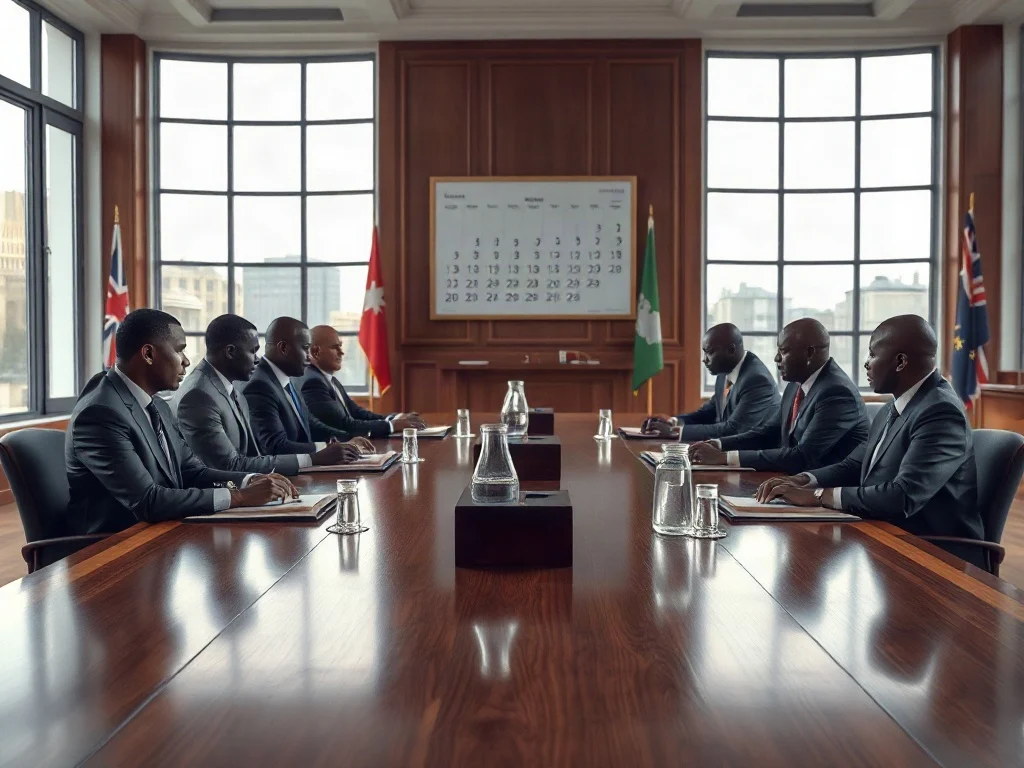
A UK slavery apology has moved from a taboo subject to a stated diplomatic objective, but the wording matters. According to BBC political coverage, British diplomats are now committing to ‘time-bound’ talks on the issue. They want to signal urgency even though no date has been confirmed. That is a real shift in tone, but it is not a shift in outcome. This analysis separates what the commitment contains from what it leaves open, and it sets out the tests that will show whether Britain is negotiating in earnest or managing a diplomatic problem.
What the UK has actually committed to
The reporting supports three things. Britain accepts that the issue needs to be dealt with in a structured process. It describes that process as time-bound. It is offering reassurance about urgency without naming a date. Nothing in the reporting amounts to a formal apology, an agreed text, or an agreed financial mechanism. Anyone reading the headline as an imminent apology is reading more into it than it says.
‘Time-bound’ is a useful word because it constrains a government without binding it. A process can be time-bound with a deadline of six months or six years. The deadline is the substance. Until it is published, the phrase is a procedural promise, not a policy.
Why the date matters more than the vocabulary
The difference between urgency and a deadline
Diplomats can express urgency at no cost. A deadline creates accountability, because a missed date becomes a public failure. Governments that want to preserve flexibility tend to prefer the first and avoid the second. Caribbean governments pressing for a UK government apology for slavery have good reason to ask for a calendar. Without one, ‘talks’ can run for years while the political window closes.
What a credible timetable would contain
- A named negotiating lead on each side.
- A schedule of meetings with agreed agendas.
- A defined output, such as a joint statement, a draft text, or a set of options.
- A date by which the output is due.
If these elements are missing after the next round of meetings, the ‘time-bound’ label is decorative.
The historical backdrop: why the issue is so charged
Compensation for owners, nothing for the enslaved
Britain’s role in the Atlantic slave trade was large and well documented. When the Slavery Abolition Act 1833 ended slavery across most of the empire, the government borrowed heavily to compensate slave owners under the Slave Compensation Act 1837 framework. The formerly enslaved received no payment and were initially subject to an ‘apprenticeship’ system that kept them bound to their former owners. The Legacies of British Slavery database at UCL documents who was compensated, which is why the asymmetry is difficult to dismiss as a historical abstraction. The Treasury confirmed in 2018 that the borrowing was repaid only in 2015, so British taxpayers were still servicing the debt long after the principle of compensating owners had been discredited.
Expressions of regret, but not an apology
British leaders have approached the subject with carefully limited language. Tony Blair expressed ‘deep sorrow’ around the 2007 bicentenary of the abolition of the slave trade, which fell short of a formal apology. In 2015, during a visit to Jamaica, David Cameron urged moving ‘forward’ and announced prison investment instead of engaging on reparations. At the 2024 Commonwealth Heads of Government Meeting in Samoa, Keir Starmer said reparations were not on the agenda. The summit’s final communique nevertheless acknowledged that the time had come for a conversation about reparatory justice. The current commitment to talks is the next step on that trajectory, and it is more concrete than anything before it.
Apology versus reparations: the real fault line
Treating the apology and the reparations question as one issue is the most common analytical mistake. They carry different costs and different risks, and governments weigh them differently.
Why an apology is the lower-cost move
A formal apology is symbolic. It can be worded to avoid admitting specific legal liability, and it costs nothing in the budget. The Netherlands showed the template in December 2022, when Mark Rutte apologised on behalf of the Dutch state for its role in slavery, and the Dutch government also set up a fund for awareness and education initiatives. The Dutch approach separated acknowledgment from compensation. Britain could follow a similar path.
Why reparations are the harder question
The CARICOM Reparations Commission, which operates under CARICOM, has proposed a ten-point plan. It begins with a full formal apology and goes on to repatriation, debt cancellation, public health programmes, education, cultural institutions and technology transfer (see the CARICOM reparations site). In other words, an apology is the start of the Caribbean position, not the end of it. That is why London’s reluctance to separate the two is understandable from a fiscal and precedent standpoint, and also why Caribbean leaders such as Mia Mottley treat a standalone apology with caution. An apology that closes the conversation would be a defeat for them, not a victory.
The strategic question for both sides is whether an apology opens a negotiation or ends one.
Why Britain is moving now
Several pressures converge, and it is worth separating the documented ones from the plausible ones.
- Commonwealth cohesion (documented context). The Commonwealth of Nations has repeatedly seen reparatory justice raised at leaders’ meetings, and the 2024 communique made it harder to avoid. Details are available through the Commonwealth Secretariat.
- Republican momentum (context, not a causal claim). Several Caribbean states have moved to remove the monarch as head of state, which changes the political cost of delay for London. Whether this is driving British policy is interpretation, not established fact.
- Diplomatic competition (reasonable inference). Britain’s Foreign, Commonwealth and Development Office seeks trade, security and climate partnerships with Global South governments, and unresolved historical grievances complicate those relationships.
The monarchy adds a constitutional wrinkle. Charles III has spoken of ‘the greatest sorrow’ for slavery’s suffering, but he acts on ministerial advice. A state apology from the Crown would therefore be a government decision in practice.
How to judge whether the talks are serious
Observers, journalists and campaigners can apply a short checklist to the next announcements.
- Is there a date? A published deadline or schedule is the clearest signal.
- Who is at the table? Ministers signal intent; officials alone suggest containment.
- Is the agenda defined? Talks that list apology, development cooperation and historical education as items are different from open-ended ‘dialogue’.
- Is there a joint text? A shared draft means negotiation. Parallel statements mean positioning.
- What happens to the money question? Silence is not an answer. Watch whether it is excluded explicitly or deferred.
Common mistakes in reading these developments
- Assuming ‘talks’ mean an apology is agreed.
- Equating a statement of regret with a formal apology, which is a legal and rhetorical distinction.
- Treating Caribbean governments as a single bloc. Positions differ by country, economy and domestic politics.
- Ignoring the domestic British audience, where public opinion on the subject is divided and politically sensitive.
Risks and edge cases
Several things could derail the process. A change in the British political climate could make the commitment costly to honour. A leak of draft wording could trigger a domestic backlash before an agreement exists. Caribbean governments may disagree among themselves about whether to accept an apology without a reparations framework. There is also a legal edge case: wording that implies liability could invite litigation, which is one reason governments favour the language of ‘acknowledgment’ and ‘deep regret’. No court has ordered reparations from Britain for slavery, and the legal route remains untested, so any claim about its likely success is speculation.
Frequently asked questions
Will the UK apologise for slavery?
It has not committed to doing so. The reported commitment is to time-bound talks on the issue, with no confirmed date. An apology is one possible outcome, not a promised one.
What is the difference between an apology and reparations?
An apology is a formal acknowledgment of wrongdoing. Reparations involve practical remedies, which can include funding, development programmes, debt measures or institutional change. CARICOM’s plan treats the apology as the first of ten measures.
Has any European country apologised for slavery?
Yes. The Netherlands apologised in December 2022. The scope and consequences of that apology differ from what Caribbean governments are seeking from Britain, and the comparison is useful but imperfect.
What does ‘time-bound’ mean in diplomacy?
It means a process is expected to conclude within a limited period. Without a stated end date, the term signals intent but creates no enforceable obligation.
The test is the calendar, not the vocabulary
The most important insight is that the language of the commitment is deliberately flexible, and the calendar is the only part that can make it binding. Britain has moved from deflecting the subject to describing a process, which is meaningful progress. But a process with no date is a form of reassurance, not delivery.
The next signals to watch are specific. Does London publish a timetable? Does a minister, rather than an official, lead the talks? Does the agenda explicitly separate apology from reparatory justice, or does it blur them? The unanswered question is whether Britain will treat an apology as the opening of a broader settlement or as a substitute for one. My reasoned expectation, and it is a prediction rather than a fact, is that any first outcome will be a carefully worded acknowledgment paired with educational and development commitments, while the harder questions of compensation remain contested. Whether Caribbean governments accept that as a beginning will define the next phase of this relationship.
Frequently Asked Questions
Does the commitment to 'time-bound' talks mean the UK will apologise soon?
No. The reporting shows only a commitment to a structured process with a stated sense of urgency. No date, formal apology, agreed text or financial mechanism has been confirmed. The phrase is a procedural promise, and its real meaning depends on whether a deadline is published.