
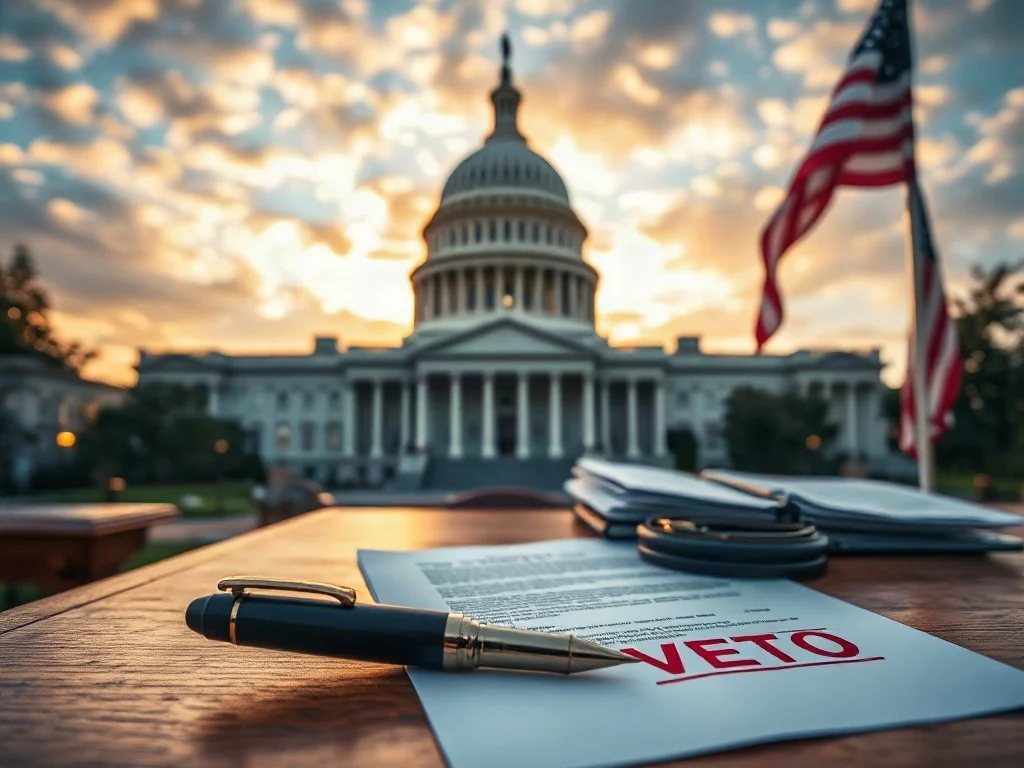
Democratic control of Congress gives the party real institutional power, but far less than the headlines about a political ‘takeover‘ suggest. A majority can pass bills, run investigations, write spending laws and block nominees. It cannot make a bill law without the president’s signature, and that leaves presidential veto power as the central constraint on what Democrats can deliver. This analysis separates what a congressional majority can do on its own from what depends on the White House, the Senate rulebook or the courts.
Why a Congressional Majority Is Not the Same as Governing
The American system is built on separation of powers. Congress writes laws, but the president can reject them and the courts can strike them down. Political scientists call the resulting arrangement divided government whenever the White House and at least one chamber are held by different parties. It is a structural feature, and it should not be read as a malfunction.
For Democrats facing a Republican president, the practical question is not ‘What do we want?’ but ‘What can we force?’ The answer depends on which tools need only a simple majority and which need supermajorities or presidential cooperation.
What Democrats Can Do With a Simple Majority
A majority in a chamber controls its committees, its calendar and its investigative machinery. That control is considerable, and much of it needs no Republican votes.
Set the Agenda and Pass Bills
The majority party picks the Speaker of the House, chairs every committee and decides which bills reach the floor. Democrats can therefore pass bills on health care, voting rights, ethics, labor or taxes. Even if those bills die in the other chamber or at the president’s desk, they serve as a public record and a negotiating position. The minority can sometimes force votes through a discharge petition, but only with enough defections from the majority, so the agenda power is real.
Investigate and Subpoena
Oversight is arguably the most immediate power. Committees such as the House Oversight Committee can hold hearings, demand documents and issue a subpoena. This congressional oversight and subpoena power turns an opposition party into an auditor of the executive branch.
It has limits, however. Administrations routinely resist subpoenas by invoking executive privilege or by slowing compliance. Enforcement often means litigation, which can outlast the two-year term of a Congress. Oversight generates information and political pressure far more reliably than it generates compulsion.
Impeach, But Not Remove
The House can impeach with a simple majority. The Senate, however, needs a two-thirds vote to convict, a threshold no president has ever met. Donald Trump was impeached twice in his first term and acquitted both times, including after the first impeachment. The record shows impeachment to be a powerful political signal and a very weak removal mechanism unless public and bipartisan support is overwhelming.
The Veto Problem: Where Democratic Bills Stop
The constitutional rule is simple. Under Article I, Section 7, a bill passed by both chambers goes to the president, who can sign it or return it with objections. The text is available through the Constitution Annotated. Congress can then override a veto only with a two-thirds vote in each chamber.
In a 435-member House, an override requires 290 votes if all members vote. In a 100-seat Senate it requires 67. A party that holds a narrow majority will not reach those numbers without many defections from the president’s own party. Overrides are historically rare and become rarer under polarization. The clearest recent example is the override of Trump’s veto of the National Defense Authorization Act at the very end of his first term, a bill with deep bipartisan roots. Partisan priorities almost never clear that bar.
The Practical Effect
The veto changes behavior before it is ever used. A president‘s threat to veto shapes what leaders bother to send, how they write it and what they attach it to. Democrats will likely face three choices:
- Messaging bills that pass the House but are designed to expose divisions rather than become law.
- Negotiated compromises that give the president partial wins in exchange for Democratic priorities.
- Must-pass vehicles such as spending bills, where a veto carries higher political costs.
The Senate Filibuster and the Two-Chamber Test
Controlling the House alone gives Democrats little legislative reach. Control of both chambers helps, but the Senate filibuster usually demands 60 votes for cloture on ordinary legislation. A narrow Democratic Senate majority would therefore still need Republican votes for most bills.
One exception is budget reconciliation, which allows certain fiscal measures to pass with 51 votes. It is restricted to budgetary provisions, and Senate rules limit what can be included. It is also a one-off tool that cannot carry broad policy changes, which is why the filibuster debate matters so much to any new majority.
The Power of the Purse and Government Shutdowns
The strongest formal lever Democrats hold is control over spending. No federal agency can spend money without an appropriation, and appropriations must originate in a law the president ultimately signs. Democrats can attach conditions, refuse funding for specific priorities or decline to fund agency expansions.
That leverage cuts both ways. Failure to agree can produce a government shutdown, as in the 35-day partial shutdown from December 2018 to January 2019, the longest at that time. Shutdown politics tend to punish whichever side voters blame, and both sides have misjudged that repeatedly. A related risk is the debt ceiling, where refusal to act could threaten the government’s ability to pay its obligations.
Impoundment and the Limits of Appropriations
Congress can appropriate funds, but an administration may slow or decline to spend them. The Impoundment Control Act of 1974 was passed to restrict that practice, though its enforcement relies on the Government Accountability Office and the courts. Whether executive spending restraint is lawful remains contested and is an area where Democrats’ formal power may exceed their practical power.
Checking the Executive Through Resolutions and Confirmations
Several tools allow Congress to challenge executive actions, though each has limits:
- Congressional Review Act: The Congressional Review Act lets Congress disapprove of agency rules, but the president can veto the resolution. It is therefore mainly useful when the White House and Congress are aligned.
- War powers: The War Powers Resolution allows Congress to seek limits on military deployment, but vetoes have blocked these efforts.
- National emergencies: Under the National Emergencies Act, Congress can vote to terminate a declared emergency. Both chambers passed such a resolution in 2019, Trump vetoed it, and the override attempt failed.
- Confirmations: The Senate’s advice and consent role gives a Democratic Senate majority power over cabinet and judicial nominees. Since Senate rules were changed in recent years, confirmations require only a simple majority, which makes control of the chamber decisive.
The pattern across these tools is consistent: Congress can force a vote, but a presidential veto usually ends the matter unless a supermajority forms.
Practical Strategy: How a New Majority Should Think
Experienced legislators distinguish between three goals: passing law, shaping public opinion and constraining the executive. Democrats cannot achieve the first without presidential assent, but they can pursue the other two aggressively.
Common Mistakes
- Overreaching on investigations so that oversight looks like pure partisanship and loses public support.
- Treating a shutdown as costless leverage, when evidence from past standoffs shows blame is unpredictable.
- Ignoring the courts, which often decide the outcome of disputes over subpoenas and spending.
What Observers Should Watch
Three indicators matter more than rhetoric: whether the Democratic caucus holds together on procedural votes, how many Republicans break on specific bills, and whether leadership chooses compromise on must-pass legislation. Votes on appropriations, nominees and oversight enforcement will show actual power more clearly than any messaging bill.
Frequently Asked Questions
What can Democrats do in Congress with a majority?
They can control committees, schedule votes, pass bills in their chamber, hold hearings, issue subpoenas, impeach officials in the House and confirm or reject nominees in the Senate. They cannot enact laws without the president’s signature or a two-thirds override.
How can Congress override a presidential veto?
Both the House and the Senate must pass the bill again by two-thirds majorities. With full attendance, that means 290 votes in the House and 67 in the Senate.
Can Democrats remove a president through impeachment?
The House can impeach by simple majority, but removal requires a two-thirds Senate conviction. That has never happened to a president.
Does controlling only the House give Democrats much power?
Yes, but mostly negative or investigative power. The House can block legislation, conduct oversight and affect spending, but it cannot confirm nominees or pass bills alone.
The Real Test Is Leverage, Not Legislation
The central insight is that a congressional majority is primarily a power of refusal and exposure. Democrats can stop the president’s agenda from advancing, investigate his administration and force him to negotiate over money. They cannot easily enact their own agenda while he holds the veto and they lack two-thirds support in both chambers.
The more interesting question is how that leverage is used. A party that treats oversight and appropriations as instruments for specific, achievable concessions may gain more than one that stages confrontations with no path to resolution. Watch the first must-pass spending deadline: it will reveal whether the new majority sees its power as a way to govern, to constrain or merely to campaign. The unanswered question is whether voters will reward restraint or confrontation, and that answer will shape both parties’ strategy well beyond a single Congress.