
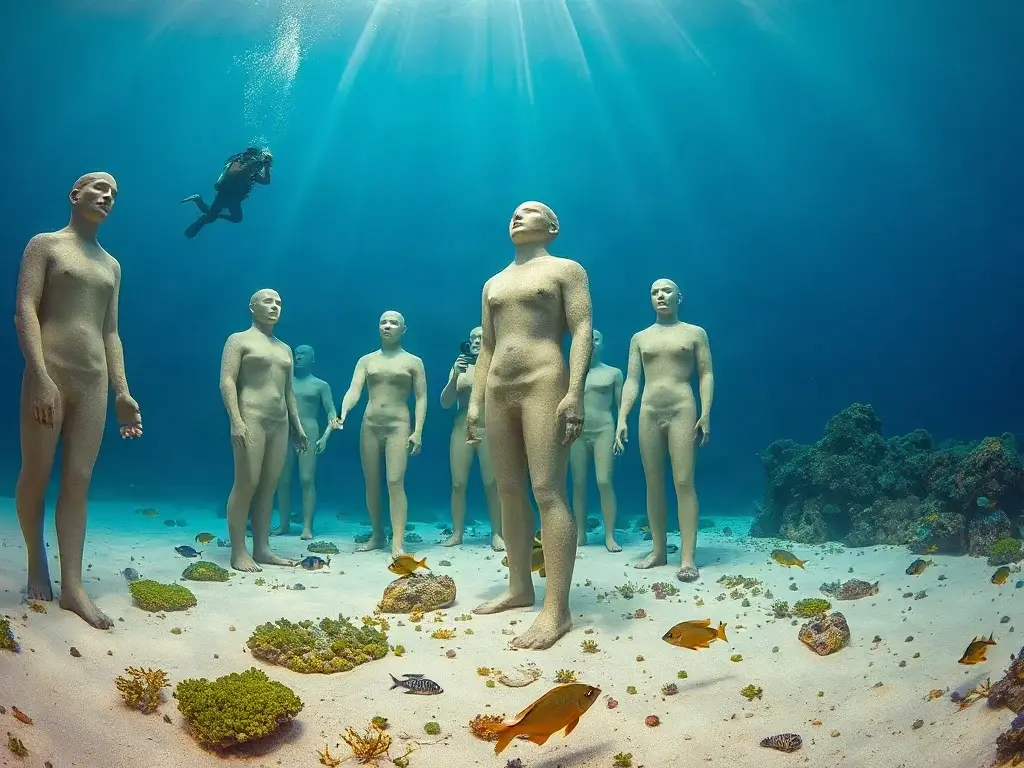
An underwater sculpture park in Saint Lucia is about to turn the island‘s southwest coast into a gallery without walls. This winter, Below Saint Lucia is set to open at Anse La Verdure. It is a new dive park that blends art, culture, history and marine conservation in a collection of sculptures inspired by the island’s people, heritage and national identity. For divers who have drifted past the volcanic drop-offs and reef gardens of the eastern Caribbean, the promise is simple and a little thrilling. Here the seabed becomes a story.
This article looks at what is publicly known about the project, why underwater art has become a serious tool in tourism and reef stewardship, and what divers, snorkelers and destination planners should watch as the park develops. Where details have not been announced, such as exact sculpture counts, depths and access rules, I say so rather than guess.
What We Know About Below Saint Lucia
The facts so far are focused but significant. Below Saint Lucia is being developed by DeepBlueSea at Anse La Verdure, a bay on the southwest coast of Saint Lucia. The site is the first phase of a three-part underwater sculpture park concept. Future locations are planned with snorkelers in mind, including Anse Ferre in Ciceron.
The park aims to bring together ‘art, culture, history and marine conservation’ through immersive underwater sculptures inspired by Saint Lucia’s people, heritage and national identity.
That phased structure matters. Phase one targets certified divers, who can reach deeper installations and spend longer with each piece. Later phases widen the audience to people who prefer the surface and shallow water. This is a sensible way to build a destination attraction: start with the audience that can reach the most demanding sites, then extend access.
What Is an Underwater Sculpture Park?
An underwater sculpture park is a curated collection of artworks placed on the seabed, designed to be viewed by people who are scuba diving or snorkeling. Unlike a conventional sculpture garden, the works are meant to change. Sunlight shifts across them, currents sweep around them, and marine life settles on them.
A Brief Lineage of Submerged Art
The modern movement is closely associated with British sculptor Jason deCaires Taylor. His work helped establish the Caribbean as the global testing ground for the format. A well-known early example is in Grenada, one of Saint Lucia’s neighbors in the Windward Islands. Another is the Museo Subacuático de Arte off Cancún, Mexico. I make no claim that Below Saint Lucia is connected to these projects. They simply show that the concept is established, and that the Caribbean is fertile ground for it.
Why Saint Lucia Is a Natural Setting
Saint Lucia already has global recognition for its dramatic marine and volcanic landscape. The twin spires of the Pitons Management Area are a UNESCO World Heritage property, and you can read the official listing on the UNESCO World Heritage Centre website. The nearby town of Soufrière sits in the same southwestern region that has long drawn divers.
Culturally, the island’s story runs deep. Indigenous peoples such as the Kalinago were present before European contact. Centuries of colonial contest followed, and the island eventually became independent. It has produced two Nobel laureates, including poet Derek Walcott. A sculpture park that draws on people, heritage and national identity has unusually rich material to work with.
The Conservation Question: Art or Artificial Reef?
The most important debate around any submerged art installation is ecological. Supporters argue that carefully designed pieces can act like an artificial reef. Their textured surfaces give larvae and algae a place to settle, which can build habitat over time. They may also draw divers away from fragile natural formations. Critics respond that placement, materials and visitor management determine whether a site helps or harms.
How Underwater Art Can Support Reefs
- Habitat creation: Stable, textured substrates can host sessile organisms, which in turn attract small fish and invertebrates.
- Pressure diversion: A compelling attraction on sand or degraded seabed can redirect traffic away from living coral reefs.
- Awareness: Visitors who emotionally connect with a place are more likely to support protection of it.
- Economic incentive: A paid, managed attraction can fund monitoring and local stewardship.
Where the Risks Lie
- Poor siting: Placing structures on healthy reef or seagrass can cause direct damage.
- Material choice: The concrete or other compounds used must be suitable for marine use. Specifications matter more than slogans.
- Diver contact: Even careful visitors can kick up sediment, touch organisms or break coral near installations.
- Storm exposure: The Caribbean sits in the path of tropical cyclones, which can move or damage submerged structures.
The source announcement frames Below Saint Lucia as a conservation-linked project. Details of the environmental assessment, materials and monitoring plan have not been laid out in the information available to me. Those are the questions an informed visitor should ask.
What Divers Can Expect at Anse La Verdure
Specifics such as the number of sculptures, depth range and entry points have not been published in the announcement I reviewed. Based on how comparable parks operate, though, divers can reasonably prepare for a few things. Treat the following as general guidance rather than confirmed features of this site.
Preparing for a Sculpture Dive
- Check the certification level. Confirm with the operator which depths and conditions apply before booking.
- Refine your buoyancy. Sculpture sites reward precise control. Hovering a short distance from an installation protects both the art and the marine life growing on it.
- Bring a camera, but keep your fins up. Photography is a major draw, and the most common source of reef contact.
- Dive at different times. Light and visibility change the character of a piece dramatically between morning and afternoon.
- Return later in the season. Marine growth makes the sculptures look different over weeks and months.
The Snorkeler’s Phase: Why It Matters
Only a minority of travelers are certified divers, so planning snorkel-accessible locations such as Anse Ferre in Ciceron broadens the park’s reach considerably. Shallow installations are easier to see in bright light. They also bring families and non-divers into a conservation narrative they might otherwise never encounter. They require careful management, though. Snorkelers often stand on or touch what they cannot see below, so clear briefings, guides and designated entry points will be essential.
Economic and Cultural Stakes for Saint Lucia
Tourism is central to many Caribbean economies, and diversification of the visitor experience is a recurring strategic aim. A well-run sculpture park supports sustainable tourism in several ways. It can extend visitor stays, create guiding and maintenance jobs, and give local artists a public platform. It also pairs with the island’s wider ecotourism positioning. For official visitor information on the island, the Saint Lucia Tourism Authority is the authoritative starting point.
The cultural dimension may prove just as valuable. When sculptures represent the island’s own people and history, the attraction is not a generic installation that could sit anywhere. It is rooted in place. That distinction separates a novelty from a lasting cultural asset.
Responsible Visiting: Best Practices and Common Mistakes
Visitors shape the long-term fate of any submerged attraction. A few habits make the difference.
- Choose licensed operators who brief divers on the site and limit group sizes.
- Use reef-safe sun protection and avoid applying products immediately before entering the water.
- Never touch, stand on or climb the sculptures. Even a light touch can remove the living layer that helps them integrate with the reef.
- Avoid gloves where possible, since they encourage touching.
- Report damage or unusual conditions to operators so that monitoring remains accurate.
The most common mistake is treating the park as a photo set rather than an ecosystem. The second is assuming that art automatically equals conservation. It does not, unless management and monitoring prove it.
FAQ: Underwater Sculpture Parks and Below Saint Lucia
When does Below Saint Lucia open?
The announcement says it will open this winter. An exact date had not been given in the information available.
Where is Below Saint Lucia located?
The first phase is at Anse La Verdure on Saint Lucia’s southwest coast.
Who is developing the park?
DeepBlueSea is developing it as a three-part underwater sculpture park concept.
Can snorkelers visit?
The first phase is aimed at divers. Future locations, including Anse Ferre in Ciceron, are planned to include snorkelers.
Are underwater sculptures good for coral reefs?
It depends on design, siting and management. Well-planned installations can add habitat and reduce pressure on natural reefs, while poorly planned ones can cause harm. Long-term monitoring is the best test.
Do I need to be a certified diver?
For the first phase, certification is expected. Confirm requirements with the operator, since depth and conditions are not yet published.
The Real Test Begins After the Ribbon Is Cut
The most important insight from this project is that an underwater sculpture park is not finished the day it opens. It is a living experiment. The sculptures will be colonized, weathered and rearranged by the sea. Whether Below Saint Lucia becomes a model for marine conservation through culture, or simply an attractive stop on the dive circuit, will depend on choices made after the first visitors arrive.
Watch for a few signals. Will the operators publish environmental monitoring results? Will local artists and communities keep a visible role? Will the second and third phases follow on schedule and deliver the snorkeler access promised? And how will the structures fare through the next major storm season? Any open marine protected area coordination would be another encouraging sign.
My reasoned expectation, not a confirmed fact, is that the attractions which endure will be the ones that treat the ocean as a co-author. Saint Lucia has the heritage, the scenery and the story. The unanswered question is whether this park can prove that a statue on the seabed can give back more to the reef than it takes from it.
Frequently Asked Questions
Is Below Saint Lucia only for certified scuba divers?
Not in the long run. The first phase at Anse La Verdure is aimed at certified divers, who can reach deeper installations. Later phases are planned with snorkelers in mind, including Anse Ferre in Ciceron, so the park will gradually open to people who prefer shallow water.
Is Below Saint Lucia connected to Jason deCaires Taylor's underwater museums?
No connection has been announced. The project is being developed by DeepBlueSea. Taylor's work in Grenada and the Museo Subacuático de Arte near Cancún is mentioned only as proof that underwater sculpture parks are an established concept, and that the Caribbean suits them.
Do underwater sculptures actually help coral reefs?
They can, but it depends on design. Textured, stable surfaces let larvae and algae settle, building habitat over time, and the park may draw divers away from fragile natural reefs. Critics say placement, materials and visitor management decide whether a site helps or harms.
What details about the park are still unknown?
Several practical details have not been announced, including the exact number of sculptures, their depths and the access rules. Anyone planning a dive should wait for official information from the developers before booking, rather than assuming specifics about the layout or requirements.
Why was Anse La Verdure chosen as the location?
The article doesn't give an official reason, but the setting fits. The southwest coast is a long-established diving region near Soufrière and the UNESCO-listed Pitons Management Area, and Saint Lucia's heritage offers rich material for sculptures about its people and identity.
When will the underwater sculpture park open?
The park is set to open this winter, according to the announcement, but no exact date has been confirmed in the article. Because it is only the first phase of a three-part concept, further locations will follow later, also without announced dates.