
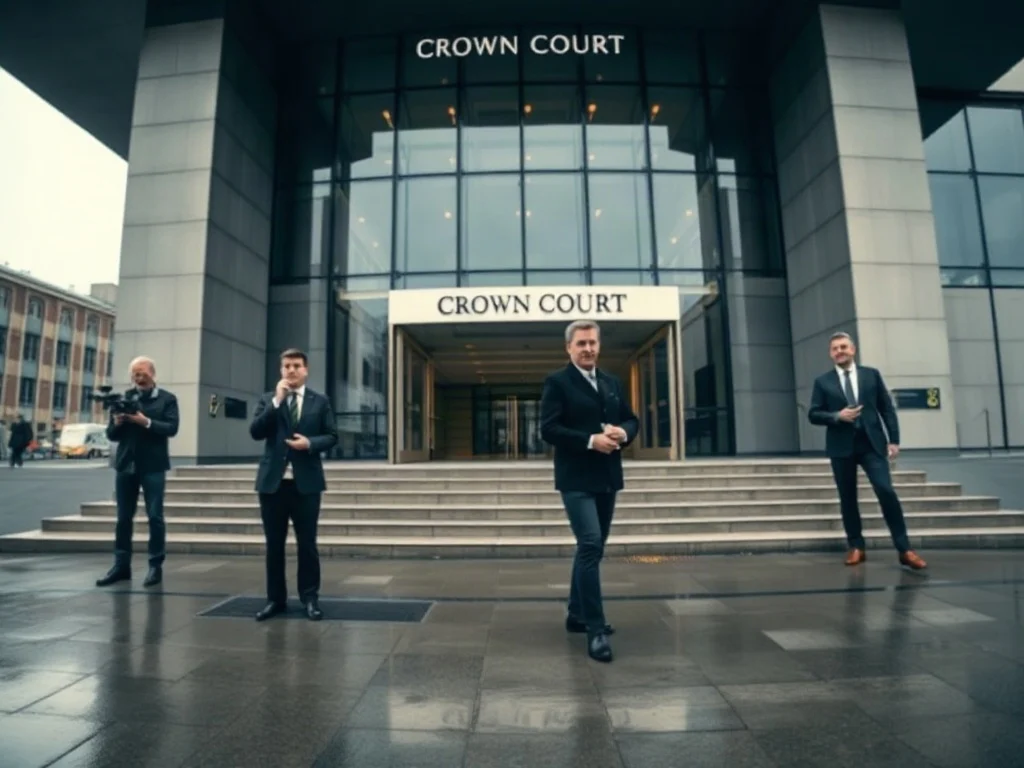
The Russell Brand trial has reached the point where the case against the comedian is being contested as much on how the allegations surfaced as on what they contain. According to reporting from court, Brand’s defence barrister told jurors that a Channel 4 documentary and the journalists behind it had ‘poisoned the well’ against him. The barrister also said Brand ‘had an immense amount of sex’, but that ‘none of it was unlawful’. Brand denies the charges. This analysis looks at what those two statements are doing in a criminal trial, why they matter, and where they are weakest.
One caveat applies throughout. This article relies on the reported summary of the defence argument, not a full transcript. It treats the statements as advocacy, which is not evidence, and it takes no position on guilt. Under English law Brand is presumed innocent unless the prosecution proves otherwise to the criminal standard.
Background: how the allegations reached a courtroom
The case has its origins in September 2023. The Sunday Times, The Times and the Channel 4 current affairs series Dispatches jointly published and broadcast a investigation in which several women made allegations of sexual misconduct against Brand. Brand rejected them publicly, saying his relationships had been consensual. After the broadcast, the Metropolitan Police said it had received a report relating to an alleged incident, and a wider investigation followed.
In 2025 Brand was charged with sexual offences against several women, and the Crown Prosecution Service said the alleged offences took place between 1999 and 2005. He pleaded not guilty. The trial is being heard at Southwark Crown Court, where a jury will decide each count on the evidence it hears.
The timeline explains the defence’s emphasis. A media investigation came first, a criminal case followed, and the public image of the defendant changed in between. His commercial platforms were affected, with YouTube suspending his ability to earn advertising revenue shortly after publication. A defence team can argue that this sequence created a narrative that jurors are being asked to set aside.
What ‘poisoning the well’ means, and why it is being used here
The phrase comes from rhetoric. Poisoning the well is the practice of presenting adverse information about a person in advance, so that anything they later say is received with suspicion. In a courtroom, the accusation is that coverage did not merely report allegations but shaped how the public, potential witnesses and eventually jurors would interpret them.
The defence’s likely logic
Reading the reported statement charitably, a defence argument of this kind usually has three strands:
- Contamination of accounts. A public broadcast may lead other people to reassess their own memories of events decades old, or encourage others to come forward. Defence lawyers routinely test whether accounts were shaped by what complainants had seen or heard elsewhere.
- Editorial framing. Documentaries select and sequence material. The defence can argue that the edit presented a coherent story in a way a messy reality does not, and that jurors should not mistake narrative coherence for proof.
- Incentives and motives. Broadcasters and newspapers compete for audiences. The defence can invite jurors to ask whether the commercial and reputational stakes of a major investigation influenced how it was presented.
Where the argument is vulnerable
The argument has limits. Journalism that precedes a prosecution does not by itself make later evidence unreliable. The jury will hear sworn testimony tested by cross-examination, and the Crown will say the charges rest on that evidence, not on a television programme. Prosecutors will also point out that police investigations and charging decisions are made independently of broadcasters. Whether the well was poisoned is therefore a question of evidence. It can be tested against what each witness says and what can be corroborated.
There is also a strategic risk. If jurors see an attack on the media as deflection from the specific allegations, the tactic can backfire. Experienced advocates tend to use it sparingly and tie it to concrete inconsistencies.
The ‘immense amount of sex’ line: reframing, not rebutting
The second reported statement is the more revealing. By accepting that Brand ‘had an immense amount of sex’, the defence concedes something the jury will probably hear anyway, since Brand wrote about his past in memoirs and discussed it publicly for years. The qualifier carries the argument: ‘none of it was unlawful.’
This is a classic reframing. It separates a lifestyle that some people find distasteful from the legal question the jury must answer, which is whether specific acts occurred without consent and whether the defendant lacked a reasonable belief in consent under the Sexual Offences Act 2003. The offences charged relate to events before and around that Act, and the relevant legal definitions depend on the date of each alleged offence.
Why this framing cuts both ways
For the defence, the framing does two jobs. It pre-empts moral judgment by jurors who might otherwise be tempted to convict on character. It also positions the allegations as isolated claims within a large number of consensual encounters, which supports the argument that regret or reinterpretation, not offending, explains some accounts.
For the prosecution, the same facts support a different reading. The Crown can argue that a pattern of behaviour is relevant to how events unfolded, subject to the rules on bad character evidence under the Criminal Justice Act 2003. It can also argue that a high number of sexual partners says nothing about whether any particular encounter was consensual, which is also the legal position. The defence’s concession therefore does not resolve the central issue. Consent is assessed encounter by encounter.
The legal question is never whether a person is promiscuous. It is whether a particular act took place without consent and without a reasonable belief in it.
Trial by media versus open justice
The dispute sits on a recurring fault line between press freedom and fair trial rights. The concept of trial by media describes coverage that is said to prejudge a defendant before a court has ruled. English law manages this tension mainly through contempt of court rules, which restrict reporting once proceedings are active. Those rules do not apply to journalism published before anyone is arrested or charged, which is the position the Brand reporting was in.
That gap is the legitimate policy question beneath the defence’s rhetoric. Investigative reporting into powerful individuals is a recognised public interest function, and the 2023 reporting was produced under the editorial standards that broadcasters like Channel 4 must meet under the Ofcom Broadcasting Code, overseen by Ofcom. Without reporting of this kind, many allegations against high-profile people might never reach police. Against that, the adversarial system assumes jurors can set aside what they have seen. Whether that assumption holds for a defendant as publicly discussed as Brand is untestable, though judges address it with directions to the jury to decide only on evidence heard in court.
What the jury actually has to decide
Strip away the commentary and the jury’s task is narrow. Under the principle of the presumption of innocence, the prosecution carries the burden of proof, and it must satisfy jurors beyond reasonable doubt on each count separately. A verdict on one count does not decide another.
That structure matters for how the defence’s media argument can work. It has no formal legal effect on its own. It is useful only if it helps jurors doubt particular witnesses or particular counts. Equally, jurors who distrust the documentary are not entitled to acquit on that basis alone if the evidence on a count is otherwise convincing.
How to read trial coverage critically
For readers following the case, a few practical habits separate informed reading from reaction:
- Distinguish evidence from advocacy. Opening and closing speeches by barristers frame the case but are not proof.
- Track counts, not headlines. Each charge involves different complainants, dates and evidence.
- Watch for corroboration. Contemporaneous messages, third-party witnesses and documents typically carry more weight than recollection alone.
- Check source quality. Prefer court reporters present in the room and official material from the Crown Prosecution Service over social media summaries.
- Avoid commenting in ways that could prejudice proceedings. Active proceedings carry legal restrictions, and general guidance is available from the judiciary of England and Wales.
Frequently asked questions
What does ‘poisoned the well’ mean in the Russell Brand trial?
It means the defence argues that the Channel 4 documentary and related reporting prejudiced opinion against Brand before any court tested the allegations. It is an argument made to the jury, not a finding of fact.
Is a documentary treated as evidence in a criminal trial?
Not automatically. Jurors decide on evidence presented in court. A broadcast might be referred to when witnesses are questioned, but the jury is directed to decide on the evidence before it.
Does having many sexual partners affect a rape case?
Not as a matter of law. Consent is assessed for each alleged act, and the number of a person’s partners does not establish consent in any individual encounter.
Can media coverage make a fair trial impossible?
Courts can stop a trial if prejudice is so serious that a fair hearing cannot be achieved, but the threshold is high. English courts generally rely on judicial directions and the presumption that juries follow them.
What the Brand verdict will and will not settle
The most important insight is that the ‘poisoned well’ argument and the ‘immense amount of sex’ concession are two halves of one strategy. One attacks the credibility of how the story emerged. The other removes the moral shock that might push jurors toward conviction. Neither answers the question the jury must decide, which is what happened in specific encounters and whether the Crown can prove it.
Watch three things next. First, how the judge directs jurors on the effect of pre-trial publicity and on consent. Second, whether cross-examination exposes inconsistencies that give the media argument factual content, or leaves it as rhetoric. Third, what follows the verdict. An acquittal on some or all counts would not answer the broader questions about investigative journalism, and a conviction would not retroactively validate every editorial choice. Both outcomes will probably prompt scrutiny of the relationship between broadcasters, police and the courts. The open question is whether that scrutiny produces a measured debate about standards, or whether it becomes another round of poisoned wells.
Frequently Asked Questions
Does the defence claim that the media coverage was unfair count as evidence in the trial?
No. The barrister's statements, including the 'poisoned the well' claim, are advocacy and not evidence. Jurors must decide each count on the sworn testimony and material presented in court. Lawyers' arguments can guide how jurors view that evidence, but they cannot replace it.
What does 'poisoning the well' actually mean in a legal setting?
It comes from rhetoric and describes presenting negative information about someone in advance so that anything they say later is met with suspicion. In court, the defence is arguing that the coverage shaped how the public, witnesses and potential jurors would interpret the allegations before any trial began.
How could a documentary affect the accounts of complainants decades after the events?
The defence may argue that a broadcast can lead people to reassess old memories or encourage others to come forward. Lawyers routinely test whether accounts were influenced by what complainants had seen or heard elsewhere. Cross-examination is the main way a jury can judge whether that happened.
Why can't the media investigation simply be blamed for the criminal charges?
Prosecutors will say police investigations and charging decisions are made independently of broadcasters. Journalism that comes before a prosecution does not by itself make later evidence unreliable. The charges are said to rest on witness testimony tested in court, not on a television programme.
Is Russell Brand presumed innocent despite the public attention?
Yes. Under English law he is presumed innocent unless the prosecution proves the charges to the criminal standard, which requires the jury to be sure of guilt. He has pleaded not guilty and denies the allegations, which are said to date from between 1999 and 2005.
Why does the timeline of the case matter to the defence strategy?
The media investigation came first, a criminal case followed, and Brand's public image and income changed in between, such as YouTube suspending his ad revenue. The defence can use this sequence to argue that a public narrative formed before trial, which jurors are being asked to set aside.