
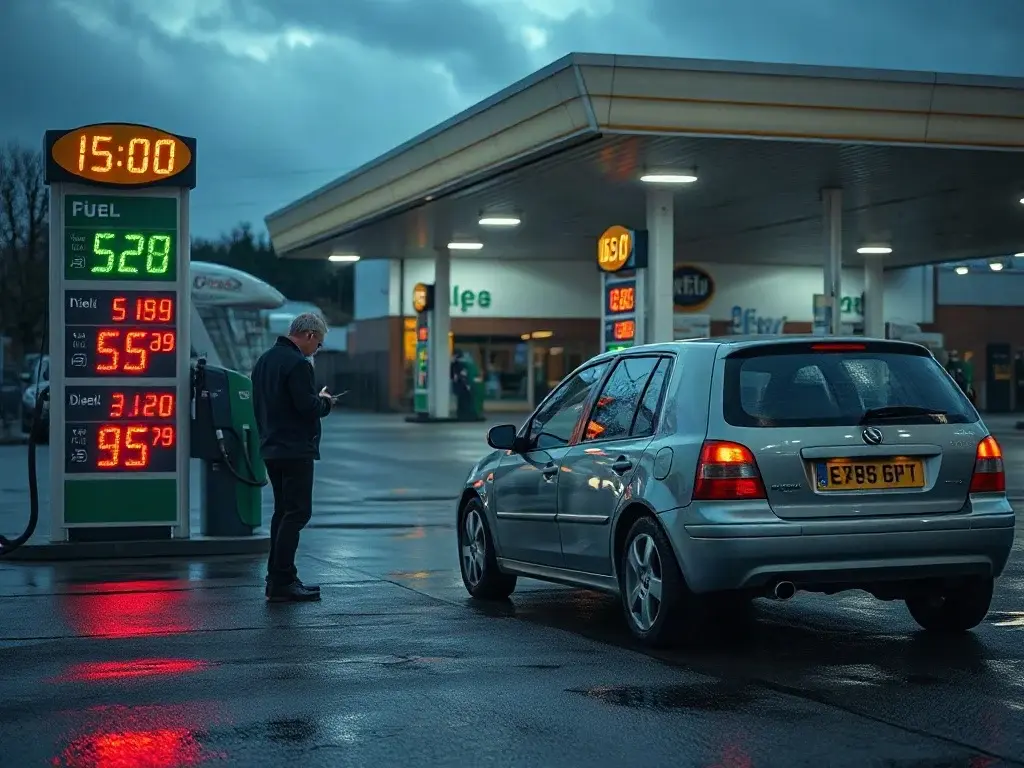
When the Chancellor delivers a Budget, the measures that attract the most public anger are often not the ones with the largest fiscal impact. This year, a notable source of frustration has been the decision not to cut fuel duty, a tax that touches almost every household with a car, van or commute. For many people earning around £30,000 a year, the absence of a cut is not an abstract policy question but a monthly cost they feel directly. The BBC gathered reactions from people across a wide range of incomes, from £4,062 to £150,000 a year, and the responses reveal a clear pattern: fuel costs are being judged less as a macroeconomic lever and more as a test of whether government understands the pressures on ordinary working life.
What Fuel Duty Is and Why It Matters
Fuel duty is a excise duty levied on petrol and diesel sold for road use in the United Kingdom. It is collected at the point of sale and forms part of the price drivers pay at the pump alongside the fuel price set by refiners and distributors and the value-added tax applied on top. Because the duty is charged per litre, it is a fixed amount regardless of the underlying price of crude oil, which means that when wholesale prices rise, the duty component does not automatically fall in proportion. Governments have used changes to fuel duty as a short-term instrument for managing household budgets, and the UK has a long history of freezing or deferring increases, a practice that has been in place in various forms for more than a decade.
The Mechanics of a Freeze Versus a Cut
It is important to distinguish between a freeze and a cut. A freeze holds the rate at its current level, preventing the inflation-linked increase that would otherwise occur. A cut lowers the rate in absolute terms. Many commentators have noted that a freeze, while helpful relative to the counterfactual, still leaves drivers paying a historically high duty burden. This distinction explains why some respondents felt the Budget was insufficient even where it avoided an increase: the expectation was a reduction, not merely the absence of a rise.
The Fiscal Case Against a Cut
Those defending the decision point to the cost of reducing fuel duty. Excise receipts are a substantial and relatively stable revenue stream, and even a modest reduction in the per-litre rate can cost billions of pounds annually when applied across the entire road fuel market. Treasury officials and independent fiscal analysts have repeatedly argued that revenue must be weighed against borrowing and debt-servicing constraints. The Office for Budget Responsibility publishes forecasts that inform these trade-offs, and its assessments often shape how ministers justify decisions they might otherwise prefer to make.
A second argument concerns environmental policy. Economists who favour carbon pricing contend that keeping fuel relatively expensive discourages consumption and supports the transition toward electric vehicles and public transport. From this perspective, a fuel duty cut is regressive in climate terms, subsidising the use of carbon-intensive transport. Critics respond that the transition is uneven: households in rural areas, those without access to reliable public transport, and workers who must drive for their jobs have fewer substitutes, so the policy burden falls disproportionately on them.
Distributional Effects Across Incomes
The distributional question is central to the anger expressed by many respondents. Fuel spending as a share of income is typically higher for lower earners, although absolute spending rises with income among drivers who cover longer distances. A duty cut therefore delivers a larger proportional benefit to lower-income households, yet higher earners who drive more miles may capture a larger absolute saving. This complexity means that the same policy can be described as either progressive or regressive depending on the metric chosen. Analysts who focus on the share of income spent on fuel tend to view a cut as helpful to those on modest salaries. Those who focus on total savings often conclude that the benefit is concentrated among heavier drivers.
Why a £30,000 Earner Feels Squeezed
The respondent earning £30,000 occupies an uncomfortable position in the income distribution. Earnings at this level are often too high to qualify for many targeted means-tested supports, yet they leave limited room to absorb sustained increases in essential costs. Fuel is particularly visible because it is purchased frequently and its price is displayed publicly on roadside signs, making increases hard to ignore. Behavioural economists describe this as a salience effect: costs that are repeated and conspicuous shape perceptions of living standards more strongly than their share of the household budget might suggest.
Perception Versus Measured Impact
There is a gap between the measured impact of fuel duty on household finances and the way it is experienced. Statistical measures of inflation and household spending attempt to capture average effects, but individual budgets are shaped by specific commuting distances, vehicle efficiency and local transport options. A worker who drives forty miles each day in an older vehicle faces a very different exposure from a city resident who rarely uses a car. Reporting on the Budget must therefore be read with awareness that aggregate figures can obscure significant variation in lived experience.
Competing Viewpoints and Their Limits
Supporters of the Budget argue that targeted support is more efficient than a broad fuel duty cut, since it can be directed toward households most in need without subsidising high-consumption drivers. Support for this view draws on the general principle in public economics that well-designed transfers are preferable to price interventions, which distort consumption decisions across the entire market. Opponents respond that targeted schemes are administratively complex, can miss eligible households, and do not provide the immediate, visible relief that a price change delivers at the pump.
Each position carries risks. Relying on broad tax cuts can entrench high consumption and expose public finances to volatility in fuel markets. Relying solely on targeted transfers may leave a large group of ordinary workers without relief and erode trust in institutions that appear unresponsive. The strength of the reaction reported by the BBC suggests that the second risk is currently the more politically salient one, even if the first carries real economic weight.
Practical Considerations for Drivers
While policy debates continue, drivers facing sustained fuel costs can take practical steps to manage their spending. Maintaining correct tyre pressure, reducing unnecessary weight in the vehicle, and adopting smoother acceleration habits can improve fuel economy. Comparing prices across retailers and using supermarket loyalty schemes may yield savings over time. For those whose income is under pressure, reviewing eligibility for any available support programmes and considering whether a more fuel-efficient vehicle would reduce long-term running costs are worth evaluating against upfront expense. Households should also monitor how fuel prices interact with other rising costs, since the combined effect often matters more than any single item.
What to Watch Next
The most important insight from this episode is that fuel duty has become a symbol of whether government is listening to ordinary workers, and that symbolism can outweigh the technical arguments on either side. Readers should watch how the Office for Budget Responsibility revises its forecasts, whether the government introduces any targeted measures for commuters, and how the transition to electric vehicles affects the long-term revenue base that excise duty depends on. As vehicle fleets electrify, the fuel duty system itself faces structural decline, which will force a broader reconsideration of how road transport is taxed. The unresolved question is not simply whether fuel should be cheaper today, but how a tax designed for a petrol-dependent economy will be replaced, and who will bear the cost of that transition.
Frequently Asked Questions
What is the difference between a fuel duty freeze and a fuel duty cut?
A freeze keeps the duty rate at its current level, preventing the inflation-linked increase that would otherwise apply. A cut actually lowers the rate per litre. Even when a freeze avoids a rise, drivers still pay a historically high duty burden, which is why many felt the Budget fell short of what they expected.
Why doesn't the government simply cut fuel duty if drivers are struggling?
Fuel duty is a large and stable revenue source, and even a small per-litre reduction across the whole road fuel market can cost billions of pounds a year. Ministers must weigh that cost against borrowing and debt constraints, and forecasts from the Office for Budget Responsibility often shape these decisions.
Does a fuel duty cut help lower earners more than higher earners?
It depends on the measure used. Lower earners usually spend a larger share of their income on fuel, so the benefit is proportionally bigger for them. Higher earners who drive more miles may save more in absolute cash terms, so the same cut can look progressive or regressive depending on which metric is chosen.
Why do some economists oppose fuel duty cuts on environmental grounds?
Economists who favour carbon pricing argue that keeping fuel relatively expensive discourages driving and supports the shift to electric vehicles and public transport. From this view, a cut subsidises carbon-intensive transport. Critics reply that people in rural areas or those who must drive for work have few alternatives, so the burden falls unfairly on them.
Why does fuel duty not fall when oil prices drop?
Duty is charged per litre as a fixed amount, not as a percentage of the fuel price. When wholesale prices rise, the duty component does not automatically shrink in proportion, so the government's share of the pump price can remain high even as underlying costs change.