
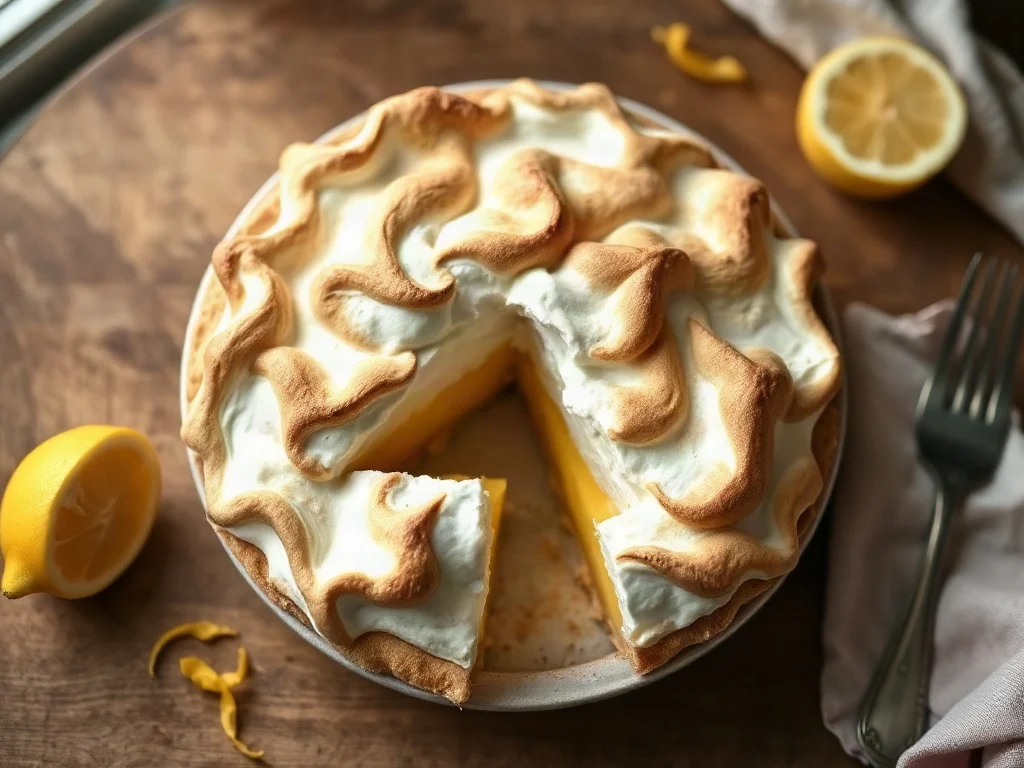
Lemon meringue pie is one of the most recognizable desserts in the American and British baking traditions, and its appeal rests on a clear structural contrast: a sharp, glossy lemon custard set inside a crisp pastry shell and crowned with a cloud of sweet meringue. Searching for a lemon meringue pie recipe usually means wanting a dessert that looks impressive yet relies on a handful of well-understood techniques. The difficulty lies less in the ingredient list than in controlling the custard’s set, the meringue’s stability, and the pastry’s texture, all of which determine whether the finished pie is tart and balanced or runny and cloying.
Background and Context
Lemon-based custard pies trace their lineage to English and European cookery, where citrus curds and custards were prized for their concentrated flavor and ability to set with eggs and sugar. The modern meringue-topped version became widely established in the United States during the nineteenth century, when improvements in refined sugar and home ovens made stiffly beaten egg white meringue more accessible. Its structure depends on three components: a blind-baked pastry crust, a starch-thickened lemon custard, and a sugar-stabilized meringue. Each has distinct failure modes, which is why the pie rewards careful technique.
Core Analysis of the Custard
The Role of Starch and Acid
Most reliable custards use cornstarch cooked with sugar, water, egg yolks, and lemon juice. Cornstarch gelatinizes at approximately 90 to 95 degrees Celsius, so the custard must reach a full boil and hold it briefly to achieve maximum thickening. Undercooked starch produces a weeping filling that soaks the crust. Lemon juice adds acidity, which tightens protein structure in the yolks but can also thin starch if added too early. Adding acid after the custard has thickened is a common practical solution.
Egg Yolks and Tartness Balance
Yolks enrich the custard and add setting power, but excessive lemon concentration can overwhelm the palate. Many professional recipes balance roughly one part lemon juice to two to three parts sugar by weight, adjusted to taste. Zest contributes aromatic oils that juice alone cannot provide, which is why it is typically steeped into the custard.
The Meringue: Stability and Weeping
The meringue is the most technically sensitive element. Egg whites whipped with sugar form a foam stabilized by denatured proteins. The main defects are weeping, where droplets of syrup appear on the surface, and shrinking, where the topping pulls away from the crust. Weeping typically results from undissolved sugar, under-baking, or temperature shock. Adding sugar gradually to whites beaten to soft peaks, and sealing the meringue to the crust edges, both reduce these risks. Some bakers use cornstarch or a hot-sugar-syrup method for greater stability, though each adds complexity.
Common Mistakes
- Hot filling under cold meringue: Spreading meringue on a very hot custard can cause condensation and sweating underneath.
- Sugar not fully dissolved: Grainy meringue is prone to beading.
- Humidity: High humidity impairs whipping and increases weeping.
- Greasy bowls or yolk contamination: Even small amounts of fat prevent whites from reaching full volume.
The Crust
A crisp, sturdy shell is essential because a wet pastry undermines the entire dessert. Blind baking, which means baking the crust with weights before adding filling, is the standard method. Chilling dough before rolling and before baking limits shrinkage. An egg wash applied to the baked crust creates a moisture barrier, a technique widely recommended in professional baking guides.
Practical Applications
For reliable results, prepare the custard the day before if possible, cool it to warm rather than hot before topping, and bake the meringue until it reaches a golden tip at a moderate temperature. Cooling the pie gradually at room temperature and then refrigerating it prevents sweating and keeps slices intact. Readers should evaluate their recipe by checking whether the custard holds a firm slice when fully chilled, since this is the best indicator of adequate starch cooking.
Future Developments
Lemon meringue pie itself changes slowly, but its techniques are influencing contemporary dessert work. Stabilized meringues, alternative thickeners such as tapioca or agar in place of cornstarch, and reduced-sugar versions are increasingly common. These variations reflect real trade-offs: alternative stabilizers can alter texture and shelf life, and their long-term performance in home kitchens remains less documented than the classic method.
Frequently Asked Questions
Why does my lemon meringue pie weep?
Weeping is usually caused by undissolved sugar, under-baked meringue, or rapid temperature changes. Dissolve sugar fully and bake until the surface is firm and golden.
Can lemon meringue pie be made ahead?
The crust and custard can be prepared a day ahead. Assemble and top with meringue shortly before serving for the best texture.
Why is my custard runny?
The starch was likely not brought to a full boil or held long enough. Cook until the custard is thick enough to coat a spoon, then cool before chilling.
The most important insight from this analysis is that a successful lemon meringue pie depends on controlling temperature and moisture at every stage rather than on the ingredient list alone. Watch for growing interest in stabilized and lower-sugar variations, which will test whether classic methods remain the benchmark. A meaningful open question is how well alternative thickeners perform over multi-day storage in typical home refrigerators, an area where reliable independent testing is still limited.
Frequently Asked Questions
Why does my lemon custard sometimes stay runny even after cooking?
Cornstarch needs to reach roughly 90 to 95 degrees Celsius and hold a full boil for about a minute to reach maximum thickening. If the custard is removed from heat too early, the starch never fully gelatinizes, producing a weeping, soupy filling that also soaks the crust. Stirring constantly during the final minutes helps prevent scorching while ensuring the starch activates.
Should I add the lemon juice before or after thickening the custard?
Adding lemon juice after the custard has thickened is generally the safer choice. Acid can weaken starch thickening if it is introduced too early, leading to a thinner filling. Stirring in the juice and zest once the custard is cooked lets you preserve its body while controlling tartness precisely.
What causes beads of syrup to form on my meringue?
Weeping usually comes from sugar that did not fully dissolve, under-baking, or a sudden temperature change that makes the foam contract. Adding sugar gradually to soft-peak whites and beating until the mixture is glossy and smooth reduces the risk. Spreading the meringue onto a warm (not hot) filling and sealing it to the crust edges also helps keep the topping stable.
Why does the meringue sometimes pull away from the crust?
Shrinking occurs when the meringue cools and contracts faster than it adheres to the pastry. Spreading it all the way to the edges so it touches the crust creates a seal that holds it in place. Baking until fully set and cooling the pie gradually at room temperature also reduces the stress that causes pulling.
Why is blind baking the crust important for this pie?
A wet or soggy pastry shell undermines the contrast that makes lemon meringue pie appealing. Blind baking, which means partially or fully baking the crust with weights before adding filling, sets the structure and drives off moisture. Brushing the baked crust with egg wash afterward creates an extra moisture barrier against the custard.