
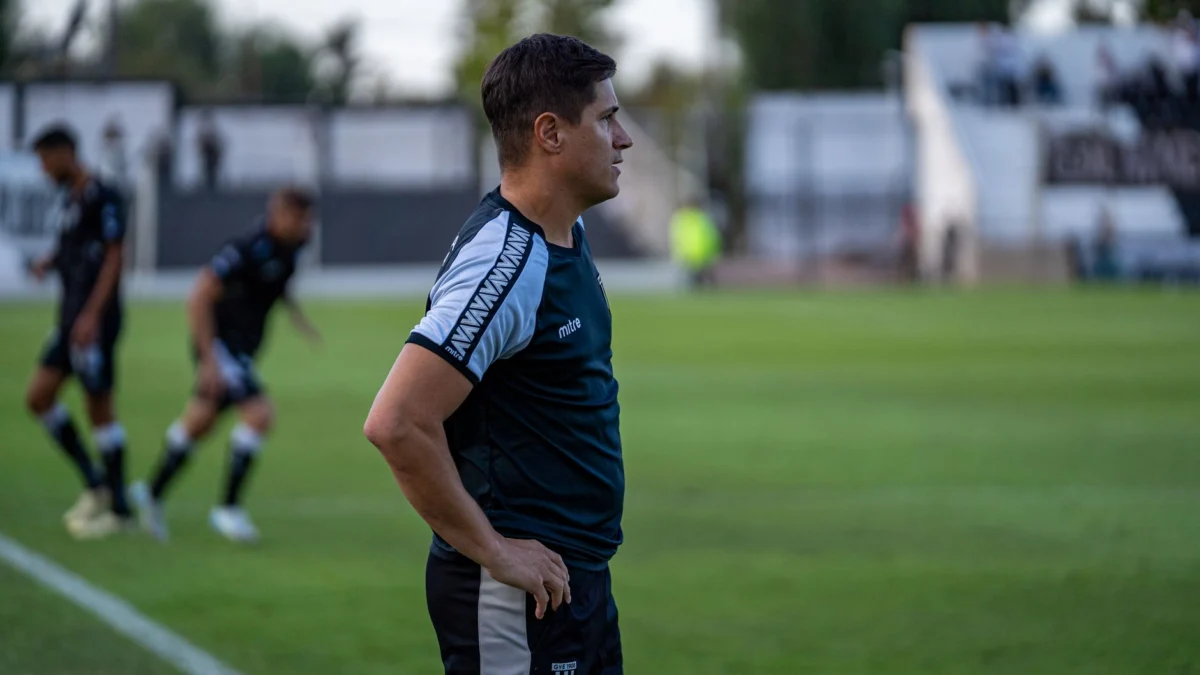
Manchester United‘s collapse against Bournemouth is not just another bad afternoon; it is a fresh reminder that this club still mistakes managerial turnover for structural repair. If Michael Carrick is under immediate pressure after a tactical failure, the deeper question is not whether one result was unacceptable. It is whether the next appointment can restore basic football logic at Manchester United F.C., where expectations, wage bill and history still do not match the quality of the football.
That is why the debate over Manchester United manager candidates matters more than the usual post-defeat noise. The club does not merely need a louder voice. It needs a coach who can impose an identity, align with recruitment, and make the squad harder to break in transition. In other words, the next manager has to solve football problems, not just public-relations problems.
Why the next appointment matters more than the latest defeat
Since the departure of Sir Alex Ferguson, United have cycled through managers with very different methods, from control-based systems to high-pressing demands and counterattacking plans. The issue is not that every coach failed for the same reason. The issue is that the club kept hiring different answers to different questions, without ever defining the question properly. That is how a squad becomes tactically fragmented.
The modern game punishes this kind of drift. In the Premier League, where pressing intensity, rest defence and transition control are non-negotiable, an elite club cannot improvise its way through the season. A team that cannot maintain spacing without the ball, or progress it cleanly with the ball, will eventually be exposed. That is why the current crisis is bigger than one caretaker, one match or one bad run.
Manchester United do not merely need a new manager. They need a manager whose method can survive bad results.
The boardroom context also matters. With football leadership figures such as Jason Wilcox and Omar Berrada shaping the decision-making environment, this is no longer just a touchline choice. It is a test of whether United can finally connect football operations to recruitment, development and style. Any serious rebuild should be judged against the club’s own history at Manchester United’s official site and the standards of the competition at the Premier League.
The three names that actually make football sense
There is a difference between a popular shortlist and a sensible one. On the evidence available, the conversation around Eddie Howe, Antonio Conte and Julian Nagelsmann is serious because each represents a different theory of recovery. Howe offers stabilisation. Conte offers urgency. Nagelsmann offers architectural ambition.
| Candidate | What he fixes | Main risk | Best-fit scenario |
|---|---|---|---|
| Eddie Howe | Culture, pressing structure, player development, discipline | May not satisfy those demanding instant elite glamour | A genuine rebuild with patience and recruitment alignment |
| Antonio Conte | Standards, defensive shape, short-term clarity | High friction, narrow tactical fit, limited long-term value | An emergency reset for a squad that needs hard edges immediately |
| Julian Nagelsmann | Modern tactical organisation, flexibility, control through structure | Complexity, adaptation, reliance on club patience | A high-upside project where the club accepts a learning curve |
Eddie Howe: the stabiliser
Newcastle United F.C. under Howe have shown what happens when a manager is allowed to raise the floor before chasing the ceiling. He is not the most glamorous candidate, but that is exactly why the case for Eddie Howe to Manchester United deserves respect. He improves habits, not just headlines. He builds compactness, intensity and accountability, and those qualities are precisely what United have lacked too often.
Howe’s strength is that he treats structure as an everyday habit, not a special occasion. He typically wants a side that can press with coherence, recover the ball quickly and attack with simple verticality when the opening appears. That matters because United’s biggest failures are often not about talent. They are about disconnection between the lines. If the forwards press one way, the midfield another, and the back line retreat too early, the team never becomes coherent.
For a club that has been trapped in cycles of reaction, Howe is attractive because he is neither a pure ideologue nor a short-term firefighter. He sits in the middle. He can rebuild a squad in stages, improve young players and demand fitness standards without turning every week into a philosophical experiment. The limitation is obvious: he may not be the name that satisfies those who equate authority with global celebrity. But the best appointments are not made to satisfy social media. They are made to solve the actual job.
Antonio Conte: the disciplinarian
Antonio Conte has the clearest record of any candidate at imposing immediate order. He has won domestically in Serie A and has demanded a high-functioning, highly coached team wherever he has worked, including at Tottenham Hotspur F.C.. If the brief is to force standards upward overnight, Conte is the most obvious emergency option. He would almost certainly make United harder to play against.
But Conte is also the least forgiving fit for a club that still has to repair its identity. His football usually depends on precise squad profiling, heavy physical demands and a willingness to restructure the roster around his preferred shape. That can work when the club is ready to commit fully; it becomes combustible when the board wants flexibility, evolution and harmony at the same time. Conte rarely gives you halfway control. He gives you conviction, or friction.
This is why Antonio Conte Manchester United would be a high-risk, high-clarity appointment. It could produce short-term order, especially if the dressing room needs a shock to the system. But it could also reproduce the old United problem: a manager who wins the argument for a season and loses the longer war over squad construction. If the club wants a reset that lasts beyond the next summer window, Conte is a narrow solution.
Julian Nagelsmann: the architect
Julian Nagelsmann represents the most modern option. His background at RB Leipzig, Bayern Munich and with the Germany national football team points to a coach who thinks in structures, overloads and adaptability. He is a believer in space manipulation, not just energy. In tactical terms, he is the most ambitious name on the board.
That ambition comes with a cost. Nagelsmann tends to require a club that can handle complexity and accept that the first phase of change may look messy. He is a coach who wants control through organisation, often in systems resembling a 4-2-3-1 formation or even a 3-4-2-1 formation depending on the match plan and player profiles. That flexibility is an advantage only if the club is prepared to support it with recruitment and patience.
For a Manchester United side that needs modern ideas, Nagelsmann is tempting because he can tie together possession structure, pressing triggers and in-game adaptation. He is also the candidate most likely to force the club into a more coherent footballing department. The danger is that a highly intelligent coach can still become trapped inside an incoherent institution. If the club wants innovation without accepting the necessary discipline around it, the marriage fails quickly.
What United actually need from the next manager
The next coach must address four practical problems immediately. First, the team needs cleaner defensive spacing. Too often the back line is left too exposed because the midfield is late to shift or the press is poorly timed. Second, ball progression must become more reliable. United cannot rely on isolated moments or individual brilliance every week. Third, the squad needs a clear pressing identity. The best teams in Europe, whether built around pressing or counter-pressing, know when to attack the ball and when to drop.
Fourth, the manager has to choose a system that matches the squad rather than trying to pretend the squad is something else. If the players are better suited to a controlled 4-2-3-1, then forcing a back-three can create unnecessary friction. If the group can handle a more aggressive 3-4-2-1, then the coach needs the personnel and training time to make it work. The wrong system is rarely wrong in isolation; it is wrong because it magnifies existing weaknesses.
This is also where the role of the sporting structure matters. A modern head coach should not be expected to solve recruitment alone, but he must have veto power over profiles. Without that, United repeat the same error in new language: they buy names, not functions. The result is a squad that looks expensive but still cannot sustain a coherent style for 90 minutes.
How to judge the shortlist without getting fooled by reputation
The easiest mistake is to rank candidates by headline value. The smarter question is which coach improves the club’s football system fastest without creating a new crisis six months later. That means the board should ask very specific questions:
- Can the coach explain how the team will defend transitions within his first month?
- Does he know which players improve under his method, and which ones do not?
- Can he integrate youth development without lowering tactical standards?
- Will he work with recruitment, or demand signings that the club cannot realistically deliver?
- Does his preferred style match the squad’s athletic and technical profile?
Those questions are more important than charisma. They are also more important than whether a candidate sounds like a global superstar. A club as large as United should not be hiring a personality. It should be hiring a football solution.
That is why some observers push for a coach with a proven culture-building profile, while others argue for a more radical reset. The tension is real. If the club wants immediate authority, Conte makes sense in the narrowest sense. If it wants a steady rebuild with less volatility, Howe is the most practical fit. If it wants to become tactically modern in a more ambitious way, Nagelsmann offers the highest ceiling. The mistake would be choosing one simply because the others feel familiar.
The decision that reveals whether United want a system or a saviour
The most important insight is uncomfortable: Manchester United’s next manager may succeed only if the club finally accepts that the manager is one part of a broader football machine. A great coach can improve a weak side, but he cannot permanently compensate for vague recruitment, mixed messages and inconsistent leadership. The real test is whether the board selects a manager whose football idea can be supported for several windows, not merely until the next bad month.
That is why the unanswered question is not simply who should manage Manchester United? It is whether the club wants a coach who can survive chaos, or a structure that makes chaos less likely in the first place. Howe, Conte and Nagelsmann each point to a different future. The board’s choice will show whether United still think in emergencies, or whether they are finally ready to build something that lasts.
My prediction is simple: if United again choose the most emotionally satisfying option instead of the most system-friendly one, they will be back here within a year asking the same question. If they choose the right fit and give him real authority, the conversation changes. Not because the club suddenly becomes perfect, but because it finally starts acting like a club with a plan.
Frequently Asked Questions
Why is changing the manager not enough to fix Manchester United’s problems?
Because the deeper issue is structural, not just tactical. United have repeatedly hired managers with different styles without building a squad or recruitment plan that matches any one method. That creates tactical confusion, weak transitions and inconsistent identity. A new coach can improve results, but only if the club also supports a clear football model behind him.
What kind of manager does Manchester United actually need right now?
United need someone whose ideas fit the squad, recruitment and boardroom structure, not just someone with a big reputation. The article suggests three profiles: a stabiliser who builds habits, a hard-line manager who brings instant order, or a modern tactician who can create a long-term identity. The right choice depends on whether the club wants a reset or a rebuild.
Why is Eddie Howe seen as a serious option despite not being the flashiest name?
Howe is considered serious because he improves the basics first: pressing structure, discipline, compactness and player development. Those are exactly the areas United have often lacked. He may not deliver instant glamour, but his value is in building a team that functions consistently, which is often the real foundation for later success.
What is the main risk of appointing Antonio Conte?
Conte can bring immediate standards, clearer defensive organisation and short-term intensity, but the risk is friction. His methods tend to be demanding and less flexible, and they may not suit a long-term rebuild. If the club wants quick improvement, he is viable; if it wants a multi-year identity project, he may be the wrong fit.
Why does Julian Nagelsmann appeal as a candidate if he is more complex than the others?
Nagelsmann appeals because he offers the most advanced tactical framework of the three. He can build control through structure, adapt in-game and create a modern team identity. The downside is that this kind of appointment requires patience, strong recruitment and a club willing to accept an adjustment period before the benefits fully show.