
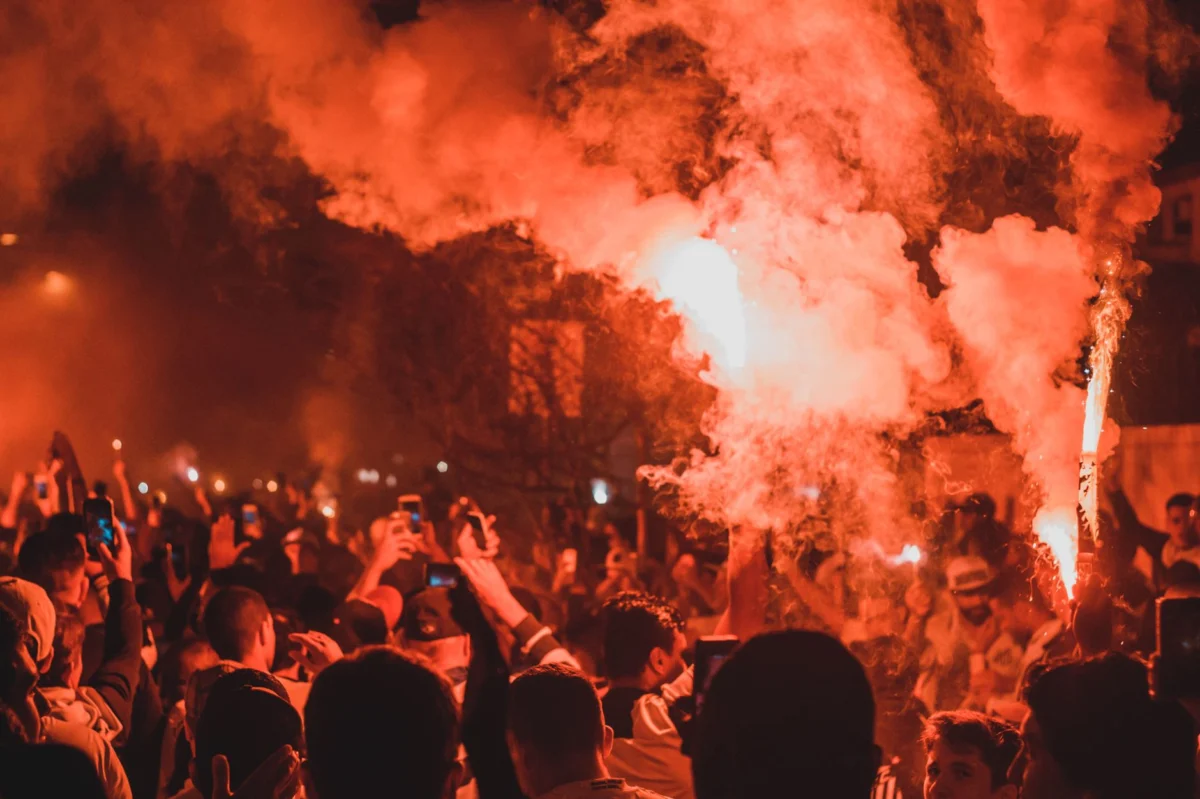
The sight of Manchester United supporters singing for Michael Carrick while the team stumbled to a 3-0 home defeat by AFC Bournemouth said almost everything about the club’s current state. In that moment, Manchester United fans blame the Glazers far more than the caretaker manager. That distinction matters because it shows how supporters now separate short-term coaching from long-term dysfunction. For many fans, the problem is not one match, one manager or even one bad tactical plan. It is a wider collapse of standards that stretches from the boardroom to the pitch at Old Trafford.
This is why the reaction felt so revealing. Carrick, a respected former player and temporary steward, was not treated as the villain. Instead, the anger in the stands pointed toward the ownership model, the recruitment strategy and a club culture that has drifted far from the standard associated with Manchester United during the years of Sir Alex Ferguson. The contrast between the songs for Carrick and the hostility aimed elsewhere offers a useful window into how modern football support works, especially at a club as visible and historically loaded as United.
What the crowd was really saying
Inside a stadium like Old Trafford, noise is never just noise. Chants, boos and silences are messages, and supporters of a club with United’s profile know that every reaction gets amplified beyond the ground. By backing Carrick, fans were effectively saying that the caretaker was not the primary cause of the collapse. By directing frustration toward other targets, they were also making a broader judgment: the club’s decline is structural rather than accidental.
That distinction is important in association football, where managers often become lightning rods for problems that begin higher up the chain. A caretaker can change shape, selection or tempo, but he cannot rewrite a squad’s balance overnight. He cannot fix years of muddled recruitment, and he cannot restore trust in the institution if supporters believe the institution itself is broken.
| Target of fan sentiment | What supporters communicated | Why it mattered |
|---|---|---|
| Michael Carrick | Support, patience and recognition of his limited role | Fans saw him as a temporary figure, not the source of the crisis |
| Ownership and boardroom | Opposition, protest and frustration | Supporters linked poor results to long-term governance failures |
| Players and club culture | Disapproval of effort, confidence and standards | The team’s performance was treated as part of a wider decline in identity |
That pattern is typical of modern football chant culture. Fans often use song to distinguish between an individual who is trying to steady the ship and the people they believe created the storm. At United, that separation has become sharper over time, because repeated managerial changes have not solved the deeper issues. The crowd’s verdict on Bournemouth was therefore not just emotional; it was analytical.
Why Carrick was spared from the anger
Carrick’s status mattered. He was not the long-term architect of the squad, nor the manager who had shaped the club’s recruitment over several seasons. As a former midfielder who had spent years inside the club environment, he also carried a different kind of credibility with fans. He belonged to the old internal culture, the one many supporters still associate with professional standards, calmness and tactical intelligence.
That credibility should not be overstated. Carrick was still responsible for preparing the team, selecting the side and reacting in-game. But in the eyes of supporters, a caretaker is usually judged against a narrower brief: stabilize, simplify and survive. If the squad looks fragile, that is not automatically evidence that the interim boss lacks authority. It may simply mean the underlying structure is poor.
There is also a symbolic factor. Carrick represented continuity with the club’s past without embodying the decisions that led to the present mess. Fans could support him without endorsing the wider regime. That is different from blind optimism. It is a recognition that a temporary manager can be respected even while the club around him is being condemned.
This separation became even more notable because Carrick’s reputation had been built during an era when Manchester United expected to win major honours regularly. The contrast with the post-Ferguson years has been stark, and supporters remember what the club looked like when standards were set by players such as Wayne Rooney and Ryan Giggs. In that context, sympathy for Carrick was also a small protest against the erosion of excellence.
The deeper grievance: ownership, recruitment and identity
The anger that went elsewhere was not spontaneous. It has roots in the long-running dispute between Manchester United fans and the Glazer family, a dispute that has turned nearly every poor result into another argument about the club’s ownership model. For many supporters, the problem is not simply that the team loses. It is that the club often appears to be managed as a commercial asset first and a football institution second.
That criticism intensified after the retirement of Ferguson, because the club seemed to drift from one footballing plan to another without a coherent identity. The role of the executive hierarchy, including figures such as Ed Woodward, became central to that debate. Supporters saw a club that could generate global revenue while still making basic football decisions look uncertain or reactive.
Recruitment is where this distrust becomes most visible. A squad can be expensively assembled and still be badly balanced. It can have famous names and still lack control, pace, leadership or a clear pressing structure. That is why one poor night against Bournemouth felt bigger than the result itself. It looked like another chapter in a broader pattern: managers arrive, attempt to patch problems and eventually leave without changing the core machinery.
United’s training base at the Carrington Training Complex is supposed to be a symbol of elite preparation, but facilities alone do not guarantee elite outcomes. In elite association football, culture matters as much as infrastructure. If players do not know what the club stands for on the pitch, the brand value off it becomes irrelevant to the supporter in the stand.
This is also why comparisons with the Ferguson era persist. Under Ferguson, United were not just successful; they were associated with a clear standard of authority and resilience. The manager’s personality was part of the institution. Since then, the club has repeatedly tried to re-create that authority through new coaches, but no appointment can fully compensate for a governance model that fans no longer trust.
What the Bournemouth defeat revealed on the pitch
The scoreline alone told one story, but the performance told another. A home defeat to Bournemouth is jarring because it exposes familiar weaknesses rather than a one-off lapse. The issues were the kind supporters have seen before: uncertain pressing, a lack of control in midfield, defensive hesitation and a team that looked vulnerable whenever the game became open.
In practical terms, that is what happens when a squad lacks a settled tactical identity. Players hesitate between pressing and dropping off. Midfield lines stretch. The back line gets isolated. The attacking unit starts looking impatient because possession does not lead to rhythm. A supporter does not need to be a coach to spot that pattern; it becomes visible in the body language of the team.
The Bournemouth result also highlighted how fragile confidence can become at a club under pressure. Once the first mistake lands, the stadium atmosphere changes. That is especially true at a ground like Old Trafford, where expectations are higher than the current performances suggest they should be. Every misplaced pass then feels like evidence of something larger, and the crowd reads it accordingly.
That is why the defeat should not be interpreted as proof that Carrick was incapable. It was evidence that the gap between United’s ambitions and its current level remains large. A caretaker can sometimes engineer one good result or one tactical surprise, but rebuilding confidence is a different task from organizing a single match.
Why fan protest matters beyond one afternoon
Supporters are not merely reacting to results; they are shaping the public meaning of those results. When fans choose to sing for a caretaker and direct anger elsewhere, they create a narrative that journalists, pundits and executives cannot ignore. That is especially true at one of the world’s most watched clubs, where every chant becomes part of the wider football conversation.
There is also a commercial dimension. A club like Manchester United depends on global prestige, sponsorship appeal and the image of stability. Persistent discontent at Old Trafford weakens that image. It tells the outside world that supporters are no longer willing to accept the idea that occasional trophy runs can hide deeper structural problems.
At the same time, protest has limits. A chant does not directly change the ownership model. It does not automatically improve recruitment, and it does not guarantee a better manager. But it does keep pressure alive. It prevents boardroom discomfort from being separated from on-field failure, which is often exactly what fans want.
That is why the reaction to Carrick should be read as a message of distinction rather than softness. The fans were not saying everything was fine. They were saying something more precise: the immediate mess was bigger than the caretaker, and the club’s problems cannot be solved by sacking another manager and hoping the noise goes away.
Frequently asked questions about the reaction to Carrick
Why were Manchester United fans singing for Michael Carrick?
Because many supporters saw him as a temporary figure trying to steady the club after a wider crisis. The songs reflected respect for his status as a former player and recognition that he was not the architect of the deeper problems.
Why are Manchester United fans blaming the Glazers?
Fans have linked poor performances to years of weak football governance, repeated managerial turnover and recruitment decisions that have not built a balanced squad. For many, the ownership issue explains more than any single result.
Was the Bournemouth defeat really about the manager?
Not entirely. A manager always carries responsibility for selection and preparation, but the scale of United’s issues makes it difficult to blame one caretaker for everything. The defeat looked like another symptom of broader instability.
What does this mean for the next manager?
It means the next appointment will be judged on more than tactics. Supporters will want evidence of a clear footballing plan, stronger recruitment and a club identity that is not dependent on short-term fixes.
What to watch next at Old Trafford
The most important insight from this match is that supporters have become more sophisticated in how they assign blame. They no longer automatically turn every bad result into a manager-only story. They can separate the caretaker from the system, and that makes the message from the stands more powerful. Carrick may have been the temporary face of the team, but the crowd’s anger was aimed at the long-term forces that have left Manchester United vulnerable to nights like this.
What happens next depends on whether the club treats that message as noise or as evidence. If the hierarchy responds with another cosmetic fix, the cycle will continue. If it accepts that the problem reaches into ownership, recruitment and identity, then the Bournemouth defeat may be remembered not only as a poor result but as another warning that the club’s biggest issue is still unresolved. The unanswered question is simple: how many more bad nights will it take before the people running the club are forced to change the structure, not just the headline name on the touchline?
Frequently Asked Questions
Why did Manchester United fans sing for Michael Carrick after a 3-0 home defeat?
Because the chants were less about the result itself and more about who supporters believed caused the collapse. Carrick was seen as a temporary figure trying to steady a damaged team, not the architect of years of decline. The songs were a way of separating short-term blame from the deeper structural problems at the club.
Does the crowd’s support for Carrick mean fans wanted him to become permanent manager?
Not necessarily. The backing for Carrick was more a statement of sympathy and perspective than a demand for a long-term appointment. Fans were acknowledging his limited remit as caretaker. Their focus was on the ownership, recruitment and culture that had left any interim coach with an unstable squad to manage.
Why are the Glazers being blamed more than the players or the caretaker manager?
Because many supporters believe repeated failures at United come from above rather than from one match or one coach. Poor recruitment, frequent managerial turnover and a lack of clear football strategy have shaped the squad over time. In that view, players and managers are symptoms of a wider governance problem, not the root cause.
What does the article mean by the problem being 'structural' rather than just tactical?
It means the issues go beyond formations or substitutions. A tactical fix can improve a team briefly, but it cannot correct years of unbalanced squad building, declining standards and weak leadership. The Bournemouth defeat was read as evidence of an institutional decline that no caretaker manager could fully reverse in the short term.
Why is Carrick treated differently from many other interim managers at big clubs?
His long history at Manchester United gave him a level of trust and familiarity that many temporary managers do not have. Supporters associated him with the club’s older internal standards and professionalism. That made it easier to view him as someone trying to contain the damage, rather than as the source of the crisis.