
The Anthropic IPO is not just another technology floatation story. It sits at the intersection of frontier artificial intelligence, public-market appetite, and a hard question that investors often prefer to postpone: what happens when a company building powerful Claude says the same technology could also be misused to harm people on a large scale? Anthropic’s warning is not decorative caution. It reflects a genuine dual-use problem in modern machine learning, where the same systems that can accelerate productivity can also lower the cost of cybercrime, persuasion, and biological harm.
That tension explains why this story matters. A public listing forces a company to speak in two registers at once: the language of safety and the language of growth. Investors want scale, margins, and defensible market share. Regulators want disclosure, governance, and restraint. Meanwhile, the public hears the contradiction and asks whether a company can honestly claim both extraordinary upside and serious downside. The answer is yes, but only if it is willing to admit that frontier AI is not a normal software category. It is a platform technology with system-level risk.
What the Anthropic IPO actually signals
In market terms, an initial public offering is a financing event, a liquidity event, and a credibility test. For Anthropic, it would also be a stress test of whether the market believes an AI lab can become a durable public company without muting its safety message. That is a difficult balancing act. A private company can tolerate ambiguity and long timelines. A public company enters the stock market, where quarterly reporting compresses strategic patience into performance metrics.
A filing is not the same as a verdict
A registration filing, even when serious, is not a guarantee that shares will trade on the expected timetable. It signals preparation, not certainty. For investors, that distinction matters because the valuation story will depend on market conditions, competitive pressure, and the company’s ability to show a path from research intensity to operating discipline. For the company, the filing marks a transition from private narrative to public accountability. That shift tends to reward clarity and punish hand-waving.
Why public markets care
Anthropic is not entering a blank field. It is competing in a sector already shaped by OpenAI, Google DeepMind, major cloud providers, and an expanding ecosystem of open-source models. Public investors will not simply ask whether Claude is impressive. They will ask whether the product can sustain demand, whether enterprise customers will pay for it repeatedly, and whether the company can preserve a meaningful moat once its rivals update their own models. That is a classic platform question, not a one-off product question.
Why a safety-first AI company is still chasing scale
Anthropic has built its brand around the proposition that powerful models can be made more reliable through careful training, evaluation, and governance. That positioning matters because public trust is now part of the business model. But there is no contradiction in being safety-first and growth-oriented. In fact, the market increasingly rewards firms that can present safety as a competitive advantage rather than a public-relations layer. The challenge is that safety work is expensive, iterative, and rarely visible in the same way as user growth or revenue expansion.
The commercial logic behind frontier AI
Frontier large language models are not cheap to build or run. They demand compute, talent, and infrastructure, and that pushes AI companies toward scale economics that resemble industrial platforms more than traditional software. The strongest commercial argument for an AI lab is that once the model becomes embedded in enterprise workflows, its value compounds through usage, integration, and switching costs. The strongest counterargument is that the field is still young, the technical lead can compress quickly, and pricing power may be weaker than the hype implies.
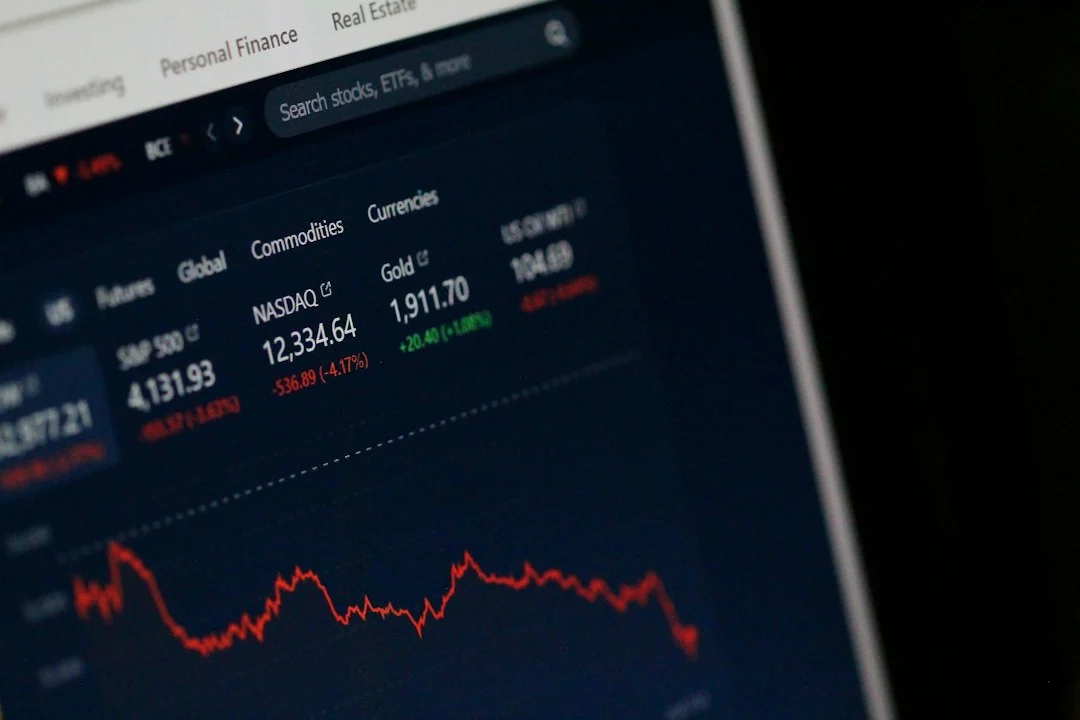
That is why the phrase AI bubble and stock market valuation has become unavoidable. Some investors see an emerging category with enormous addressable demand. Others see a capital cycle that resembles earlier periods of infrastructure overbuild, where enthusiasm outruns monetization. The comparison to the dot-com bubble is not perfect, but it is instructive: transformative technologies can be real and overvalued at the same time.
The threat model is credible because the tools are dual-use
The harshest reading of Anthropic’s warning is also the most realistic. Advanced AI does not need to become autonomous in the science-fiction sense to be dangerous. It only needs to reduce friction for bad actors. A system that drafts phishing campaigns, writes malware variants, scales social engineering, or helps plan illicit procurement can already create damage. That is why cybercrime is one of the clearest near-term risk areas. The barrier to entry falls when a model can assist with language, coding, and operational planning.
There is also a deeper biological risk. Public discussion often jumps straight to apocalypse language, but the practical concern is narrower and more defensible: a sufficiently capable model could assist in designing harmful biological workflows or lowering the expertise needed to misuse existing knowledge. That is why biological weapons and biosecurity appear repeatedly in serious AI risk debates. The issue is not that a chatbot suddenly manufactures pathogens. The issue is that it can compress expertise, amplify experimentation, and help malicious users move faster than oversight systems can react.
Safety research is not a public-relations exercise
Modern AI safety work is tied to AI safety and AI alignment: making sure increasingly capable models do what operators intend, do not invent dangerous behavior, and remain controllable under stress. Internal evaluations in the industry often test for jailbreaks, deceptive behavior, data leakage, and resistance to shutdown. These tests do not prove a model is unsafe in the absolute sense, but they do reveal a basic point: capability increases faster than confidence. The more capable the system, the more expensive it becomes to prove that it is still under human control.
That is also why the distinction between ordinary generative artificial intelligence and a more advanced path toward artificial general intelligence matters. Most investors do not need to believe in AGI to accept that today’s systems already raise governance problems. The relevant question is not whether the technology has reached a hypothetical end state. It is whether the current generation is already powerful enough to create meaningful externalities.
What investors should actually worry about
The serious investor does not ask whether AI is good or bad. That is the wrong frame. The better question is whether the company can convert technical leadership into predictable economics without being crushed by compute costs, competition, regulation, or reputational drag. Anthropic’s public-market story will be judged on several practical variables: customer concentration, enterprise retention, pricing power, and the quality of its safety posture. Each one can move valuation materially.
| Market lens | Safety lens | Practical question |
|---|---|---|
| Revenue growth and margins | Model control and misuse prevention | Can the business scale without weakening safeguards? |
| Competitive moat | Alignment and reliability | Can Claude stay differentiated as rivals improve? |
| Capital efficiency | Compute governance | Are training and inference costs manageable at public-company scale? |
| Valuation discipline | Systemic risk | Is the market pricing enthusiasm faster than reality? |
This table captures the core asymmetry. In a traditional software business, product risk and market risk are often separable. In frontier AI, they are tangled. A product update can improve usage and simultaneously widen the misuse surface. A safety measure can improve trust and simultaneously slow deployment. Public markets tend to price the first effect more readily than the second, which is one reason AI stocks can become overextended even when the underlying technology remains transformative.
Musk’s bubble warning fits a familiar pattern
Elon Musk has repeatedly warned about AI exuberance, and his comments now sit inside a broader market debate about whether the sector is pricing in too much too soon. His concerns are not unique, but they are influential because they echo a familiar cycle in technology markets: early utility, then capital flood, then valuation compression when profits fail to keep pace with narrative. Even if the AI buildout proves durable, the path may still be volatile.
To understand the warning, it helps to remember that bubble talk does not require a worthless technology. The internet was real; the bubble was real too. Likewise, AI can be both economically meaningful and financially overheated. Venture funding, cloud spending, and infrastructure bets can support rapid expansion, but they can also hide fragility. The question is whether the winners will be the companies with the deepest research benches or the ones with the strongest distribution, data access, and procurement relationships. That is not yet settled.
For context, the current debate also echoes earlier platform shifts such as cloud computing, mobile, and search, but with a key difference: AI systems can generate outputs that affect security, labor, and information integrity directly. That makes the stakes broader than ordinary software adoption. It also makes the market’s enthusiasm easier to justify and easier to overshoot.
Regulation will shape valuation, not just the narrative
Public-company status will bring more scrutiny from the Securities and Exchange Commission, more pressure on risk disclosure, and more attention to model incidents. That matters because AI regulation is moving from principle to implementation. Even where the law is still evolving, boards and investors are already being forced to think about misuse, model testing, and accountability. The public cannot assess a frontier AI business solely by product demos. It needs a view of governance.
The regulatory environment is not limited to one jurisdiction. If AI companies want global scale, they have to satisfy multiple regimes and multiple definitions of acceptable risk. That can raise costs, slow deployment, and reward the firms that can operationalize compliance. In the best case, the result is better discipline. In the worst case, it becomes a race between ever more capable models and institutions that are always one step behind. That is the central policy problem of the next few years.
Frequently asked questions
What is Anthropic?
Anthropic is an AI company known for building Claude and for emphasizing safety, reliability, and controlled deployment. It emerged as one of the most closely watched firms in frontier AI, particularly because it tries to combine commercial scale with a strong research-led safety posture.
Can advanced AI really be used for cybercrime?
Yes, in practical terms it already can be, at least as an assistance layer. Models can help draft phishing messages, automate coding tasks, and speed up reconnaissance or social engineering. That does not mean every model is a direct weapon, but it does mean the misuse threshold is lower than it was before.
Why is the Anthropic IPO significant?
Because it tests whether the market will fund a company that openly talks about existential risk while still asking investors to value it like a high-growth platform. The offering is a referendum on whether safety can be part of a strong commercial story rather than a brake on it.
The real test will be whether safety and scale can coexist
The most important insight is not that AI is dangerous or that markets are irrational. It is that both things can be true at the same time, and the market usually prices one before it understands the other. If the Anthropic IPO succeeds, it will show that investors are willing to underwrite a company whose core product raises hard governance questions. If it stumbles, it may say less about the value of AI and more about the limits of confidence when risk becomes harder to ignore.
Watch the next phase closely: enterprise adoption, model governance, regulatory disclosures, and the company’s ability to prove that safety work is not a cost center but a strategic asset. The unanswered question is whether the public markets can reward frontier AI without encouraging the very speed that makes the technology harder to control. That answer will matter far beyond one listing, because it will help define how the next generation of AI companies is built, priced, and constrained.
Frequently Asked Questions
Does Anthropic’s IPO filing mean the company is definitely going public soon?
No. A filing usually means the company is preparing for a possible listing, not that the IPO is guaranteed or imminent. Market conditions, regulatory review, valuation expectations, and internal timing can all delay or change the plan. For investors, the key point is that preparation signals intent, not certainty.
Why would a company that warns about AI risks still want to grow quickly?
Because safety and scale are not mutually exclusive. Anthropic’s bet is that enterprises will prefer a model provider they trust to be more careful, especially as AI becomes more embedded in sensitive workflows. The company still needs growth to fund compute, talent, and research, but it can frame safety as part of its competitive edge.
What makes Anthropic different from a normal software company in the eyes of public investors?
Unlike ordinary software firms, frontier AI labs face system-level risks and unusually heavy infrastructure costs. Investors are not just evaluating revenue growth; they are also assessing model capability, safety governance, regulatory exposure, and the possibility that the technology itself creates public backlash or legal constraints. That makes the business harder to value with standard tech metrics.
If Claude is strong, why wouldn’t Anthropic automatically have a lasting moat?
A strong product does not guarantee a durable moat in frontier AI. Competitors like OpenAI, Google DeepMind, and well-funded open-source ecosystems can narrow the gap quickly. Public investors will look for evidence of repeat enterprise usage, deep integrations, and switching costs, not just benchmark performance or initial excitement around Claude.
How can Anthropic’s warning about misuse affect the IPO valuation?
It can cut both ways. On one hand, candid risk disclosure may build credibility with regulators and institutional investors. On the other, it can remind the market that the technology carries legal, reputational, and operational risks that could limit growth or increase compliance costs. The valuation will depend on whether investors see that honesty as prudence or as a warning sign.