
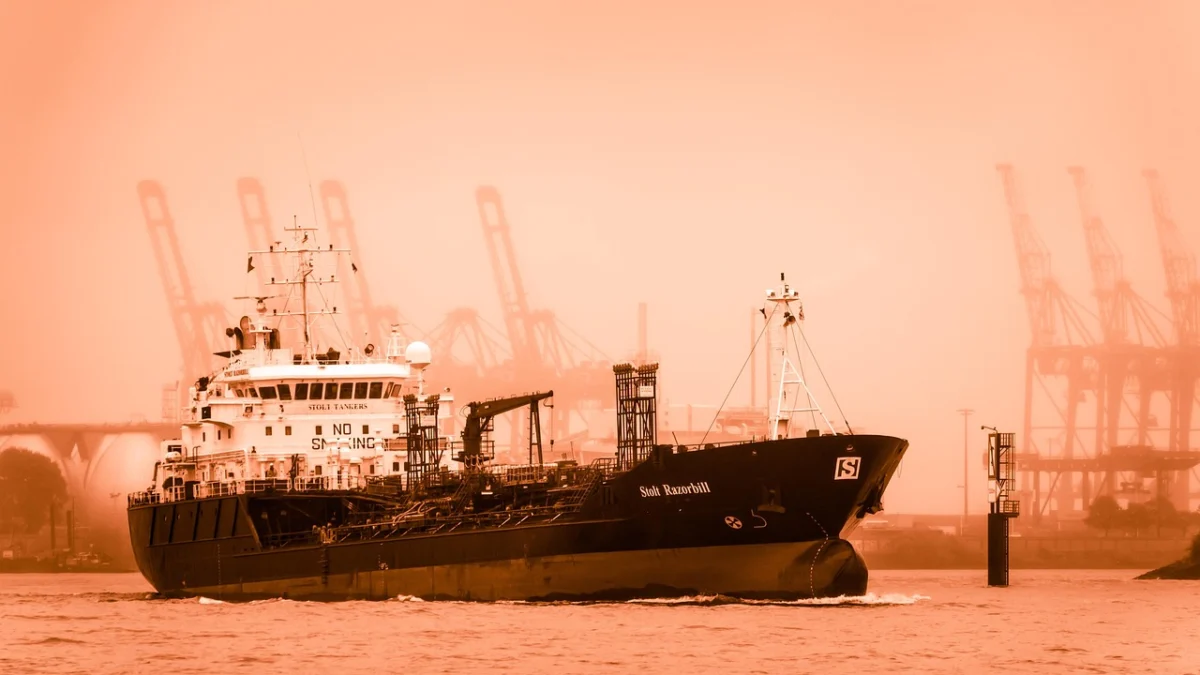
The idea of a drinking water import from Norway sounds extraordinary, but it is really a sign of how fragile local water resilience has become. South East Water says around 280,000 customers could face shortages if the current dry spell deepens, and the mention of sea tankers tells you this is no longer a routine water supply problem. It is a drought management problem, a logistics problem, and a governance problem at the same time. In a region under pressure from water scarcity, the question is not whether water can be moved. It is whether it can be moved safely, in time, and at a scale that actually matters.
For readers checking the official position, operational updates sit with South East Water, drought oversight sits with the Environment Agency, economic regulation sits with Ofwat, and drinking-water safety is monitored by the Drinking Water Inspectorate. Those institutions matter because a plan like this only becomes credible if every part of the chain is compliant, testable, and available at short notice.
What the Norway plan actually means
A emergency water supply plan of this kind should not be mistaken for a normal commercial import. It would be a temporary contingency, used only when local sources, pressure management, and restrictions are no longer enough. The proposal reportedly involves sea tankers bringing in supplies from overseas, which implies a fully controlled transfer of drinking water, not a casual cargo of untreated liquid. The distinction matters. Tap water is not just water; it is a regulated product with quality standards, sampling requirements, and liability attached.
That is why the vocabulary matters. People often say water is water, but a utility has to distinguish between raw source water, treated water, and potable water. Only the last category belongs in a customer’s tap. If the water is loaded in Norway, shipped by tankers, and discharged in England, every transfer point has to preserve drinking water quality. That includes cleaning, sealing, sampling, and chain-of-custody controls. If any link fails, the whole plan becomes unusable.
There is also a reputational issue. Emergency imports are often interpreted as proof that the system has run out of options. In reality, they are usually a sign that companies are trying to avoid a worse failure: lost pressure, customer outages, and emergency deliveries to vulnerable households. The public sees a dramatic headline. The utility sees a last-resort buffer.
Why South East England is so exposed
The wider context is a familiar one in England’s dry south: limited storage, dense demand, and a climate that is becoming harder to plan around. The region depends on a network of reservoirs, rivers, groundwater, and treatment plants that were designed for a different rainfall pattern and a different population profile. That is not a criticism of one company alone. It is a structural issue in the broader water industry.
England’s south-east has long been one of the country’s more water-stressed areas, and the problem is not just rainfall. Demand rises when more homes are connected, gardens are watered, and commercial activity expands. At the same time, the baseline is shifting because of climate change. In the United Kingdom, warmer conditions can intensify dry spells, increase evaporation, and make seasonal planning less reliable, even if annual rainfall does not collapse. That is why the issue is often framed as climate change in the United Kingdom rather than a single bad summer.
The practical result is simple: a network with thin reserves becomes vulnerable faster than the public expects. If storage is low, a hot spell can turn into a supply crisis quickly. That is where a company moves from ordinary conservation messaging to emergency options such as restrictions, pressure reduction, and, in extreme cases, imported water.
Why storage and demand matter as much as rainfall
Water resilience is not just about how much falls from the sky. It is about how much can be stored, treated, moved, and conserved when rainfall is interrupted. A system with weak buffers will always feel more brittle than a system with spare capacity. That is why water resources planning is now as much about demand management as about engineering new supply.
Tools like metering, leakage control, and public restraint matter because they buy time. They are boring compared with a tanker arriving from Norway, but they are usually more effective per pound spent. A utility that reaches for shipping before exhausting demand-side options has either a very severe emergency or a very thin margin.
How sea tankers deliver drinking water in a drought
At a practical level, the phrase sounds simpler than the operation behind it. A sea tanker is not a magic hose. It is a vessel, a port, a pumping arrangement, and a treatment and testing chain that has to work end to end. The water source would have to be suitable for export, the vessel would have to be cleaned and certified, and the receiving site would need infrastructure that can accept the load without contaminating it.
In other words, this is not just a maritime issue. It is an interlocking public-health and engineering problem. The water could be sourced from a compliant treatment facility and moved as potable supply, but it would still need to meet UK standards at the point of delivery. That is why water treatment and discharge testing are central, not optional.
There is a reason utilities usually prefer to avoid imports unless they are cornered. The process is slow to stand up, expensive to run, and vulnerable to weather, scheduling, and port constraints. It is the opposite of a scalable long-term solution. It is a bridge. And bridges, by definition, are meant to get you past a problem, not to replace the road.
How do sea tankers deliver drinking water in a drought?
They do it by moving already compliant water through a tightly managed transfer process. The vessel must be clean, the loading and unloading points must be protected, the water must be sampled, and the receiving network must be able to accept it without breaching pressure or quality rules. The job is not to improvise. The job is to maintain standards under pressure.
That makes the comparison with desalination useful. Desalination creates water from seawater, but it is energy-intensive and usually slow to build at scale. Tanker imports can be faster if a route and a contract already exist, but they cannot deliver the same strategic independence. Neither option is elegant. Both are expensive ways of coping with a shortage that should have been less acute in the first place.
| Option | Strength | Weakness | Best role |
|---|---|---|---|
| Tanker import | Can be deployed as an emergency bridge | Costly, carbon-heavy, and limited in volume | Short-term crisis management |
| Desalination | Creates new supply from the coast | High energy use and long lead times | Strategic resilience asset |
| Restrictions | Reduces demand quickly | Public fatigue and uneven savings | First response in drought |
| Leakage and conservation | Improves resilience permanently | Slow and capital-intensive | Long-term fix |
The hard trade-offs behind the headline
The headline version of this story focuses on the drama of importing water from abroad. The harder truth is that emergency imports are usually the least efficient option on the table. They are expensive because they add transport, port handling, compliance checks, and contingency planning to a product that is normally cheap to move locally. They are carbon-intensive because ships burn fuel. They are politically awkward because they can look like a workaround for deeper underinvestment.
That does not mean they are irrational. In a severe event, resilience is judged by outcome, not elegance. If the choice is between a temporary import and customers running dry, the import wins. But it should be understood as an exception, not a model. A serious water strategy should be built around water conservation, smarter demand control, and better storage, not around repeat emergency shipping.
This is also where regulation matters. The sector is shaped by Ofwat, the Environment Agency, and the rules that govern service quality and environmental impact. Those bodies do not control the weather, but they do influence how quickly companies invest, what risks are tolerated, and how much pressure is put on long-term resilience versus short-term bill stability.
There is a second policy question as well. England has debated new reservoirs, transfers, and demand reduction for years, but the pace of delivery remains slower than the pace of climate pressure. That gap is why stories like this keep appearing. A system that depends on emergency improvisation is not yet resilient enough.
What customers are likely to experience first
For households, an emergency plan does not usually begin with imported water. It begins with communications: save water, avoid non-essential use, check leaks, and follow any temporary restrictions. In many cases the next step is a hosepipe ban or a tighter version of outdoor-use limits. Only if conditions deteriorate further do utilities move toward more visible intervention.
That matters because public perception often leaps straight to dry taps. In practice, utilities try to avoid that outcome with a sequence of interventions. Pressure management, district-by-district controls, temporary restrictions, and emergency logistics are all part of the same ladder. The final rung is the one nobody wants to use.
Customers should also understand that priority is not distributed evenly. Vulnerable households, care settings, and critical services are protected first. That is why the details of any emergency plan matter as much as the headline. A company can be technically ready and still struggle if it has not mapped who gets water first, how it is delivered, and how quickly the network can recover.
Frequently asked questions
Why is South East Water importing water from Norway?
Because the company is facing a drought risk severe enough that local resources may not be enough to keep supply stable. Norway is being discussed as a contingency source because the plan is about securing potable water, not about routine trading.
Is imported drinking water safe?
It can be, but only if it meets UK standards and passes strict checks during loading, transport, and discharge. Safety is a process, not a label.
Will tanker imports become normal in the UK?
They should not. The economics, the logistics, and the emissions make this a poor everyday solution. It is better understood as an emergency fallback while longer-term measures catch up.
What is the difference between tanker imports and desalination?
Tanker imports move existing potable water from elsewhere. Desalination manufactures new freshwater from the sea. One depends on transport. The other depends on energy. Both have serious drawbacks, which is why neither is a clean answer to chronic shortage.
What should households watch for next?
Watch for restriction notices, pressure changes, and official drought updates from the company and regulators. Those signs usually appear before any dramatic emergency supply measure becomes visible.
What to watch next
The most important insight is not that Norway can be turned into a tap for South East England. It is that a wealthy, regulated water system is now considering maritime imports because the local margin for error has narrowed so much. That should sharpen attention on the real question: can the UK build enough water supply and sanitation resilience to avoid improvising at sea?
The next few years will show whether the response is structural or reactive. If investment accelerates, if leakage falls, if storage expands, and if demand management becomes more serious, then emergency imports may remain what they should be: rare, costly, and exceptional. If not, this will not be the last time a drought headline points offshore for a solution. The unanswered question is blunt: how many more dry spells must pass before resilience is built in, rather than borrowed from a ship?
Frequently Asked Questions
Why would South East England import drinking water all the way from Norway instead of using local sources first?
Because the proposal is meant as a last-resort contingency, not a routine supply option. Local reservoirs, rivers, groundwater, demand controls, and pressure management would be used first. The Norway idea only becomes relevant if those measures cannot keep enough water available for customers during a severe drought or supply disruption.
Would imported water from Norway actually be safe to drink on arrival?
Only if it passes the same strict drinking-water standards as domestic supply. That means treatment, sealing, sampling, transport controls, and traceable chain-of-custody checks at every stage. If quality cannot be verified at each transfer point, the water would not be allowed into the supply system.
Why mention sea tankers instead of pipes or rail if the water is already treated?
Sea tankers can move large volumes over long distances faster than building temporary land-based infrastructure. The point is not convenience but speed and scale in an emergency. Tanker transport also allows a tightly controlled route for treated water, which is important when the product must remain potable throughout the journey.
Does this mean South East England is already out of water?
No. It means the region is under enough stress that utilities are preparing for a worse scenario. Emergency imports are not a sign that taps will immediately run dry; they are a backup plan to prevent shortages, loss of pressure, and emergency deliveries if the dry spell deepens further.
Which organisations would decide whether a water import like this can happen?
Different bodies oversee different parts of the process. South East Water would manage operations, the Environment Agency would oversee drought conditions, Ofwat would cover economic regulation, and the Drinking Water Inspectorate would monitor safety. A plan like this only works if all four parts are aligned and compliant.