
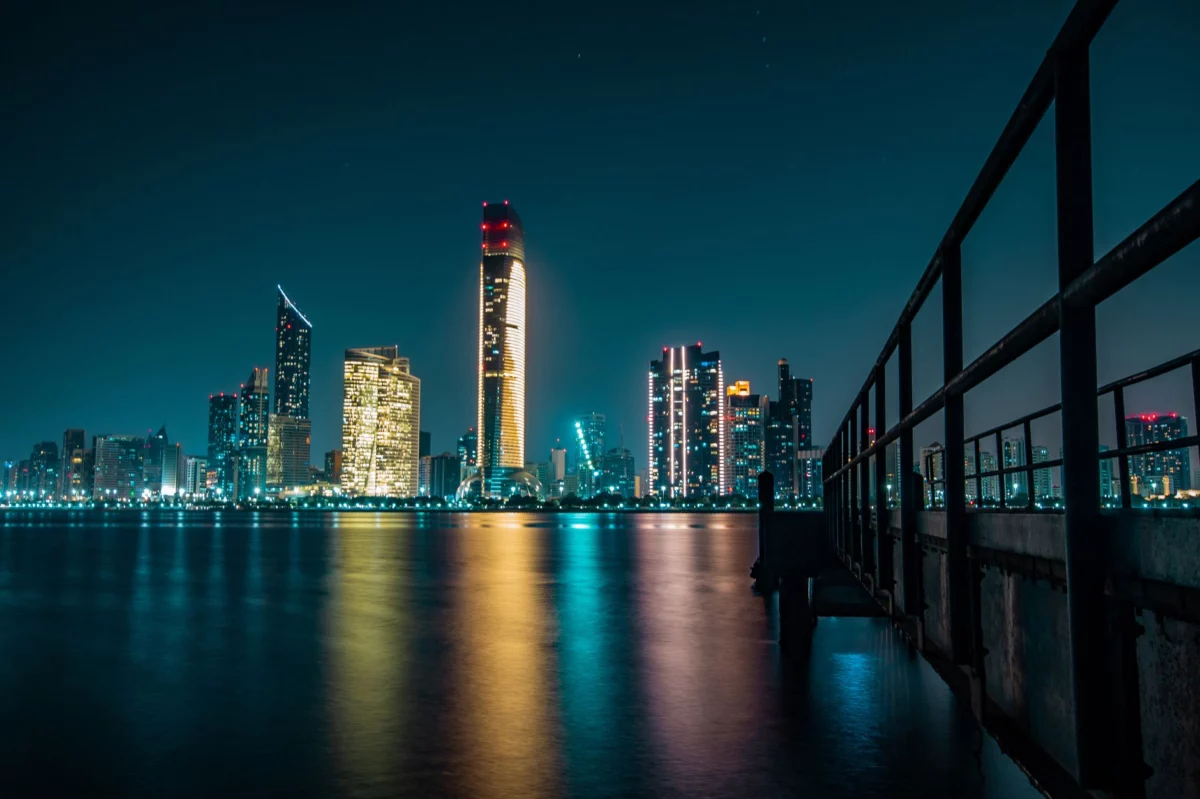
Saleh Al Geziry’s rise through Abu Dhabi’s tourism ecosystem is more than a personal success story; it is a window into the way the emirate is building its future. Named among Forbes Middle East‘s leading travel and tourism figures for 2026, the DCT Abu Dhabi Director General for Tourism has become closely associated with a simple but powerful idea: a city does not become memorable by accident. It becomes memorable when policy, culture, infrastructure, and storytelling move in the same direction. That is the heart of Abu Dhabi tourism strategy.
In a region where destination competition is fierce, Abu Dhabi has chosen a path that is both ambitious and unusually disciplined. Rather than relying on one signature attraction, it is shaping a layered visitor economy that connects the capital’s identity to its wider urban form, its museums and mosques, its islands and entertainment districts, and its role within the United Arab Emirates. This matters because modern tourism is no longer just about arrivals; it is about experience quality, repeat visitation, and the ability to turn a first trip into a long-term relationship with place.
That is why Saleh Al Geziry is best understood not simply as an executive, but as a destination-builder. His work sits at the intersection of destination marketing, urban development, and economic diversification. Abu Dhabi does not need to imitate anyone else to win attention. Its challenge is subtler: to turn distinctiveness into momentum, and momentum into durable growth.
Why Saleh Al Geziry matters to Abu Dhabi’s visitor economy
The strongest tourism leaders understand that destination work is both visible and invisible. The visible part is the attraction portfolio: landmarks, hotels, beaches, events, museums, and transport links. The invisible part is the system behind them: how ministries coordinate, how brands are positioned, how neighborhoods are activated, and how the visitor journey is made seamless from airport to hotel to attraction and back again. That systems view is what gives Abu Dhabi’s current tourism push its power.
Saleh Al Geziry’s public profile reflects this broader approach. By the time a destination leader reaches the level of a director general, the job is no longer to simply advertise a place. It is to align a whole ecosystem. That includes the cultural institutions that make a city feel original, the hospitality sector that absorbs demand, the transport network that connects supply, and the long-term brand architecture that tells visitors what the city stands for. The concept is close to place branding, but in Abu Dhabi it is also a practical economic tool.
A strong destination is not built only with attractions. It is built with coherence: the right airport, the right cultural narrative, the right reason to return.
That coherence is what distinguishes sustainable destination leadership from short-lived promotion. In the case of Abu Dhabi, the question is not whether the city has assets. It clearly does. The real question is whether those assets are being woven into a story that feels coherent to families, luxury travelers, culture seekers, business visitors, and regional short-break guests alike.
The backdrop: Abu Dhabi as a destination in its own right
To understand the strategic significance of this moment, it helps to look at Abu Dhabi’s broader evolution. The city has long occupied a special place in the Gulf: politically central, economically important, and architecturally expansive. But in the era of experience-led travel, a capital city must do more than govern. It must invite. It must persuade travelers that a visit will offer meaning, not just convenience.
Abu Dhabi’s advantage is that its tourism story is not built from a single template. A traveler can move from the majesty of the Sheikh Zayed Grand Mosque to the creative energy of the Louvre Abu Dhabi, then on to the curated waterfronts of Saadiyat Island and the leisure ecosystem of Yas Island. That variety is not accidental. It is the result of years of investment in identity, infrastructure, and positioning.
The destination also benefits from broader Gulf connectivity and aviation strength. National carriers such as Etihad Airways have helped make Abu Dhabi more reachable to long-haul visitors, while the city’s hotel inventory and hospitality standards have matured alongside rising expectations in the hospitality industry. In the modern travel economy, accessibility is destiny. A compelling brand matters, but frictionless access matters just as much.
The pillars of an Abu Dhabi tourism strategy
At its best, an Abu Dhabi tourism strategy is not a slogan. It is a framework. Several pillars appear to define the emirate’s current direction, and Saleh Al Geziry’s leadership is closely associated with bringing those pillars into alignment.
| Pillar | What it does | Why it matters |
|---|---|---|
| Culture | Builds a unique emotional identity | Gives travelers a reason to choose Abu Dhabi over generic sun-and-sea alternatives |
| Connectivity | Reduces friction in the visitor journey | Supports longer stays, easier access, and stronger repeat visitation |
| Experience clusters | Bundles attractions into neighborhoods and circuits | Encourages multi-night itineraries and higher spend per trip |
| Sustainability | Protects place quality over time | Ensures growth does not erode the very character that makes the destination attractive |
Culture as a signature
Culture is Abu Dhabi’s most persuasive differentiator. In tourism terms, culture is not decorative; it is strategic. The emirate’s museums, religious landmarks, and heritage experiences make the capital feel intellectually and visually distinct. That matters because travelers increasingly want more than entertainment. They want context, authenticity, and a sense that they have learned something about a place. This is where cultural tourism becomes a growth engine rather than a niche segment.
It also helps that Abu Dhabi can combine modern spectacle with heritage depth. A visitor can explore high design and contemporary art on Saadiyat, then move toward a landmark like the Sheikh Zayed Grand Mosque and experience a completely different emotional register. The contrast is powerful because it makes the city feel multidimensional rather than theme-driven. That depth is hard to manufacture quickly, which is why it is so valuable.
Connectivity and access
Great destinations are easy to enter and even easier to navigate. In practical terms, that means airport connectivity, internal transport, hotel distribution, and digital trip planning all need to work as one system. Abu Dhabi’s appeal is strengthened when it is not just seen as a place to visit, but as a place you can actually experience without stress.
That is where aviation, routes, and regional positioning matter. A destination that is broadly attractive but difficult to reach will lose travelers to rivals that make the journey simpler. Abu Dhabi’s strategic edge lies in reducing those frictions while still preserving a sense of exclusivity and calm.
Events, leisure, and repeat visitation
Leisure districts are another critical piece of the puzzle. Ferrari World Abu Dhabi, the wider entertainment energy of Yas Island, and the emirate’s association with Formula One all contribute to a portfolio that works across age groups and trip types. This is important because tourism growth is not only about attracting a first-time visitor. It is about creating enough variety that people return with different companions, different budgets, and different reasons.
Event-led destinations often face a familiar risk: temporary spikes without lasting value. Abu Dhabi’s challenge is to avoid that trap by linking events to broader cultural and leisure experiences. When a racing weekend becomes a reason to stay longer, or a museum visit becomes part of a family itinerary, the city captures more of the trip value. That is where the economics of destination-building become visible.
Sustainability and the long game
Any serious discussion of tourism in the 2020s must include sustainable tourism. Growth that damages identity eventually destroys demand. Abu Dhabi’s future depends on preserving quality of place: the cleanliness of its public realm, the dignity of its cultural spaces, the manageability of its visitor flows, and the clarity of its urban character. That is not a side issue. It is the main issue.
This is where destination leadership becomes especially demanding. The goal is not maximum volume at any cost. It is smart growth. The city must continue to expand its share of the travel market while protecting the very traits that make it attractive. That balancing act is the essence of modern tourism governance.
What destination builders get right—and where the hard work begins
There is a tendency to romanticize destination leadership, as if a strong brand alone can create success. In reality, destination building is a discipline of trade-offs. Every added attraction must fit the larger story. Every campaign must be supported by infrastructure. Every bold announcement must be backed by operational quality.
For Abu Dhabi, the opportunity is substantial. The city can pair luxury travel with heritage tourism, family entertainment with business travel, and global branding with a distinctly local voice. But the risks are just as real. If the message becomes too broad, the destination may lose definition. If it becomes too narrow, it may miss growth segments. And if the visitor experience does not match the promise, marketing can become noise.
Common mistakes Abu Dhabi must avoid
- Over-relying on one attraction: diversified destinations are more resilient than single-icon cities.
- Letting branding outrun operations: a brilliant campaign cannot compensate for poor service or friction.
- Ignoring repeat visitors: the second trip is often more valuable than the first.
- Confusing growth with identity: not every opportunity fits the brand story.
- Underestimating sustainability: place quality is a long-term asset, not a short-term cost.
These are familiar lessons in global tourism, whether the conversation is about heritage tourism, urban regeneration, or large-scale leisure development. What distinguishes Abu Dhabi is its ability to learn quickly and execute at scale.
That scale matters because tourism is never just tourism. It touches retail, transport, culture, events, real estate, and labor markets. It becomes part of a city’s story about who it is and what it wants to become. In that sense, the work of Saleh Al Geziry is tied not just to arrivals or occupancy rates, but to the broader idea of how a capital city competes in the 21st century.
What readers should watch next
The next phase of Abu Dhabi’s tourism journey will likely be defined by three questions. First, can the emirate continue expanding its cultural offer without making it feel overpackaged? Second, can it keep improving access and convenience while preserving a premium sense of place? Third, can it turn new visitors into advocates who return, recommend, and spend more across a wider part of the city?
Those questions matter because the global tourism market is changing fast. Travelers are more selective, more digital, and more interested in meaningful experiences. They expect high standards, but they also expect stories. Abu Dhabi is well positioned if it continues to treat destination building as a long-term civic project rather than a short-term campaign.
For readers seeking a broader policy lens, the most useful reference points remain the city’s official tourism direction, the wider work of the United Nations World Tourism Organization, and comparative studies of how capital cities use tourism to support economic diversification. Abu Dhabi’s case is compelling because it shows how a place can be both deeply local and globally legible at the same time.
Saleh Al Geziry’s recognition by Forbes Middle East signals more than personal achievement. It suggests that the market is paying attention to a style of leadership that values coherence, long-range thinking, and the quiet discipline of building rather than merely announcing. The unanswered question is not whether Abu Dhabi can attract attention. It already can. The real question is whether it can keep turning attention into attachment, and attachment into enduring value.
If the next few years confirm that pattern, Abu Dhabi will not simply be a destination with impressive attractions. It will be a destination whose strategy has become part of its identity.
Frequently Asked Questions
Why is Saleh Al Geziry described as a destination-builder rather than just a tourism executive?
Because his role appears to go beyond promoting attractions. The article presents him as someone aligning policy, culture, infrastructure, and branding so the whole visitor experience works as one system. That broader coordination is what turns a destination from a collection of sites into a coherent place people want to return to.
What makes Abu Dhabi’s tourism strategy different from a single-attraction approach?
Abu Dhabi is not relying on one landmark to define its appeal. Instead, it is building a layered experience that combines cultural institutions, leisure districts, islands, and urban identity. This reduces dependence on any one draw and makes the destination more resilient, especially for travelers who value variety and repeat visits.
Why does the article emphasize repeat visitation instead of just visitor numbers?
Because modern tourism success is measured by more than arrivals. Repeat visitation signals that the destination delivered enough value, comfort, and meaning for travelers to come back. For Abu Dhabi, this matters because long-term growth depends on turning first-time visitors into loyal audiences, not just attracting one-off trips.
How does Abu Dhabi’s tourism strategy connect to economic diversification?
Tourism is being used as part of a wider economic model, not as a standalone sector. By strengthening hospitality, culture, transport, and events, Abu Dhabi creates jobs, stimulates investment, and supports related industries. That makes tourism a practical tool for diversification, especially in an economy seeking broader growth beyond traditional revenue sources.
Why is coherence so important in Abu Dhabi’s visitor experience?
A destination can have excellent attractions but still feel disjointed if transport, messaging, and visitor flow do not connect. Coherence ensures the airport, hotels, cultural sites, and neighborhoods feel like parts of one journey. That seamlessness improves satisfaction, strengthens the city’s brand, and makes the experience easier to recommend.