
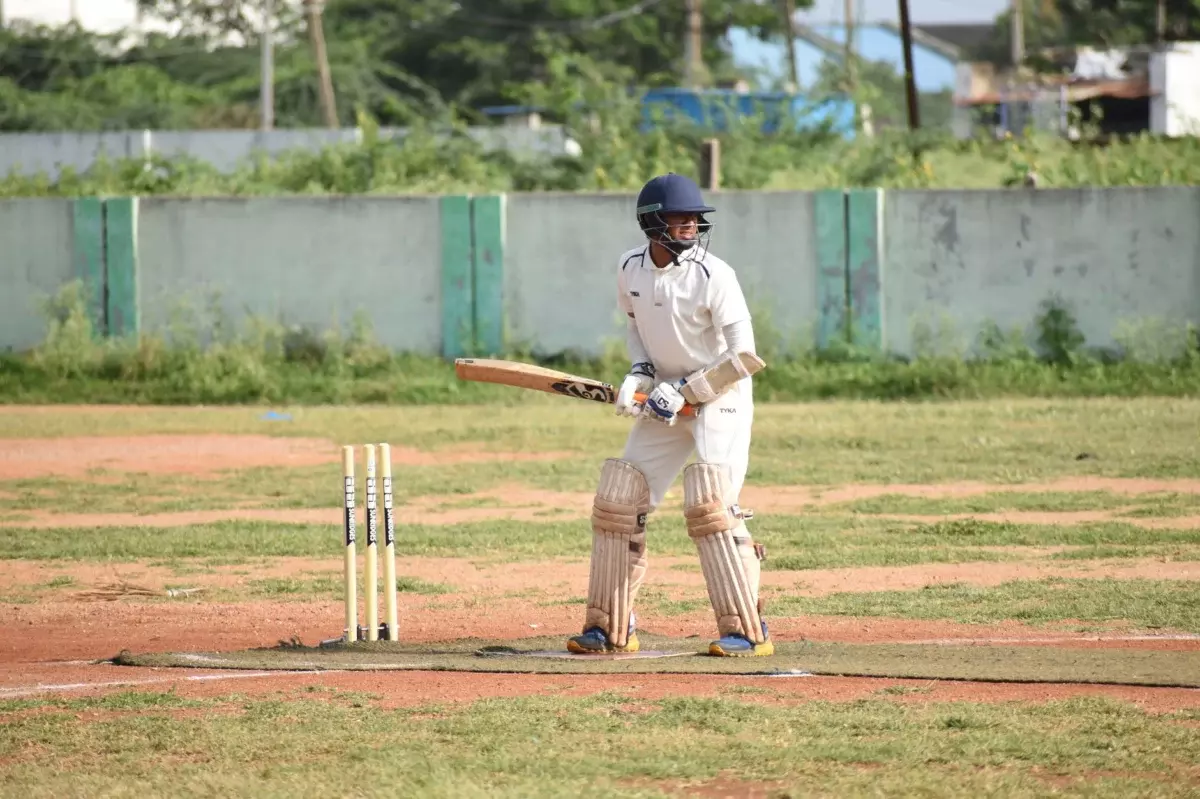
Dan Lawrence at Lord’s became the defining thread of a day otherwise controlled by rain. Persistent interruptions reduced the amount of meaningful cricket, disrupted tactical plans and denied the match a normal rhythm. Yet limited playing time does not necessarily produce limited evidence. Lawrence used the available window to strengthen his position, demonstrating why interrupted days can be unusually revealing tests of concentration, adaptability and intent.
The significance of Lawrence’s contribution cannot be judged only through volume: runs scored, overs completed or time spent at the crease. On a fragmented day, opportunity is compressed. Batters must restart mentally, reassess changing conditions and decide whether to absorb pressure or exploit bowlers who are also struggling for continuity. Lawrence’s response mattered because it addressed the central question surrounding any player competing for a larger role: can he turn uncertain circumstances into persuasive evidence?
Why Dan Lawrence at Lord’s mattered
Dan Lawrence has long been regarded as an unconventional and inventive English batter. His method can include pronounced movement across the crease, strong wrist work and a willingness to challenge orthodox field settings. Those qualities make him difficult to contain, but they also invite scrutiny when conditions reward disciplined seam bowling.
That tension gives an innings at Lord’s additional analytical value. The ground’s history can create an exaggerated sense of occasion, but its practical demands are more important than its symbolism. Atmospheric moisture, pitch preparation and the distinctive slope can influence movement and alignment. A batter must manage the ball in front of him rather than become distracted by the venue’s reputation.
Lawrence’s opportunity was therefore about more than surviving rain interruptions. It was a chance to show that his attacking identity could coexist with situational discipline. Selectors and coaches rarely need another demonstration that a naturally aggressive batter can play attractive strokes. They need evidence that he can identify risk, control tempo and preserve his scoring options when the match refuses to settle.
Rain changes the technical contest
A rain-ruined cricket day is not simply a shortened version of an ordinary day. It creates a different competitive environment. Ground staff cover the square, players leave the field, batters remove protective equipment and bowlers cool down. When play resumes, everyone must repeat physical and mental preparation without knowing how long the next session will last.
Repeated starts favor disciplined decision-making
The beginning of an innings is usually its most vulnerable phase. Batters must judge pace, bounce and lateral movement before their visual and physical responses are fully calibrated. Rain can force an established batter to repeat that process several times. Each resumption functions like a partial new innings, especially if cloud cover, wind or surface moisture has changed.
For Lawrence, the critical task was to preserve clarity. His natural movement at the crease can disrupt a bowler’s line, but movement is useful only when the head remains controlled and the bat can access the ball cleanly. Overcommitting across the stumps may expose the outside edge or create leg-before-wicket risk. Remaining static, however, could remove one of the mechanisms through which he unsettles attacks. The correct response is selective movement rather than complete technical restraint.
Bowling sides also lose continuity
Interrupted conditions are often described as automatically favorable to seam bowlers. That is too simplistic. Cloud cover may assist swing, and a refreshed surface may offer movement, but bowlers also lose rhythm. Fast bowlers repeatedly warm up, deliver brief spells and stop again. Captains can struggle to construct pressure through sustained sequences of dot balls.
This gives an alert batter a tactical opening. A bowler returning after a delay may require several deliveries to recover length. Positive footwork and controlled scoring can prevent the fielding side from immediately rebuilding pressure. Lawrence’s broader value lies in his capacity to convert these small uncertainties into scoring opportunities without treating every loose-looking delivery as an invitation to attack.
Understanding Lawrence’s batting method
Batting in cricket is often discussed through the language of textbook technique, but elite effectiveness is not synonymous with visual orthodoxy. The decisive questions are whether a method protects the stumps, controls the edge and produces repeatable scoring options against different lengths.
Lawrence’s technique is built partly around disruption. By moving across the crease or altering his stance, he asks bowlers to reconsider what constitutes a safe line. Deliveries aimed at the top of off stump can become accessible through the leg side, while bowlers who compensate by moving wider may offer width. This can disturb a carefully planned channel.
The disadvantages are equally clear. Pronounced movement can make balance more difficult, particularly against late swing. It may also complicate judgment outside off stump because the batter’s relationship with the stumps changes during the delivery. On a stop-start day, timing that movement becomes harder because the batter receives fewer consecutive balls from which to read the bowler.
Controlled aggression is the relevant benchmark
The distinction between aggression and recklessness is shot selection. Controlled aggression means creating scoring pressure while retaining a defensive response to a good delivery. It may involve decisive running, rotating the strike or punishing an obvious error rather than forcing boundaries against well-directed bowling.
In interrupted cricket, the most valuable attacking decision is often the choice not to manufacture a stroke before conditions and timing have been properly reassessed.
Lawrence is most convincing when his creativity follows sound judgment. If movement creates a favorable angle, he can exploit it. If the ball swings later than expected, he must still be able to defend beneath his eyes or leave. That combination is more relevant to selection than the aesthetic appeal of any individual shot.
Lord’s, prestige and practical difficulty
Lord’s is owned by the Marylebone Cricket Club, an institution closely associated with cricket’s laws and history. Its status as the so-called Home of Cricket ensures that performances there attract attention beyond the immediate match. That attention can help a player make a case, but it can also distort analysis by encouraging observers to attach excessive significance to the setting.
The better assessment focuses on conditions and match context. The famous Lord’s slope affects how players perceive line and balance, although its impact should not be treated as a mystical force. Bowlers still need to execute, and batters still need to judge each delivery. The playing surface, weather and quality of the attack remain more influential than reputation alone.
The ground is also central to the development of cricket and the administration of the Laws of Cricket. However, history cannot protect a match from weather. Rain exposes one of the sport’s persistent vulnerabilities: a major contest can lose much of its competitive shape despite sophisticated drainage, forecasts and ground-covering systems.
What the innings means for selection
A strong contribution in limited playing time can improve a player’s case, but it should not settle selection by itself. Elite teams must evaluate performance over a meaningful sample, considering opposition quality, role, conditions and the manner in which runs were made. A fluent cameo and a long, pressure-resistant innings answer different questions.
Lawrence’s case is complicated by his versatility. He can occupy several batting positions and provide an additional spin-bowling option. Such flexibility is useful in a squad, particularly when injuries or workload management force changes. Yet versatility can also prevent a player from owning a clearly defined role. Being capable of batting in several positions is not the same as being equally suited to each one.
In Test cricket, the difference is substantial. Opening demands repeated exposure to the new ball, while the middle order more often requires adaptation to an existing match situation. The skills overlap, but the tactical expectations do not. Any argument for Lawrence’s advancement should therefore specify the role rather than rely on the vague claim that he is in form.
What selectors should examine
- Judgment outside off stump: whether Lawrence consistently distinguishes playable width from deliveries designed to draw the edge.
- Balance after movement: whether his head and bat remain aligned when he moves across the crease.
- Restart discipline: how effectively he rebuilds concentration after weather delays, breaks and changes of bowling.
- Scoring access: whether he can rotate the strike without relying on high-risk boundary options.
- Role suitability: whether the innings provides evidence for a specific position in the order.
The limits of interpreting a weather-shortened performance
The temptation after a disrupted day is to overstate whatever cricket did occur. Scarcity increases attention: when only a small amount of play is possible, every passage appears more consequential. Analysts should resist that effect. A short sample can reveal process, but it provides limited certainty about durability.
Rain may also alter the competitive balance in ways that a scorecard cannot fully capture. A fielding captain might use bowlers differently because another stoppage appears imminent. A batter may attack because there is little time before poor light or another shower. These decisions are rational within the moment but may not resemble those made during an uninterrupted session.
The County Championship and other forms of first-class cricket are particularly exposed because draws remain possible and lost time cannot be recovered through the limited-overs mechanisms used elsewhere. The Duckworth–Lewis–Stern method, for example, recalculates targets in rain-affected limited-overs matches but does not resolve time lost in first-class cricket.
Lawrence should consequently receive credit for using the available opportunity, not immunity from broader evaluation. The strongest interpretation is that he supplied relevant evidence under difficult circumstances. It is not that one interrupted day erased every previous technical or positional question.
Managing rain-affected cricket more effectively
Weather cannot be controlled, but its consequences can be reduced. The official Laws of Cricket published by MCC establish the framework within which officials make decisions about dangerous or unreasonable conditions. Ground authorities, meanwhile, can invest in drainage, covers and efficient staffing.
More flexible playing hours deserve careful consideration where competition regulations permit them. Earlier starts after reliable forecasts, extended evening sessions and realistic use of reserve time can preserve more cricket. Each option has constraints: spectators need notice, broadcasters require schedules, local authorities may impose operating limits, and fading light can create safety concerns.
Teams should also treat interruption management as a trainable skill. Batters can rehearse compressed warm-up routines, use consistent mental cues and review only essential technical information during delays. Excessive analysis can be counterproductive because it encourages players to alter a functioning method in response to a handful of deliveries.
Frequently asked questions
Why was Lawrence’s performance important?
It showed how he responded when playing time, rhythm and conditions were uncertain. The value was not merely statistical; it concerned his judgment, adaptability and capacity to impose himself without ignoring risk.
Why is batting after a rain delay difficult?
A batter must restart physical and visual preparation while reassessing swing, bounce and pace. The bowler may also return refreshed, and atmospheric conditions can differ from those before the interruption.
Does rain always help seam bowlers?
No. Humidity and cloud can coincide with swing, but cloud itself does not guarantee movement. The ball’s condition, seam position, wind, pitch and bowler execution all matter. Repeated delays can also disrupt bowling rhythm.
Can one innings secure an England place?
It can influence a close decision, but responsible selection requires a wider body of evidence. Decision-makers must consider role, technical matchups, recent performances and the balance of the team.
What Lawrence must prove next
The central insight from the rain-damaged day is that opportunity is measured by relevance, not duration. Lawrence could not control the weather or the number of overs available. He could control how quickly he understood the conditions, how firmly he committed to decisions and how effectively he balanced enterprise with preservation.
His next challenge is repetition. An inventive technique attracts praise when it succeeds and disproportionate criticism when it fails. The only durable answer is to make the method reliable across longer innings, stronger attacks and different roles. Observers should watch whether his movement continues to create scoring options without widening his dismissal risk against late seam and high-quality pace.
The unresolved question is not whether Lawrence possesses talent; that has been evident for years. It is whether he can convert adaptability into sustained authority. If he does, this rain-ruined appearance at Lord’s may be remembered not for the cricket the weather removed, but for the evidence Lawrence managed to provide before it returned.
SEO DATA
Primary Focus Keyphrase: Dan Lawrence at Lord’s
Related Keyphrase 2: Lawrence rain-affected innings
Related Keyphrase 3: Dan Lawrence batting analysis at Lord’s
Related Keyphrase 4: Why was Lawrence’s innings important?
Related Keyphrase 5: England cricket selection
Primary Keyphrase Synonyms: Lawrence at Lord’s, Dan Lawrence innings, Lawrence’s Lord’s performance, Dan Lawrence batting display, Lawrence cricket analysis
SEO Title: Dan Lawrence at Lord’s: Rain-Affected Innings Analyzed
Meta Description: Dan Lawrence at Lord’s turned limited playing time into a valuable statement. Explore his technique, selection case and the effects of rain.
URL Slug: dan-lawrence-lords
Image Filename: dan-lawrence-lords-rain-cricket.jpg
Image ALT Text: Dan Lawrence batting at Lord’s as rain clouds gather above the cricket ground
Image Title: Dan Lawrence Batting During a Rain-Affected Day at Lord’s
Image Caption: Lawrence makes use of limited playing time during a weather-disrupted day at Lord’s.
Search Intent: News/current event and informational
Frequently Asked Questions
Why can a short innings on a rain-interrupted day carry significant selection value?
Limited playing time can intensify the test rather than diminish it. A batter must repeatedly rebuild concentration, reassess movement and make scoring decisions without developing a normal rhythm. Selectors can therefore learn whether a player adapts quickly, controls risk and remains tactically clear when opportunities are compressed.
Do rain delays always make conditions easier for seam bowlers?
Not necessarily. Moisture and cloud cover may increase swing or seam movement, but repeated stoppages can disrupt a bowler's rhythm, shorten effective spells and prevent sustained pressure. Batters who recalibrate quickly may exploit loose deliveries from bowlers forced to warm up and restart several times.
How does the slope at Lord's affect a batter such as Dan Lawrence?
The Lord's slope can alter a batter's perception of alignment, bounce and lateral movement. For Lawrence, whose technique includes movement across the crease, maintaining a stable head position is especially important. Excessive movement may expose an edge or create leg-before-wicket risk, while controlled movement can disrupt the bowler's preferred line.
What does selective movement at the crease mean in Lawrence's case?
Selective movement means using triggers and crease position according to the ball, bowler and conditions rather than moving automatically. Lawrence does not need to abandon his unconventional method, but he must avoid overcommitting across the stumps. The objective is to retain his scoring options while keeping balance and defensive access.
Can one rain-affected performance establish Lawrence as a long-term selection choice?
A single fragmented innings cannot settle a long-term selection debate, because consistency across opponents and conditions remains essential. However, it can provide valuable evidence about adaptability, concentration and game awareness. Such qualities matter when selectors are deciding whether an inventive batter can succeed in a broader or more demanding role.