
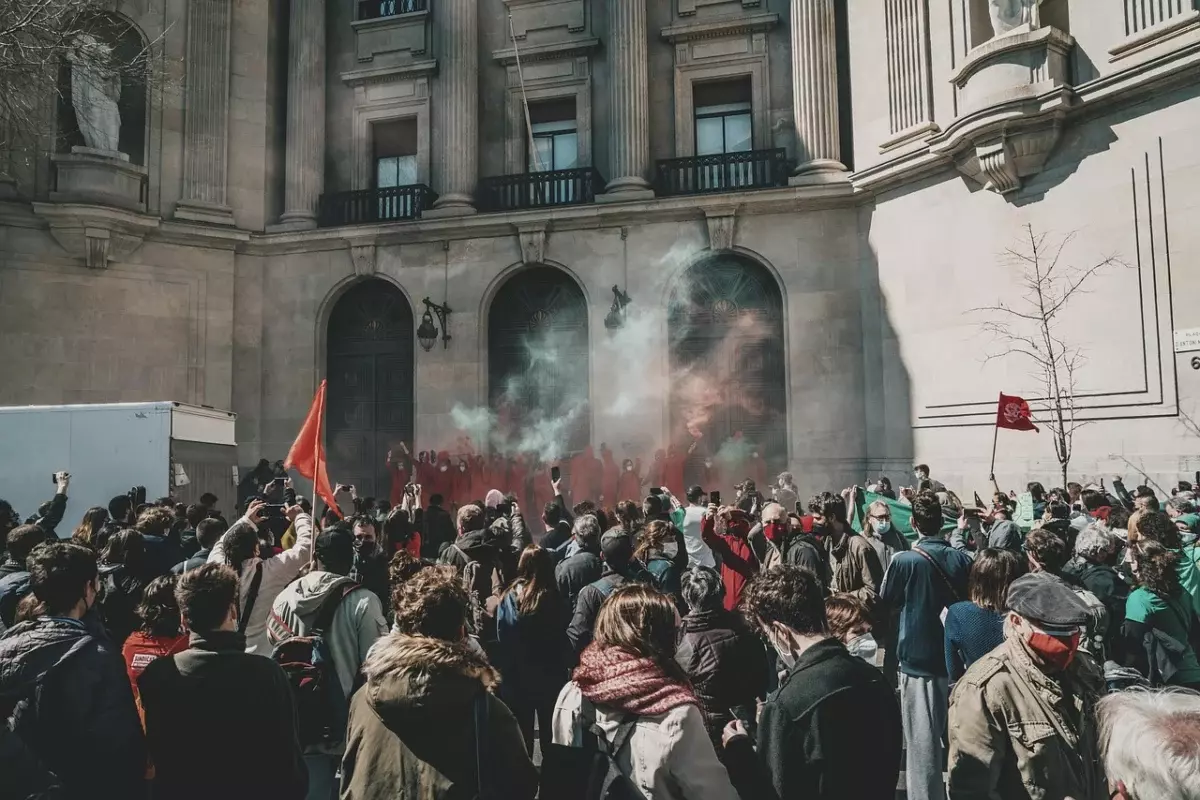
Anti-AfD protests in Cologne brought thousands of people into the streets after the far-right party achieved a major electoral breakthrough. The demonstration reflected more than disappointment with a single result: it expressed deep anxiety about Germany’s democratic culture, the normalization of nationalist rhetoric, and the direction of Europe’s largest economy. Although the available news report does not specify a final police estimate or describe every organization involved, the scale of the rally makes one point unmistakable—many citizens regard the Alternative for Germany’s rise as a political turning point demanding a visible response.
The protest followed the 2025 German federal election, in which the Alternative for Germany recorded its strongest federal performance to date and finished second nationally. Official results published by Germany’s Federal Returning Officer gave the AfD 20.8% of second votes. Describing that outcome as an outright national victory would be imprecise because the party did not finish first or form the federal government. Politically, however, doubling its 2021 vote share and becoming the largest opposition force represented an extraordinary advance.
Why the Anti-AfD Protests in Cologne Matter
Cologne carries unusual symbolic weight in this debate. The city is one of Germany’s largest, most diverse and most internationally connected urban centers. Its identity has been shaped by migration, commerce, universities, media organizations and an exuberant civic culture. A mass demonstration there therefore sends a message extending well beyond municipal politics: a substantial part of urban Germany refuses to treat the far right’s electoral growth as routine.
The rally also illustrates the difference between electoral legitimacy and freedom from criticism. The AfD won representation through democratic elections, and its voters cannot simply be erased from political life. At the same time, citizens retain the right to scrutinize its policies, challenge its language and organize peacefully against its influence. Germany’s constitutional order protects both competitive elections and freedom of assembly. Protest is not an attempt to cancel democracy when it remains peaceful; it is one of democracy’s established instruments.
An election determines who holds parliamentary seats. It does not end the public argument over what those representatives stand for or how other citizens should respond.
Understanding the AfD’s Electoral Breakthrough
The Alternative for Germany was founded in 2013, initially gaining attention through opposition to eurozone rescue policies. It subsequently shifted toward a harder nationalist platform, placing immigration, asylum, Islam, national identity and resistance to European integration near the center of its political appeal. The party’s evolution has made it a leading example of right-wing populism in contemporary Europe.
The 2025 AfD election results in Germany cannot be explained by one issue alone. Immigration and border policy were central, but economic insecurity, energy costs, frustration with the outgoing governing coalition, dissatisfaction with public services and declining trust in political institutions also influenced the campaign. The AfD proved especially effective at presenting different grievances as evidence of a single failure by an allegedly detached establishment.
A National Result with Sharp Regional Differences
National percentages conceal a deeply uneven electoral map. The AfD has traditionally performed more strongly in eastern Germany, where the consequences of reunification, demographic change and regional inequality remain politically powerful. In several eastern constituencies, the party has become a dominant electoral force rather than a marginal protest vehicle. Its support in western metropolitan areas is generally lower, helping explain why a Cologne protest after the German election could attract such a large and passionate crowd.
Regional differences should not be reduced to stereotypes about east and west. AfD voters include ideological nationalists, habitual supporters, economically anxious citizens and people using the ballot to punish established parties. These motivations overlap but are not identical. Treating every voter as committed to the party’s most extreme statements may deepen alienation; ignoring extremist currents within the party would be equally misleading.
The Role of Digital Political Communication
The AfD has built a formidable presence on social platforms, where emotionally charged videos and simplified messages can travel faster than detailed policy analysis. Anger, fear and cultural conflict are highly shareable, while algorithmic recommendation systems can reward provocative content. This does not mean social media mechanically causes far-right voting. It does mean that digital platforms can amplify political narratives, bypass traditional journalistic scrutiny and intensify political polarization.
Opponents face a difficult strategic choice. Repeating inflammatory claims can unintentionally extend their reach, yet refusing to respond may leave misinformation uncontested. Effective communication requires rapid factual correction, emotionally credible storytelling and direct engagement with the material concerns beneath political resentment.
Why Are Germans Protesting the AfD?
Many demonstrators fear that the party’s rise may shift the boundaries of acceptable political speech. Their concerns commonly involve immigration policy, minority rights, historical memory, European cooperation and the resilience of constitutional institutions. Germany’s experience of dictatorship and the Holocaust gives debates about ethnic nationalism an exceptional moral and historical intensity. Modern German democracy was deliberately designed to prevent political power from again becoming concentrated in an anti-democratic movement.
That architecture is rooted in the Basic Law for the Federal Republic of Germany. It places human dignity at the center of the constitutional system and creates checks among parliament, federal states, courts and executive authorities. The Federal Constitutional Court plays a particularly important role in defending constitutional principles.
Debate surrounding the AfD also involves scrutiny by domestic intelligence authorities and litigation over official classifications. Such matters must be described carefully because findings can differ among regional branches, court proceedings may alter their legal significance, and allegations against individual members are not automatically findings against every voter or party organization. Protesters may draw political conclusions from this scrutiny, but legal judgments remain the responsibility of courts operating under due process.
Protest, Democratic Legitimacy and the Limits of Exclusion
Critics of anti-AfD demonstrations sometimes argue that constant denunciation strengthens the party’s claim to be a persecuted outsider. That risk is real. If protest rhetoric portrays millions of voters as morally irredeemable, the AfD can use the hostility to reinforce a siege mentality. Demonstrators are most persuasive when they distinguish between rejecting discriminatory policies, confronting extremist networks and listening seriously to citizens who feel abandoned.
Supporters of the demonstrations answer that silence carries a greater danger. Political normalization rarely arrives through a single dramatic event; it can occur incrementally as once-taboo language becomes familiar and other parties imitate it. From this perspective, public mobilization establishes a democratic boundary before exclusionary ideas become embedded in mainstream policy.
The Parliamentary Firewall
Germany’s established parties have generally maintained a political cordon sanitaire, often called a firewall, against formal cooperation with the AfD. The approach is intended to prevent the party from gaining executive power through coalitions despite lacking a majority of its own.
The firewall creates its own tension. Supporters consider it a necessary defense of democratic norms. Critics argue that excluding a party with substantial electoral support can allow it to claim that ordinary parliamentary competition is rigged. The policy’s durability will depend on whether mainstream parties can form workable governments, address voter concerns and maintain discipline at federal, state and local levels.
What the Protest Can—and Cannot—Achieve
A demonstration can make threatened communities feel less isolated, connect civic organizations and communicate that election results do not represent unanimous public consent. It can also attract media attention, recruit volunteers and create networks capable of sustained work. These are meaningful outcomes, particularly when a rally brings together trade unions, religious communities, cultural institutions, students and local advocacy groups.
However, crowds alone rarely reverse an electoral trend. If the energy disappears after a weekend march, the structural conditions helping the AfD remain untouched. Effective democratic resistance must move from symbolism to patient institution-building.
Practical Priorities Beyond the March
- Defend factual debate: Civic groups should correct false claims with verifiable evidence while avoiding the condescension that can harden distrust.
- Strengthen local journalism: Communities need reporters capable of examining municipal decisions, extremist networks and the real effects of migration or economic policy.
- Address administrative failure: Slow housing construction, overburdened schools and delayed public services can turn manageable problems into symbols of governmental incompetence.
- Protect targeted communities: Authorities and civil society should document threats, support victims and distinguish legitimate policy disagreement from harassment or violence.
- Create sustained participation: Voting, party membership, neighborhood forums and volunteer work provide more durable influence than occasional outrage.
- Listen without surrendering principles: Democratic actors can acknowledge insecurity about migration, employment or cultural change without adopting collective blame.
Political violence, intimidation and property damage would undermine these goals. Peaceful organizers benefit from transparent stewarding, cooperation on public safety and clear rules against dehumanizing slogans. A movement defending pluralism must demonstrate pluralist behavior in practice.
Economic and European Consequences
The AfD’s rise matters beyond German domestic politics. Germany is central to the European Union, NATO’s European security architecture and the continent’s industrial economy. A stronger nationalist opposition can influence debates on Ukraine, sanctions, defense spending, climate policy, migration and the transfer of authority to EU institutions even when it remains outside government.
Business leaders must also consider reputational and labor-market consequences. Germany depends on international trade and skilled workers, while many regions face demographic aging. Political hostility perceived as targeting foreigners may make recruitment more difficult. Conversely, dismissing concerns about infrastructure capacity or the administration of asylum can erode confidence in government. Sustainable policy has to combine orderly rules, humane treatment, faster decisions and credible integration.
Frequently Asked Questions
Did the AfD win the German federal election?
No. The AfD finished second nationally in the 2025 federal election with 20.8% of second votes, according to the Federal Returning Officer. It was nevertheless the party’s best federal result and a major political breakthrough. Referring to a far-right election surge is therefore more precise than saying it won control of Germany.
Were the Cologne protesters opposing a legal political party?
Yes, they were protesting the policies and influence of a legally participating party. Peacefully opposing a legal party is itself a democratic right. A protest does not annul votes or remove elected representatives from the Bundestag.
Can Germany ban an anti-democratic party?
The Basic Law provides a tightly controlled process for declaring a party unconstitutional, but only the Federal Constitutional Court can make that decision. The legal threshold is intentionally demanding. Political criticism, intelligence scrutiny and a constitutional ban are separate matters and should not be conflated.
Will demonstrations reduce AfD support?
Not automatically. Protests can energize democratic participation and prevent normalization, but they can also strengthen an outsider narrative if they stigmatize voters indiscriminately. Long-term effects depend on whether civic mobilization is matched by effective government, trustworthy institutions and persuasive alternatives.
The Test Comes After the Streets Empty
The most important lesson from Cologne is not simply that thousands rejected the AfD. It is that Germany’s political conflict is moving into a more demanding phase. The country must protect constitutional boundaries while engaging citizens whose frustrations have become a powerful electoral force. Moral clarity without practical competence will not be enough; neither will technocratic policy that ignores identity, belonging and trust.
What happens next will depend on the performance of the federal government, the cohesion of the AfD, future state elections and the ability of democratic parties to solve visible problems without borrowing exclusionary rhetoric. Observers should watch whether the parliamentary firewall holds, whether protest networks develop lasting local institutions and whether digital polarization continues to reward confrontation over policy.
The reasoned prediction is that far-right politics in Germany will remain influential even if the AfD never enters the federal government. Its greatest immediate power may be its capacity to reshape the agendas and language of its competitors. Cologne’s demonstrators have shown that resistance can fill the streets. The unanswered question is whether democratic institutions can transform that passion into better governance before public frustration hardens into permanent division.
Frequently Asked Questions
What does the AfD receiving 20.8% of second votes mean in Germany’s electoral system?
Germany’s second vote primarily determines each party’s proportional share of seats in the Bundestag, subject to electoral rules. The AfD’s 20.8% therefore reflects its nationwide parliamentary strength rather than a direct vote for a chancellor. Finishing second made it the largest opposition force, but it did not amount to winning the election or forming the government.
Why are protests against a democratically elected party considered legitimate?
Electoral success gives a party parliamentary representation, not immunity from criticism. Germany’s constitutional system protects both competitive elections and peaceful freedom of assembly. Citizens may therefore oppose a party’s policies, rhetoric or influence without rejecting democracy itself, provided demonstrations remain lawful and do not seek to deny voters or representatives their constitutional rights.
Why was Cologne a particularly significant location for an anti-AfD demonstration?
Cologne is a large, diverse western German city shaped by migration, universities, media, international business and a strong civic culture. Because AfD support is generally lower in western metropolitan areas than in many eastern regions, a large protest there highlights Germany’s geographic and cultural political divide while sending a message beyond local politics.
Can the AfD influence national policy without entering the federal government?
Yes. As the largest opposition force, the AfD can shape parliamentary debate, receive substantial speaking time, submit motions and questions, and pressure governing parties to address issues important to its voters. Its electoral strength may also influence how other parties frame immigration, security or economic policy, even if they continue to reject formal cooperation with it.
Why is it difficult to explain the AfD’s breakthrough through immigration alone?
Immigration and asylum were central campaign themes, but voters were also responding to energy costs, economic uncertainty, strained public services, dissatisfaction with the outgoing coalition and declining institutional trust. The AfD connected these separate concerns through an anti-establishment narrative, allowing it to attract people motivated by different grievances rather than one uniform ideological position.