Why Turkey is shifting from mass sightseeing to slow cultural travel
Turkey’s travel story is changing. For years, many international visitors associated the country mainly with beach resorts and fast-paced sightseeing, but official tourism messaging now points in a wider and more thoughtful direction. Türkiye’s Ministry of Culture and Tourism says the sector has moved beyond “sea, sand, and sun” and is increasingly built around culture, faith, gastronomy, archaeology, nature, cruise, winter, and health tourism. That shift matters not only for visitors, but also for local communities, small businesses, and heritage-rich towns that benefit most when people stay longer and travel more meaningfully.
For readers in the UK who want a fuller understanding of Turkey, this change is especially relevant. Whether you are planning a personal trip, promoting a Turkish business, or simply following developments in the country’s economy and culture, the move from mass sightseeing to slow cultural travel helps explain where tourism is ing next. It is about discovering neighborhoods instead of only landmarks, villages instead of only resort strips, and traditions instead of only postcard views.
Turkey is deliberately moving beyond the old holiday model
One of the clearest reasons behind the shift is that Turkey is no longer presenting itself as a one-dimensional summer destination. In its 2025 tourism results, the Ministry of Culture and Tourism said the country has moved beyond just “sea, sand, and sun tourism.” In its place, officials are actively promoting culture, faith, nature, archaeology, gastronomy, and eco-tourism as part of a more diverse national offer.
This is a major repositioning. Mass sightseeing often depends on volume, short stays, and highly concentrated visitor flows in a few famous places. Slow cultural travel works differently. It encourages people to spend more time in a destination, explore local identity, and build itineraries around learning, food, heritage, and everyday life. In practical terms, that means less emphasis on rushing through highlights and more emphasis on connection.
Turkey is well placed to make this transition because it already ranks among the world’s leading tourism markets. The ministry said Türkiye was 4th globally in incoming tourism in 2024 and 7th in tourism revenue. With that level of visibility, the country has more room to guide demand toward higher-yield and more distinctive niches rather than competing only on beach volume.
Slow travel fits the goal of spreading tourism across all 81 provinces
Another key reason is geography and national strategy. The Ministry of Culture and Tourism’s 2025 first-quarter update states that Türkiye aims to expand tourism across all 81 provinces and all 12 months of the year. That objective naturally supports slow cultural travel, because deeper regional exploration is far more likely to distribute visitors than the traditional model of short seasonal beach breaks.
When a country wants tourism to happen year-round, it cannot rely only on summer resort demand. It needs city breaks, faith routes, food journeys, heritage trails, village stays, and nature-based experiences that work outside peak beach months. Slow cultural travel provides exactly that. It gives travelers reasons to visit in spring, autumn, and winter, and it gives lesser-known destinations a stronger place on the tourism map.
For local businesses, this matters a great deal. A tourism economy spread across the calendar and the country can create more stable demand for guides, cafés, artisans, accommodation providers, drivers, food producers, and cultural venues. It also means more communities can benefit from tourism without depending on a single crowded season.
Cultural tourism is now central to Turkey’s official identity
Turkey’s shift is not just marketing language; it is increasingly built into the official definition of what tourism should mean. Istanbul’s Directorate of Culture and Tourism defines cultural tourism as travel motivated by learning, discovering, experiencing, and consuming both tangible and intangible cultural attractions. That includes architecture, arts, heritage, cuisine, music, and living traditions.
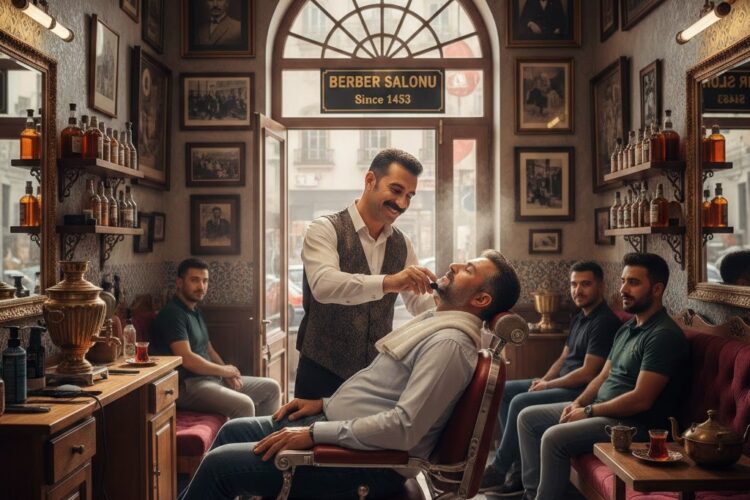
This definition is important because it moves the focus away from passive viewing and toward active engagement. A traveler interested in cultural tourism is not simply ticking off monuments. They are trying regional dishes, attending festivals, listening to music, learning local stories, and understanding how history continues in daily life. That is the essence of slow cultural travel.
It also reflects what many visitors increasingly want. In a crowded global market, memorable travel often comes from depth rather than speed. Turkey’s cultural range gives it a strong advantage here, because the country offers layers of Byzantine, Ottoman, Seljuk, Roman, Anatolian, and modern cultural life that cannot be fully appreciated in a rushed itinerary.
Istanbul is being promoted as a city to experience, not just pass through
Istanbul shows this shift particularly clearly. Rather than being framed only as a stopover or a quick landmark city, it is being positioned as a cultural destination in its own right. The ministry highlights the city’s 8,500-year history through museums, palaces, excavation sites, modern art venues, festivals, and everyday street life. That language encourages visitors to slow down and absorb the city beyond the usual checklist.
Official tourism messaging also supports a more walkable and neighborhood-level style of discovery. GoTürkiye’s Istanbul faith content explicitly invites visitors to “take time,” “spend a day soaking up the city’s historical treasures,” and “set your own pace.” Those phrases matter, because they signal a different kind of tourist experience: one based on rhythm, reflection, and immersion.
For anyone who knows Istanbul well, this makes perfect sense. The city rewards repeat visits and unhurried exploration. A morning in a historic mosque, an afternoon in a contemporary gallery, an evening in a local meyhane or tea house, and time spent in districts beyond the line attractions all create a richer understanding of the city. That is far more aligned with slow cultural travel than with mass sightseeing.
Faith, heritage, and archaeology are creating deeper reasons to travel
Turkey is also leaning more strongly into faith tourism, which official sources describe as a growth area. GoTürkiye presents modern Türkiye as home to many religious monuments, relics, and ruins of deep cultural value, positioning the country as a major destination for religious tourism. Faith travel often encourages slower journeys because visitors are motivated by meaning, heritage, and reflection, not just photo opportunities.
Archaeology is part of the same pattern. The ministry’s 2025 tourism messaging highlights projects such as “Heritage for the Future” and the Night Museum initiative, showing how preservation and visitor experience are being linked more closely. Instead of treating heritage as static background, Turkey is turning archaeological conservation into a reason for longer and more engaging visits.
UNESCO-linked sites strengthen this approach further. İzmir’s official culture-tourism messaging highlights Ephesus and Bergama as World Cultural Heritage sites, both of which appeal strongly to travelers interested in history-led itineraries. These destinations are not best understood in a rushed stop; they invite time, context, and curiosity, which is exactly why they fit the slow cultural model so well.
Villages, slow cities, and local identity are becoming part of the tourism offer
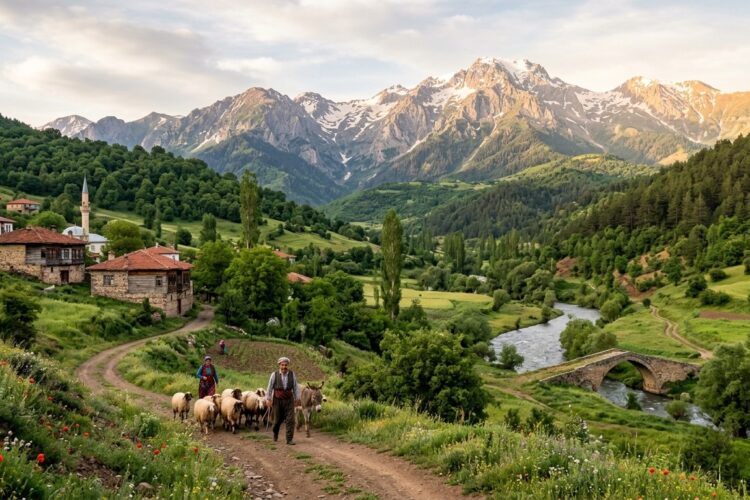
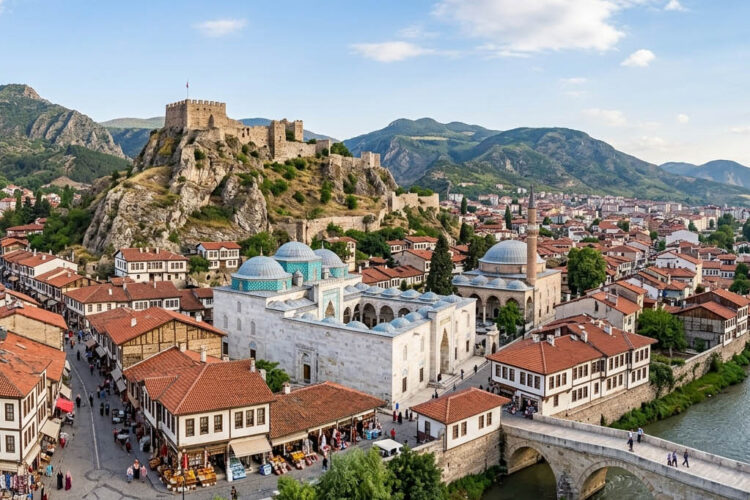
One of the most visible signs of change is the growing emphasis on rural destinations and local identity. In 2026, Ortahisar in Cappadocia joined the International Cittaslow network, bringing Türkiye’s total number of slow cities to 29. According to GoTürkiye, this reflects a commitment to preserving natural fabric, sustaining local life culture, and prioritising sustainable tourism.
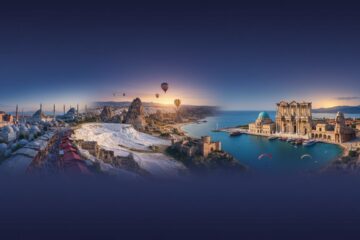
That is significant because Cappadocia has often been reduced in global travel imagery to balloon photos and quick visual consumption. Official messaging now pushes a broader story. GoTürkiye highlights Ortahisar’s churches and monasteries as part of the region’s deep-rooted spiritual and cultural heritage, helping reposition Cappadocia as a place of layered history rather than a single iconic activity.
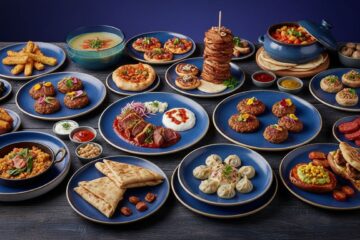
The same wider map can be seen in places like Göynük and Hatay, where cultural-route marketing highlights village life, heritage, and regional food. GoTürkiye’s content on Göynük emphasises traditional food culture and slow-cooked shared meals, showing how local ways of living are being presented as travel experiences in themselves. This is a world away from mass sightseeing, where visitors often see places without truly meeting them.
Longer stays and higher value now matter more than simple visitor volume
The economic data also helps explain why Turkey is shifting strategy. In the first half of 2025, the country welcomed 26,388,831 international visitors, with an average stay of 10.0 nights and average spending of USD 106 per night per person, according to GoTürkiye. Those figures suggest that success is increasingly tied to longer, higher-value stays rather than pure volume alone.
That aligns with the ministry’s broader focus on revenue. Turkey reported 2025 tourism revenue of USD 65.231 billion and set a 2026 target of USD 68 billion. When revenue becomes a central metric, destinations have a strong incentive to attract visitors who spend on food, guided experiences, local crafts, boutique accommodation, festivals, and regional transport. Slow cultural travel supports exactly that kind of spending pattern.
In other words, the country does not need every tourist to move quickly through the same landmarks. It benefits more when travelers spread out, stay longer, and engage more deeply with local economies. For small businesses and independent operators, this can be especially positive, because value is created through experience, not just count.
Sustainability and meaningful travel are shaping the new tourism narrative
Finally, Turkey’s tourism shift is closely linked to sustainability. GoTürkiye says the country’s Sustainable Tourism Program was developed with the Global Sustainable Tourism Council in 2022, and the official tourism platform now promotes “sustainable alternatives” for more mindful and meaningful travel. This wording strongly mirrors the language of slow tourism.
Slow cultural travel is attractive because it can support preservation as well as profit. UN Tourism’s Best Tourism Villages programme celebrates rural destinations where tourism acts as a catalyst for opportunity, cultural preservation, and sustainable growth. Turkey’s current direction fits neatly within that logic: protect what makes a place distinctive, then invite visitors to experience it responsibly.
There is also a branding advantage here. Around the world, many travelers are becoming more conscious of overcrowding, environmental pressure, and shallow travel experiences. By linking its image to sustainability, cultural depth, and meaningful discovery, Turkey can appeal to visitors who want more than a fast itinerary. It is a smart long-term move for the country’s reputation and for the communities that welcome guests.
Overall, Turkey is shifting from mass sightseeing to slow cultural travel because the new model better matches its strengths. The country has extraordinary historical depth, living traditions, regional food cultures, faith heritage, villages, archaeological sites, and urban creativity. A slower form of tourism allows those assets to be experienced properly while helping tourism benefits reach more places and more people.
For UK readers with personal, professional, or cultural ties to Turkey, this trend is worth watching. It suggests a future in which travel is more local, more year-round, more sustainable, and more connected to real community life. Whether someone is visiting Istanbul for its art and neighbourhoods, ing to Cappadocia for heritage as well as scenery, or exploring lesser-known towns through food and tradition, slow cultural travel is becoming one of the clearest ways to understand modern Turkey.