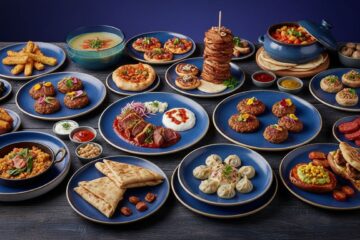
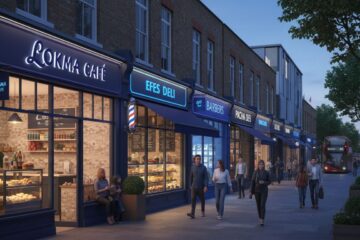
New-wave eateries and community hubs are reshaping the capital’s high streets
London’s high streets are changing in ways that feel especially relevant for local communities, independent operators and food businesses. What was once seen mainly as a place to shop is now being reimagined as somewhere to meet friends, work remotely, enjoy a meal, attend a class, access services and take part in local life. For many neighbourhoods across the capital, this shift is helping bring fresh energy to areas that had been struggling with empty units and changing consumer habits.
For the UK’s Turkish community, and for anyone interested in independent enterprise and cultural connection, this transformation matters. Cafés, bakeries, restaurants, delis and mixed-use community venues are becoming central to the story of London high streets, offering not only food and hospitality but also identity, belonging and everyday social infrastructure. In a city with more than 600 high streets and 240 town centres, according to New London Architecture, the scale of that opportunity is enormous.
High streets are becoming places to spend time, not just money
One of the clearest themes in recent reporting is that the capital’s high streets are no longer defined only by retail. South West Londoner captured the mood well when it said the high street is no longer just where people shop, but where they choose to spend time. That simple change in behaviour explains why new-wave eateries, coffee shops and flexible community venues are taking on such an important role.
The Greater London Authority’s report At a crossroads: London’s high streets frames these streets as places that can support community, culture and local economies, rather than simply acting as shopping strips. That thinking has also been backed by policy, with a new High Streets Fund announced in February 2025. In practice, this means regeneration is increasingly focused on creating mixed-use destinations that feel useful and welcoming throughout the day.
This matters because the high street economy is still massive. New London Architecture says London’s high streets and town centres support around 1.5 million jobs and more than 200,000 businesses. When these places evolve successfully, the effect is felt not only by traders and landlords, but by families, workers, students and older residents who depend on vibrant local centres for everyday life.
Why eateries are leading the revival
Food businesses are at the heart of this transformation because they meet several needs at once. A modern café or restaurant is often more than somewhere to eat; it can be a meeting point, an informal workspace, a cultural touchpoint and a visible sign that a local high street is alive. The Standard’s coverage of changing London high streets highlights cafés, restaurants, breweries and delis as part of the new blend of uses that supports an “urban village” character.
Consumer spending patterns also help explain why eateries are becoming more prominent. South West Londoner reported that spending on restaurants and hotels contributed to quarterly growth in Q2 2025, but with a notable twist: consumers are leaning more toward coffee shops, fast food and off-peak deals than toward traditional mid-range dining. In other words, people still want food-led experiences, but they are choosing formats that feel flexible, social and affordable.
For Turkish business owners, this creates a meaningful opening. Concepts built around breakfast culture, coffee, pastries, grilled food, takeaway meals, family-friendly dining or hybrid deli-café models are well placed to connect with how people use high streets now. A venue that serves quality food while also offering warmth, familiarity and a sense of community can become a neighbourhood anchor rather than just another place to eat.
The rise of the “third place” on the capital’s high streets
Much of the discussion around regeneration now centres on the idea of the “third place”, somewhere that is neither home nor work, but still plays an essential part in daily life. Guardian commentary and letters in early 2026 argued that the future of high streets depends on more than shopping, calling for cafés, restaurants, play centres, pubs, community spaces, groups and classes. That wider mix reflects how people increasingly use local centres as social infrastructure.
Government policy language has also started to describe high streets as community, social and cultural hubs. This is a significant shift, because it moves the conversation away from measuring success only by retail sales. Instead, value is also found in whether a street helps people connect, access services, participate in local culture and feel part of a neighbourhood.
New-wave eateries fit naturally into this model. A well-run food venue can host small events, support local artists, provide noticeboards for nearby services, collaborate with schools or charities, and offer a comfortable setting where different generations mix. For many residents, these are the real signs of a healthy high street: not just transactions, but relationships.
Empty shops are being rethought as community assets
One of the biggest visual signs of change on many high streets has been the presence of empty units. Yet recent policy and media coverage suggest these spaces are increasingly being seen as opportunities rather than only as symptoms of decline. The Standard reported that the London Assembly urged the Mayor to help residents take over empty shop units for community projects and public art, while new powers now allow councils to auction long-empty properties to local businesses and community groups.
This is important because it creates a more formal route for grassroots regeneration. Instead of waiting indefinitely for a conventional retailer to move in, local authorities and communities can test ideas that bring life back to a street. These might include shared kitchens, arts spaces, youth activities, social enterprises, wellness studios or cultural centres with café elements attached.
For Turkish entrepreneurs and organisations, this could open practical possibilities. A vacant unit might become a community-led cultural venue, a cookery workshop space, a women-led enterprise hub, a dessert shop with events, or a hybrid business combining retail, food and advice services. The key point is that the future high street is not limited to one traditional commercial model.
Hospitality and leisure are replacing pure retail
Recent analysis from the Guardian noted that there are thousands fewer retail outlets than there were in 2019, while restaurants and other services now take up more space on high streets. This is not simply a temporary trend. It reflects a deeper structural change in what local centres are for and how physical space creates value in an era when many goods can be bought online.
Centre for Cities has argued that London shows the high street is not doomed, but adapting. Its work says the capital’s high streets can continue as centres for community, hospitality and leisure, and notes that 78% of London’s suburban high streets have a lower vacancy rate than the UK’s city-centre average. That is a useful reminder that local high streets still have resilience when they meet everyday needs well.
Hospitality-led businesses benefit from something online shopping cannot easily replicate: atmosphere. A busy breakfast spot, a late-opening dessert café, a family restaurant, or a tea house with strong local roots gives people a reason to visit in person. These experiences build repeat footfall and often spill over into nearby businesses, helping the wider street feel safer, busier and more attractive.
Identity and inclusion are now central to regeneration
Recent London policy discussions increasingly connect regeneration with local identity, inclusive development and community space. The GLA’s 2025,26 work on high streets, along with London Architecture roundtable discussions in 2025, has emphasised that successful renewal should not erase what makes an area distinctive. Instead, it should support neighbourhood character and make space for a wider range of residents and businesses.
This approach is especially meaningful in a diverse city such as London, where migrant communities have long helped shape local high streets. Turkish restaurants, barbers, grocers, dessert shops, travel agents, tailors and cafés do more than fill units. They preserve language, food traditions, intergenerational ties and business networks that give many areas their identity and appeal.
When high streets invest in inclusion, they become stronger economically as well as socially. People are more likely to support places that reflect the community around them. For business owners, authenticity can be a major advantage. A high street with a recognisable local character is harder to replace, easier to remember and more likely to attract loyal regulars.
Wellbeing, services and food are merging on the high street
Another clear trend is the growth of health and wellness as part of the same high-street transformation. London World reports that high streets are evolving beyond traditional retail toward hubs centred on health and wellbeing, with Place Informatics saying these services reshape high streets by offering something people can genuinely benefit from. This suggests a broader move toward practical, service-based and experience-led local centres.
In reality, this trend often overlaps with hospitality. A neighbourhood no longer sees food, wellbeing and community as separate categories. A café may serve healthier lunch options and host parenting meet-ups. A bakery may sit next to a pilates studio, dentist or counselling service. A restaurant may become the natural place for local networking, after-school family meals or informal celebrations.
For local operators, the lesson is that success increasingly comes from understanding how people live, not just what they buy. Businesses that align with daily routines, morning coffee, school runs, flexible working, fitness, socialising and accessible services, are likely to become more deeply embedded in the life of the street.
What this means for independent and Turkish-owned businesses
Independent businesses are often best placed to respond to these changes because they can adapt quickly to local demand. They can test new menus, create community offers, organise low-cost events, and build personal relationships with customers in ways that larger chains may struggle to match. On a high street being reshaped by new consumer habits, that flexibility is a real strength.
For Turkish-owned businesses in particular, there is strong potential in blending commerce with community value. A venue might offer Turkish breakfast at weekends, host small business meet-ups in the evenings, collaborate with local schools during cultural events, or provide a warm social setting during quieter daytime hours. These kinds of practical ideas reflect the new role of the high street as a place for connection as much as consumption.
There is also an opportunity to think beyond the classic standalone restaurant model. Deli-cafés, dessert bars, coffee and bakery concepts, food halls, shared retail-and-hospitality spaces and family-friendly venues all fit the direction of travel. In a market where spending habits are changing, businesses that combine affordability, experience and local relevance may be the ones that stand out most.
London’s high streets are clearly entering a new phase. The old retail-heavy model is giving way to a more varied landscape shaped by eateries, services, culture, wellbeing and community uses. Policy support, changing consumer behaviour and the practical reuse of empty units are all helping accelerate that shift, while recent analysis shows that many suburban high streets remain more resilient than the more pessimistic lines suggest.
For communities across the capital, this is more than a property or planning story. It is about what kind of local life people want. New-wave eateries and community hubs are reshaping the capital’s high streets because they answer a basic urban need: places where people can gather, feel welcome and spend meaningful time together. For Turkish businesses and community networks in the UK, that creates not only commercial opportunity, but a chance to help define the next chapter of neighbourhood life in London.