
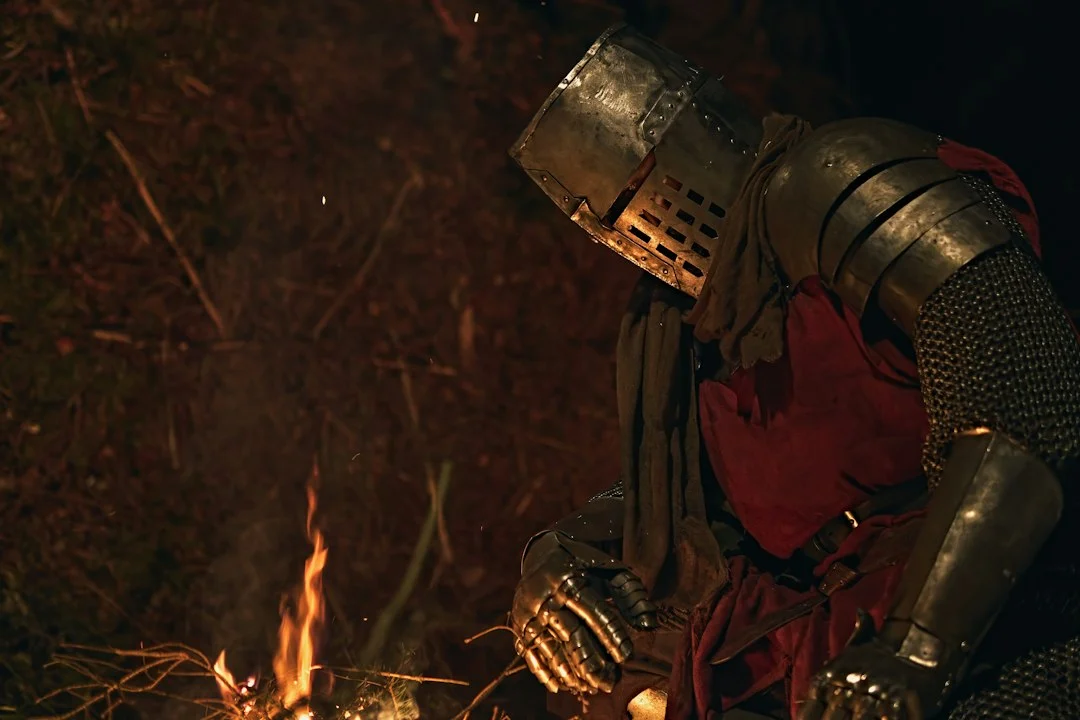
The best medieval movies are not valuable because they reproduce the past with museum precision. They matter because they turn the Middle Ages into a dramatic machine: a world where feudalism, chivalry, faith, inheritance, and violence collide in public. That is why any serious ranking of the best medieval movies keeps circling the same core idea: these films are not just period pieces, they are arguments about legitimacy, belief, and the cost of power.
The genre is broad enough to contain the severe austerity of The Seventh Seal, the operatic grandeur of Excalibur, the corrosive satire of Monty Python and the Holy Grail, and the dynastic intelligence of The Lion in Winter. A ranking of medieval films is therefore never just a list of favorites. It is a value judgment about whether cinema should exalt the past, demystify it, or reinterpret it.
What a credible ranking is actually measuring
A useful ranking of medieval cinema should measure more than popularity. It should ask whether a film creates a convincing moral universe, whether its world feels socially legible, and whether its visual style expresses an idea rather than just filling the frame with armor. The most useful distinction is not between accurate and inaccurate, but between films that understand the medieval world as a system and films that treat it as decorative backdrop.
- Atmosphere: Does the film make the period feel dangerous, constrained, and materially specific?
- Dramatic coherence: Do the vows, battles, betrayals, and inheritances build toward real consequence?
- Historical imagination: Does the film understand how people in the period might have thought about God, authority, war, and honor?
- Rewatch value: Does the film reveal more on a second viewing, or does spectacle do all the work?
This is why a film such as Braveheart remains central to the conversation even as historians object to its liberties. The issue is not whether it behaves like a textbook. The issue is whether it transforms the medieval world into a usable cinematic conflict. The same standard separates transient pageantry from films that keep appearing on every serious list.
Why the Middle Ages keep returning to the screen
Filmmakers return to the medieval period because it offers friction in every direction. The era is full of unstable institutions, disputed succession, violent religious conviction, and limited mobility. The Crusades bring ideology into contact with conquest. The Hundred Years’ War turns dynastic rivalry into mass violence. The Black Death makes mortality impossible to ignore. Even when the story is mythic rather than literal, the tension feels historical because the institutions are fragile.
That is also why Arthurian legend remains such a durable cinematic engine. King Arthur is not only a character; he is a model of sovereignty that can be rebuilt for each era. A film can use him to defend ideal kingship, expose the corruption of power, or satirize the fantasy of noble rule. The same applies to Joan of Arc, whose story sits at the intersection of prophecy, gender, nationhood, and martyrdom.
The canon: films that define the category
A ranking of the best medieval movies usually settles around a handful of recurring titles because each one solves a different version of the same problem. Some make the period mythic, some make it procedural, and some make it emotionally brutal. The table below shows why these films keep returning to the top.
| Film | What it contributes | Why it lasts |
|---|---|---|
| The Seventh Seal | Existential medieval cinema | Turns death, faith, and doubt into a single haunting image |
| Excalibur | Mythic grandeur | Makes Arthurian legend feel ceremonial rather than quaint |
| Andrei Rublev | Spiritual and artistic struggle | Treats medieval life as a moral environment, not a costume parade |
| Monty Python and the Holy Grail | Satire and genre deconstruction | Understands that myth survives ridicule because it was once powerful |
| The Name of the Rose | Institutional tension and mystery | Shows how knowledge, doctrine, and power can become weapons |
| The Lion in Winter | Political dialogue as combat | Proves that medieval power struggles do not need constant battlefield movement |
| Braveheart | Nationalist spectacle | Large-scale emotion still makes it hard to ignore |
| The Passion of Joan of Arc | Pure spiritual intensity | Builds medieval drama almost entirely from faces, accusation, and endurance |
| Kingdom of Heaven | Crusade politics and scale | Shows how editing can change the meaning of a historical epic |
| The Last Duel | Perspective, honor, and gendered power | Uses the medieval legal order to expose who gets believed |
| The Green Knight | Ambiguity and ritual | Reframes the medieval quest as a test of character rather than heroism |
| Becket | Church-state conflict | Shows that medieval politics are often about institutions, not just swords |
What these films share is not a single visual style. They share a structural intelligence. In The Name of the Rose, knowledge is dangerous because institutions control interpretation. In The Lion in Winter, family dinner is a battlefield with legal consequences. In The Last Duel, honor is exposed as a public performance governed by gender and power. That is the difference between costume and cinema.
Historical accuracy matters, but not in the way most people think
Searches for the best medieval movies with historical accuracy usually assume that accuracy is a single measurable thing. It is not. A film can be wrong about armor, chronology, or dialect and still reveal something true about social hierarchy, fear, or belief. It can also get the props right and still misunderstand the period completely. The better question is whether the film’s inventions clarify the world it depicts.
Kingdom of Heaven is a useful example because its reputation depends heavily on version control. The theatrical cut was widely criticized, while the longer version earned more respect for giving the crusade politics room to breathe. That does not make it a documentary, but it does show how editing can determine whether a medieval epic feels like a sermon, a melodrama, or a political argument.
By contrast, A Knight’s Tale openly rejects period purity in favor of anachronistic energy. That choice is not a failure of craft; it is a different contract with the audience. Some medieval films want reconstruction. Others want metaphor. A serious ranking should recognize the difference instead of punishing every movie for choosing one mode over another.
Where many rankings go wrong
The most common mistake in lists of medieval movies is overvaluing spectacle and undervaluing structure. Mud, chain mail, candlelight, and siege engines are not analysis. A film can look expensive and still be thin. The stronger test is whether the visual design expresses an idea. A castle can mean protection, confinement, inheritance, or surveillance depending on how the camera uses it.
This is why quieter films often deserve more respect than they get. The Passion of Joan of Arc is almost unbearable in its intimacy. Andrei Rublev treats art as a burden under violent conditions. The Green Knight turns medieval symbolism into a meditation on dignity, cowardice, and self-knowledge. Even Monty Python and the Holy Grail is smarter than its absurdity suggests, because it understands that chivalric legend can be deflated only because it was once inflated.
The medieval period is often flattened into three images: knights, monks, and sieges. But real medieval life also included law, trade, scholarship, bureaucracy, craft, diplomacy, and domestic labor. Films that remember that complexity feel richer because they treat society as a system. Films that ignore it tend to become interchangeable regardless of budget.
What a critic should look for in a medieval film
If you want to evaluate medieval cinema like a critic rather than a fan of scenery, look for these patterns:
- Power is rarely abstract: It usually flows through bloodlines, vows, churches, or land ownership.
- Violence has a social logic: Who is allowed to fight, punish, or judge is often more important than the battle itself.
- Belief shapes behavior: In strong medieval movies, religion is not wallpaper; it changes choices, risks, and interpretations.
- Legitimacy is unstable: Kings, bishops, knights, and rebels all have to justify authority somehow.
That is why the medieval setting works so well for modern audiences. It externalizes debates we still recognize: who deserves power, what violence can be justified, whether institutions protect or corrupt, and whether myth can survive contact with history. The best films in the category make those questions visible without turning them into lectures.
FAQ: medieval movie rankings and what they really mean
What counts as a medieval movie?
Usually, a medieval movie is set in the European Middle Ages or in a clearly medieval-inspired world shaped by castles, hereditary rule, religious authority, and limited state power. Some rankings include adjacent settings such as the late medieval period or medieval fantasy, especially when the film draws heavily on Arthurian legend.
Are the best medieval movies historically accurate?
Not always, and that is not automatically a flaw. The strongest films usually aim for emotional and social truth rather than full reconstruction. A movie can be inaccurate in details and still be persuasive about class, faith, violence, and legitimacy. The real test is whether its choices deepen the world or merely decorate it.
Which medieval movie should history buffs start with?
If you want seriousness first, start with The Name of the Rose, The Last Duel, Becket, or The Passion of Joan of Arc. If you want myth, choose Excalibur. If you want satire, choose Monty Python and the Holy Grail.
Why do medieval films keep returning to castles and kings?
Because castles and kings are efficient symbols of power, inheritance, and fragility. They let filmmakers compress political systems into a single image. A throne room can show legitimacy under pressure; a castle wall can signal both defense and confinement. That visual clarity is one reason the genre keeps finding an audience.
The next great medieval film will need more than armor
The future of the genre will probably reward films that understand the medieval world as a system rather than a postcard. Streaming has already pushed many historical dramas toward longer, more layered storytelling, but cinema still has an advantage when it comes to scale, ritual, and force. The next title to join the canon will probably not be the loudest sword movie. It will be the one that understands how class, belief, and violence structure everyday life.
That leaves one question worth watching: will the next standout medieval film be a prestige epic that restores political complexity, or a smaller, more intimate story that proves the genre can survive without spectacle? The answer will tell us less about the Middle Ages than about what modern audiences still want from them: reassurance, critique, or a hard look at the machinery of power.
Frequently Asked Questions
Are the best medieval movies supposed to be historically accurate?
Not necessarily. The article argues that the strongest medieval films are judged less by textbook accuracy than by whether they create a believable moral and social world. A film can take liberties with dates, costumes, or events and still work if it captures how power, faith, inheritance, and violence shape the era's logic.
Why do so many medieval films focus on kings, knights, and saints instead of ordinary people?
Because those figures concentrate the era’s biggest conflicts in a visible way. Kings embody legitimacy, knights dramatize honor and violence, and saints or prophets connect private belief to public power. Medieval films often use these roles to explore larger systems, even when the story is really about the fragility of authority or the cost of obedience.
What makes a medieval movie more than just a fantasy with armor?
A true medieval movie treats the period as a system, not a decorative backdrop. The article suggests that the best ones make social rank, religion, war, and inheritance feel consequential. If the armor, castles, and ceremonies only provide surface spectacle, the film may look medieval but still miss the deeper historical imagination.
Why does Arthurian legend appear in so many rankings of medieval films?
Arthurian stories are endlessly adaptable because Arthur is less a fixed character than a test of sovereignty. Filmmakers can present him as an ideal king, a failed ruler, or a satire of noble ideals. That flexibility makes Arthurian legend useful for every era’s political anxieties, which is why it keeps returning to the screen.
How can a comedy like Monty Python and the Holy Grail belong in the same conversation as serious films like The Seventh Seal?
Because both films are doing more than telling a medieval story: they are commenting on the assumptions behind it. Monty Python mocks the myths of chivalry and authority, while The Seventh Seal turns medieval faith and mortality into existential drama. Different tones, same cultural work: both reveal what the Middle Ages can symbolize on screen.