
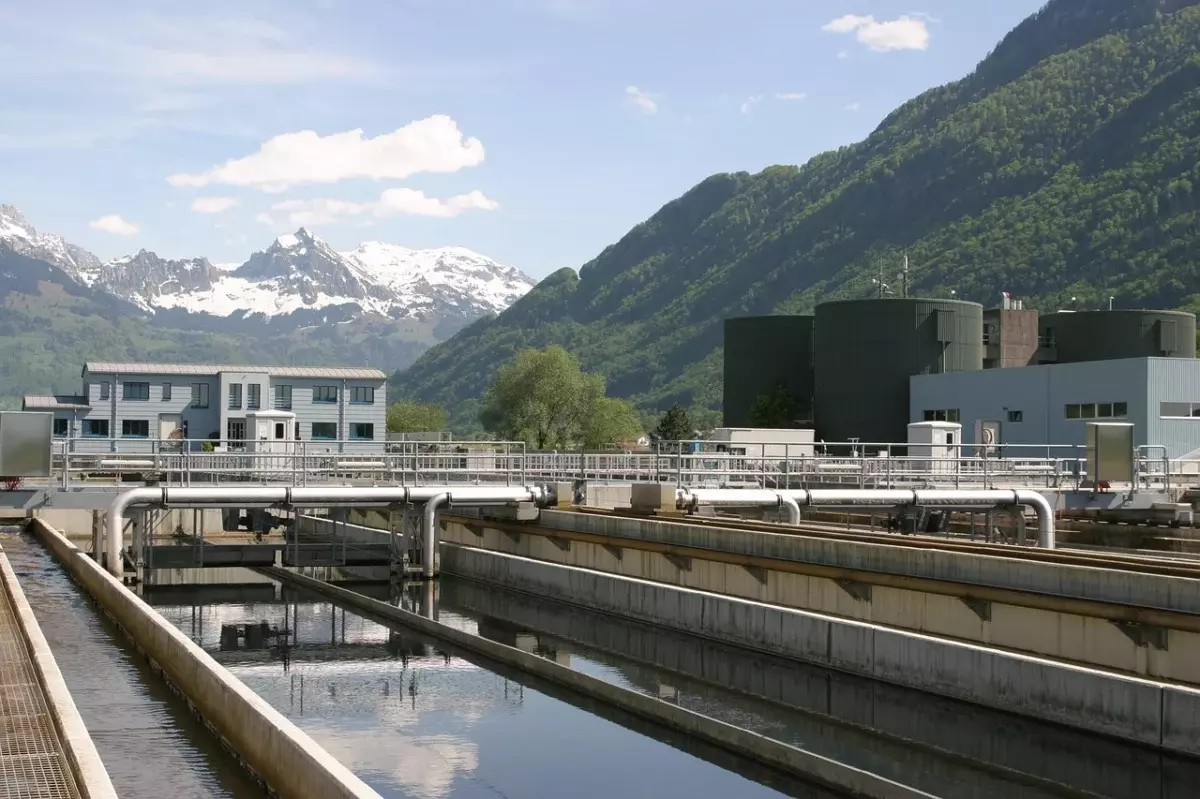
HMRC’s move to test wastewater for traces of nicotine is one of those ideas that sounds futuristic until you realize it sits at the intersection of HM Revenue and Customs, sewage, and the stubborn economics of nicotine. The plan is not to identify individual smokers in a drainpipe. It is to infer how much tobacco smoking is happening in aggregate, then estimate how much of that consumption may be slipping past the tax system through illegal cigarettes.
That matters because illicit tobacco is not a sideshow. It distorts the tax gap, feeds the black market, and rewards networks that move counterfeit or smuggled stock across the country. HMRC already publishes its broader tax-gap methodology in the Measuring tax gaps collection, while the World Health Organization continues to frame tobacco as a major public-health burden. The new question is whether a walk through the wastewater treatment plant can produce better intelligence than simpler, cheaper, and more established enforcement tools.
Why Wastewater Testing for Illegal Tobacco Is on HMRC’s Radar
Start with the obvious problem: illegal tobacco is designed to be hard to see. It hides in plain sight, sold through side streets, social networks, and informal supply chains that leave fewer footprints than a legitimate retail chain. The obvious countermeasures – raids, customs seizures, and spot checks – still matter, but they mostly tell officials what was intercepted, not the total volume of illicit consumption. That is why the language of illicit trade has become so central to tax enforcement.
Wastewater sampling offers a different lens. Instead of looking for packs on shelves, HMRC is trying to read chemical traces in the urban bloodstream. That may sound more like public health than tax administration, and in a sense it is. The same logic that made sewage useful during pandemic surveillance now makes it attractive for tobacco monitoring: population-level behavior can sometimes be measured more reliably from shared waste streams than from self-reporting or street-level observation.
How Wastewater-Based Epidemiology Works
The method is rooted in wastewater-based epidemiology, a field that treats sewers as anonymous datasets. People consume a substance, metabolize it, and excrete residues that travel into the system. Researchers then sample the water, measure concentrations, and model what those concentrations imply about a catchment population. The approach has been discussed in other contexts, from drug monitoring to infectious disease, and it relies heavily on careful epidemiology and analytical chemistry.
In tobacco surveillance, the target is not just nicotine itself but often its metabolites, because nicotine can degrade and transform before it reaches a sampling point. The logic is straightforward but the execution is not. A sewer catchment is dynamic. Rain dilutes concentrations. Industrial discharge changes flow. Tourist districts swell and empty. University towns behave differently in term time. A pipe network is not a tidy census block; it is an evolving, messy organism.
What the laboratory actually sees
At the lab bench, researchers are dealing with traces, not cigarettes. That is where forensic science-style care becomes essential. Samples must be standardized, contamination controlled, and results interpreted against flow data, weather patterns, and local population estimates. A successful measurement is not the same thing as a useful one. The value lies in whether the signal is stable enough to compare places and periods without fooling the analyst.
What the method can and cannot show
- It can suggest how tobacco consumption changes over time in a defined area.
- It can help compare one catchment with another if the methodology is consistent.
- It cannot identify individual smokers.
- It cannot, by itself, separate legal from illegal cigarettes.
- It is vulnerable to confounders such as vaping, nicotine replacement therapy, and shifts in population movement.
What HMRC Can Learn – and What It Cannot
The strongest case for wastewater testing is that it can function as a cross-check. If a district appears to show unusually high nicotine loads but retail compliance activity is low, HMRC may have grounds to look harder. If the reverse is true, the data may suggest that enforcement is already pushing the illicit market downward. But the signal remains indirect. Wastewater can tell you that nicotine entered the sewer; it cannot tell you whether that nicotine came from a taxed pack, a smuggled pack, a vape liquid, or someone on cessation treatment.
That distinction matters because policy is often tempted by neatness. A single elegant metric is seductive. Yet in tax enforcement, neat metrics can become dangerous shortcuts. The real job is to triangulate: use sewage data alongside empty-pack surveys, customs intelligence, retail inspections, online marketplace monitoring, and local intelligence from communities that see the trade up close.
| Method | What it measures | Strength | Weakness |
|---|---|---|---|
| Wastewater sampling | Population-level nicotine traces | Harder to game; good for trend detection | Indirect; affected by dilution and non-cigarette nicotine |
| Empty-pack surveys | Discarded cigarette packs in the street | Cheap and easy to deploy | Can miss hidden or rural markets |
| Retail enforcement | Compliance in shops and kiosks | Directly targets sales channels | Does not capture off-licence supply |
| Customs seizures | Intercepted shipments | Strong evidence of smuggling routes | Shows what was caught, not what got through |
This is where the budget debate gets sharp. If wastewater testing costs more than the intelligence it produces, taxpayers are effectively paying for scientific theatre. But if the method helps HMRC deploy officers more intelligently, it could pay for itself indirectly. The question is not whether the science is clever. It is whether the intelligence is actionable.
A clever measurement is not automatically a better policy; a better policy is one that changes behavior at a lower cost.
The Scientific Caveats Matter More Than the Optics
There is a reason researchers are cautious about turning nicotine traces into tax policy. In a sewer, the same molecule can reflect many behaviors. A city with high use of nicotine patches may look different from a city with the same level of smoking but lower cessation aid use. A district with heavy commuting may show a distorted daily pattern. A holiday town may peak and crash in ways that say more about tourism than contraband.
That is why the measurement must be framed as a trend tool, not a truth machine. The promise of wastewater-based epidemiology is not perfect certainty; it is useful approximation. In the best case, it reveals changes that are hard to see elsewhere. In the worst case, it creates a false sense of precision that can mislead decision-makers into overconfidence.
Public-health logic, tax-enforcement purpose
There is also a conceptual tension. Wastewater studies are often associated with tobacco control and public health, where the goal is to reduce harm, understand exposure, or guide cessation campaigns. HMRC, by contrast, is an enforcement body trying to measure revenue leakage. Those goals overlap, but they are not identical. A tool built to support epidemiology may need careful recalibration before it becomes a basis for tax intelligence.
The Ethics and Trust Question
There is no obvious privacy invasion in testing sewage, because the data are aggregated at the community level. Still, the symbolism matters. Citizens may accept wastewater testing for disease outbreaks more readily than they accept it for fiscal surveillance. The line between legitimate measurement and intrusive monitoring can be thin when state agencies start mining bodily waste for behavior clues.
That is why transparency is non-negotiable. HMRC should be clear about what the data can and cannot do, how samples are taken, how catchments are defined, and what uncertainty bands surround any estimate. Without that clarity, the public may suspect that the agency is dressing up uncertainty as science. Trust erodes quickly when a novel metric is sold as an answer rather than as one input among many.
Why the data governance design matters
Good governance would treat wastewater readings as sensitive operational intelligence, not a public-relations trophy. That means publishing methodology, independent validation where possible, and a clear statement that enforcement decisions are never based on sewer data alone. The moment a new metric becomes a headline instead of a tool, it starts to distort the organization that uses it.
What a sensible pilot should look like
- Define the exact policy question before collecting a single sample: trend monitoring, hotspot mapping, or comparison with other enforcement measures.
- Match wastewater readings with empty-pack surveys, retail compliance checks, and customs intelligence so that no single dataset carries the full burden of proof.
- Adjust for confounders such as nicotine replacement therapy, vaping, rainfall, and population churn.
- Publish uncertainty ranges, not just point estimates.
- Test whether the information changes officer deployment, seizure rates, or compliance outcomes enough to justify the expense.
That last point is the hardest one, and the most important. A method can be scientifically interesting and administratively irrelevant at the same time. The burden on HMRC is to prove that this is not merely a new lens, but a better lens. If it cannot do that, the better use of money may still be old-fashioned enforcement in places where sales are visible, evidence is stronger, and the tax loss is more immediate.
What This Experiment Says About the Future of Enforcement
Longer term, wastewater analysis will probably get better. Laboratory methods improve. Sampling can become more frequent. Models can be trained to correct for dilution and seasonal shifts. As wastewater treatment infrastructure becomes more instrumented, the granularity of data may improve as well. But the more sophisticated the measurement becomes, the more important the governance becomes too.
One likely future is not replacement but layering. HMRC may end up using sewage data the way analysts use radar in combination with satellite imagery, customs records, and local inspection reports: a supporting layer that helps prioritize action. That would be a sensible outcome. It is harder to imagine wastewater data replacing the human work of investigation, because illicit markets are adaptive, decentralized, and often hidden behind community relationships that no sensor can map on its own.
The unresolved question is simple and brutal: will this produce more useful intelligence than cheaper, more direct methods? If the answer is yes, wastewater testing could become a quiet but important addition to the state’s enforcement toolkit. If the answer is no, the sewage samples will become a symbol of a public sector temptation – the belief that sophistication itself is a substitute for judgment. The next few years should reveal whether HMRC has found a sharper scalpel or simply a more expensive one.
Frequently Asked Questions
Can wastewater testing identify individual illegal smokers?
No. The method works at the level of neighborhoods, catchments, or treatment areas. It is designed to estimate group behavior, not to trace a person or household.
Does nicotine in sewage mean illegal cigarettes are being smoked?
Not necessarily. Nicotine can come from legal cigarettes, vaping liquids, nicotine replacement products, and other legitimate sources. That is why the data need careful interpretation.
Why not just rely on empty-pack surveys or raids?
Those methods are useful, but they mostly capture visible or intercepted activity. Wastewater testing may help identify hidden trends, provided it is used alongside the more traditional tools rather than instead of them.
Frequently Asked Questions
If wastewater testing cannot distinguish legal from illegal cigarettes, what is HMRC actually trying to learn from it?
HMRC is not trying to catch individual smokers or read brands from sewage. The aim is to estimate overall tobacco consumption in a defined area, then compare that with expected legal sales and other intelligence. If consumption appears unusually high or shifts faster than legitimate market data, that can point to illicit supply, enforcement gaps, or both.
Why use wastewater at all if raids, seizures, and spot checks already exist?
Traditional enforcement shows what officers found, not the total volume of illegal trade. Wastewater data can provide a broader population-level signal that may reveal hidden consumption patterns even when street-level supply is hard to observe. In that sense, it is less a replacement for raids than a way to target them more intelligently.
How can HMRC avoid misleading results when sewage levels change with rain, tourism, or local movement?
That is one of the biggest technical challenges. Analysts have to adjust for flow rates, weather dilution, industrial discharge, and catchment population changes. The method only becomes useful if sampling is standardized and interpreted alongside local context, otherwise a spike may reflect heavy rain or a temporary crowd rather than more smoking.
Could nicotine replacement therapy or vaping make the wastewater readings unreliable?
Yes, they can complicate interpretation. Wastewater may capture nicotine residues from multiple sources, not just cigarettes, so analysts must account for vaping, patches, gum, and other nicotine products. That does not make the method useless, but it means the signal has to be modeled carefully before it is linked to tobacco consumption or illicit trade.
Does wastewater monitoring raise privacy or surveillance concerns for the public?
The approach is designed to be anonymous at the population level, not to identify households or individuals. Samples are taken from shared sewer catchments, so the data describe communities rather than named people. Even so, privacy concerns can arise if the method is expanded or combined with other datasets, which is why governance and transparency matter.