
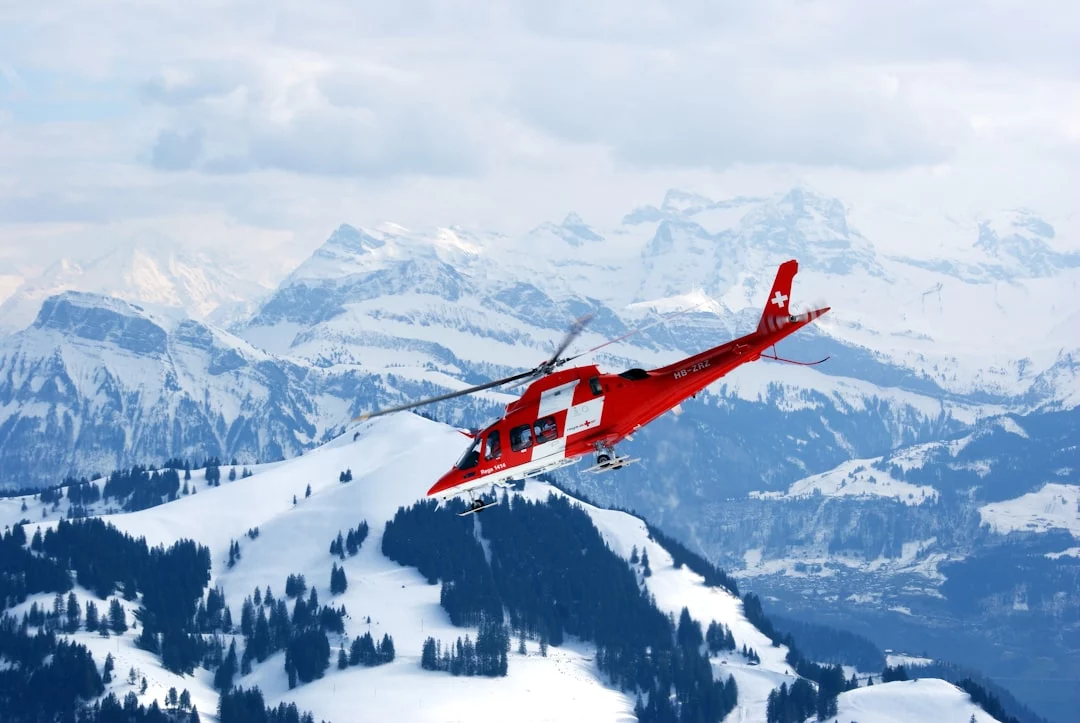
The tourist coach crash in Switzerland is more than a local tragedy. It is a blunt reminder that in the Swiss Alps, a single mistake can become a mass-casualty event almost instantly. A coach carrying 48 passengers left the road and overturned on a mountain route, drawing helicopters, paramedics, and police to a scene where speed, terrain, and time all worked against survival. The immediate facts are still developing, and authorities have not yet confirmed every detail, but the pattern is familiar: once a heavy coach (bus) goes off line on a steep descent, physics takes control.
That is why this crash deserves analysis beyond the headline. It sits at the intersection of road traffic collision risk, mountain engineering, vehicle design, and rescue logistics. It also exposes how tourism depends on road transport in places where the road network itself is a hazard. The scene is dramatic, but the underlying problem is practical: coaches are large, loaded, and vulnerable to rollover when a narrow mountain road offers little margin for correction.
What is known, and what remains unconfirmed
At this stage, the public record is limited. Several people are reported dead, the vehicle was carrying 48 passengers, and the crash occurred on an Alpine road in scenic terrain. Local police have not confirmed the nationalities of the victims, and investigators have not publicly established whether the trigger was a mechanical fault, driver error, weather, road condition, or a combination of factors. That caution matters. In major crashes, early speculation is usually wrong, and it can distract from the evidence that actually explains how the vehicle left the roadway.
For readers trying to understand the incident, the right frame is not sensationalism but process. Police, rescue services, and crash investigators will typically reconstruct speed, braking, steering input, tire condition, road geometry, visibility, and the coach’s final trajectory. In Switzerland, where tourism and mountain travel are tightly linked, these investigations also carry public-policy weight. The outcome can affect route restrictions, enforcement, and operator requirements in the same way that earlier major collisions influenced broader road traffic safety practice.
Why mountain roads are uniquely unforgiving
Mountain travel is not simply ordinary driving with a better view. Alpine routes compress several risks into a small space: steep grades, sharp bends, narrow shoulders, limited escape zones, and frequent changes in surface grip. A coach descending a mountain pass or cutting through a high valley is constantly managing momentum. The road may appear scenic to passengers, but from the driver’s seat it is a sequence of load transfers, blind corners, and braking decisions that leave almost no room for correction.
Gravity does not negotiate
The core issue is simple. A coach is tall, heavy, and built to carry many people, not to pivot sharply on a sloping camber. If the driver brakes too hard, overcorrects after a curve, or loses grip on the outer wheel line, the vehicle can tip. Once a heavy vehicle starts leaning past its stability threshold, recovery becomes difficult. That is why a vehicle rollover is such a common end state in mountain crashes: the roadway gives the machine very little lateral tolerance.
Weather and visibility compound the risk
Rain, fog, glare, frost, and falling debris all make mountain driving harder. Even when the road is technically open, the margin may be too narrow for a fully loaded coach to absorb a mistake. In the Alps, a minor drift toward the edge can become catastrophic because the shoulder is often minimal and the drop-off immediate. That is one reason transport authorities monitor weather and route conditions so closely in the region, and why the words safe route and scenic route are not interchangeable.
Why overturns happen even when the coach is modern
It is tempting to assume that a modern vehicle should prevent this kind of disaster. That assumption is too optimistic. Safety systems help, but they do not repeal physics. A coach can be equipped with technology that improves control, including anti-lock braking systems and electronic stability control, yet those systems still operate within the limits of traction, mass transfer, and road friction. They reduce risk; they do not eliminate it.
The most plausible rollover pathways in a case like this are familiar to investigators. Excessive speed on a descent, sudden steering correction after a lane drift, tire failure, brake imbalance, load shift, or a collision with a roadside object can all initiate instability. Because coaches sit high above the road surface, the center of gravity is already a disadvantage. Add passengers, luggage, and a downhill curve, and the problem becomes structural rather than incidental.
The important point is not that a coach is large. It is that a large vehicle has very little forgiveness once it starts to lean off its intended line.
What rescue looks like when the crash happens in the Alps
In a flat urban crash, ambulances may arrive in minutes and extrication may be straightforward. In the Alps, the scene is different. A broken coach on a narrow road can block access, trap passengers, and force responders to work on a slope or in a ravine. That is why emergency medical services often coordinate with helicopter rescue teams and paramedics to triage patients at the edge of the scene, not after every victim has been moved.
Rescue operations in such terrain usually follow a compressed sequence: secure the road, stabilize the vehicle, identify the most critically injured passengers, extract survivors, and establish an air or ground medical chain. Time is not just a clinical measure; it is a geographic one. A few hundred meters of difficult access can change outcomes because the difference between a reachable crash site and an unreachable one is often measured in minutes of bleeding, shock, or hypothermia.
| Risk factor | Why it matters | What investigators usually examine |
|---|---|---|
| Steep descent | Increases braking load and rollover risk | Speed, brake use, road grade |
| Narrow roadway | Reduces recovery space after a drift | Lane position, shoulder width, barrier presence |
| Weather or visibility loss | Raises the chance of delayed reaction | Surface condition, fog, rain, glare |
| Vehicle instability | Magnifies the effect of any steering or braking error | Tires, suspension, stability systems, load distribution |
The safety problem is broader than one driver or one road
The harshest but most accurate reading is that crashes like this are usually systemic. Individual error may be present, but so are route design, vehicle condition, scheduling pressure, and operator discipline. Tourism makes this more visible because the passengers are often unfamiliar with the terrain and dependent on professional judgment. That is why the coach industry, the road authority, and the local emergency chain all matter. A tragedy in a tourist corridor is never just a transport incident; it is also a failure of planning if the route, vehicle, and staffing were not matched to the terrain.
That is particularly relevant in a country where tourism is a major economic activity and where the quality of transport shapes the visitor experience. A coach trip through Switzerland can be a normal part of moving between attractions, but the label tourism should not mask the operational reality. Scenic roads are still work sites for drivers. When operators underestimate that, the public pays the price.
What investigators should examine first
- Driver hours, rest periods, and route familiarity.
- Tire condition, braking performance, and maintenance records.
- Coach occupancy, luggage load, and weight distribution.
- Road surface, barrier design, and visibility at the crash point.
- Whether the route was appropriate for a full-size coach under the conditions that day.
What this means for travelers and operators
For passengers, the lesson is not fear but scrutiny. Before a mountain transfer, travelers should look for seat belts, professional operator credentials, clear weather protocols, and a willingness to delay or reroute when conditions deteriorate. On a coach, a delayed departure is usually cheaper than a high-risk descent. That may sound obvious, but commercial pressure often rewards punctuality over caution.
For operators, the standard should be stricter than regulatory minimums. In high-risk terrain, good practice means route-specific risk assessment, conservative speed management, trained drivers who know the road, real-time weather monitoring, and maintenance schedules that account for long downhill braking. In the context of bus-type vehicles, complacency is expensive. The vehicle may look robust, but a coach is only as safe as the weakest part of the chain around it.
Officials also have a role. The Swiss Federal Roads Office and local authorities can influence signage, barriers, speed controls, and seasonal route restrictions. At the international level, the World Health Organization road traffic injuries fact sheet is a reminder that road crashes remain a major preventable cause of death worldwide. Mountain crashes are a niche subset, but they are a severe one because the environment removes the usual safety margin.
What readers should watch next in this case
The key question is whether investigators find a single trigger or a chain of failures. If the crash resulted from a mechanical problem, regulators will focus on maintenance and inspection. If the cause was driver judgment, training and fatigue controls will come under pressure. If the road itself offered too little protection, then the debate will shift toward barriers, speed limits, and whether certain stretches should be treated less like ordinary roads and more like controlled alpine corridors.
That last point matters because Europe is likely to keep seeing pressure on mountain tourism, road capacity, and cross-border coach travel. The next advance will probably not be one dramatic invention but a set of incremental changes: better telematics, more precise route risk scoring, stronger stability systems, and stricter rules for high-risk descents. Yet the unresolved question is the oldest one in transport safety. How much risk is society willing to accept in exchange for access to beautiful, remote places that depend on roads no larger than the danger they carry?
Frequently Asked Questions
Why can a coach rollover so quickly on an Alpine road after only a small error?
A coach has a high center of gravity, carries many passengers, and often travels on narrow roads with steep drops and sharp bends. On a mountain descent, even a modest overcorrection, hard braking, or loss of grip can shift the vehicle beyond its stability limit. Once that tipping point is reached, the road offers very little room to recover.
Why do investigators avoid naming a single cause immediately after this kind of crash?
Because major rollover crashes are usually the result of several factors interacting at once. Investigators need to check vehicle condition, tire performance, braking, steering, driver actions, road geometry, weather, and visibility. Early assumptions are often wrong, and a careful reconstruction is needed before anyone can say whether the trigger was mechanical, human, environmental, or a combination.
Are modern tourist coaches actually safe on mountain routes?
Yes, but only within limits. Modern coaches can have advanced braking, stability systems, and strong structural standards, yet none of these eliminate the physics of a tall, heavy vehicle on a steep, narrow road. Safety depends heavily on speed control, route choice, driver experience, weather, and maintenance. Technology reduces risk; it does not remove it.
Why is rescue often so difficult after a coach crash in the Alps?
Mountain crashes are hard to reach because access roads are narrow, steep, and sometimes blocked by debris or wreckage. Emergency teams may need helicopters, specialized extraction tools, and coordinated medical support. Time is critical, but the terrain slows everything down, which is why even a survivable crash can become far more dangerous in an Alpine setting.
What makes weather such an important factor if the road is still officially open?
An open road is not always a forgiving road. Rain, fog, frost, glare, or falling debris can reduce grip and visibility while narrowing the already limited safety margin. On a mountain route, the difference between a manageable descent and a fatal rollover can be very small. That is why conditions, not just legality, matter so much.