
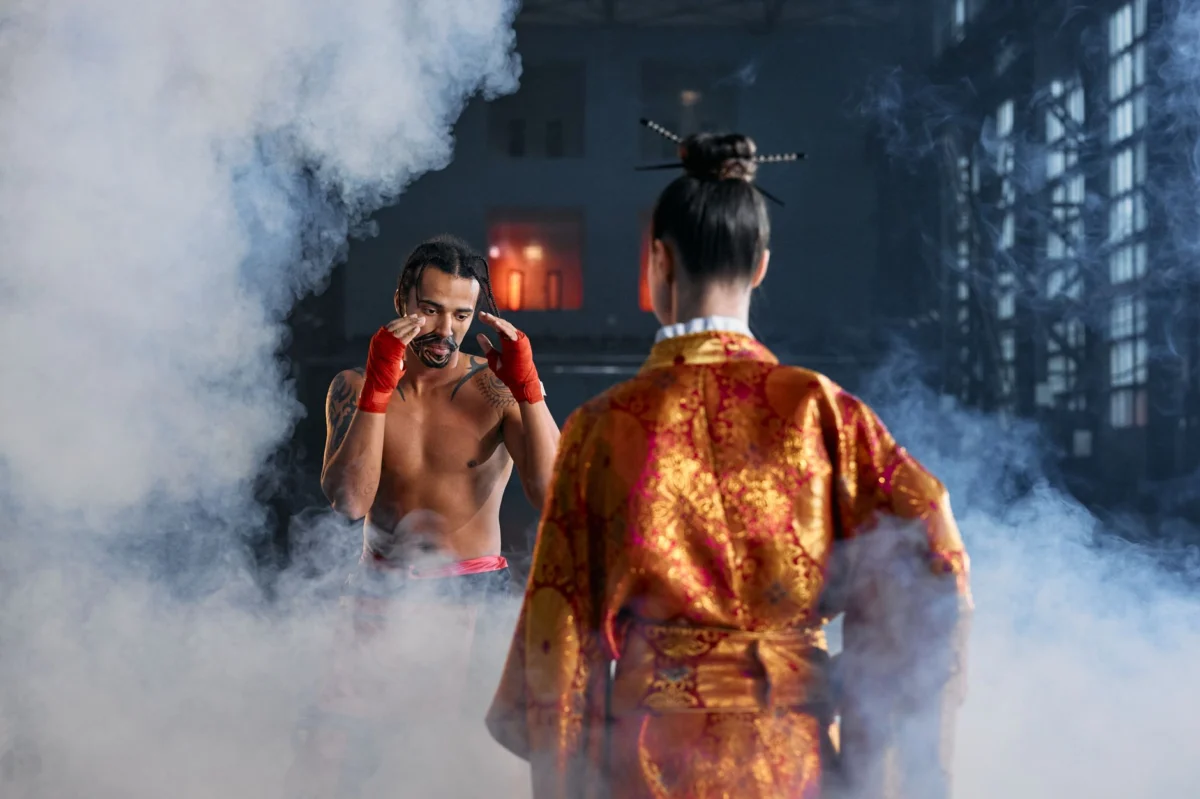
The latest Street Fighter movie cast reveal is not just fan-service with familiar faces. It is a practical test of whether a modern video game adaptation can turn celebrity recognition into believable character work. The current lineup places names such as Noah Centineo, 50 Cent, Roman Reigns, and Orville Peck next to some of the most recognizable figures in the history of Street Fighter. On paper, the cast looks like a gamble. In practice, it may be exactly the kind of gamble the franchise needs.
Why this cast reveal matters
Capcom‘s Street Fighter has always succeeded because the characters are readable at a glance. The series helped define the modern fighting game and became synonymous with the competitive arcade game era. That matters for film because the appeal is not just plot. It is silhouette, rhythm, attitude, and the instant recognition that came from games like Street Fighter II.
The casting strategy appears to understand that. Rather than chasing perfect physical doubles, the production is leaning toward personality matching: a fighter’s energy, not only their haircut. That is a smarter approach than the blunt imitation that has doomed many video game adaptations. The source material is too exaggerated for literal realism, but too specific for generic action-movie casting.
The roster, character by character
The strongest way to judge this project is to compare the announced performers with the roles they are meant to embody. The question is not whether the actors look like the game art. The real question is whether they can carry the character logic that made the franchise endure.
| Actor | Character | What the casting suggests | Risk |
|---|---|---|---|
| Andrew Koji | Ryu | Martial-arts credibility and disciplined intensity fit the franchise’s stoic center. | If the script overexplains him, Ryu becomes a monk cliché instead of a fighter. |
| Noah Centineo | Ken Masters | Natural charisma suits Ken’s loud confidence and competitive vanity. | If he leans too far into parody, Ken becomes an unearned comic relief machine. |
| Callina Liang | Chun-Li | Chun-Li needs command, not just elegance, and the role rewards controlled presence. | The film must avoid reducing her to a visual icon with no dramatic weight. |
| Jason Momoa | Blanka | Blanka is not subtle; he needs physical force, scale, and a little tragedy. | Performance capture can flatten the emotional oddness that makes the character memorable. |
| Roman Reigns | Akuma | Professional wrestling presence can translate into the controlled menace Akuma requires. | Intensity alone is not enough; Akuma also needs spiritual menace and mythic gravity. |
| 50 Cent | Balrog | The public persona already carries blunt-force swagger and bruiser energy. | Celebrity stunt casting can overpower the role if the screenplay gives him only one note. |
| Orville Peck | Vega | The masked, theatrical quality of Vega benefits from a performer who already understands mystique. | Style can become a substitute for threat if the film does not choreograph him properly. |
What the casting strategy reveals
The clearest pattern is that the film is not chasing realism. It is chasing legibility. That is exactly what a Street Fighter movie should do. The franchise’s best-known characters are built on archetypes: the disciplined warrior, the polished rival, the relentless investigator, the monster, the demon, the boxer, the showman. Those roles make sense in a game because players read them instantly. They must also make sense in a film if the audience is going to accept the world instead of merely recognize it.
This is where the casting becomes more interesting than a simple side-by-side comparison. Professional wrestling and country music are not obvious ingredients in a martial-arts franchise, yet they provide performance vocabularies that a straight dramatic actor may not. A wrestler like Roman Reigns knows how to enter a frame with authority. A singer like Orville Peck understands persona as a form of construction. That may be more useful than technical similarity alone.
The danger is obvious. When a studio leans on recognizable names, it can mistake presence for fit. Fans do not forgive that for long. In a franchise built around combat identity, the wrong casting choice does not merely disappoint; it exposes the production’s lack of discipline.
A Street Fighter adaptation does not win by identifying characters correctly. It wins when the characters move like their names mean something.
Why previous adaptations still matter
The history of Street Fighter on screen is a warning label. The 1994 film had a large audience, a famous lead in Jean-Claude Van Damme, and one of the most memorable late-career performances in action cinema from Raul Julia. Yet the movie still struggled because it treated adaptation as surface translation. Costumes, names, and catchphrases are not enough when the material depends on rhythm and contrast.
The later Street Fighter: The Legend of Chun-Li had a different problem. It leaned into seriousness without earning a convincing world, and it failed to convert mythic game logic into coherent drama. Even the presence of Ming-Na Wen could not repair a structural mismatch between the game’s expressive exaggeration and the film’s generic action framing.
That history matters because it changes what success looks like now. The goal is not to erase the game’s theatricality. The goal is to control it. The better adaptation is the one that understands why a character like Dan Hibiki works as a joke, why M. Bison works as a tyrant, and why a hero like Ryu only becomes compelling when the film resists overexplaining him.
What to watch next
The casting announcement is only the opening move. The next real evidence will arrive in trailers, costume reveals, and fight clips. That is where an adaptation either proves it understands the source material or exposes itself as branding with better lighting.
- Fight choreography: The camera must read action clearly. If the edits are frantic, the cast’s physical strengths will not matter.
- Character movement: A Street Fighter character should feel distinct even before the first punch lands.
- Tone control: The film has to balance sincerity with absurdity instead of pretending the source is realistic.
- Villain hierarchy: If Legendary Entertainment and the filmmakers mishandle the antagonists, the entire story will feel like a sequence of cameos.
- Voice and delivery: The franchise has always lived or died on attitude. A perfect costume with flat delivery still fails.
Frequently asked questions about the Street Fighter movie cast
Why does the Street Fighter movie cast include performers from outside traditional action cinema?
Because the franchise is built on persona as much as combat. A wrestler, singer, or comedian can bring a usable screen identity if the role depends on presence, rhythm, and stylization. The key is whether the film gives those performers the choreography and dialogue to justify the choice.
Does the cast need to match the game characters exactly?
No. Exact resemblance is less important than screen logic. Street Fighter characters are iconographic, not realistic. The better standard is whether the actor captures the character’s function in the story and the feeling the audience associates with that name.
What has hurt previous Street Fighter adaptations most?
Overreliance on recognizability, weak tonal discipline, and fight scenes that look generic instead of character-specific. The franchise needs more than costumes and labels; it needs a visual language that turns each fighter into a distinct threat.
Could this cast still fail even if the roles are right?
Yes. Good casting is only the first layer. If the script is thin, the choreography is unclear, or the film treats its own mythology as disposable, the best roster in the world will not save it.
The adaptation problem this cast still cannot solve alone
The most important insight is simple: this movie will be judged less by whether the cast resembles the game art and more by whether it recreates the logic of Street Fighter. That logic is built on readable combat identities, strong silhouettes, and opponents who feel like opposites rather than just enemies. A successful adaptation does not merely place Ryu beside Ken Masters or line up Chun-Li against Balrog. It makes those pairings feel inevitable.
That is why the next phase is more revealing than the cast list itself. If the film can translate these performers into distinct motion, clear conflict, and unmistakable character rhythm, the celebrity-heavy roster will look bold rather than desperate. If it cannot, the casting will read as a distraction. The unanswered question is not who is in the movie. It is whether the movie understands what those characters are supposed to do when the first punch lands.
SEO DATA
Primary Focus Keyphrase: Street Fighter movie cast
Related Keyphrase 2: Street Fighter characters
Related Keyphrase 3: live-action Street Fighter adaptation
Related Keyphrase 4: who is in the Street Fighter cast?
Related Keyphrase 5: video game adaptation cast
Primary Keyphrase Synonyms:
Street Fighter cast, Street Fighter lineup, film casting, actor roster, character portrayals
SEO Title:
Street Fighter Movie Cast: What the New Lineup Really Signals
Meta Description:
Street Fighter movie cast breakdown, from Noah Centineo to 50 Cent and Roman Reigns, and what the roles suggest about the adaptation.
URL Slug:
street-fighter-movie-cast
Image Filename:
street-fighter-movie-cast-characters.jpg
Image ALT Text:
Actors from the Street Fighter movie cast shown beside the video game characters they portray
Image Title:
Street Fighter cast vs characters
Image Caption:
The film’s star power is only half the story; fit matters more than fame.
Search Intent:
Informational
Frequently Asked Questions
Why is the casting strategy focused on personality instead of finding actors who physically match the game characters exactly?
Because Street Fighter characters are built to be instantly readable, not realistically ordinary. The film seems to prioritize attitude, presence, and performance vocabulary over exact resemblance. That approach is smarter for an exaggerated property like this, where the audience needs to believe the character’s energy first and only then accept the look.
Does this lineup suggest the movie is aiming for a serious adaptation or a more stylized one?
It suggests a stylized adaptation with serious intent. The cast includes performers whose public personas already carry strong character energy, which means the film is likely trying to make the archetypes legible rather than naturalistic. That can work well for Street Fighter, as long as the movie avoids turning that style into self-parody.
Why would casting a wrestler or a musician make sense in a martial-arts game adaptation?
Because some roles in Street Fighter depend less on traditional acting backgrounds and more on controlled persona, physical command, and stage presence. A wrestler like Roman Reigns understands how to project menace and myth. A performer like Orville Peck already works with mystique and visual identity, which can fit a character like Vega unusually well.
Which character in the lineup seems most at risk of being reduced to a gimmick?
Balrog and Vega both carry that risk, but for different reasons. Balrog can become a one-note bruiser if the script relies only on swagger, while Vega can slide into pure style if the choreography does not make him genuinely dangerous. In both cases, the film needs to give them more than a recognizable image.
Could performance capture weaken a character like Blanka instead of helping him?
Yes, if it smooths out the strangeness that makes Blanka memorable. The character needs physical scale and emotional oddity, not just a digital monster body. Performance capture can be effective, but only if it preserves the sense that Blanka is tragic and unsettling, not merely another effects-driven creature.