Report: a multicultural high street shows resilience amid changing trade and tastes
The idea that the British high street is simply fading away no longer tells the full story. Recent evidence points to a more complex reality: many local centres, especially multicultural ones, are adapting to new habits, new business models and new expectations from residents. Instead of depending only on traditional retail, today’s stronger high streets are mixing food, services, culture, hospitality and everyday convenience in ways that keep them relevant.
For Turkish business owners, families and community organisations in the UK, this matters greatly. Multicultural high streets have long been places where people do much more than shop. They meet, eat, access trusted services, maintain cultural ties and build livelihoods. New research suggests that this combination of identity, usefulness and adaptability is exactly what gives many local high streets their resilience amid changing trade and tastes.
High Streets Are Moving Beyond a Retail-Only Model
One of the clearest findings from recent UK policy and research is that high streets are no longer expected to function as pure shopping destinations. The House of Lords Built Environment Committee has argued that successful high streets must go “beyond retail,” combining services, leisure, hospitality, culture and community uses. This reflects what many people already see on the ground: the strongest streets are often those where a café sits next to a barber, a clinic, a grocery shop, a solicitor and a community venue.
The High Streets Task Force has also told Parliament that this is a structural, long-term change rather than a short-term disruption. In other words, the shift is not simply the result of one difficult trading period or a temporary consumer trend. High streets are taking on broader civic and social roles, including health, education, culture and daily services, alongside retail and food businesses.
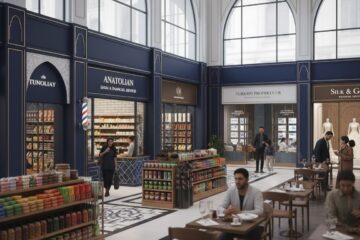
For multicultural areas, this evolution feels especially familiar. Streets shaped by migrant enterprise have often worked in this mixed-use way for years. A Turkish bakery may bring in morning footfall, a travel agent may support community connections, a restaurant may become a meeting point, and a professional service may build repeat local trade. This diversity of uses helps create a street that serves daily life rather than depending only on occasional shopping trips.
Why Multicultural High Streets Show Resilience
Research increasingly shows that diversity is not just a social feature of high streets; it can also be an economic strength. The London School of Economics, through its work on super-diverse streets and the “High Streets for All” report, has highlighted how migration, ethnic diversity and mixed local functions shape adaptable urban centres. Where high streets combine independent retail with institutions, health-related services and cultural activity, they are often better placed to absorb change.
This matters because resilience on the high street rarely comes from a single big attraction. More often, it comes from a pattern of regular visits and overlapping needs. A resident may stop for groceries, collect a prescription, buy lunch, post a parcel and meet a friend in one trip. Migrant-led and ethnically diverse businesses often fit naturally into this rhythm, serving both specific communities and the wider neighbourhood.
Academic work on London’s high-street adaptations also shows that ethnic retail has become especially visible where immigration and diversity are highest. That growth has not happened by accident. It reflects demand, local knowledge and an ability to respond quickly to changing customer tastes. Businesses rooted in community networks can often identify new needs early, whether that means stocking different food products, extending opening hours or adding delivery and service options.
Independent Businesses Are Challenging the Pessimistic Story
The claim that the high street is dying is being challenged by recent retail research. According to the 2026 Voices of Retail report from Faire and Spring & Autumn Fair, 71% of independent retailers reported stable or growing trade. That is a significant finding at a time when public discussion often focuses only on closures, costs and competition from online retail.
The same research also shows strong public demand for local and independent businesses. Around 96% of shoppers said they want more independent shops on their high street, 95% said they would spend more if there were more independent options, and 85% said they would prefer local businesses over chains. These figures suggest that customer appetite is not disappearing; it is shifting toward places that feel distinctive, personal and locally grounded.
For multicultural high streets, this is encouraging news. Independent Turkish grocers, jewellers, cafés, dessert shops, salons, estate agents and service providers often compete not by trying to look like national chains, but by offering trust, specialist knowledge and a more human connection. KPMG’s 2025 UK private enterprise barometer also notes resilience among independent retailers despite high-street pressure and rising employment-related costs, reinforcing the idea that smaller businesses still have a meaningful future.
Changing Tastes Favour Experience, Story and Identity
Consumer demand is also evolving in ways that may benefit multicultural local centres. Recent retail reporting indicates that growth is increasingly driven less by price alone and more by brand storytelling, in-store experience and community connection. Shoppers are looking for places that feel memorable, useful and authentic, rather than interchangeable.
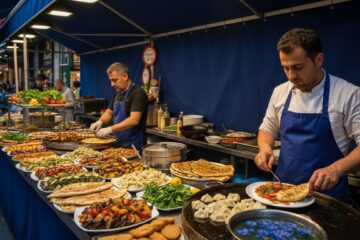
This is where culturally rooted high streets can stand out. A street with Turkish restaurants, family-run food stores, patisseries, textile shops and specialist services offers more than transactions. It offers atmosphere, familiarity and discovery. Customers may come for convenience, but they often return for the experience: the conversation, the hospitality, the product knowledge, the smells from the bakery, or the sense that the business is part of a living neighbourhood.
RICS has also highlighted that distinctive environments, local identity and engaged community stakeholders are key assets in transforming high streets beyond a purely retail-led model. That insight is especially relevant in areas where business activity is closely tied to culture. Identity is not an optional extra; it is part of the value proposition. When managed well, it can support both commercial success and stronger community belonging.
London Shows Why High Streets Still Matter
London remains one of the strongest examples of the continuing importance of local centres. New London Architecture reports that the capital has more than 600 high streets and 240 town centres, together hosting 1.5 million jobs, 28% of all employment in London, and over 200,000 businesses. These are not marginal spaces. They are a major part of the city’s economic and social infrastructure.
Another important point is how closely high streets are woven into everyday life. London data shows that Londoners live within a five-minute walk of a high street. That proximity helps explain why local trade remains so important, even as online shopping grows. People still rely on nearby places for food, services, social contact and urgent everyday needs.
For the Turkish community and other diverse groups across London, this local accessibility has real value. High streets can act as cultural anchors, especially when they include familiar foods, language support, trusted professionals and community-friendly meeting spaces. In this sense, resilience is not only about turnover or vacancy rates. It is also about usefulness, visibility and the ability to remain part of people’s daily routines.
Pressure on Trade Is Real, but Adaptation Continues
None of this means conditions are easy. Hospitality and retail operators continue to face rising costs, uncertain footfall and changing spending patterns. HRC’s 2026 high-street programme notes that hospitality businesses are adapting under pressure while trying to build local loyalty and long-term resilience. Across the board, employment costs and inflation remain serious concerns for independent operators.
Yet resilience often shows itself not in the absence of pressure, but in the ability to respond to it. Businesses are refining menus, adding lower-cost product lines, investing in more efficient operations, using social media more strategically and focusing on repeat local customers. In many multicultural districts, this flexibility has been a long-standing survival skill rather than a new trend.
Evidence on post-lockdown resilience also supports the value of practical, everyday uses. A peer-reviewed study found that high streets with higher proportions of essential stores and services, lower pre-pandemic vacancy and average occupier change experienced the lowest rise in vacancy. This is a useful reminder that convenience businesses, food stores, pharmacies, repair services and other regular-need operators are central to a street’s stability.
Policy Is Catching Up With What Communities Already Know
Public policy is increasingly recognising the high street as national economic infrastructure rather than simply a retail strip. The UK government has framed high streets as drivers of growth, jobs and innovation, while also accepting that they must evolve to meet changing demand. That shift in language is important because it opens the door to more realistic, flexible thinking about what local centres are for.
The House of Lords has also emphasised adaptability over rigid masterplans. Community needs change, and what can be sustained on a high street changes too. That means places should avoid monolithic visions and instead support a balanced mix of uses. For multicultural areas, this approach makes sense. Streets that work well often do so because they can evolve organically as populations, tastes and opportunities shift.
Another theme in current policy thinking is leadership. The Lords committee says successful and sustainable high streets often involve local leadership from community figures, businesses or authorities. For areas with strong Turkish and other migrant-owned enterprises, this creates an important opportunity. Traders’ groups, community organisations and local champions can help shape investment, events, placemaking and planning decisions so that regeneration supports existing strengths rather than erasing them.
What This Means for Turkish Businesses and Communities
For Turkish business owners in the UK, the wider report on high-street resilience carries a positive message. The features now being praised by researchers and policymakers, such as mixed uses, strong identity, independent enterprise, convenience and community connection, are often already present in multicultural trading areas. That does not remove the challenges, but it does mean these businesses are operating with assets that matter in the current market.
There is also a broader opportunity to communicate that value more clearly. Businesses can highlight their local roots, specialist expertise and contribution to daily life in the neighbourhood. A food shop is not just selling products; it may be supporting family habits, festive traditions and cross-cultural discovery. A café is not only serving tea and coffee; it may be acting as a social meeting place that strengthens footfall for nearby traders as well.
For communities, supporting the local high street is also a way of sustaining visible cultural life. Multicultural high streets do not only respond to demand; they also shape the character of an area. When residents choose local restaurants, bakers, barbers, accountants or boutiques, they are helping keep a distinct and useful ecosystem in place. In a changing economy, that everyday support can make a real difference.
The evidence now points away from a simple story of decline and toward a more grounded story of change. High streets are evolving, and the most resilient ones are often those that reflect the real lives of the people around them. In many parts of London and the wider UK, multicultural high streets are proving that local trade can remain strong when it is tied to convenience, identity, experience and community trust.
For readers interested in Turkish businesses, services and culture in the UK, this is an encouraging moment to look again at the local high street. Its future may not look like the past, but that does not mean it lacks a future. On the contrary, the streets that combine independence, diversity and everyday usefulness may be among the best placed to thrive amid changing trade and tastes.