
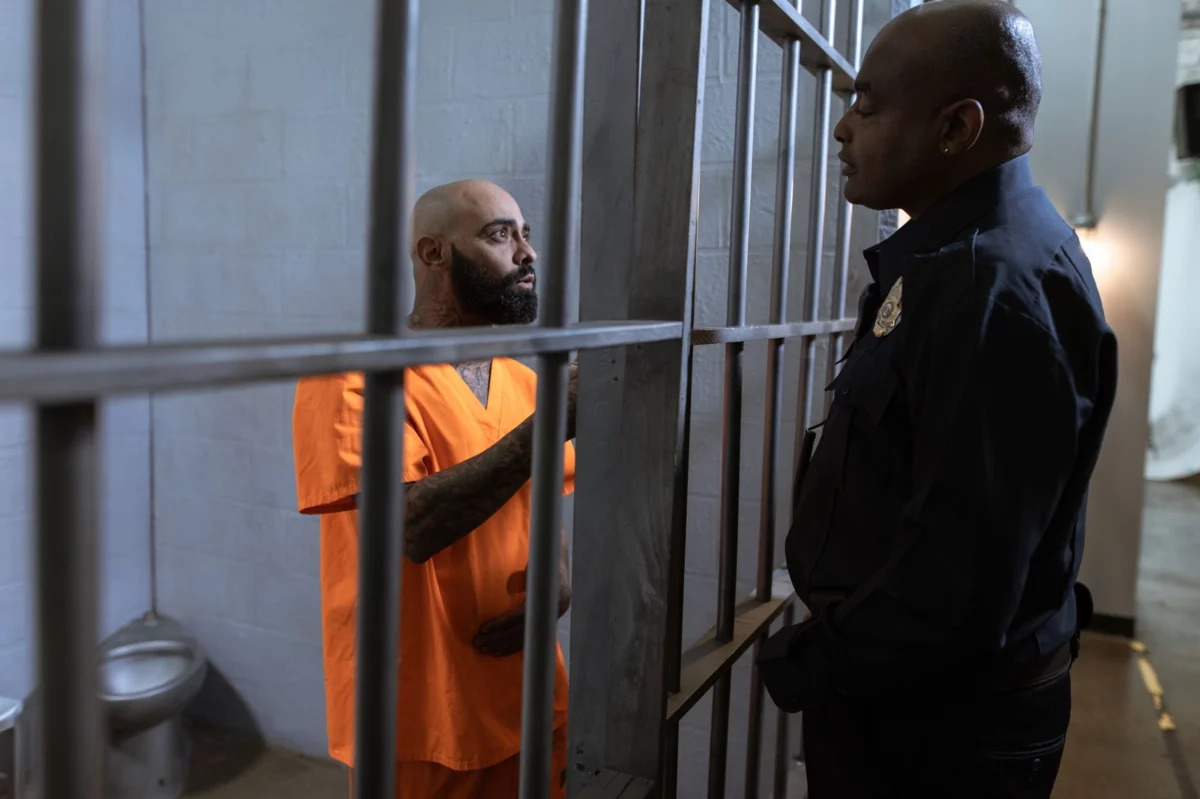
The Albanian mayor’s AI avatar is a small local event with a large political meaning. A jailed official using political deepfake videos to promise free school lunches turns synthetic media into a governance problem, not just a novelty. What matters here is not whether the clip is amusing or absurd. It is that the clip compresses several trends at once: the mainstreaming of artificial intelligence, the normalization of deepfakes, the cheapening of generative artificial intelligence, and the rise of the avatar as a political surrogate on Instagram.
Seen narrowly, this is a campaign gimmick. Seen properly, it is a test case for modern political communication: when a public figure speaks through generated media, what exactly are voters judging — policy, performance, or software? The answer matters because the clip sits at the intersection of social media, misinformation, propaganda, and the broader world of synthetic media.
Why the video matters beyond the spectacle
The obvious reaction is to treat the video as a curiosity: a politician behind bars using an AI-generated version of himself to keep talking. That reaction is too shallow. The real issue is that synthetic speech now offers political actors a way to remain visible without being physically present, and visibility is power. In local politics, presence signals control. It reassures supporters, pressures opponents, and tells the public that a leader still shapes events. Once that presence can be manufactured through computer-generated imagery and scripted automation, the line between announcement and performance weakens.
This is also why the case belongs in the same conversation as platform politics. A clip posted on Instagram is not a formal statement, a press conference, or an archived public record. It is content designed to move quickly, travel emotionally, and survive long enough to shape perception before verification catches up. That is the logic of modern political messaging: the feed rewards speed, not accuracy. A synthetic clip can therefore do two things at once. It can communicate a policy promise and quietly train viewers to accept generated faces, generated voices, and generated authority as normal political tools.
The danger is not that every synthetic clip lies. The danger is that once synthetic speech becomes routine, authenticity itself becomes negotiable.
That distinction matters. Not all AI-assisted content is deceptive. A city government might use generated voiceovers for accessibility, translation, or routine public-service announcements. But the moment a synthetic spokesperson becomes a substitute for direct accountability, the ethical burden rises sharply. A politician in custody speaking through an avatar is not a neutral use of technology. It is a deliberate attempt to retain emotional access to voters while bypassing the physical reality that would normally frame the message.
How political deepfake videos are made
From script to synthetic spokesperson
Most people hear the word deepfake and imagine a sophisticated face swap. In practice, many political clips are less dramatic and more scalable. A model can be trained or configured to generate a face, a voice, or a complete talking-head presentation; a script is written; the avatar reads the message; the clip is compressed and posted. The system relies on machine learning, template-based video generation, and the user’s willingness to accept a polished screen as evidence of presence.
That is why the term deepfake is both useful and incomplete. Some clips truly are manipulated faces or cloned voices. Others are simply synthetic presenter videos, which are adjacent to deepfakes but not identical to them. The broader category is generated media in politics: content that looks like direct political speech but is actually assembled by software. The technical distinction matters because regulators, platforms, and voters often respond too late when they insist on a narrow definition of what counts as fake.
Why audiences accept them
People rarely evaluate political video frame by frame. They use shortcuts. Familiar face, familiar setting, familiar promise: enough said. On social feeds, that shortcut becomes more powerful because the viewer usually encounters the clip in motion, without context, and often among comments that reinforce the initial impression. That is how misinformation spreads even when the content is visible in plain sight. It does not require perfect deception. It only requires a moment of confusion, excitement, or loyalty.
The platform environment amplifies that effect. A synthetic clip can be shared as irony, outrage, or support; in each case, the algorithm sees engagement. In that sense, the social media system is not a neutral pipe. It is a distribution engine that rewards emotionally charged content regardless of provenance. That is why the politics of synthetic media are inseparable from the economics of attention. A deceptive clip does not need to convince everyone. It only needs to move enough people quickly enough to matter.
The Albanian context and the specific political calculus
The details of this case matter. Tirana, as Tirana and Albania suggest, is not a generic backdrop; it is a real administrative arena where local promises have practical consequences. Erion Veliaj, as mayor, is associated with the ordinary things voters can measure: streets, schools, services, and the municipal budget. That is why a promise about free school lunches is politically effective. It is concrete. It sounds useful. It appeals to daily life rather than ideology.
Yet the setting changes the message. A jailed mayor using an avatar to announce a welfare promise creates a split-screen effect. On one side, the policy is ordinary and locally legible. On the other, the medium is extraordinary and potentially manipulative. The promise can therefore function as both substance and signal: a pledge on behalf of children, and a display of political endurance from behind bars. That duality is not accidental. It is strategic.
It also shows how modern politics uses medium to reframe circumstance. The prison setting would normally signal constraint, weakness, or accountability. The avatar reverses that. It projects continuity, even defiance. The message is not simply, ‘I am still here.’ It is, ‘You can still hear me, and I can still speak to you through the machine.’
Why the prison setting intensifies the message
Imprisonment usually strips an elected official of the immediate tools of office: staged appearances, handshake politics, and live rhetorical control. Synthetic video restores a version of that power. The image is no longer of confinement but of mediated reach. That is what makes the clip politically potent and ethically awkward. It allows the speaker to appear free enough to govern while physically unable to do so in the normal way.
For supporters, that can read as resilience. For critics, it reads as evasion. For everyone else, it creates a credibility problem. The core democratic question is whether voters are responding to a policy position or to an engineered feeling of presence. Once that question becomes routine, the line between campaign communication and propaganda narrows further.
Legal, ethical, and platform risks
The regulatory landscape is behind the technology. Some jurisdictions are moving toward disclosure rules for synthetic political content; others rely on broad fraud or election laws that were not written for avatar-based messaging. In the European context, AI governance is tightening around transparency and labeling expectations, while many election systems elsewhere still struggle to define what counts as a deceptive synthetic political act. That unevenness gives opportunistic actors room to exploit ambiguity.
The ethical problem is not confined to outright falsehoods. Even a true policy promise can become misleading if the channel creates a false impression of access, authority, or spontaneity. That is why the key risk categories are disclosure, accountability, and provenance. A clip may be technically labeled as AI-generated and still be emotionally manipulative. Conversely, a clip may be sincere and useful, but if viewers cannot tell how it was produced, trust degrades anyway.
- Disclosure: synthetic political content should be clearly labeled, in-frame and in the caption, not hidden in small-print disclaimers.
- Accountability: voters should know who approved the script, the avatar, and the distribution strategy.
- Provenance: parties and public offices should keep source files, prompts, and edit logs so the content can be audited later.
- Context: an AI avatar should not be used to replace direct human explanation when a real spokesperson is available.
These are not abstract ideals. They are practical safeguards. Public agencies, campaign teams, and newsrooms should treat synthetic video the way they treat financial disclosures: as material that must be traceable, not merely shareable. The same logic applies to platform moderation. Social companies are good at detecting obvious fraud after the fact; they are much worse at judging political intent in real time. The result is a recurring lag between publication and correction, which is exactly the window manipulators need.
What professionals should do instead
The right response is not a blanket rejection of AI in politics. That would be unrealistic and, in some cases, counterproductive. Translation, accessibility, draft scripting, and non-deceptive presentation tools have legitimate uses. The problem is not AI itself; it is ambiguity. A politics that uses generated media responsibly must make the synthetic nature of the content unmistakable and its purpose defensible.
Professionals should therefore adopt a simple rule: if the medium matters to the message, disclose the medium. If the avatar is a convenience, say so. If the clip is a substitute for a live appearance, explain why the substitution is necessary. And if the video is meant to persuade voters, accept that the standards should be stricter, not looser. Synthetic content in public life should carry the burden of explanation, because its persuasive power is precisely what makes it risky.
Advanced teams should also monitor provenance standards such as cryptographic content credentials and watermarking, while recognizing their limits. Watermarks can help verification, but they can also be stripped, cropped, or ignored. Provenance metadata helps journalists and platforms, but ordinary viewers rarely inspect metadata. That is why the human layer still matters: clear captions, visible labels, and consistent policy rules are more effective than technical fixes alone.
FAQ: the practical questions people are already asking
What is a political deepfake video?
It is a video that uses generative artificial intelligence, facial synthesis, voice cloning, or related tools to make a politician appear to speak or act in a way that was not filmed in the normal sense. The category includes obvious deepfakes and subtler synthetic presentations.
Is an AI avatar the same as a deepfake?
Not exactly. A deepfake usually implies manipulated identity content, such as a swapped face or cloned voice. An avatar can be a broader computing term for a digital spokesperson. In politics, the two overlap because both can create the impression of direct human presence.
Can social platforms stop these videos?
They can reduce the damage, but they cannot eliminate it. Platforms can label, downrank, or remove clearly deceptive content, yet they still struggle with ambiguous clips that are technically synthetic but politically useful. The larger fix is a mix of policy, disclosure, and media literacy, not moderation alone.
The real test is not whether politicians use AI
The deeper question is whether voters can still tell when they are hearing a person, a team, or a model. That is where this story points next. As synthetic media becomes cheaper and more convincing, political actors will use it for translated speeches, rapid-response videos, localized appeals, and crisis management. Some of that will be harmless. Some of it will be efficient. Some of it will be manipulative.
The likely future is not a total ban on AI in politics. It is a contest over labels, provenance, and trust. Expect more rules that force disclosure, more platform pressure to mark generated content, and more attempts by politicians to exploit the gray zone between a digital assistant and a digital double. The unresolved issue is not technical. It is democratic: when presence can be manufactured, what counts as accountability? That question will decide whether election interference is understood as a hack from outside the system or a habit that the system slowly learns to live with.
SEO DATA Primary Focus Keyphrase: political deepfake videos Related Keyphrase 2: AI-generated political campaign videos Related Keyphrase 3: how politicians use AI avatars Related Keyphrase 4: what is a deepfake in politics Related Keyphrase 5: AI impersonation in elections Primary Keyphrase Synonyms: synthetic political videos, AI-generated campaign clips, deepfake election ads, virtual spokesperson videos, generated media in politics SEO Title: Political Deepfake Videos and the Albanian Mayor’s AI Pledge Meta Description: Political deepfake videos are reshaping campaign trust. The Albanian mayor’s AI pledge shows the risks, rules, and future of synthetic politics. URL Slug: political-deepfake-videos-albanian-mayor-ai-pledge Image Filename: political-deepfake-videos-albanian-mayor-ai-pledge.jpg Image ALT Text: AI-generated video of a politician speaking from a prison cell on a smartphone screen Image Title: Political deepfake video on a smartphone Image Caption: A synthetic political video can be more powerful than a press release because it looks personal, immediate, and real. Search Intent: Informational, mixed intent
Frequently Asked Questions
Why is the Albanian mayor’s AI avatar more than just a political gimmick?
Because it changes how political presence works. The avatar is not only a flashy campaign tactic; it shows how a public figure can stay visible and influential even without being physically present. That makes it a test case for whether voters are judging a real person, a policy message, or a carefully produced synthetic performance.
Is every AI-generated political video a deepfake?
No. Deepfakes usually imply manipulated faces or cloned voices, but many political clips are broader forms of generated media. Some use an AI avatar reading a script without directly swapping a real face. The article argues that the larger issue is synthetic political speech, not just classic deepfake manipulation.
Why does posting the video on Instagram matter?
Because platform context changes how people receive political messages. Instagram rewards speed, emotion, and shareability, not careful verification. A synthetic clip can spread as persuasive content before anyone checks it, which means the platform itself becomes part of the political strategy rather than just a neutral channel.
What is the real risk if synthetic political speech becomes normal?
The biggest risk is that authenticity stops being a meaningful standard. If voters get used to AI-generated speeches, they may become less able to tell when a message is a direct public statement and when it is a manufactured performance. That makes accountability weaker, even when the content is not openly false.
Could there be legitimate uses of AI avatars in politics?
Yes. Governments could use synthetic voices or avatars for accessibility, translation, or routine public-service announcements. The ethical problem arises when the technology is used to replace direct accountability or to preserve a politician’s influence while avoiding the constraints of real-world presence, scrutiny, or legal responsibility.