
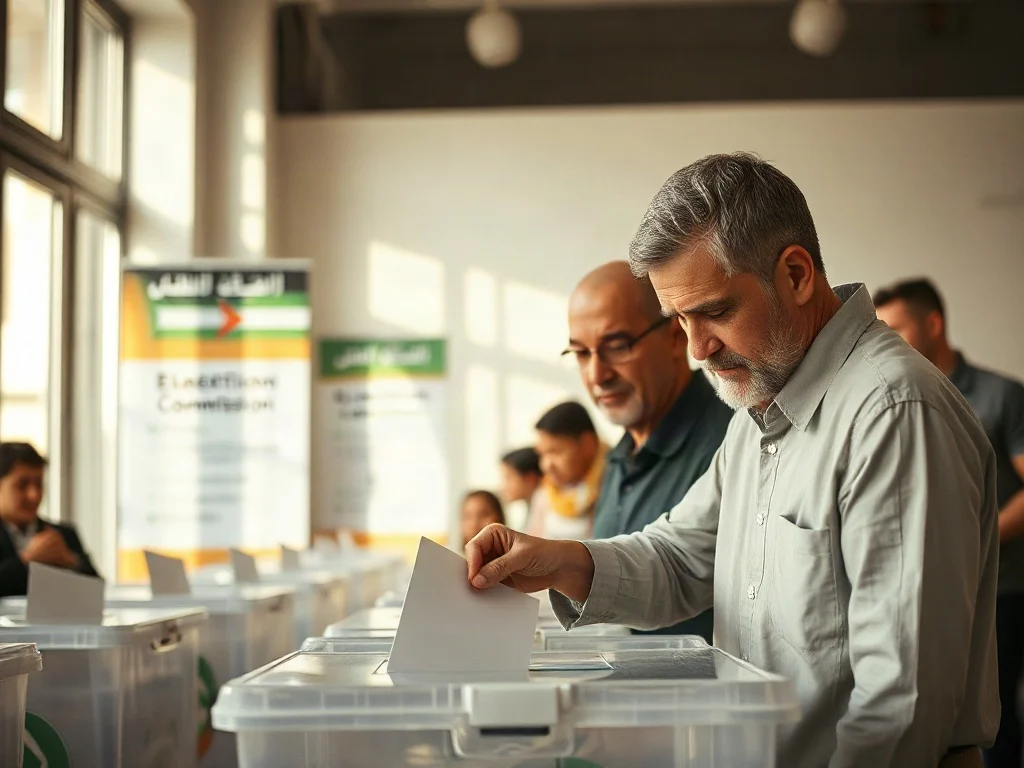
The push for Palestinian elections 2027 has just become one of the most closely watched diplomatic storylines in the Middle East. On Saturday, France and seven other countries, including the United Kingdom and Canada, urged the Palestinian Authority to hold its long-delayed parliamentary and presidential votes by the end of March 2027. They also criticised Mahmoud Abbas for pushing both ballots back to September, and they made their continued support for the PA conditional on democratic reform. This article explains what was demanded, why the issue is so charged, and what a credible Palestinian vote would actually require.
What the Eight Countries Actually Demanded
The message is blunt. The signatories want a Palestinian vote for both president and parliament no later than the end of March 2027, and they treat Abbas’s September timetable as too slow. The most consequential element is not the date but the condition attached to it. Continued backing for the Palestinian Authority is now explicitly tied to democratic reform. That moves the language from encouragement to leverage.
Only France, the UK and Canada are named in the reporting available here. The full list of signatories and the exact wording of their statement should be checked against the official text before it is quoted.
Why Palestinian Elections Keep Being Postponed
A democratic mandate frozen in time
The last Palestinian presidential vote was the 2005 presidential election, which Abbas won. The last parliamentary vote was the 2006 legislative election, won by Hamas over Fatah. The result triggered the Fatah–Hamas conflict and a geographic split, with Hamas controlling the Gaza Strip and the PA governing parts of the West Bank. The Palestinian Legislative Council has not functioned normally since.
The 2021 precedent
Elections were scheduled again in 2021, but Abbas postponed them, citing the lack of Israeli assurances that voting could take place in East Jerusalem. Critics argued the decision also reflected fears of a divided Fatah. That history explains why many Western governments now treat a new delay with deep scepticism, whatever the stated reasons.
Conditional Support: The Leverage Behind the Message
The PA was created under the Oslo Accords and depends heavily on international funding and political legitimacy. By linking support to reform, the eight governments are using one of the few tools they have. There is a strategic logic as well. Governments backing the two-state solution need a Palestinian partner that can credibly claim popular consent. Otherwise the PA risks being seen as a caretaker administration rather than a representative government, a form of democratic backsliding by default.
The Hard Obstacles to a Credible Vote
- Gaza after the war: Holding a vote in a territory devastated by the Gaza war raises questions about displaced voters, voter rolls, polling infrastructure and security.
- East Jerusalem: Voting rights there remain contested and were the stated reason for the 2021 cancellation.
- Movement and security in the West Bank: The ongoing Israeli occupation of the West Bank complicates campaigning, candidate registration and ballot access.
- Candidate eligibility: Disputes over who may run, especially concerning Hamas and commitments to the Palestine Liberation Organization platform, could determine whether the vote is seen as inclusive.
These are real constraints, not mere pretexts. Yet they also cut both ways. The harder the conditions, the more a clear timetable, backed by election monitoring and agreed technical arrangements, matters.
What Credible Palestinian Presidential and Parliamentary Elections Would Require
- A fixed legal date published by decree, with no open-ended conditions.
- An independent electoral administration with transparent voter registration.
- Guaranteed freedom of campaigning in the West Bank and, as far as possible, Gaza.
- International observation and public reporting of results by polling station.
- A plan for contested areas, including East Jerusalem, agreed well before polling day.
Common mistakes include announcing dates without enabling legislation and treating an election as a one-day event rather than a months-long process. International actors such as the Middle East Quartet have historically stressed process as much as outcome.
Frequently Asked Questions
When did the eight countries want Palestinian elections held?
They urged that both the presidential and parliamentary votes take place by the end of March 2027.
Why have Palestinian elections been delayed?
The reasons cited include the Fatah–Hamas split, disputes over East Jerusalem and the security situation. Critics also point to political risk for the incumbent leadership.
What happens if the Palestinian Authority does not comply?
The statement makes continued support conditional on reform. The specific consequences have not been detailed in the reporting available, so any outcome remains speculative.
The Real Test Is Not the Date but the Ballot
The six-month gap between March and September looks small, but it exposes a larger question: whether a deadline set from outside can overcome political incentives inside. Pressure from Paris, London and Ottawa is meaningful, yet it will succeed only if it is matched by practical help on voter access, security and candidate rules.
Watch for three signals in the coming weeks: whether Abbas issues a binding decree with a firm date, whether Washington and Arab governments align with the eight signatories, and whether the question of Hamas’s participation is answered or left to derail the process. The most important unanswered question is not when Palestinians will vote, but whether a generation that has never cast a ballot will be given a vote that truly counts.