
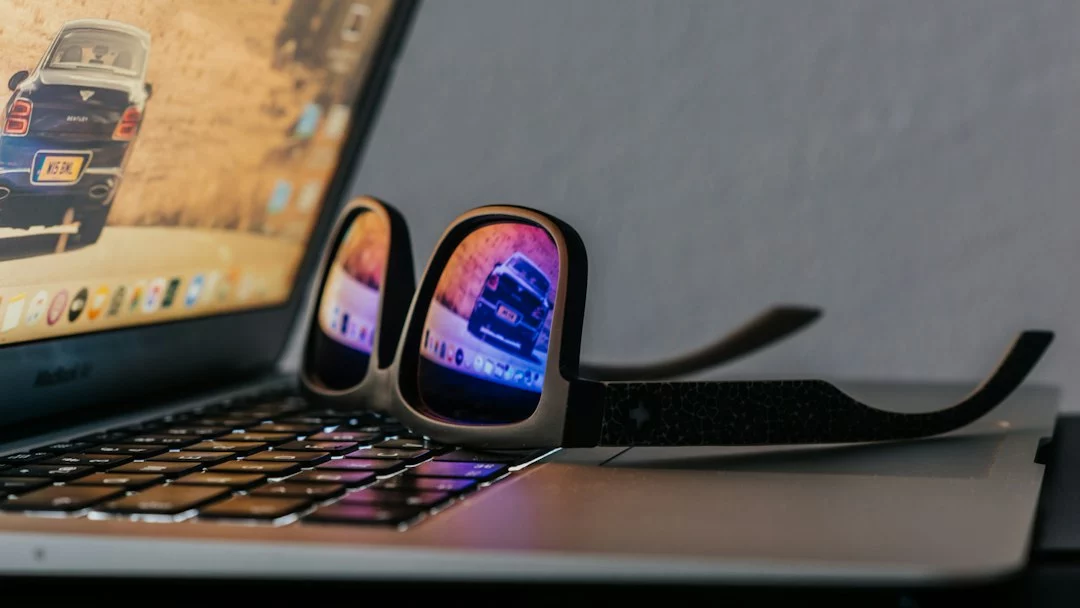
Meta smart glasses privacy is moving from a vague promise to a concrete technical question. With the company planning to extend its Private Processing encryption service to its smart glasses, the real issue is no longer whether a pair of smart glasses looks futuristic, but how a camera-equipped wearable computer handles the data it captures. In the age of augmented reality, artificial intelligence, and always-on sensing, privacy is not a side feature. It is part of the product definition itself, especially when a device sits on your face and sees what you see.
That is why the move matters. Meta Platforms has spent years trying to make wearable devices feel normal, from the Ray-Ban Meta line to broader bets on mixed reality and the future of human-computer interaction. Yet the privacy problem has always shadowed the category: smart glasses can record sound, capture images, infer context through computer vision, and blur the line between convenience and surveillance. Private Processing is Meta’s attempt to convince users that its glasses can be useful without becoming an always-on data hose.
The core privacy problem with smart glasses is not only what the wearer sees, but what the device infers about everyone nearby.
Why Meta smart glasses privacy matters now
The privacy debate around wearables is not new, but glasses raise the stakes. Unlike a phone, which users usually hold intentionally, glasses are worn continuously and often in social settings where recording feels intrusive. That makes the category especially sensitive in relation to privacy, consent, and the social norms that shape everyday technology use. In practice, the question is not only whether a user trusts the hardware. It is whether bystanders, coworkers, family members, and strangers can trust the ecosystem around it.
This is where the comparison with other technologies becomes useful. A smartphone camera can already capture rich data, but smart glasses add a layer of ambient, low-friction collection that feels more like Internet of Things sensing than traditional photography. Add AI features on top, and the device may analyze scenes, transcribe speech, or infer objects in view. That creates a privacy burden well beyond simple camera permissions. It also turns facial recognition system concerns, biometrics, and identity inference into mainstream consumer issues rather than niche security topics.
Meta’s challenge is therefore both technical and reputational. The company has been associated for years with data-intensive advertising and platform-scale profiling. A privacy-first wearable cannot rely on branding alone; it needs visible, verifiable controls. For readers comparing the product category, Meta’s own Privacy Center and smart glasses page are the best official places to check how the company describes data handling, retention, and user controls.
How Private Processing changes the data path
At a high level, Private Processing is best understood as an effort to reduce how much sensitive information is exposed during cloud-based AI tasks. The phrase suggests an encrypted or otherwise protected processing flow, which is important because many wearable AI features are hard to run entirely on-device. If the glasses need cloud help to interpret images or speech, the privacy question becomes: who can see the input while it is in motion, while it is being processed, and while it is stored?
That distinction matters because not all encryption solves the same problem. End-to-end encryption is the strongest familiar consumer standard, but many systems only encrypt data in transit or at rest. Those are useful protections, yet they do not automatically prevent the service provider from accessing content during processing. In other words, the marketing word encryption is not enough. The implementation details, the key management, the trust boundary, and the retention policy determine whether the system behaves more like a secure communication channel or just a locked server pipeline shaped by cryptography.
| Approach | Where data is handled | Main advantage | Main limitation |
|---|---|---|---|
| On-device processing | On the glasses or paired device | Lowest exposure to cloud services, often faster for small tasks | Battery, heat, and model-size constraints |
| Standard cloud processing | Company servers | More capable AI features and larger models | Broader trust and retention concerns |
| Private Processing | Encrypted or protected cloud path | Attempts to reduce server-side visibility while keeping AI capability | Security depends on the exact architecture and policy |
That hybrid model is attractive because it tries to capture the best of both worlds. Pure edge computing keeps data close to the device, but wearable hardware is constrained. Cloud computing, by contrast, can support much stronger AI features, but it increases the number of actors and systems that may touch the data. Private Processing sits in the middle: it is an attempt to make a cloud-assisted wearable feel more like a private device, even when the workload is too heavy for the glasses alone.
What risks remain even if the encryption works
Encryption is valuable, but it is not a privacy cure-all. The biggest risks in computer security often appear around the edges, not the center. For smart glasses, those edges include account access, firmware updates, partner integrations, metadata, and user behavior. A system can be strong on paper and still leak useful information through logs, timestamps, device identifiers, or behavioral patterns.
- Metadata exposure: Even if the content is protected, the system may still know when a request was made, how often the glasses are used, and which features are popular.
- Retention rules: Temporary processing can still become permanent storage if defaults change or if users opt in without fully understanding the trade-off.
- Bystander consent: People near the wearer may not know when a camera or microphone is active, which is a social and ethical issue as much as a technical one.
- Account compromise: If the user’s account is hijacked, the privacy model collapses quickly, regardless of the underlying encryption.
- Policy drift: A feature that begins as private can be repurposed later if product policy changes or if the company expands its data use cases.
This is why privacy advocates often focus on governance rather than simply features. The camera hardware is only one part of the system. The other part is the rulebook: what data is collected, what is sent, what is retained, what is used to train models, and what can be deleted. Those are the questions that determine whether a product feels respectful or extractive.
Why this matters beyond Meta
The significance of this move goes beyond one company’s hardware roadmap. Wearable AI is becoming a category, not a novelty, and the privacy standards set by one major vendor can shape user expectations for years. If Meta normalizes a more encrypted and transparent model, competitors in mixed reality, smart audio, and other consumer wearables may have to match that bar. If it fails, the whole category may inherit the stigma of always-watching devices.
There is also a market logic here. Users are more likely to adopt a device that gives them a plausible privacy story. That story needs to be understandable, not just technically sophisticated. Most people do not want to read a white paper on computer vision or cloud computing; they want to know whether their camera footage is visible to people they do not trust, whether the service can train on their interactions, and whether the device quietly turns into a data collection tool. In that sense, privacy is a customer acquisition issue as much as a compliance issue.
For Meta specifically, the reputational hurdle is steep. A company known for massive-scale social data systems has to prove restraint in a category that amplifies intimate capture. The good news is that smart glasses can benefit from design lessons already learned in digital privacy, from permission prompts to clearer activity indicators. The harder part is making those protections credible enough that users believe them even when the device is invisible on their face.
How to evaluate smart glasses privacy before you buy
If you are considering any camera-enabled wearable, it helps to treat privacy as a feature checklist rather than a slogan. That approach is especially useful when comparing devices that mix on-device processing, cloud AI, and encrypted communication. The phrase wearable AI security should not mean only password protection; it should mean meaningful controls over capture, processing, storage, and sharing.
- Check where processing happens. Ask whether the device can handle the task locally, on a paired phone, or only through cloud infrastructure.
- Review the retention policy. Look for clear limits on how long audio, images, transcripts, and logs are kept.
- Understand training options. Make sure you know whether your data can be used to improve models and whether opt-out controls are available.
- Look for visible recording indicators. Good design helps bystanders and users know when a camera or microphone is active.
- Audit account security. Strong passwords, multifactor authentication, and device management matter as much as encryption claims.
- Test the deletion flow. A privacy feature is only real if users can actually find, understand, and use it.
Meta smart glasses privacy will ultimately be judged by how easy these controls are to use in the real world. If they are buried in settings, people will not trust them. If they are simple, visible, and default to restraint, the company has a chance to improve the category’s credibility.
FAQ: Meta smart glasses privacy
Are Meta smart glasses private now?
They may be more private than earlier versions depending on the feature, but no smart glasses should be assumed to be private by default. The real answer depends on where data is processed, what is stored, and what users can disable.
Does Private Processing mean Meta cannot see my data?
Not necessarily. The value of the feature depends on the actual architecture. Users should look for clear explanations of what is encrypted, what can be accessed during processing, and whether content is retained after the task is complete.
What is the biggest privacy risk with smart glasses?
The biggest risk is not just the camera. It is the combination of continuous capture, AI inference, cloud connectivity, and weak bystander awareness. That combination can turn a consumer device into a powerful sensing system.
The real test is whether trust can be engineered
The most important insight here is simple: privacy for smart glasses is not a single feature, but a chain of trust. If one link fails, the whole story weakens. Private Processing is promising because it acknowledges that wearable AI cannot succeed if every task is exposed in plain view. But it also raises a harder question: can a platform known for scale, personalization, and data-driven products convince users that it is deliberately limiting its own visibility?
What to watch next is whether Meta makes the privacy story measurable. That means clearer documentation, stronger defaults, visible indicators, better deletion tools, and concrete explanations of how the system uses encryption rather than vague assurances. The industry will also be watching whether privacy becomes a competitive differentiator in wearables, not just a compliance burden. If that happens, the best product may not be the one with the most features, but the one that proves it can do less with your data while still doing more for you.
SEO DATA
Primary Focus Keyphrase: Meta smart glasses privacy
Related Keyphrase 2: smart glasses encryption
Related Keyphrase 3: how Meta Private Processing works
Related Keyphrase 4: are Meta smart glasses private
Related Keyphrase 5: wearable AI security
Primary Keyphrase Synonyms: privacy protections for Meta glasses, smart glasses data protection, wearable privacy safeguards, glasses security controls, Meta wearable privacy
SEO Title: Meta Smart Glasses Privacy: What Private Processing Could Change
Meta Description: Meta smart glasses privacy is evolving with Private Processing. Learn how encrypted AI handling could reduce risks and where the limits remain.
URL Slug: meta-smart-glasses-privacy
Image Filename: meta-smart-glasses-privacy-private-processing.jpg
Image ALT Text: Person wearing smart glasses with a subtle privacy and encryption interface overlay
Image Title: Smart Glasses Privacy Concept
Image Caption: Encrypted AI processing could make wearable cameras feel less invasive, but only if users trust the system.
Search Intent: Mixed intent
Frequently Asked Questions
Does Private Processing mean Meta can no longer access anything my glasses capture?
Not necessarily. Private Processing is meant to reduce exposure of sensitive data during AI tasks, especially when cloud help is needed, but the exact level of access depends on how the system is built. Encryption can protect data in transit or at rest, yet processing itself may still require defined trust boundaries, key management, and retention rules.
How is privacy risk with smart glasses different from privacy risk with a smartphone camera?
Smart glasses are more sensitive because they are worn continuously and can collect data passively in everyday social settings. A phone is usually raised deliberately, while glasses can capture images, audio, and contextual cues with much less friction. That makes consent, bystander awareness, and ambient data collection much harder to manage.
Will private processing stop the glasses from analyzing what I see in real time?
Not necessarily. The goal is to let AI features work while reducing unnecessary exposure of the input data, not to disable analysis itself. Some tasks may still rely on cloud processing because they are too demanding for the device alone. The real question is whether the data path is tightly controlled and limited.
What should I look for to judge whether the privacy claims are credible?
Look for specifics, not slogans. Useful signals include whether processing happens on-device or in the cloud, what data is encrypted, who holds the keys, how long data is retained, whether users can opt out, and whether the company explains its controls in plain language. Clear documentation matters more than broad privacy branding.
Do bystanders have any real protection if someone nearby is wearing smart glasses?
Bystander protection is still a major challenge. Even if the wearer has privacy controls, people nearby may not know when recording or AI analysis is happening. That is why smart glasses raise social and legal questions beyond device security. The strongest protections will likely combine technical limits, visible indicators, and clear usage norms.