
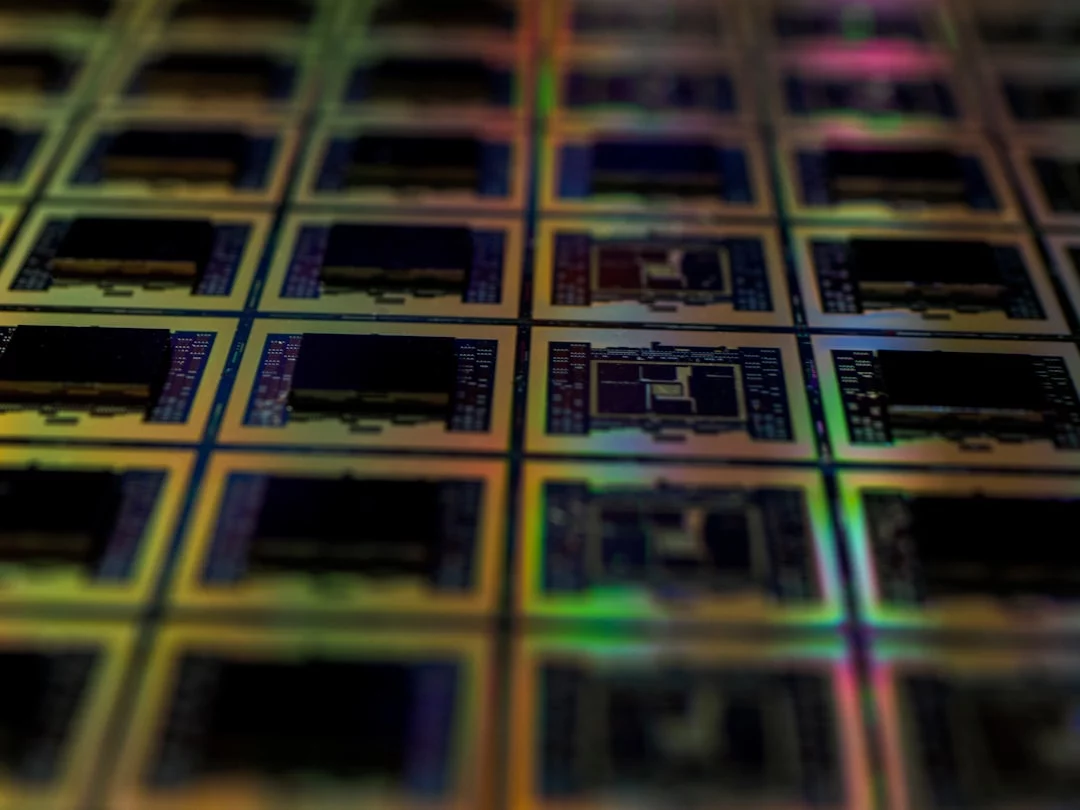
Kepler Computing’s claim that it can help ease the memory chip shortage sits at the center of a bigger question: can a startup really change one of the most stubborn bottlenecks in semiconductor manufacturing? In a market built on computer memory, DRAM, and NAND flash, even a small improvement in density, yield, or energy use can ripple through data centers, smartphones, PCs, and AI servers.
That matters because memory is not just another chip category. Unlike some custom logic parts, memory often behaves like a commodity: prices move with supply, factories take years to build, and demand can spike faster than capacity. If Kepler’s approach works, it could alter the economics of the whole stack from wafer starts to finished devices, especially in high-end systems that rely on High Bandwidth Memory.
Why memory shortages keep coming back
Memory shortages usually emerge from the same structural pattern: demand rises quickly, new fabs are slow and expensive, and the industry cannot instantly reallocate capacity. In semiconductor device fabrication, every extra step adds cost and risk. A single wafer can represent weeks of work through photolithography, deposition, etch, and test. Because of that, a small forecasting error can become a very visible supply chain problem.
At the device level, memory chips are still built on the same physical foundations as other integrated circuits, but their economics are different. They depend heavily on silicon process maturity, yield, and bit cost rather than only performance per watt. That is why the market can swing from surplus to shortage even when the underlying technology seems stable. New demand from AI, cloud storage, consumer electronics, and edge devices simply lands faster than the industrial system can respond.
This is also why memory cycles are so punishing for buyers. When capacity is tight, customers compete for the same chips; when supply finally expands, margins compress and producers cut back. The result is a boom-bust pattern that has defined semiconductor memory for decades. Any company claiming it can reduce that volatility has to prove more than good engineering. It has to prove repeatable manufacturing economics.
What Kepler Computing is claiming, and what investors should ask
According to the company’s framing, the breakthrough is not just a new circuit layout. It is a combination of chip design and a proprietary material that could improve how memory stores and moves charge. That may sound abstract, but the practical questions are concrete: does the material increase density, reduce leakage, improve endurance, simplify packaging, or lower thermal stress? Without public data, the claim is interesting but not yet proven.
Here the relevant lens is materials science, not just circuit design. Many promising memory ideas fail because they cannot survive real manufacturing conditions. Others, such as phase-change memory or resistive random-access memory, showed that new physics can help but still face integration hurdles. If Kepler is using a new stack, it will also need to work with packaging trends like chiplets and 3D integrated circuits.
A stealth startup also faces a credibility gap. Without public sample data or third-party validation, the market cannot tell whether the claimed improvement comes from the material itself or from a test setup optimized for a narrow benchmark. The difference matters because semiconductors reward results that are reproducible across fabs, not just impressive in a slide deck.
In memory, the winning innovation is rarely the one that looks best in a lab photo. It is the one that survives fabrication, qualification, and pricing pressure at scale.
What the material might change at the cell level
Depending on where it sits in the stack, a proprietary material could alter threshold voltages, insulate charge more effectively, or improve selector behavior in dense arrays. It could also influence parasitic capacitance, which matters when billions of cells share limited space. Those changes might not sound dramatic to a casual reader, but they can move the cost curve in a major way if they translate into better yield and tighter packing.
How a proprietary material could help
In the best case, Kepler’s approach would improve more than one variable at once. Memory makers care about density, endurance, heat, and process compatibility because gains in one area can be erased by losses in another. A material that slightly increases density but ruins yield is not a breakthrough. A material that fits existing equipment, lowers power, and increases usable bits per wafer is a different story.
| Approach | Possible upside | Main risk |
|---|---|---|
| New memory material | Higher density, better endurance, lower power | Yield loss, tool incompatibility, long qualification |
| Advanced packaging and chiplets | More bandwidth, better thermals, modular scaling | Complex assembly, cost pressure, reliability issues |
| Conventional fab expansion | Faster supply increase using proven technology | High capex, slow ramp, cyclical oversupply |
If the material improves one class of memory but not another, the impact will still matter. DRAM is often the immediate pressure point for servers and High Bandwidth Memory, while NAND flash matters more for storage-rich products. A startup does not need to replace both to reshape the market; it only needs to win a profitable niche and prove that volume manufacturing is repeatable.
Potential upside
- Higher bit density per wafer, which lowers cost per gigabyte.
- Better endurance or retention, useful for AI and enterprise workloads.
- Lower heat or power draw, especially important when memory sits close to processors.
- Simpler stack or packaging, which could improve yield.
Risks and limitations
- New material may be incompatible with existing fabs.
- Yield can collapse when a lab process is moved to volume production.
- Qualification cycles can take quarters or years.
- Cost advantages can disappear if new equipment is required.
That is where the economics of the foundry model become decisive. Contract manufacturers are optimized for scale, repeatability, and known process recipes. A material that breaks those rules can be scientifically elegant yet commercially irrelevant. The logic is also consistent with the slowdown in Moore’s law: when transistor scaling gets harder, gains must come from architecture, packaging, and materials rather than simple shrinkage.
Why AI, cloud, and device makers care so much
In the AI era, memory is not a passive component. Model training and inference both depend on getting data to accelerators fast enough to avoid starving expensive compute. That is why buyers pay close attention to HBM, memory capacity per package, and how systems combine compute with storage. Even when a company is not buying memory directly, it feels the effects through server pricing, laptop bills of materials, and lead times on finished devices.
For procurement teams, the real question is not just whether a new memory part performs better, but whether it fits into existing validation workflows. If a product needs a new controller, a new packaging stack, or a custom firmware layer, the adoption curve slows. That is why startups often win first in niche or premium segments before they can influence the broader market. The more a product depends on integrated circuit redesigns, the more time it takes to reach mainstream volume.
There is also a practical procurement lesson here. Large buyers do not just want higher performance. They want supply continuity, predictable qualification, and realistic roadmaps. If Kepler can offer a better cost structure but cannot guarantee output, it will struggle to change purchasing behavior. If it can demonstrate both technical advantage and manufacturing discipline, then even conservative buyers may begin to treat it as more than a curiosity.
What buyers and analysts should watch next
The most useful signals will not be broad promises. They will be specific evidence points that show whether the technology can move from concept to line item. The first is whether the company can publish reproducible test data on retention, endurance, energy use, and density. The second is whether any fabrication partner, pilot line, or packaging house is willing to be publicly associated with the process. The third is whether the material can be produced without exotic inputs that create a new bottleneck of their own.
Analysts should also watch whether the startup is targeting memory cells directly or solving a narrower problem inside the stack. Some companies enter the market through interconnects, barriers, or thermal management rather than the cell array itself. That can be a smart route because it reduces risk and lets the company prove value without replacing an entire platform at once. But it also means the impact on the broader shortage may be gradual rather than immediate.
This is where the broader semiconductor ecosystem matters. Improvements in semiconductor device fabrication often spread slowly, because customers want evidence that the process works across lots, nodes, and use cases. If Kepler can show that its material is compatible with standard workflows, then adoption becomes more realistic. If not, the startup may still become valuable as an IP company, but not necessarily as a supplier that changes global supply.
Why the claim matters beyond one product
Even a modest breakthrough could affect inventory behavior and negotiating power across the supply chain. Memory buyers hate opaque shortages because they ripple into system pricing and launch schedules. If a startup offers a credible path to a denser or cheaper memory tier, incumbents may respond with lower prices, faster roadmap shifts, or defensive IP moves. That is how technical claims can turn into commercial pressure long before volume shipments appear.
There is also a geopolitical angle. Governments now treat semiconductor capacity as strategic infrastructure, and any innovation that uses less silicon area per bit or improves yield can be attractive. But policy support does not erase the fundamentals of process control, testing, and capex. The winner still has to make a device that can be manufactured repeatedly, not merely demonstrated once.
In that sense, the story is less about a single stealth startup and more about whether the industry has finally reached the point where a well-designed material can substitute for expensive capacity expansion. If the answer is yes, memory markets may become slightly less violent. If the answer is no, the next shortage will likely look familiar: demand outruns supply, prices spike, and the cycle resets.
FAQ: the memory shortage, the startup claim, and the market
What is causing the memory chip shortage?
The shortage is usually caused by a combination of fast demand growth, slow fab expansion, and the fact that memory is highly cyclical. When buyers suddenly need more DRAM or NAND flash, capacity cannot be added quickly enough.
Could a new material really end the shortage?
It could reduce cost per bit or improve supply if it scales, but shortages are also driven by capital cycles, packaging capacity, and demand growth. No single material can eliminate all of that.
Why is HBM so important right now?
Because it sits close to the processor and provides the bandwidth that modern AI systems need. Tight supply there can slow server shipments even when other parts are available.
What is the biggest red flag for a stealth memory startup?
The biggest red flag is a gap between lab results and production reality. If the company cannot show reproducibility, compatibility, and a believable route to volume manufacturing, the claim remains speculative.
The real question is whether the bottleneck shifts, not whether it disappears
The most important insight is that memory shortages are a system problem, not a single-technology problem. A breakthrough from Kepler Computing, if real and manufacturable, could move the bottleneck rather than erase it: from wafer cost to packaging, from density to thermal limits, or from raw supply to qualification speed. That is still valuable. In semiconductors, removing one constraint often exposes the next one.
What readers should watch next is whether the company can publish reproducible results, secure a manufacturing path, and show economics that beat incumbent DRAM and NAND on a true volume basis. If it can, the market may treat the company as a serious force in semiconductor memory. If it cannot, the story will join a long history of elegant ideas that ran into the hard edges of fabrication. The unanswered question is not whether a new material can work in principle, but whether it can survive the unforgiving arithmetic of computer memory markets.
Frequently Asked Questions
How could a stealth startup meaningfully reduce a global memory chip shortage if it does not own major fabs?
A startup would not need to replace the whole industry to have an effect. If its technology raises density, yield, or energy efficiency, it can improve the economics of each wafer. Even a modest gain can free up usable capacity, lower bit cost, and make existing supply go further, especially in tightly constrained markets like AI servers and high-end storage.
Why do memory chip shortages keep returning even when manufacturers already know demand is high?
Memory supply is hard to adjust quickly because fabs take years to build and qualify, and capacity cannot be moved instantly between product types. The market also behaves like a commodity: small forecasting errors or demand spikes can cause large price swings. When demand rises faster than new output, shortages reappear despite technically mature manufacturing.
What would count as real evidence that Kepler's material is more than a lab-scale idea?
The strongest evidence would be reproducible results from independent testing, not just internal benchmarks. Buyers and investors would want sample chips, yield data, endurance measurements, thermal stability results, and evidence that performance holds across realistic manufacturing conditions. In semiconductors, a claim matters only when it survives fabrication, qualification, and scale-up.
Could a new memory material lower shortages without requiring entirely new chip factories?
Yes, if it improves the number of usable bits per wafer or reduces failure rates, it can effectively expand supply without a brand-new fab. That said, the material still has to fit existing process steps, packaging, and reliability requirements. If integration is difficult, any theoretical gain can disappear during manufacturing.
Why is High Bandwidth Memory mentioned separately from ordinary DRAM in this context?
High Bandwidth Memory matters because it is used in expensive, performance-sensitive systems like AI accelerators and advanced servers, where supply constraints are felt quickly. It is also more complex to produce and package than standard DRAM. If a startup improves memory efficiency there, the impact could be disproportionate because demand is strong and supply is already tight.