
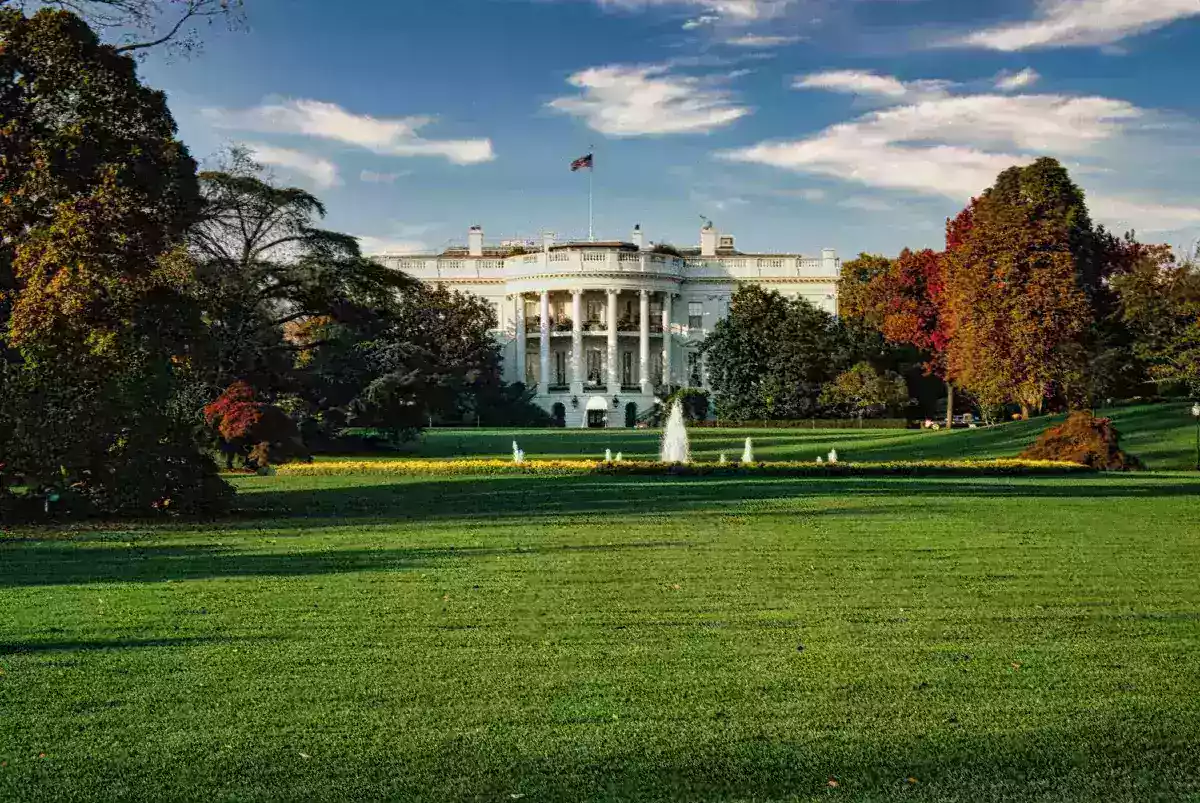
Trump’s AI safety accord is a telling example of how policy now works around artificial intelligence: the White House can convene, persuade, and signal priorities, but it cannot instantly turn a promise into enforceable behavior. That tension is the heart of the current debate over AI safety. If six major AI companies agree to safeguards, that is politically meaningful. Whether it is practically meaningful depends on what happens after the cameras leave and the product teams return to shipping models built on machine learning and large language models.
The core question is simple: is this a real governance shift, or just a polished piece of public relations? The answer is probably somewhere in between. Voluntary commitments can create useful norms, especially when frontier labs are moving faster than lawmakers. But if the agreement is nonbinding, it remains vulnerable to the same problem that has dogged tech self-regulation for decades: a company can pledge caution today and face very different incentives tomorrow. That is why the phrase fancy pinky-swear lands so easily. It captures a hard truth about modern regulation: without verification, enforcement, and transparency, safety promises can be more symbolic than structural.
Why a voluntary AI safety accord keeps showing up in policy debates
Governments reach for voluntary agreements when the policy problem is urgent and the legal path is slow. That pattern is familiar in the history of the White House, which has often used public commitments to influence behavior before formal rules are in place. It is also familiar in the AI sector, where the pace of deployment regularly outruns the pace of statute-writing. When the subject is advanced AI, the stakes are unusually high because model capabilities can change quickly, product features can roll out globally in weeks, and safety failures can emerge only after systems are used at scale.
That is why the policy conversation now sits at the intersection of technical risk and political theater. On one side are researchers working on AI alignment, who worry about the gap between intended behavior and actual behavior. On the other side are firms such as OpenAI, Anthropic, Google, Microsoft, Meta Platforms, and Amazon, whose strategic incentives are shaped by competition, investor pressure, and product cycles. Those pressures do not disappear because a company signs a pledge.
There is also a broader governance context. The National Institute of Standards and Technology has spent years developing practical risk-management approaches that can be used by both regulators and industry. At the same time, governments outside the United States have pursued harder-edged frameworks, including the European Union’s evolving AI legislation and international principles promoted through institutions such as the OECD. The result is a patchwork of guidance, standards, and political statements rather than one unified rulebook.
The central problem is not whether a company can sign a promise; it is whether anyone can later verify, compare, and enforce what the promise required.
What the accord can change, even if it is not binding law
A nonbinding accord is not useless. In practice, it can do three things that matter. First, it can define a common vocabulary for safety work. Second, it can create reputational pressure by making companies publicly commit to tests or guardrails. Third, it can lay groundwork for future standards by normalizing practices that auditors, buyers, and policymakers can later expect. In other words, a voluntary pact can become the first draft of an AI governance framework.
That matters because the real challenge in AI oversight is not only what the model can do in a laboratory setting. It is what the system does after deployment, under adversarial prompting, in multiple languages, inside customer support workflows, or embedded in search, coding, and content products. Safety work therefore has to move beyond a one-time demo and into continuous monitoring, scenario testing, and incident response. For companies, that can mean pre-release red teaming, documentation of failure modes, escalation rules for severe incidents, and tighter review of high-risk uses such as biosecurity, fraud, or targeted manipulation.
The table below shows why voluntary accords attract attention even when they lack legal teeth:
| Policy tool | What it does well | Main limitation |
|---|---|---|
| Voluntary AI safety accord | Moves fast, creates shared language, signals intent | No direct penalty for noncompliance |
| Technical standard | Improves testing, measurement, and comparability | Depends on adoption and audit quality |
| Law or regulation | Creates enforceable obligations and clarity | Slower to pass and harder to update |
For policymakers, the attraction is obvious: an accord can move before Congress does. For companies, the attraction is more strategic. Signing can buy goodwill with regulators and the public, especially if the firm believes the practical requirements are things it would have done anyway. But that is exactly why critics are skeptical. A pledge that aligns with existing internal plans is easy to sign and easier to frame as leadership than as compliance.
Why critics call it a pinky-swear
The skepticism is not cynicism; it is institutional memory. Many technology promises have looked stronger at launch than they proved in operation. The problem is that voluntary systems depend on internal incentives, and internal incentives change. A company may spend heavily on safety while a policy spotlight is bright, then quietly rebalance once competitors release faster or cheaper products. That is why a nonbinding commitment often looks less like accountability and more like a reputational shield.
The issue is especially sharp in corporate governance. Boards answer to shareholders, product managers answer to deadlines, and executives answer to the market. If the cost of extra testing is delay and the benefit of caution is diffuse, safety work can become the first thing cut from a race to ship. This is not unique to AI, but AI magnifies the risk because the harm surface is wider: algorithmic bias, misinformation, privacy leakage, security vulnerabilities, and model misuse can all appear without a dramatic failure at launch.
There is also a measurement problem. A company can say it will test for safety, but how much testing is enough? Against which benchmarks? By whose audit? If the answer lives only in private documents, external observers cannot tell whether the promise changes outcomes or simply changes language. That is why the most credible voluntary agreements are the ones that create visible artifacts: published testing summaries, incident reporting, independent review, and clear escalation paths. Without those, a pledge may be little more than a marketing claim with policy vocabulary.
The expert divide is therefore easy to explain. Supporters of voluntary accords argue that they are pragmatic, fast, and better than waiting for perfect legislation. Critics reply that speed is not the same as seriousness, and that a promise without a penalty can become a substitute for reform. Both sides are partly right. The accord can shape norms. It cannot, by itself, guarantee them.
How the accord fits into the broader AI policy stack
The smartest way to read the agreement is as one layer in a much larger policy stack. At the bottom sit technical tools such as evaluation frameworks, red-team methods, and documentation practices. In the middle sit standards bodies and advisory frameworks, including the NIST AI Risk Management Framework. Above that sit public principles such as the OECD AI Principles. At the top sit statutes and formal regulation, which can impose penalties, define liabilities, and force disclosure.
That layered view matters because not every policy problem needs the same tool. Some AI risks are best addressed through technical standards and secure development practices. Others need consumer-protection rules, procurement conditions, or sector-specific regulation. Still others may eventually require legislation comparable to the European Union’s Artificial Intelligence Act, which treats some use cases as high risk and imposes stronger obligations. The U.S. has historically preferred a more fragmented mix of agency guidance, industry commitments, and enforcement under existing law, with an executive order sometimes used to coordinate agency action.
That is why the White House accord should not be judged only on whether it is binding. The real question is whether it changes the baseline expectations that later become formal requirements. If the answer is yes, the agreement can help standardize safety practice before rules harden. If the answer is no, then the accord may simply become evidence that the political system prefers visible promises to durable enforcement.
For readers who want a more concrete benchmark, compare any company pledge with three questions: Can the company show its testing process? Can outsiders understand the limits of the tests? Can the firm explain what happens when a serious issue is discovered after launch? Those questions turn a slogan into a governance test.
What companies, auditors, and policymakers should do next
For companies, the right response is not to treat the accord as public-relations cover. It is to build a system that can survive scrutiny even if the political moment fades. That means separating safety review from product enthusiasm, documenting model limitations honestly, and planning for worst-case scenarios rather than average-case demos. It also means treating vendor models as part of the risk surface, not as magical black boxes that somehow inherit safety by association.
- Map model use cases by risk level. A chatbot used for casual support is not the same as a system making decisions in hiring, lending, health, or public services.
- Run pre-launch and post-launch evaluations. Safety is not a single test; it is a repeated process.
- Keep incident-response playbooks current. When something breaks, speed of containment matters.
- Use independent review where possible. Internal teams miss blind spots that outside auditors may catch.
- Measure bias, misuse, and drift. A model that looks safe in one setting can degrade in another.
- Disclose what users and regulators need to know. Transparency is not a slogan; it is a control mechanism.
For policymakers, the key move is to convert symbolic momentum into operational requirements. That may mean procurement rules, reporting obligations, or sector-specific standards that specify what counts as adequate testing. It may also mean clearer coordination between agencies so that safety claims are not left to ad hoc interpretation. A voluntary pact is most useful when it is a bridge to something measurable.
For auditors, academics, and civil society groups, the job is to ask better questions. Not just, did the company sign? But what did it commit to testing? What evidence will be public? Who can challenge the results? And what happens if the next model release changes behavior in ways the accord did not anticipate? Those are the questions that distinguish governance from ceremony.
FAQ: the practical questions readers are asking
What is an AI safety accord?
An AI safety accord is a voluntary agreement in which companies or governments promise to adopt specific safeguards for AI systems. It can set expectations, but it is not necessarily enforceable unless turned into law, regulation, or contractual obligation.
Is a voluntary AI agreement legally binding?
Usually not. A voluntary agreement can create public commitments and reputational pressure, but without statutory force or a contract-like enforcement mechanism, it generally lacks penalties for noncompliance.
Why would major AI companies sign a nonbinding pledge?
Because even a nonbinding pledge can improve public trust, shape industry norms, and reduce political pressure in the short term. It can also help companies signal that they are serious about safety without immediately accepting the burden of formal regulation.
How does this connect to AI alignment and AI safety research?
It connects directly. AI alignment research asks how to make systems behave consistently with human goals. AI safety work asks how to reduce harmful outcomes in real deployments. A voluntary accord is a policy attempt to translate those technical concerns into business obligations.
What should readers watch next?
Watch for whether the accord produces public metrics, independent audits, or follow-up rules. If it does, it may become a meaningful step in the evolution of AI governance. If it does not, it will likely be remembered as a moment when the White House asked for restraint and the industry offered a signature instead of a system.
What the next launch will reveal
The most important insight is that the AI safety accord is not really about the document; it is about the incentives behind it. A signature can show that companies understand the politics of AI risk. It cannot, on its own, prove that they will bear the cost of caution when the next competitive race begins. That is why the coming months matter more than the signing day. If the accord becomes a bridge to measurable standards, then it will have done real policy work. If it remains a nonbinding gesture, it will join a long list of tech promises that were persuasive in the room and fragile in the wild.
What to watch next is whether the White House, NIST, lawmakers, and the companies themselves turn broad language into specific obligations: tests that can be reproduced, reporting that can be checked, and escalation pathways that cannot be quietly ignored. The unanswered question is not whether AI needs safety. It is whether the institutions around AI are finally willing to make safety costly enough to matter.
Frequently Asked Questions
If the accord is nonbinding, why do policymakers treat it as important at all?
Because it can still shape behavior before formal laws exist. A voluntary accord can set expectations, create reputational pressure, and normalize safety testing across major labs. Even without legal force, it may influence how companies design, deploy, and document models, especially when regulators and buyers start treating those commitments as the baseline.
What would make this kind of AI safety pledge more than just a public relations move?
It becomes more credible when commitments are specific, measurable, and independently checkable. That means clear testing standards, public reporting, third-party audits, and consequences for noncompliance. Without those elements, a pledge can sound serious while leaving companies free to reinterpret or quietly narrow the promise later.
Why do voluntary AI pacts appear so often when governments could just write rules?
Because AI moves faster than legislation. Drafting laws, negotiating standards, and enforcing them can take years, while frontier models are released in months. Voluntary pacts let governments influence behavior quickly, especially in areas where the risk is urgent but the legal framework is still incomplete or politically difficult to pass.
Does signing a safety accord actually change how AI companies compete with each other?
Only to a point. The accord can reduce pressure to race on safety-sensitive decisions and give companies a shared public benchmark. But it does not remove core competitive incentives around speed, market share, and investor expectations. If one firm believes caution slows it down, the agreement alone will not eliminate that tension.
Why are organizations like NIST and the OECD mentioned if the White House accord is the main event?
They matter because they help turn broad promises into usable governance tools. NIST develops practical risk-management methods, while the OECD and other international bodies shape common principles that can influence regulators and companies across borders. Together, they provide the technical and policy scaffolding that voluntary White House commitments usually lack.