
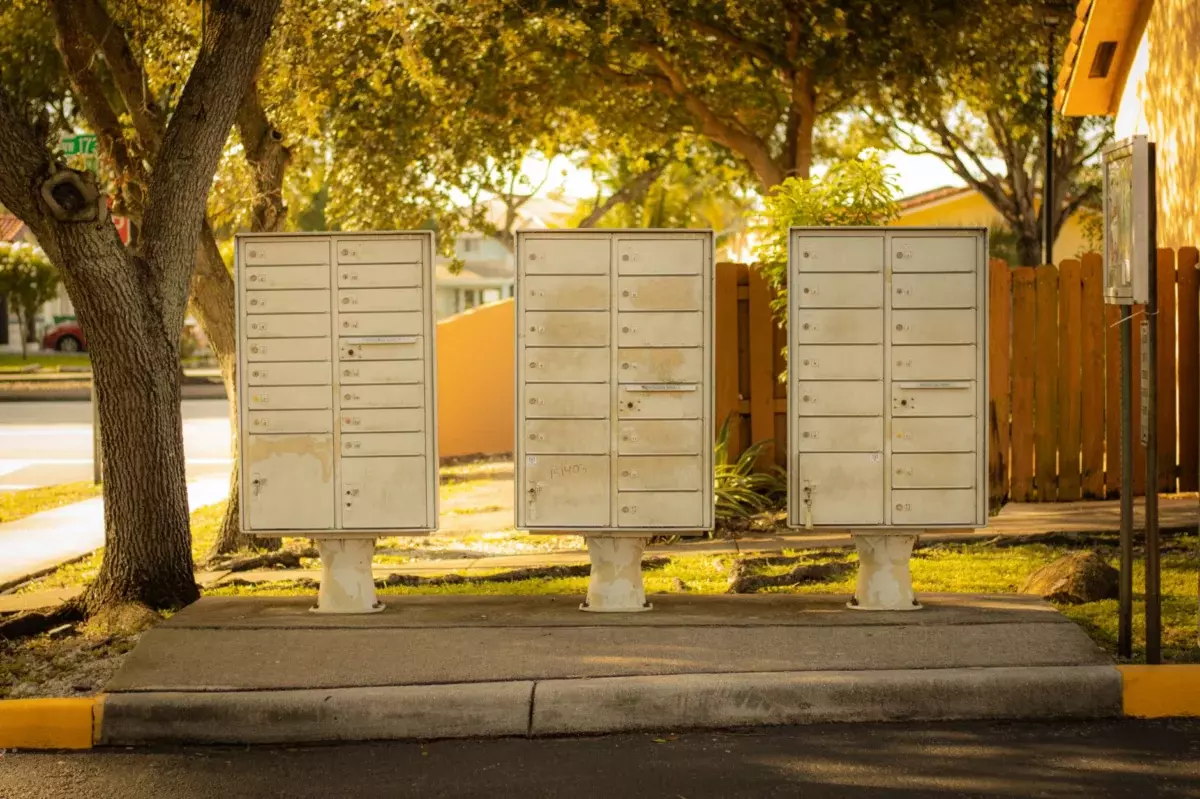
Mailbox credit card scams are easy to underestimate because they look less futuristic than AI-generated deepfakes or chat-based cons, but the old methods still work. A stolen envelope, an intercepted replacement card, or a diverted statement can give a criminal enough information to open accounts, reset passwords, or drain a line of credit before the victim notices. The reason is simple: physical mail is still part of the financial system, and every letter route is a potential attack surface.
Mailbox Credit Card Scams: Why Old-School Fraud Still Works
Why the mailbox remains a real target
A locked mailbox should feel mundane, but for a thief it can be a rich source of account data. A single piece of mail can reveal whether a person recently applied for a credit card, requested a replacement bank card, or received a notice that can be used in identity theft. That is why mail theft remains attractive: it is low-cost, low-tech, and often overlooked.
The danger is not just the envelope itself. Mail can also feed broader fraud schemes, including account takeovers, address diversion, and fake verification calls. In practice, a mailbox is often the first physical step in a longer attack chain that ends online. A criminal who steals one card-related letter may use it to trigger a reset, impersonate the customer, or harvest enough details to bypass support checks.
United States Postal Service mail still carries financial information because institutions rely on it for statements, replacement cards, PIN mailers, and official notices. That persistence is useful for customers, but it also creates a long-lived opportunity for criminals. As financial crime evolves, the most effective attacks are often the ones that blend old access points with modern digital exploitation.
How mailbox credit card scams actually work
The basic pattern is simple: intercept something that matters, then use it to move the fraud forward. The execution varies, but the logic is the same. A thief may target outgoing mail, incoming credit cards, or letters that reveal when a victim is vulnerable. Sometimes the goal is direct theft. In other cases, the mail is only the foothold for a larger account takeover.
Mailbox fishing and outgoing-mail theft
In some neighborhoods, criminals use a hook or improvised tool to pull mail from unsecured boxes. This old technique survives because it is silent and fast. Outgoing envelopes can contain payment slips, account numbers, or even personal details that support impersonation. If a customer sends a form back to a card issuer, a criminal who intercepts it may learn enough to mimic the victim later.
Intercepted replacement cards
Replacement cards are especially valuable. They are usually mailed during moments of urgency, when the customer is already focused on a lost, damaged, or compromised account. If a thief gets there first, the criminal may have a fresh credit card and a narrow window before the victim notices. In some cases, the threat is made worse by separately mailed credentials, such as a mailed PIN or activation instructions linked to a personal identification number.
Change-of-address and redirected mail
Another classic move is address diversion. If an attacker can redirect mail, they may receive statements, card offers, and security notices that were meant for the real customer. That can delay detection, help the thief answer verification questions, and create confusion about where the victim is actually receiving account mail. This is why mailbox fraud is often connected to broader identity manipulation rather than a single stolen envelope.
Preapproved offers and new-account fraud
Even a stack of unsolicited mail can be useful. Preapproved offers may be harvested to confirm names, addresses, or household patterns. In a weaker identity profile, that information can support new-account fraud or help a criminal build a synthetic identity over time. The mailbox is not just a place to steal a card; it is a place to assemble a victim profile.
Paper statements and check fraud links
Paper statements can expose account status, partial card numbers, and payment timing. In some cases, they also reveal enough to support check fraud or related payment scams. The overlap matters because many households still receive both card notices and bank correspondence at the same address. One compromised mailbox can therefore affect multiple financial products at once.
That is why the old-school version of the scam is still so resilient. The thief does not need a large technical footprint. They only need a physical opening, a predictable delivery schedule, and an account system that still trusts mail as proof of legitimacy.
Why these scams survive the AI era
It is tempting to assume that advanced tooling has replaced the low-tech scam, but the opposite is often true. The most adaptable criminals use both. A physical theft from the mailbox may be followed by a phishing message, a fake support call, or a social-media-based impersonation. In that sense, mailbox fraud is not old-fashioned in a nostalgic way; it is old-fashioned in a modular way.
AI can improve scale, but it does not eliminate the need for raw account access. A criminal still benefits from an authentic envelope, a real letterhead, or a live address associated with the victim. That is why phishing and social engineering often pair so well with physical mail theft. One provides psychological pressure; the other provides evidence and timing.
There is also a practical reason the mailbox remains valuable: it is quieter than a breach. A data breach can expose millions of records, but it is noisy and eventually public. Mail theft is local, selective, and hard to trace. That makes it especially attractive for criminals who want to avoid attention while still harvesting real-world identifiers.
The most effective fraud is often the kind that looks ordinary until the account is already moving.
Warning signs that your mail has been targeted
Mailbox-related fraud is rarely obvious at first. The most useful clue is usually a small inconsistency: a statement that never arrived, a card that shows up late, or an unexplained alert that your address has changed. Treat those small anomalies as early warnings, not as paperwork noise.
| Warning sign | What it may mean | Best immediate response |
|---|---|---|
| Missing credit card or replacement card | Interception in transit or mailbox theft | Call the issuer and ask for a card status review |
| Unexpected change-of-address notice | Mail diversion or account tampering | Verify the request directly with the carrier and your bank |
| Credit card alerts you did not trigger | Possible account takeover | Lock the card and review recent activity |
| Statements suddenly stop arriving | Redirected mail or address manipulation | Check paperless settings and confirm your mailing address |
| New account or address verification mail you do not recognize | New-account fraud or identity misuse | Report it and place fraud alerts where appropriate |
If you are unsure whether a missing letter matters, assume it does. In mailbox scams, delay helps the criminal more than it helps the victim. The earlier you question a missing envelope, the easier it is to stop the next step.
What to do if you think a credit card was stolen from your mailbox
The right response is fast, structured, and repetitive across institutions. Start with the card issuer, then move to mail and identity protections. The goal is to deny the thief more time and reduce the chance that one stolen letter turns into several compromised accounts.
- Contact the card issuer immediately and ask them to freeze the card, cancel the number, and review any recent account changes.
- Check whether the card or statement was meant to be mailed, whether it was reissued, and whether the address on file was modified.
- File a report with the United States Postal Inspection Service if mail theft is suspected.
- Use IdentityTheft.gov to document the incident and build an identity theft recovery plan.
- Consider a fraud alert or credit freeze through the major credit bureaus if the mail suggests wider identity exposure.
- Review all account recovery settings, especially mobile numbers, email addresses, and mailing addresses.
- Watch for secondary signs such as unfamiliar applications, odd login alerts, or mail from unfamiliar institutions.
The Consumer Financial Protection Bureau and the FTC both stress a basic principle: document the loss, notify the institution quickly, and assume the threat may extend beyond a single card. That advice matters because the most damaging part of mailbox fraud is often not the stolen card itself, but the account changes that come after it.
How to reduce the odds of mailbox fraud
Prevention is mostly about limiting easy access and reducing the amount of useful paper that sits in the mailbox. There is no perfect defense, but layered habits make a big difference. Think of the mailbox as one control point in a larger security system, not as a standalone container.
High-impact habits
- Use a locked mailbox or a secure cluster box whenever possible.
- Collect mail promptly so envelopes do not sit visible for long periods.
- Switch to paperless statements for accounts that support it.
- Shred preapproved offers, old statements, and any document showing partial account details.
- Consider a P.O. box if you receive sensitive financial mail at a high-risk address.
- Review account notification settings so address changes and new cards trigger alerts.
- Remove outdated checks, payment slips, and mail with signatures from exposed trash.
What to monitor first
For most households, the highest-value controls are straightforward: keep the mailbox locked, reduce paper mail, and set alerts on accounts that matter most. Those steps do not eliminate skimming, phishing, or other digital crime, but they narrow the chances that a thief can bridge the gap from the physical world to the financial one.
It is also worth remembering that a mailbox issue can evolve into a broader security issue even when no card is stolen. A thief who learns your household routines, your name format, or the timing of your billing cycle gains information that can be used later. That is why mail security should be treated as part of personal security, not as a separate chore.
Why banks and issuers still use mail
Many consumers wonder why financial institutions still rely on physical mail at all. The answer is partly regulatory, partly practical, and partly customer preference. Some documents are still easier to deliver by post, and some consumers trust a sealed envelope more than a notification buried in an inbox. But mail is also a legacy system, and legacy systems tend to preserve old attack paths.
That does not mean the solution is to abandon mail overnight. It does mean issuers should continue to move high-risk workflows toward stronger controls: app-based approval, secure digital delivery, two-factor verification, and faster card replacement options that do not depend entirely on ordinary postal delivery. The more a card program relies on the mailbox, the more it inherits the mailbox’s weaknesses.
For consumers, this is the key tradeoff: mail is convenient, but it is not a secure authentication layer by itself. A piece of paper can confirm delivery, but it does not prove that the right person received it.
FAQ: mailbox credit card scams and mail theft
What is the biggest risk if my card was stolen from the mailbox?
The biggest risk is usually not just the card replacement itself. It is the possibility that the thief can use the mail to confirm your address, impersonate you, or trigger additional account changes. A stolen card can become a gateway to a broader identity theft event.
Should I freeze my credit or just monitor it?
If you believe the mailbox incident exposed more than one account or revealed personal information, a credit freeze is often the stronger choice. Monitoring can catch problems later, but freezing makes it harder for criminals to open new accounts in your name.
Does mail theft count as a serious crime?
Yes. Mail theft is a serious offense because it can lead to financial fraud, identity theft, and account takeover. Even when the physical theft seems minor, the downstream harm can be substantial.
Can a postal scam happen without the mailbox being broken into?
Absolutely. Criminals can intercept outgoing mail, exploit a weak delivery setup, use a fraudulent address change, or target a shared building mailbox. The absence of visible damage does not mean the mail was safe.
The next weak link is the hybrid attack
The most important insight is that old-school and modern fraud are no longer separate categories. A mailbox theft can feed a phishing campaign; a phishing campaign can trigger a replacement card; a replacement card can be intercepted from the porch. That is the real lesson behind mailbox credit card scams: the scam does not have to be sophisticated at every stage, only at the point where the victim stops watching.
What readers should watch next is the growing blend of physical interception and digital impersonation. As issuers push faster card replacement, virtual cards, and app-based account recovery, the remaining weak links will shift. The obvious question is whether consumer protections can keep pace faster than criminals can adapt. For now, the safest assumption is uncomfortable but practical: if a financial document still arrives in the mailbox, it still deserves the same attention you would give to a login code, because a thief only needs one overlooked envelope to start a much larger fraud.
Frequently Asked Questions
If my mailbox is locked, am I still at risk from card-related mail theft?
Yes. A locked mailbox reduces casual theft, but it does not eliminate risk. Mail can still be intercepted during delivery, removed from shared or poorly secured community boxes, or diverted through address-change fraud. The bigger issue is that even one stolen statement or replacement-card notice can give a criminal enough data to move into account takeover or identity fraud.
Why do criminals bother with mail theft when online fraud seems more advanced?
Because mail theft is cheap, quiet, and often overlooked. It can provide high-value details like account status, card replacement timing, addresses, and personal identifiers. Those clues can help attackers pass verification checks, redirect mail, or confirm when a victim is vulnerable. In many cases, the physical theft is just the first step in a larger digital scam.
What types of mail are most valuable to scammers, beyond the actual credit card?
Replacement cards are valuable, but so are PIN mailers, activation instructions, statements, and even preapproved offers. These items can reveal account timing, identity details, or household patterns. A criminal may use that information to impersonate the victim, trigger a password reset, or build enough context to answer security questions and access accounts.
How would I know if my mail has been redirected or tampered with?
Common signs include missing statements, unexpected delays in receiving cards or notices, and account alerts showing activity before you received the corresponding mail. You might also notice address changes you did not request or a sudden increase in forwarded mail. If anything seems off, contact the issuer directly and check your mailing address and account settings immediately.
If a scammer steals a mailed card or statement, is the damage limited to that one account?
Not necessarily. A single stolen item can expose enough information to affect multiple accounts. The data may help an attacker reset passwords, impersonate you with customer service, or open new accounts using your identity. That is why mail theft is often connected to broader fraud rather than a one-card problem.
What is the safest way to reduce mailbox credit card scam risk?
Combine physical and digital precautions. Use a secure mailbox, avoid leaving outgoing mail exposed, choose paperless statements where possible, and monitor for address changes and account alerts. If you expect a replacement card, track it closely and activate it quickly. The goal is to shorten the window in which intercepted mail can be used against you.